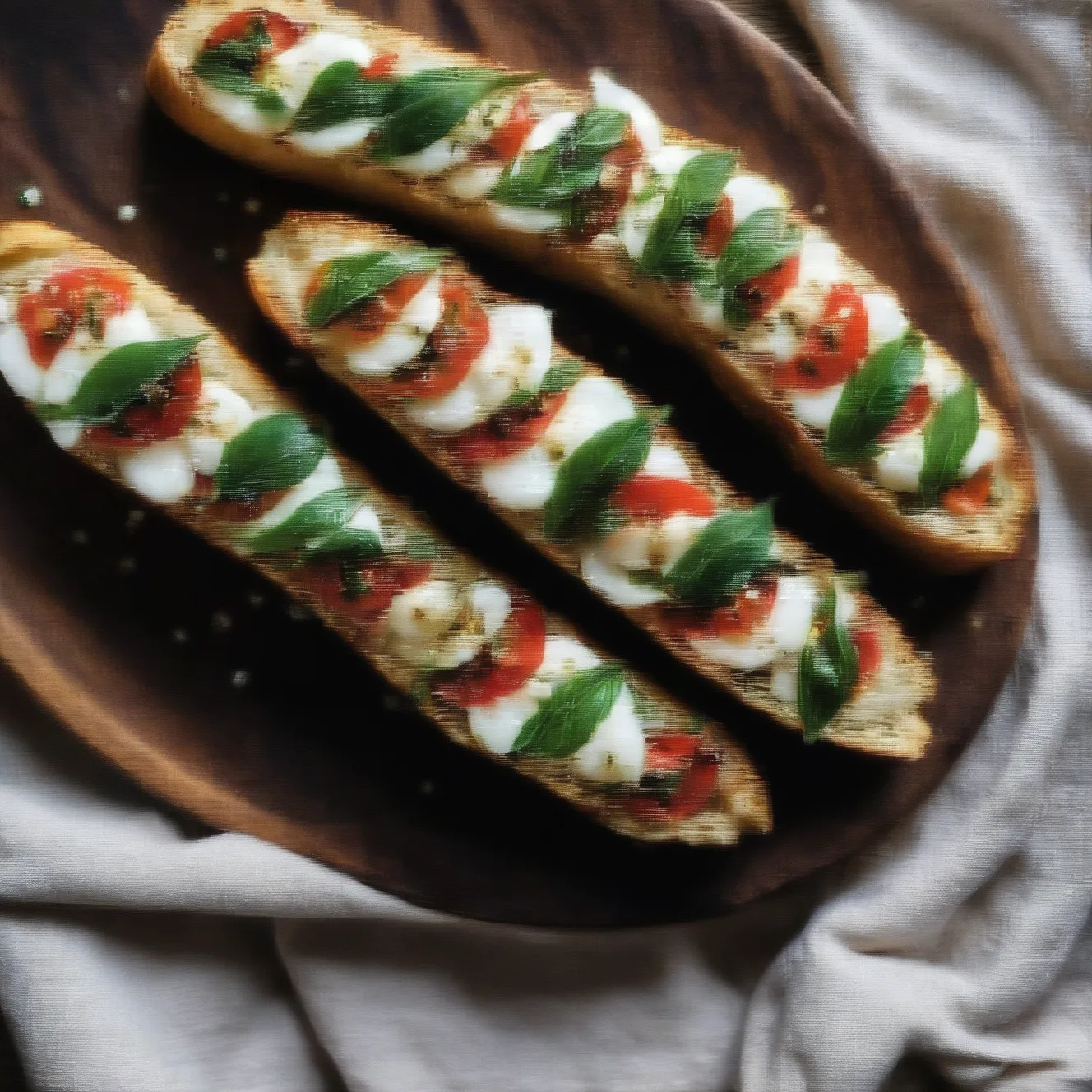
Caprese Garlic Bread — The TikTok Appetizer Mashup That Became Legendary
Someone on TikTok combined two universally loved Italian foods — garlic bread and caprese salad — and accidentally created the appetizer that now shows up at every summer gathering. Buttery toasted bread, melted fresh mozzarella, ripe tomatoes, fresh basil, and a drizzle of balsamic glaze. The visual moment when you pull a piece and the mozzarella stretches is exactly the kind of video that earns millions of views.
This is not a complicated dish. But most recipes get one thing wrong — they try to bake everything together from the start, which turns the bread soggy before it reaches the table. The technique here uses two separate broiler rounds: toast the garlic butter bread first, then add the mozzarella and broil again, then top with the fresh ingredients off-heat. That sequence makes the difference between a crispy, dramatic appetizer and a limp disappointment.
TL;DR
- Toast the garlic bread under the broiler first (3–5 min), then add mozzarella and broil again (2–3 min).
- Top with tomatoes, basil, and balsamic glaze only after the bread is off-heat.
- Pat tomatoes completely dry — excess moisture is what makes the bread go soggy.
- Fresh mozzarella (packed in water) only. Pre-shredded won’t give you the right texture or pull.
- Serve within 5 minutes. This dish does not wait.
Why the Technique Matters: Toast First, Top Second
The single most common mistake in caprese garlic bread is loading everything onto the raw bread and baking it all at once. Here’s what goes wrong: tomatoes contain a significant amount of water, which releases as steam when heated. That moisture migrates directly into the bread. By the time the mozzarella melts, the bread underneath is already soft. By the time it reaches the table, the bread is completely limp.
The correct sequence has two broiler rounds. First, you toast the garlic-buttered bread until it’s golden and slightly crispy — now the surface is sealed and less permeable to moisture. Second, you add the mozzarella and return to the broiler just long enough to melt it. Then everything else — tomatoes, basil, glaze — goes on after the bread comes out of the oven, while the cheese is still hot but the bread isn’t picking up more steam.
The tomatoes also need to be patted bone-dry before they touch the bread. Salt draws moisture out of tomato flesh rapidly — a 10-minute salted rest on paper towels followed by a firm press removes a surprising amount of liquid. Do this, and the bread stays crispy for a full 5–10 minutes after serving. Skip it, and you’re racing the clock.
Choosing Your Mozzarella
Fresh mozzarella is not the same product as the shredded low-moisture mozzarella in bags. Understanding the difference matters here:
Fresh mozzarella (packed in water or brine) is a soft, wet cheese with a milky, mild flavor and smooth texture. It’s made the same day it’s sold. When you broil it, it melts into creamy puddles with a slightly runny quality — glossy and rich. This is what you want for caprese. The stretch comes from the soft curd structure; the creaminess comes from the high fat content (about 20g fat per 3 oz). The water content is also high, which is why you must pat it dry before broiling — surface moisture will steam and prevent any browning.
Low-moisture mozzarella (the shredded kind or the firm blocks) has had most of that water removed. It melts more uniformly into a cohesive, stretchy layer, like pizza cheese. It works as a substitute if that’s what you have; you’ll get a different, more pizza-adjacent result.
Three fresh mozzarella formats are common:
- Ball (ovoline or fior di latte): The classic 8 oz ball. Slice into ¼-inch rounds. Most flexible option.
- Ciliegine (cherry-sized balls): Smallest format, halved or quartered. Good for smaller baguette-based versions where you want smaller pieces per bite.
- Bocconcini (egg-sized balls): Between ciliegine and the full ball in size. Slice in half or in thirds.
Buffalo mozzarella (mozzarella di bufala): Made from water buffalo milk rather than cow’s milk, with higher fat content and a creamier, more complex flavor. Better in an uncooked caprese salad where the flavor comes through; the difference is somewhat muted once you broil it.
Burrata: See the FAQ above — it’s the luxury option and it works, but requires a slightly different approach.
Tomato Selection and Handling
The tomato season in the Northeast US runs roughly mid-July through September for peak local heirloom tomatoes. In late June (where we are now), you’ll find early-season tomatoes at farmers markets and good grocery stores, but the peak-ripeness window hasn’t fully arrived yet. For June:
- Cherry and grape tomatoes are reliably sweet and have lower moisture content than sliced large tomatoes. Halve them for this recipe; they nestle into the mozzarella well and hold their shape.
- Early heirloom tomatoes: If you find them ripe and fragrant at the market, use them — slice ¼ inch thick and go through the salt-drain process (below).
- Campari tomatoes (the golf-ball-sized tomatoes sold in clusters at most grocery stores): A solid year-round option. Good sugar-to-acid balance, lower moisture than beefsteak.
How to drain tomatoes for this recipe: Slice or halve tomatoes and lay them in a single layer on a double layer of paper towels. Sprinkle lightly with a pinch of kosher salt. Let sit 10 minutes undisturbed — you’ll see moisture beading up on the surface. Press another layer of paper towels firmly over the top and press. For sliced tomatoes, flip and press the other side. The tomatoes should feel nearly dry to the touch, not wet and slippery.
The Garlic Butter
Room-temperature butter is non-negotiable. Cold butter won’t spread evenly and creates thick patches that don’t melt uniformly under the broiler — leaving you with rich spots and dry spots. Leave butter on the counter for 30–45 minutes, or microwave in 5-second increments until softened but not liquid.
For minced garlic: Use fresh cloves. 5 cloves for a large Italian loaf gives you a well-present garlic flavor without being overwhelming. The finer you mince, the more surface area releases flavor into the butter. A microplane grater is the best tool — it produces an almost-paste consistency that blends seamlessly into the butter and spreads without raw garlic chunks.
Garlic powder as a supplement: Some experienced caprese garlic bread makers add a small amount of garlic powder alongside fresh minced garlic. The powder distributes more evenly and provides consistent background garlic flavor across the entire surface; the fresh garlic provides punch and aroma. Using both — roughly ½ teaspoon garlic powder + 4–5 fresh cloves — gives you the best of both approaches.
Dried Italian seasoning or dried oregano is optional but recommended. A small amount (½ teaspoon) adds herbal background that complements the basil without competing with it.
Balsamic Glaze: Buying vs. Making
The product you want is labeled “balsamic glaze” or “balsamic reduction” — a dark, thick, pourable syrup with a sweet-tart flavor. It is not the same as regular balsamic vinegar.
Buying: Commercial balsamic glaze is consistent, convenient, and most brands are genuinely good. Recommendations: Stonewall Kitchen Balsamic Glaze, Trader Joe’s Balsamic Glaze, Kirkland Signature (Costco) Balsamic Glaze, and the Aldi version (sold seasonally). All of these contain some combination of grape must (concentrated grape juice), reduced balsamic vinegar, and sometimes caramel color. They’re thick enough to drizzle in controlled zigzags without running off.
Making your own: Pour 1 cup balsamic vinegar into a small saucepan. Simmer on medium-low until reduced to ⅓ cup — about 15 minutes. Cool completely at room temperature before using; it thickens significantly as it cools (if it gets too thick, add a splash of balsamic vinegar to thin). Homemade has a sharper, more acidic character than commercial glaze; add a teaspoon of honey if you want to match the sweetness of the store-bought version.
Variations Worth Making
Prosciutto caprese garlic bread: Add 3–4 torn slices of prosciutto di Parma after the bread comes off the broiler, draped over the tomatoes. Do not put prosciutto under the broiler — heat makes it chewy and almost rubbery. The heat from the bread warms it gently without cooking it, preserving the silky, slightly fatty texture.
Fig jam + prosciutto: Spread a thin layer of fig jam on the garlic-toasted bread before adding the mozzarella. The sweetness of the fig plays against the salty prosciutto in a way that reads as more sophisticated than the sum of its parts. This variation is particularly good on ciabatta.
Burrata version: Follow the main recipe but do not add mozzarella before the second broil. After the bread comes out (just the garlic-toasted step), tear 1–2 balls of room-temperature burrata over the hot bread. The residual heat softens and slightly melts the filling without collapsing the outer shell. Add tomatoes, basil, and balsamic glaze as usual.
Pesto garlic bread caprese: Replace 1 tablespoon of the butter with 2 tablespoons of basil pesto — either stirred into the garlic butter or spread in a thin layer under the mozzarella. The pesto adds a more pronounced herbal punch and a slightly green color under the melted cheese. If doing this, reduce or skip the fresh basil garnish since the pesto is already herb-forward.
Roasted garlic version: Replace the fresh minced garlic in the butter with roasted garlic — cut the top off a whole garlic head, drizzle with olive oil, wrap in foil, and roast at 400°F for 40 minutes, then squeeze out the softened cloves and mash into the butter. Roasted garlic is sweeter, more mellow, and deeply savory rather than sharp. Worth the extra time for a dinner party presentation.
Bruschetta-style (no cheese): Skip the mozzarella and second broil. Just toast the bread, then top with finely diced fresh tomatoes (seasoned with olive oil, garlic, salt, and basil). This is technically bruschetta, not caprese garlic bread, but it’s a good option for guests who avoid dairy.
Serving and Cutting
Use a serrated bread knife to cut the assembled bread crosswise into 2–3 inch pieces. The mozzarella and tomatoes will shift slightly as you cut — that’s normal. A sharp serrated blade cuts cleanly through the bread without dragging toppings off the surface the way a straight blade does.
Serve on a cutting board or a long platter. The presentation — the full loaf cut into pieces with the mozzarella, tomatoes, basil, and balsamic glaze visible — is dramatic and does well on a table centerpiece.
For a party format, garlic bread grilled cheese uses a similar double-toast technique. For the fresh tomato component without the bread, viral TikTok tomato feta bake is a closely related dish. If you want to lean into the garlic component, garlic confit is worth making in advance — stirring confit garlic into softened butter instead of raw minced garlic produces a sweeter, more complex result.