

Pin It

Viral TikTok Cheese-Stuffed Sweet Potato (The One That Caused a Butterkäse Shortage)

Viral TikTok Cheese-Stuffed Sweet Potato (The One That Caused a Butterkäse Shortage)
Jump to Recipe
Prep 5 min Cook 90 min (classic) or 45 min (fast method) Serves 1
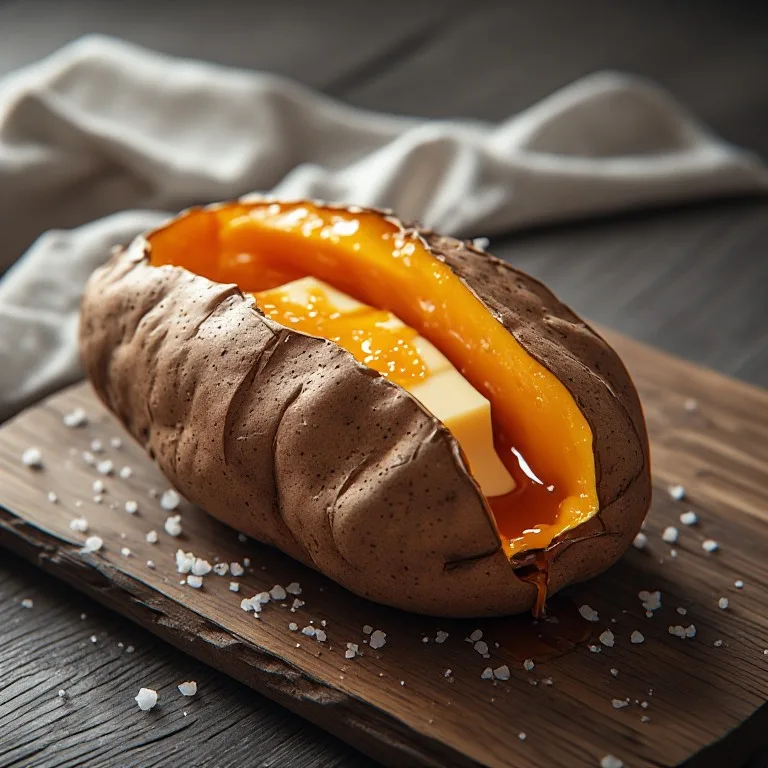
Quick answer: Preheat oven to 300°F. Pierce a medium-large sweet potato all over with a fork. Roast 60–90 minutes, until completely tender and puffed. Turn off the oven and leave the potato inside undisturbed for 2–3 more hours — this is the step that makes the interior syrupy. Remove, cut a lengthwise pocket in the center, press in a thick slab of Butterkäse cheese, and eat immediately while the cheese melts from the potato's residual heat. Finish with flaky salt.

Shop the tools

Gear matched to this recipe. These are Amazon affiliate links — we may earn a small commission if you buy, at no extra cost to you.

As an Amazon Associate, Copycat Spices earns from qualifying purchases. Product images are generic illustrations, not the exact item listed.

Viral TikTok Cheese-Stuffed Sweet Potato (The One That Caused a Butterkäse Shortage)

Courtney Cook's 7-million-view sweet potato: slow-roasted at 300°F until the interior turns syrupy, then stuffed with a thick slab of creamy Butterkäse cheese. What the low-and-slow method actually does to a sweet potato, why Butterkäse is the right cheese (and the best substitutes when you can't find it), and how to nail the pocket technique.

Easy Prep: 5 min Cook: 90 min (classic) or 45 min (fast method) Total: 1h 35m1 servings ~$3.15/serving
Prep5 min
Cook90 min (classic) or 45 min (fast method)
Total1h 35m
Servings
1
At home~$3.15/serving
vs
Restaurant~$14.17/serving
You save ~78%

The Story Behind the Recipe

Courtney Cook's 7-million-view sweet potato: slow-roasted at 300°F until the interior turns syrupy, then stuffed with a thick slab of creamy Butterkäse cheese. What the low-and-slow method actually does to a sweet potato, why Butterkäse is the right cheese (and the best substitutes when you can't find it), and how to nail the pocket technique.

Nutrition Facts

Per serving (1 servings)
Calories285
Total Fat9g
Total Carbs41g
Dietary Fiber7g
Sugars9g
Protein10g
Sodium270mg

* Estimated values based on standard recipe preparation. Actual values may vary.

Ingredients

  • Optional fast-method variation
  • Optional air fryer variation

Instructions

💡
Pro tip: This recipe tastes even better the next day. The flavors need time to meld together in the fridge.
❄️
Storage: Keeps in an airtight container in the fridge for up to 2 weeks. Freezer-friendly for up to 3 months.
🎃 Free Halloween cookbook — download now The Copycat Halloween Cookbook A ready-made, photo-illustrated PDF of our best halloween copycat recipes — free to download, no building required. Pay what you want to support if you love it.

Free PDF — instant download. We'll also send new seasonal copycat recipes now and then; unsubscribe anytime. Or just download it →

The Viral TikTok Cheese-Stuffed Sweet Potato

There is a simple reason that a Georgia schoolteacher’s lunch caused a national cheese shortage.

Courtney Cook Bales started posting what she ate for lunch — a sweet potato stuffed with Butterkäse cheese — to Instagram in late 2025. She did nothing elaborate. She slow-roasted the potato at 300 degrees until the interior turned syrupy and sweet, carved a pocket down the center, pressed in a thick slab of mild German butter cheese, and ate it straight from the skin. The first video got 7 million views. The ones that followed got similar numbers. By early 2026, Butterkäse had sold out at every Aldi in the country, and specialty grocers were rationing it by the pound.

The recipe has four ingredients if you count flaky salt. The technique has one meaningful step that most people skip. Here’s exactly what’s happening and why it works.

What the 300°F Method Actually Does

A typical baked sweet potato spends 45–60 minutes at 400°F. The outside caramelizes, the interior goes soft, and the whole thing is done in under an hour. It’s good. The Courtney Cook method does something categorically different: 300°F for 60–90 minutes, then the oven turns off and the potato stays inside for another two to three hours.

At low heat over an extended period, the sweet potato’s natural starch-degrading enzymes stay active longer before heat finally denatures them. Those enzymes convert more of the potato’s starches into simple sugars — primarily maltose — than a fast, hot roast ever could. The slow passive cooling phase then concentrates those sugars as a small amount of moisture redistributes through the flesh. The result is a potato interior that tastes almost candied, with a fudgy, sticky quality you won’t get from a standard bake.

This is why people who try both methods report that they taste different, not just texturally different. The slow version has more concentrated sweetness, a denser interior, and a subtly caramel-like quality that makes mild cheese land completely differently against it.

The fast method — 400°F for 45–55 minutes — is still excellent. It just produces a more familiar baked sweet potato, rather than the syrupy version that made the original video look so unusual.

The Cheese Logic

Butterkäse is not a sharp, aged, or complex cheese. It’s very mild, barely salty, and high in fat — semi-soft, with a creamy, uniform texture. It melts smoothly without releasing grease. Those properties are exactly why it works here: the sweet potato’s caramelized interior needs a cheese that amplifies sweetness without fighting it. A salty or tangy cheese — cheddar, Gruyère, Manchego — competes. Butterkäse disappears into the potato and makes the whole thing taste richer.

The same logic explains why the substitutes matter. Young Havarti is the closest match: similar fat percentage, similar melt, similarly mild flavor. Muenster works well. American cheese melts most reliably of all, though it introduces a processed quality. Mozzarella is the most widely recommended substitute online, and it works — especially when paired with a thin pat of butter pressed into the pocket alongside it, which replicates Butterkäse’s fat content.

Sharp cheddar or aged cheeses are technically possible but wrong for this dish. Their salt and sharpness overwhelm the sweet potato’s caramel notes rather than rounding them. The whole point of Courtney Cook’s version is that the potato is the protagonist.

Three Failure Modes

The wrong cheese. Any aged or sharp cheese breaks the flavor balance. If you can’t find Butterkäse or Havarti, go with American cheese before reaching for cheddar. The melt matters as much as the flavor.

Skipping the rest. If you roast at 300°F for 90 minutes and pull the potato immediately, you get a fine baked sweet potato. You don’t get the syrupy interior. The passive cooling rest is non-negotiable for the full effect. Plan for it — start the potato mid-afternoon if you want it for lunch, or roast it the night before and store it whole in the fridge (reheat in a 300°F oven for 15 minutes before serving).

Cutting through the skin. The pocket needs to hold the cheese without structural failure. Use a spoon, not a knife, to create the groove — a spoon lets you push and widen without accidentally cutting through the bottom or sides. If cheese slides out of the potato, the pocket was too shallow or the cuts went all the way through.

Variations Worth Making

Japanese sweet potato. Satsumaimo has purple skin and pale flesh, with a denser, starchier interior and a less candy-like sweetness. The Butterkäse contrast reads differently — more savory and nutty against the starchy flesh, less dessert-like. Find it at Asian grocery stores and some specialty supermarkets.

Loaded version. Add 2 tablespoons of caramelized onion into the pocket alongside the Butterkäse. The low-and-slow onions echo the slow-roasted sweet potato — both developed by heat and time, both sweeter than they have any right to be. Finish with fresh thyme instead of flaky salt.

Honey and cheese. Press the Butterkäse slab in, let it start to melt, then drizzle ½ teaspoon of good honey over the top and add a few flakes of salt. This version leans deliberately sweet-savory and works best with the syrupy Courtney Cook potato rather than the fast-method version.

Protein version. Fold 2 tablespoons of full-fat cottage cheese into the pocket alongside the Butterkäse — the cottage cheese blends into the hot potato flesh and adds 5–6 grams of protein with almost no change to the flavor or texture.

Spicy. Tuck 2–3 thin jalapeño slices into the pocket with the cheese before it melts. The heat cuts against the sweet potato’s sugar and the mild Butterkäse lets the jalapeño flavor come through clearly.

Make-Ahead and Storage

The cooked-and-rested potato holds well in the refrigerator, whole and uncut, for up to four days. Reheat in a 300°F oven for 15 minutes or in an air fryer at 375°F for 8–10 minutes before cutting the pocket and adding cheese. Do not add cheese before reheating — it will melt out and dry during the reheat rather than melting fresh against the hot potato.

The potato can also be roasted the evening before and left in the turned-off oven overnight, which makes the syrupy interior even more pronounced. This is arguably the best timing: ten minutes of active effort the night before, a two-minute pocket-and-cheese operation at lunchtime.

Butterkäse and its substitutes can be portioned and stored in the refrigerator for up to two weeks — slice the block into individual serving-sized slabs, wrap each in wax paper, and store in an airtight container.

One sweet potato. One cheese. One pinch of salt. The simplest possible lunch, and the one that sold out a category of cheese nationally. There is a lesson in there about what actually resonates, and it has nothing to do with complexity.
🥗

Make It Healthier

Love Viral TikTok Cheese-Stuffed Sweet Potato (The One That Caused a Butterkäse Shortage) but want a lighter version? Try these simple swaps:

  • ✓At roughly 285 calories for the whole potato plus cheese, this is already one of the lowest-effort low-calorie lunch formats you'll find — no changes needed
  • ✓To reduce fat slightly, use part-skim mozzarella instead of Butterkäse (melts differently but works) — saves about 3g fat per serving
  • ✓Add 2 tbsp cottage cheese inside the pocket alongside the Butterkäse for 5–6 extra grams of protein with minimal change to flavor
  • ✓Japanese sweet potatoes (Satsumaimo, white-fleshed with purple skin) run slightly lower in natural sugar and higher in starch — a subtle but real nutritional swap

Frequently Asked Questions

What is Butterkäse and where do I buy it?

Butterkäse (pronounced BOO-ter-KAY-zuh) is a semi-soft German cow's-milk cheese whose name literally means 'butter cheese' — though it contains no butter. It's pale yellow, very mild, barely salty, and melts into a creamy pool rather than a greasy puddle. In the US, Aldi occasionally stocks it, and you'll find it reliably at German delis, Whole Foods cheese counters, specialty grocers, and online retailers. Trader Joe's, Costco, and regular supermarket chains rarely carry it — which is why the trend caused actual shortages.

What is the best substitute for Butterkäse?

Young (mild) Havarti is the closest match — same semi-soft texture, similar fat content, nearly identical melt behavior, and a comparable buttery-mild flavor. Muenster is the next best option. American cheese melts the most reliably but introduces a processed quality. Mozzarella works (especially paired with a thin pat of butter pressed into the pocket alongside it) and is the most widely shared workaround online. Avoid aged or sharp cheeses — cheddar, Gruyère, or Parmesan are too salty and too assertive, and they compete with the sweet potato instead of amplifying it.

Do I really have to leave it in the oven for 2–3 hours after turning it off?

Only if you want the syrupy interior that makes the TikTok version so memorable. The long passive rest lets the potato's residual heat slowly work through the flesh, concentrating the natural sugars without drying anything out. Skip the rest and you get a great baked sweet potato — moist and fluffy, but not syrupy. If you're in a hurry, use the fast method (400°F for 45–55 minutes, no rest) — it's still excellent, just different.

Can I use an air fryer?

Yes. Air fry at 380°F (193°C) for 40–45 minutes, turning once at the halfway mark. The potato comes out cooked through and tender with a slightly crisper skin than the oven version. You won't get the syrupy interior of Courtney Cook's long-rest method, but the overall flavor is great and the cook time is much shorter. Add the cheese immediately when it comes out of the fryer — the retained heat is intense and melts Butterkäse in under a minute.

What is a Japanese sweet potato and is it different for this recipe?

Japanese sweet potatoes (Satsumaimo) have purple skin and pale cream-to-yellow flesh. They're starchier and less sugary than orange-fleshed sweet potatoes, with a denser texture that some people find more satisfying. The Butterkäse-stuffed version with a Japanese sweet potato has a nuttier, less candy-like flavor — some TikTok creators prefer it specifically because it's less sweet. Both work well. Regular orange sweet potatoes (Beauregard or Jewel varieties, the standard American supermarket sweet potato) are more widely available and produce the most visually striking, syrupy result.

Why does this recipe only use two ingredients?

That's the point. The viral appeal of this recipe is partly about trust — trust that a sweet potato roasted low and slow becomes interesting enough on its own to anchor a meal, and that mild, creamy cheese is all it needs. Adding herbs, toppings, or sauces before you've tried it plain is a mistake. Eat it as intended once. You'll understand why flaky salt is the only finish it needs.

Is this actually a full meal or just a snack?

At 285 calories with 10g of protein and 7g of fiber, it sits at the intersection of a filling snack and a light lunch. Courtney Cook, who started the trend, eats it as her lunch regularly. For a more substantial meal, add a second potato or pair it with a bowl of soup or a small salad. The recipe scales exactly: two potatoes, two slabs of cheese, two portions of flaky salt — no adjustments needed.

Love this recipe? Share it!

Free PDF: our 12 most-wanted copycat recipes — instant download.

Made it? Buy us a coffee

Every recipe here is free, with no paywalls. If this one was a hit at your table, a small tip keeps new copycats coming.

$

Ratings & Reviews

—
No ratings yet

Rate this recipe

Click a star to rate

Leave a Review

0/500

CS

Copycat Spices Editorial

Researched + fact-checked. Every recipe on Copycat Spices is built from published sources — official ingredient lists, brand-published recipes, interviews and food-science references — and fact-checked before it goes live, then written as clear, step-by-step instructions for home cooks of all skill levels.

Learn more about our mission →