Viral TikTok French Onion Grilled Cheese — Caramelized Onion & Gruyère
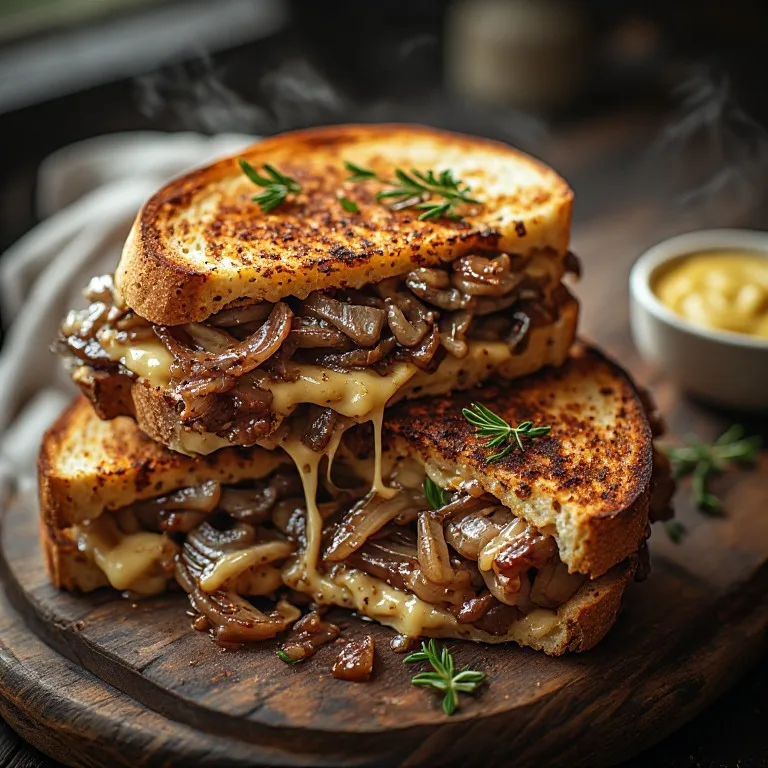
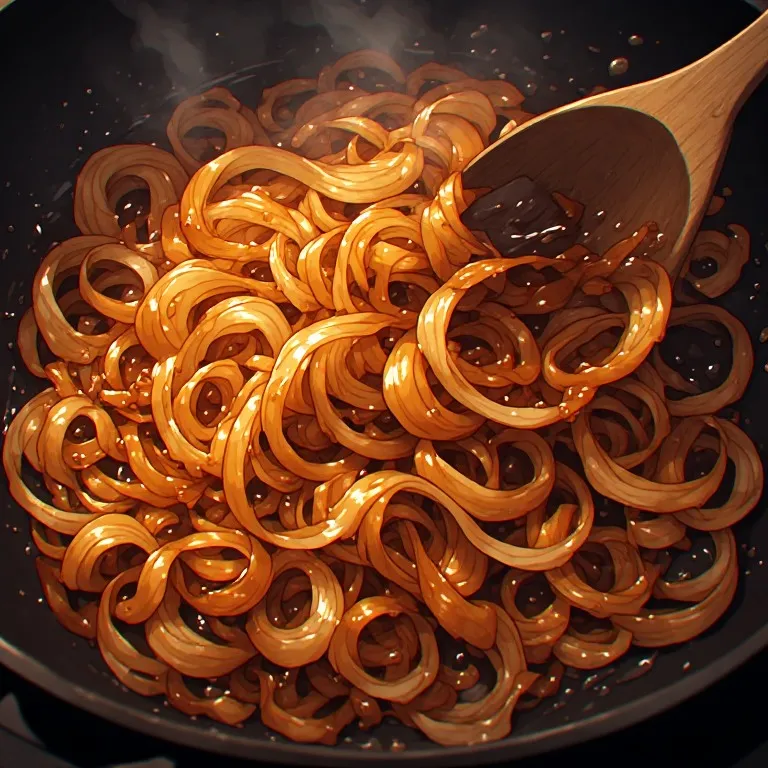
Quick answer: Slice 2 large yellow onions into thin half-moons. Melt 2 tablespoons unsalted butter in a heavy skillet over medium heat. Add the onions and ½ teaspoon salt. Cook, stirring every 5 to 7 minutes, for 35 to 40 minutes — the onions will look pale and enormous at first, shrink to about a quarter of their original volume, and turn deep mahogany. When they are that color, pour in 2 tablespoons of dry white wine or low-sodium beef broth and scrape up any dark bits from the pan. Cook 1 minute until the liquid is nearly gone and the onions are glazed. Remove from heat and add a few fresh thyme leaves if using. Heat a second skillet over medium-low heat. Spread mayo on the outside of 4 thick-cut sourdough slices — about ½ teaspoon per side. Spread the inside of each slice with a thin smear of Dijon mustard (optional but recommended). Place 2 slices mayo-side down in the pan. Pile the caramelized onions evenly across both slices. Top each with a generous layer of freshly grated Gruyère — about 1 oz per sandwich per bread side, roughly 4 oz total across the two sandwiches. Place the top slices mayo-side up. Cover the skillet with a lid for 3 to 4 minutes so the trapped steam melts the cheese from the inside. Remove the lid and check the bottom — it should be deep golden-brown. Flip carefully, press gently with a spatula, and cook the second side for 2 to 3 minutes uncovered until equally golden. Cut on the diagonal and serve immediately.
Shop the tools
Gear matched to this recipe. These are Amazon affiliate links — we may earn a small commission if you buy, at no extra cost to you.
 Illustrative imageLodge 10.25" Cast Iron SkilletThe restaurant-grade sear most copycats depend onCheck price on Amazon →
 Illustrative imageStainless Box GraterFresh-grated cheese melts the way restaurants' doesCheck price on Amazon →
 Illustrative imageInstant-Read Digital ThermometerNail fry-oil and doneness temps every timeCheck price on Amazon →
As an Amazon Associate, Copycat Spices earns from qualifying purchases. Product images are generic illustrations, not the exact item listed.
Viral TikTok French Onion Grilled Cheese — Caramelized Onion & Gruyère
The fall grilled cheese TikTok can't stop making: thick-cut sourdough loaded with 40-minute caramelized onions, a beef-broth deglaze, and melted Gruyère — all the flavor of French onion soup, made into a sandwich. Why mayo beats butter on the outside, why real caramelization takes 40 minutes not 5, and how to press without burning.
Medium
Prep: 5 min
Cook: 50 min (including 40 min onion caramelization)
Total: 55 min2 servings
~$4.50/serving
At home~$4.50/serving
vs
Restaurant~$20.25/serving
You save ~78%
The Story Behind the Recipe
The fall grilled cheese TikTok can't stop making: thick-cut sourdough loaded with 40-minute caramelized onions, a beef-broth deglaze, and melted Gruyère — all the flavor of French onion soup, made into a sandwich. Why mayo beats butter on the outside, why real caramelization takes 40 minutes not 5, and how to press without burning.
Nutrition Facts
Per serving (2 servings)Calories510
Total Fat28g
Total Carbs42g
Dietary Fiber3g
Sugars8g
Protein21g
Sodium820mg
* Estimated values based on standard recipe preparation. Actual values may vary.
Ingredients
- For the caramelized onions
- For the sandwich
- Optional additions
Instructions
Pro tip: This recipe tastes even better the next day. The flavors need time to meld together in the fridge.
Storage: Keeps in an airtight container in the fridge for up to 2 weeks. Freezer-friendly for up to 3 months.
Free PDF — instant download. We'll also send new seasonal copycat recipes now and then; unsubscribe anytime. Or just download it →
🎉 Your Halloween Cookbook is ready!
It's free — but if it's worth something to you, you can pay what you want. It keeps the recipes coming.
$
✓ Downloading your free Halloween Cookbook — check your downloads folder. Happy cooking!
Make It Healthier
Love Viral TikTok French Onion Grilled Cheese — Caramelized Onion & Gruyère but want a lighter version? Try these simple swaps:
- ✓Replace the sourdough with a whole-grain or sprouted-grain bread to add 4 to 5g of fiber per serving and a nuttier flavor that pairs well with the sweet caramelized onions. Avoid very seedy or heavily textured breads — the onion filling is already textured, and a contrasting bread can make the sandwich feel busy rather than cohesive.
- ✓Reduce the Gruyère to 2.5 oz instead of 4 oz and add 1 oz of part-skim mozzarella. The mozzarella provides the melt and stretch at fewer calories per ounce, while the Gruyère provides the flavor. Total calories drop by about 100 per serving without a noticeable impact on richness.
- ✓Skip the Dijon and smear the inside of the bread with a thin layer of plain hummus instead. It adds 2 to 3g of protein per serving, introduces a faint earthiness that anchors the sweetness of the onions, and keeps the sandwich moist against the bread.
- ✓The caramelized onions in this recipe are made with butter. Replace with 1 tablespoon of olive oil to eliminate saturated fat from the onion step — the onions will caramelize in exactly the same way. The flavor is slightly less round without butter, but still exceptional.
Frequently Asked Questions
Why does everyone use mayo instead of butter on the outside of grilled cheese?
Mayo has two properties that butter doesn't: a higher smoke point and a built-in emulsification. Butter is mostly fat but contains water and milk solids — the water steams as the bread hits the pan, and the milk solids can scorch before the bread has finished browning. Mayo is oil plus egg yolk with almost no free water. It browns at higher temperatures without burning, coats the bread surface more evenly (it's already spreadable at room temperature, while butter requires melting or softening), and produces a consistently golden crust. The flavor difference is imperceptible in the finished sandwich. This is not a TikTok trick — professional short-order cooks have used mayo for decades. You can use butter if that's what you have and reduce the heat slightly, but mayo produces more forgiving, more consistent results.
Why do my caramelized onions look done at 15 minutes but taste flat?
Onion color is not the same as onion flavor development. At 15 minutes, the onions have lost most of their water and turned golden, but the Maillard reaction and the breakdown of sulfur compounds (what makes raw onion sharp) are still ongoing. The complex sugars haven't fully formed, and the onions still have a slightly harsh, raw edge beneath the sweetness. At 35 to 40 minutes, both processes have had time to complete: the sugars have caramelized deeply, the sharp sulfur compounds have cooked off, and the onions have developed those characteristic long-chain flavor compounds that make them taste rich, savory, and almost meaty. The difference is not subtle. If you want to speed the process, you can add a pinch of baking soda at the start — this raises the pH and accelerates browning, producing done-looking onions in 15 to 20 minutes. The result is softer and slightly more one-dimensionally sweet. It works in a pinch, but 40-minute onions have a depth of flavor that the shortcut cannot fully replicate.
Why Gruyère instead of mozzarella, cheddar, or Swiss?
Gruyère is the traditional French onion soup cheese for a reason that applies equally here: it has exactly the right balance of melt, stretch, and flavor for this specific combination of ingredients. Aged Gruyère has a rich, nutty, slightly funky quality that mirrors the flavor notes in deeply caramelized onions — both are high in glutamates (the umami-forward compounds) and both carry a complex sweetness. When they melt together, the result is deeper than either would be alone. Mozzarella has excellent melt but is mild and slightly milky in a way that gets lost against assertive onions. Sharp cheddar works but its aggressive sharpness can overpower the caramelized-onion sweetness and read as a different sandwich altogether. Swiss (Emmental) is the closest substitute — similar flavor profile to Gruyère but with a softer, slightly blander character and larger holes that create uneven melt. If Gruyère is unavailable, Comté is an excellent substitute with an almost identical flavor profile.
Can I make the caramelized onions ahead of time?
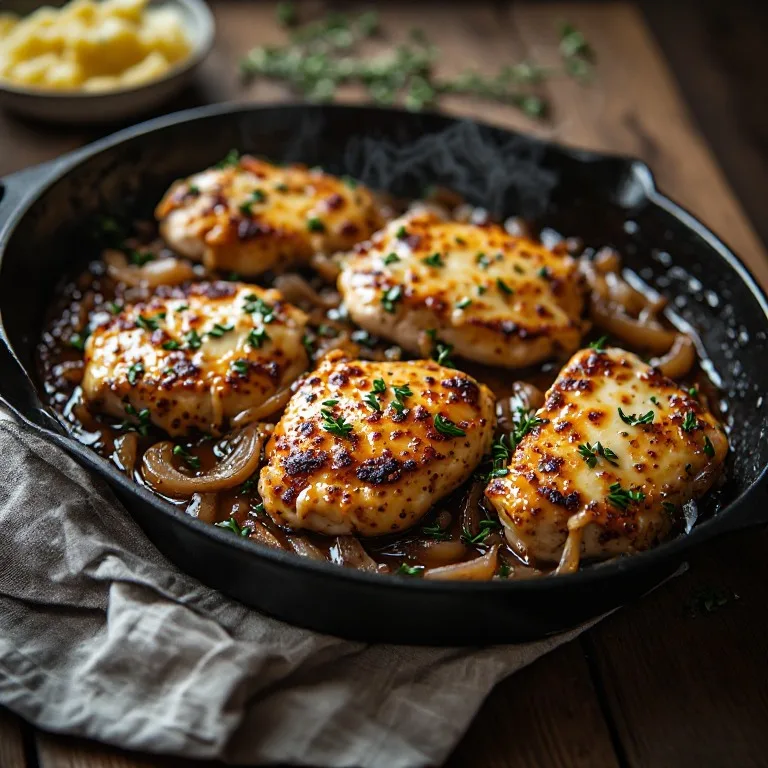
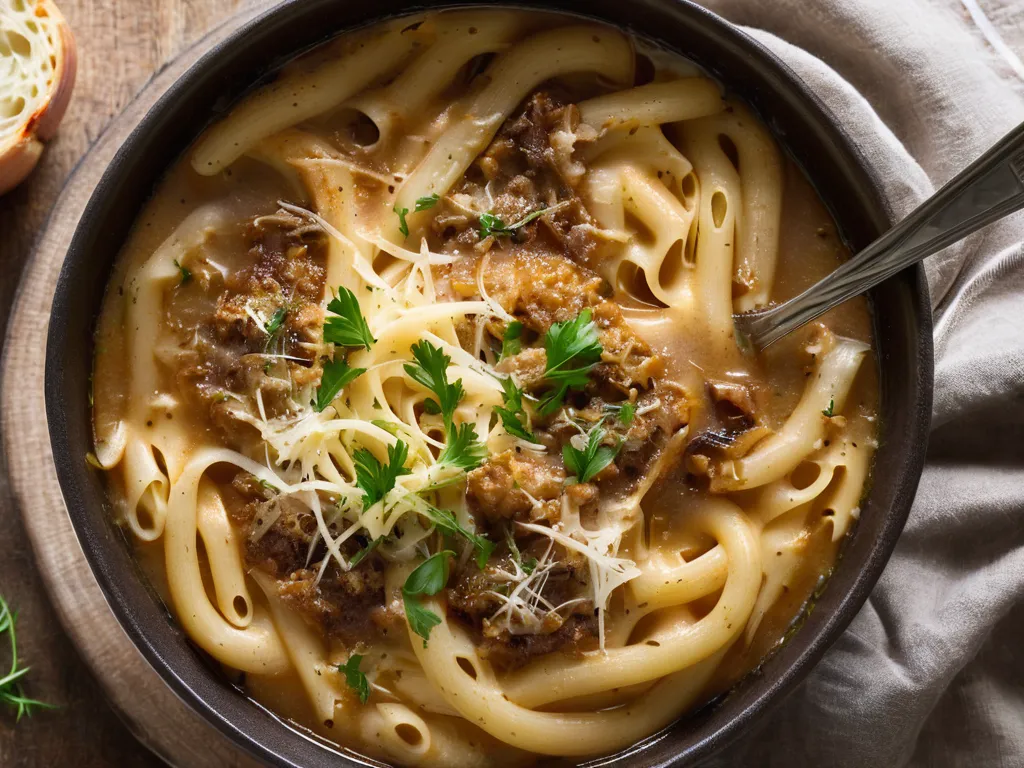
Yes, and it's one of the best prep-ahead moves in this recipe. Caramelized onions keep for up to 5 days in a covered container in the refrigerator and actually improve slightly as the flavors meld overnight. Make a double or triple batch while you have the time and patience — caramelizing 4 to 6 onions takes only 5 to 10 minutes longer than 2 onions and the leftovers work in omelets, pasta, pizza, flatbreads, and the French onion chicken recipe linked below. To store, let them cool to room temperature first, then refrigerate. When you're ready to use them, bring them to room temperature or give them 30 seconds in a pan over low heat to loosen.
My cheese melts but the bread burns before the inside is warm — what am I doing wrong?
Two likely causes: heat too high, or skipping the lid step. Grilled cheese should be cooked over medium-low, not medium or medium-high — it needs enough time on the heat for the cheese to melt thoroughly before the bread color is done. The lid trick is essential: it traps steam that circulates around and through the sandwich, heating the center and pre-melting the cheese, so by the time the exterior is golden you're not racing against a cold interior. If your bread is browning too fast even at medium-low, reduce to low and extend the time. Another culprit is a pan that isn't fully preheated before the bread goes in — add the sandwich to a cold pan and it heats unevenly, producing pale patches and burnt patches rather than uniform gold.
What bread actually works best here?
Thick-cut sourdough is the standard for the viral TikTok version — its open crumb, slight tang, and structural firmness hold up against the heavy, wet filling without collapsing. The tang is a deliberate flavor counterpoint to the onions' sweetness. Country white or pullman-style pain de mie also works well and produces a more classic diner-style result. Brioche is popular for a richer, buttery character that complements Gruyère, though it browns extremely quickly and requires careful heat management. Avoid standard sandwich bread: it's too thin (½ inch at minimum is needed to support the filling), too soft (it compresses and tears when pressing), and it browns faster than it melts the cheese. Whatever bread you use, the slices should be at least ½ inch thick.
Love this recipe? Share it!
Made it? Buy us a coffee
Every recipe here is free, with no paywalls. If this one was a hit at your table, a small tip keeps new copycats coming.
$
💛 Support checkout is coming soon — the cookbook stays free either way.
Ratings & Reviews
Rate this recipe
Click a star to rate