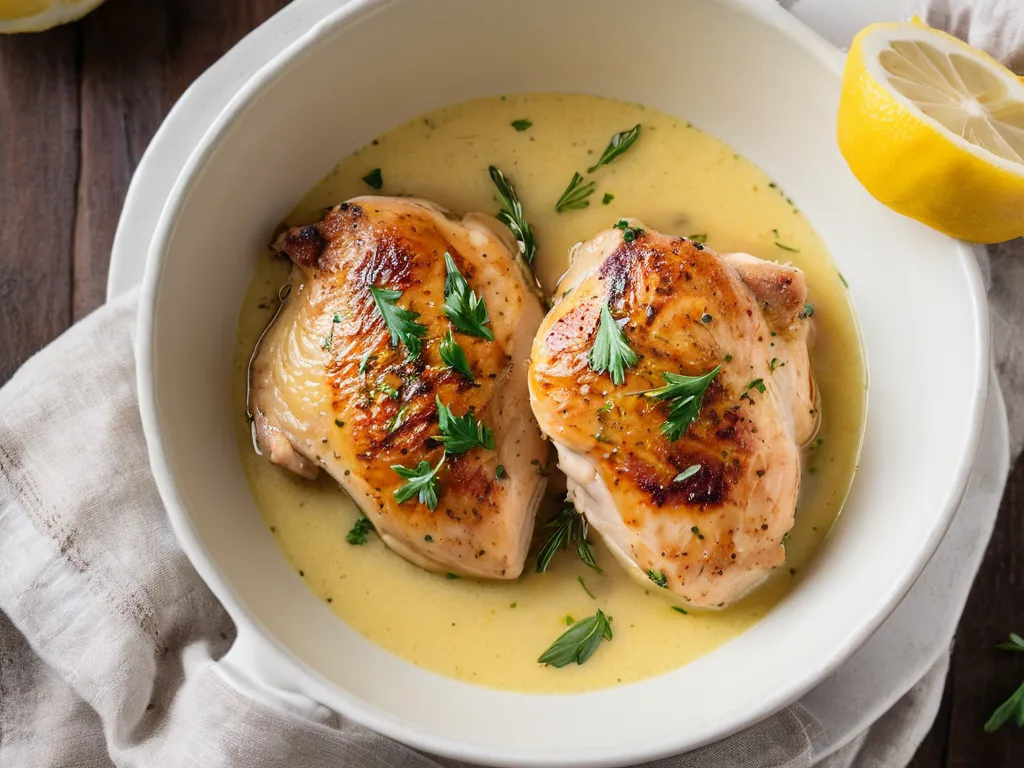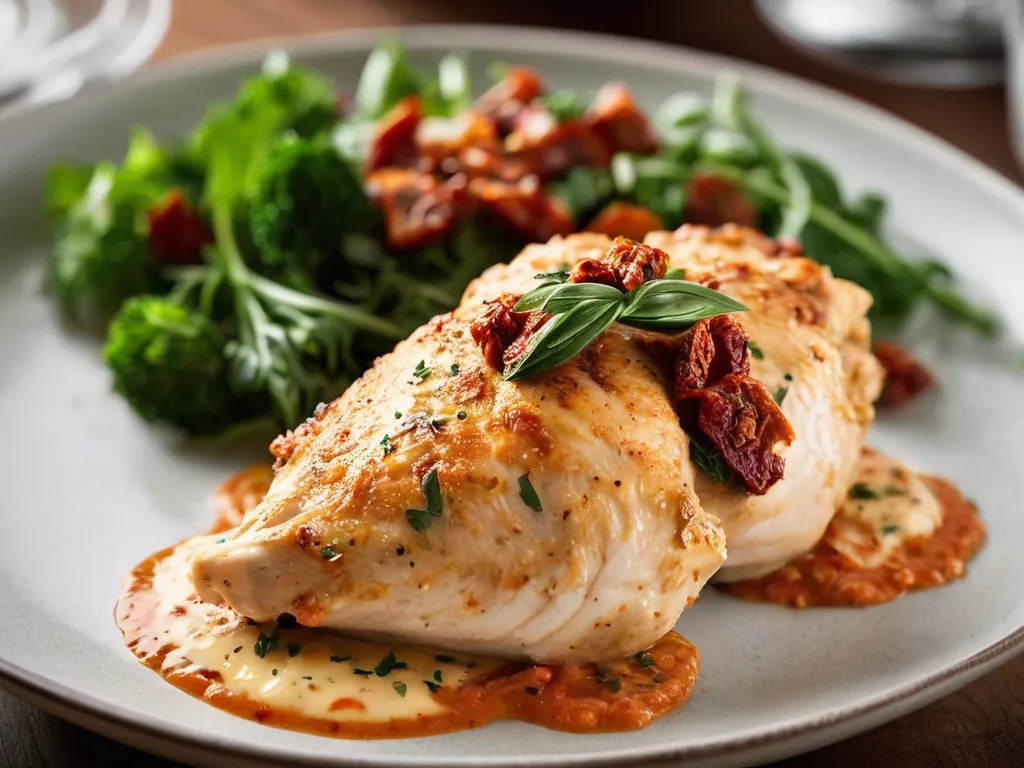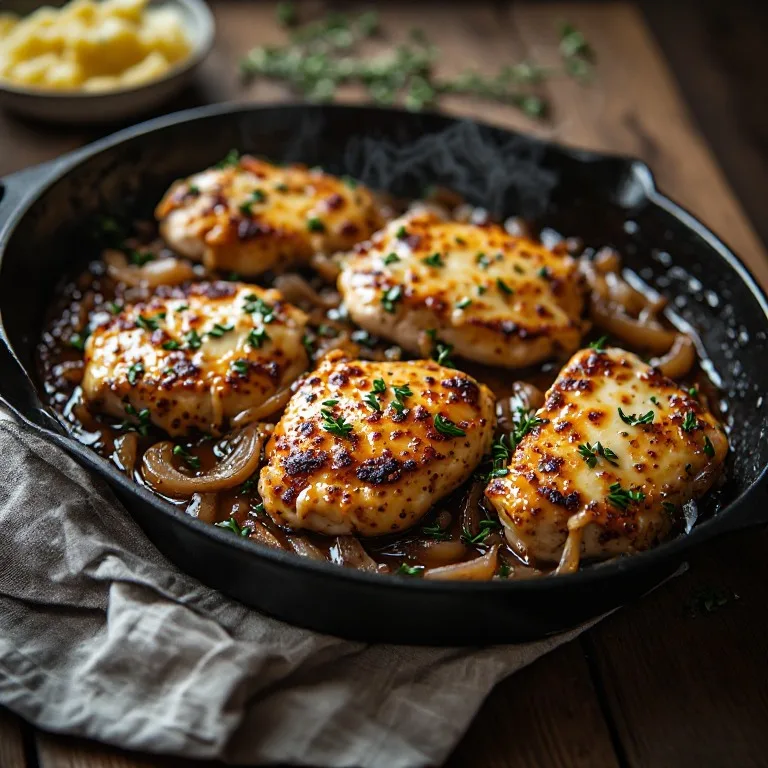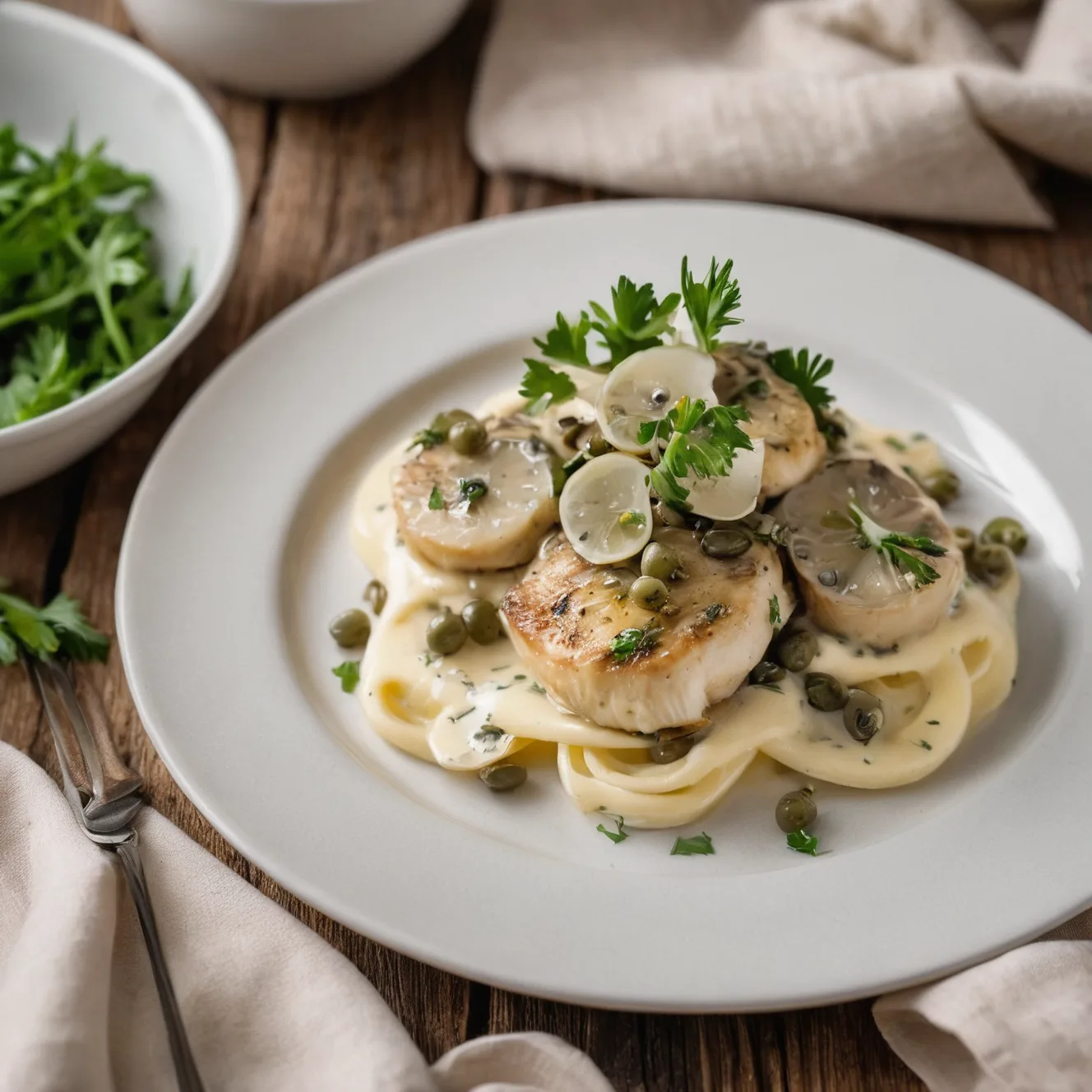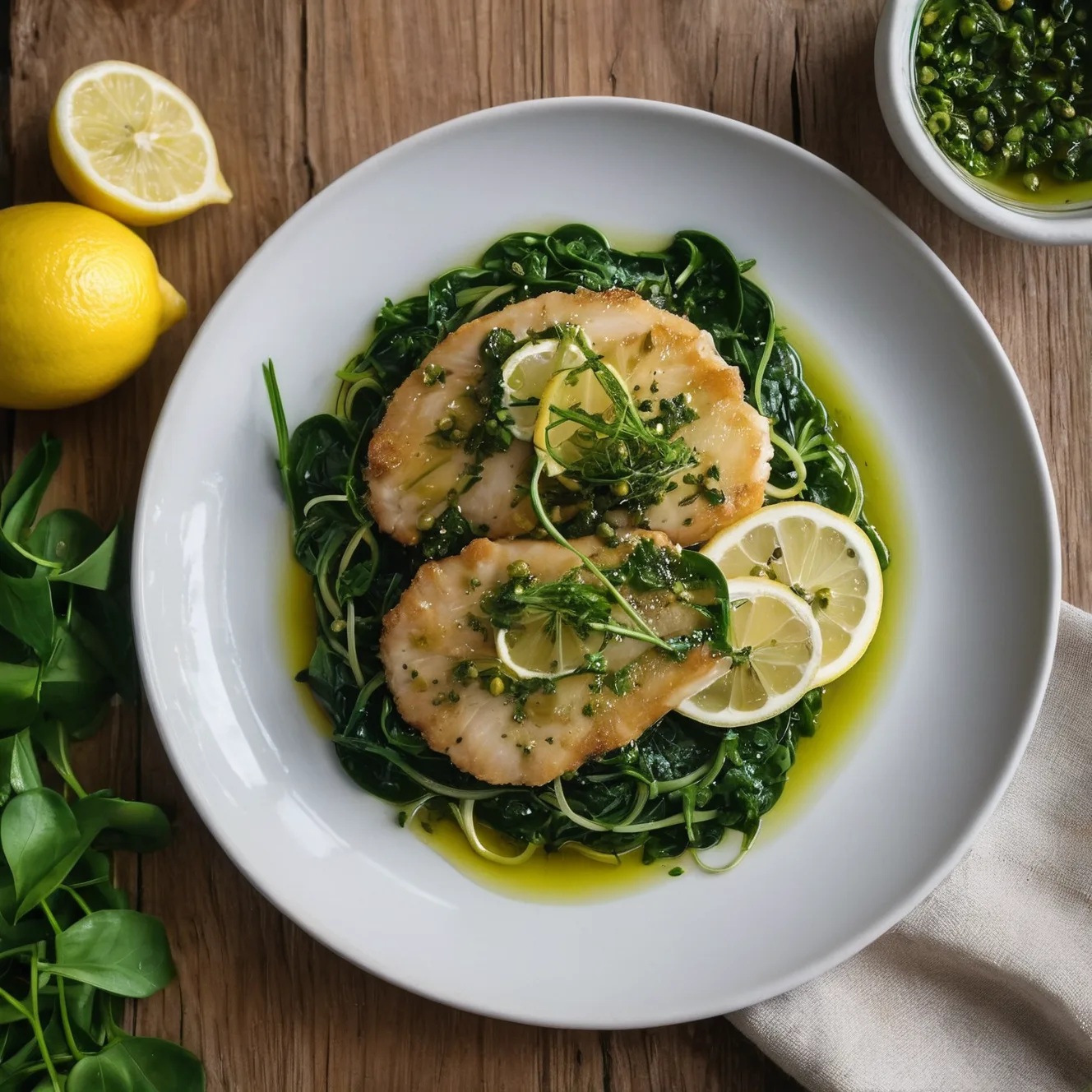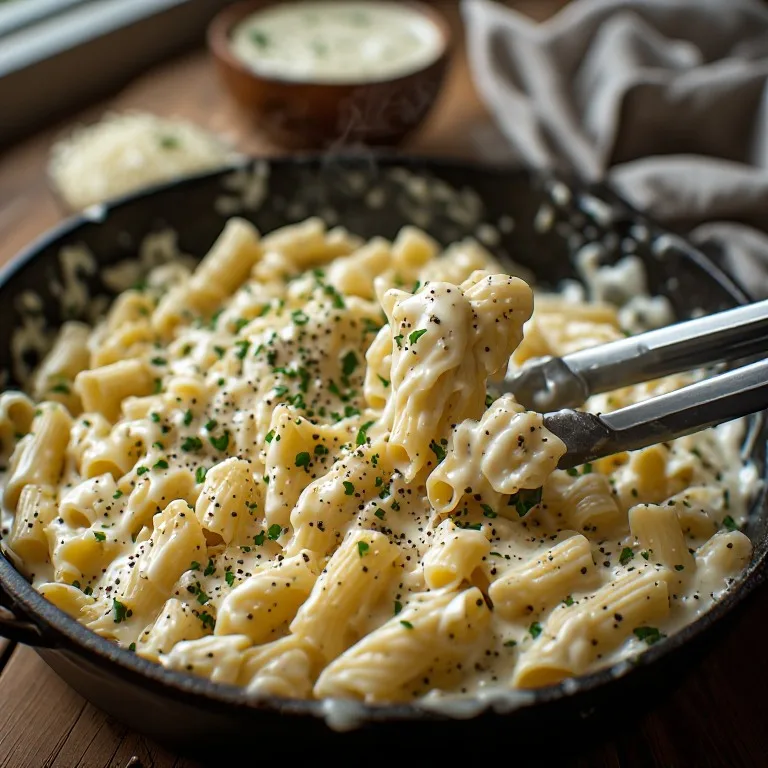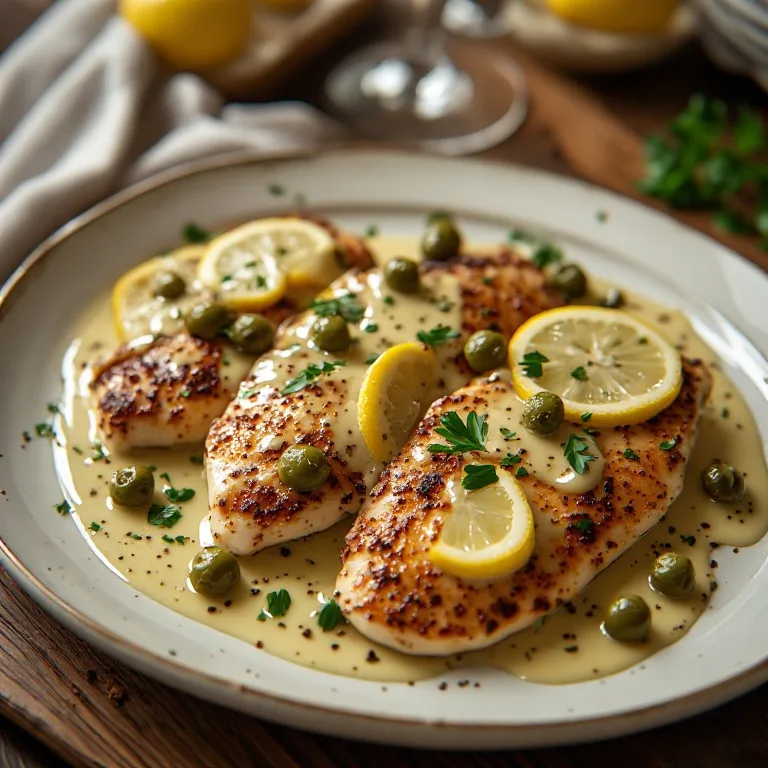



Chicken piccata is one of those dishes people have eaten at Italian-American restaurants for decades without realizing how close they already were to making it at home. The version that went viral on TikTok in 2024 — reposted and riffed on millions of times — isn’t a new recipe. It’s the same dish, with three technique adjustments that home cooks had been getting wrong.
The first adjustment is the pound. A chicken breast straight from the package is thickest in the center and thinner at the edges, which means the center is undercooked at the same moment the edges are overcooked. Pounding the breast to an even quarter-inch in a zip-lock bag fixes this in two minutes and is the single biggest improvement you can make.
The second is the deglaze. When you sear the chicken, the browned bits that stick to the pan (the fond) are not burned mess to be cleaned off — they are concentrated flavor. Pouring white wine into the hot pan and scraping them up with a wooden spoon dissolves them into the sauce. This is what gives a restaurant piccata its depth that homemade versions usually lack.
The third is the butter. Cold butter swirled into a warm sauce off the heat emulsifies into a glossy, silky coating that clings to the chicken. Butter added to a sauce that’s still at a full simmer breaks — the fat separates, and what should be velvety becomes greasy. Remove the pan from the burner before adding the finishing butter. That’s it.
Why This Went Viral
Two things pushed piccata back into the feed in 2024. The first was the sauce shot — the slow-motion pour of a glossy lemon-caper-butter sauce over golden cutlets, the capers glinting, the sauce catching the light. It photographs and films beautifully, which is most of what a recipe needs to spread.
The second was the reframing. For years piccata was filed under “restaurant food,” something you ordered rather than made. The viral videos broke it down into three fixable mistakes and proved that the thing standing between a home cook and a restaurant-grade plate wasn’t a secret ingredient — it was pounding the chicken, deglazing the pan, and knowing when to add the butter. That “you’ve been one step away this whole time” angle is catnip for the algorithm, and it happens to be true.
Common Mistakes That Ruin Piccata
- Skipping the pound. A full-thickness breast overcooks at the edges before the center is done. Every other step is downstream of getting the cutlet to an even ¼ inch.
- A thick flour coat. Dredge, then shake hard. Excess flour burns in the pan and thickens the sauce into paste instead of leaving it silky.
- Adding the finishing butter on the heat. This is the one that quietly wrecks the most sauces. On the burner, the emulsion breaks and the sauce turns oily. Off the heat, swirling, it turns glossy. Same butter, opposite result.
- Under-salting the sauce. Capers and brine bring salt, but the broth and wine dilute it. Taste before serving and adjust — a flat piccata is almost always under-seasoned, not over-reduced.
- Letting it sit. Piccata sauce tightens and dulls as it cools. Build it last and serve straight from the pan.
Variations
- Veal piccata. The original. Swap chicken for veal cutlets pounded to the same ¼ inch; they cook even faster, about 2 minutes per side.
- Shrimp piccata. Skip the dredge and the pound. Sear large shrimp 1 minute per side, remove, build the sauce, and return them at the end so they don’t turn rubbery.
- Piccata over pasta. Toss cooked angel hair directly in the finished sauce with a splash of pasta water, then plate the cutlets on top. It stretches four cutlets into a dinner for six.
- Pork piccata. Thin-cut pork loin cutlets behave almost exactly like chicken here and are often cheaper.
Storage & Reheating
Piccata keeps in the refrigerator for 3 days; store the cutlets and sauce together so the chicken stays moist. The butter in the sauce will solidify when cold — that’s normal and re-melts on reheating.
Reheat gently in a skillet over medium-low heat, spooning the sauce over the chicken as the butter liquefies, or cover and warm in a 325°F oven for about 10 minutes. Avoid the microwave if you can — it overcooks the thin cutlets and the sauce can separate. Piccata doesn’t freeze well; the emulsified butter sauce breaks on thawing. Make only what you’ll eat within a few days.