


Chicken Pot Pie Soup — All the Comfort of Pot Pie Without the Crust Work
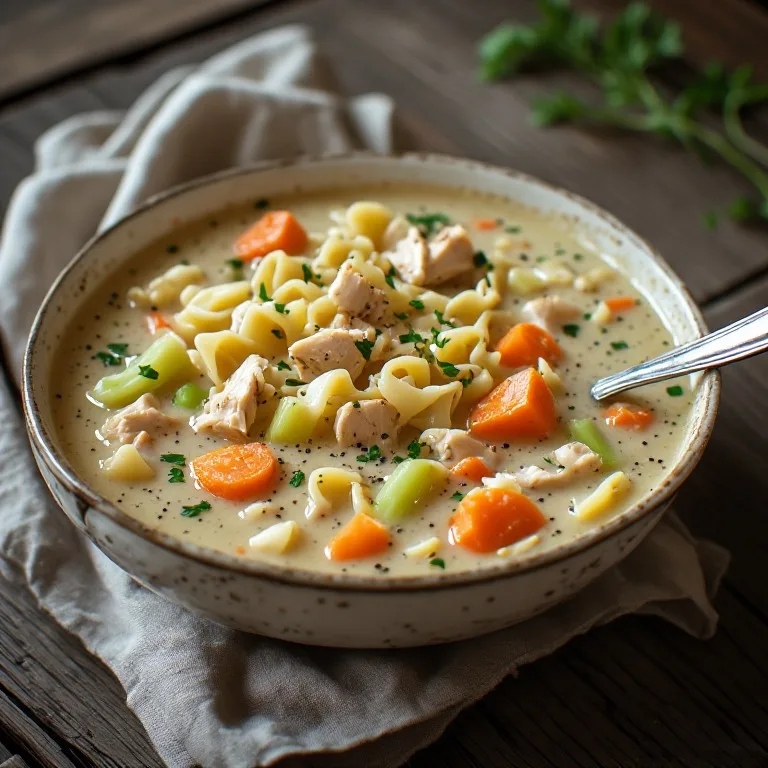
Chicken pot pie is the kind of dish that requires either the right occasion or a full Sunday afternoon. The soup version requires neither. TikTok’s food community latched onto this conversion because it’s categorically easier — no pastry to roll, no pie dish, no 45-minute bake — and produces a result that captures the essential comfort of the original: thick, creamy, golden-hued broth with tender chicken, soft carrots, bright peas, and that specific thyme-and-onion savoriness that makes pot pie taste like home.
Why the Soup Version Works
A pot pie’s filling, stripped of its pastry shell, is basically a very thick cream of chicken soup. The pastry serves two functions: it holds the filling together and it adds buttery, flaky richness and texture. In the soup version, the filling is loosened with extra broth so it’s pourable, and the pastry is replaced with puff pastry squares baked separately and floated on top. You get the same crispy, buttery flake in every bowl without needing to roll and blind-bake a crust.
The TikTok format that performed best showed the puff pastry squares being placed on top of the filled soup bowl — they float slightly, steam rises around them, and the visual immediately communicates warmth and comfort. It’s the kind of image that makes people want to reach through their phone.
The Mirepoix Foundation
Classic pot pie starts with a mirepoix: onion, celery, and carrot in equal measure, cooked slowly in butter until soft. This trio builds the savory, aromatic foundation that everything else is built on. Don’t rush this step — give the vegetables a full six to eight minutes to soften and sweeten. Onion that’s still sharp and crunchy will make the soup taste harsh. Onion that has softened to almost translucent contributes sweetness that the finished soup desperately needs to balance the richness of the cream.
Thyme is the non-negotiable herb here. It is the defining pot pie flavor. Use dried thyme rather than fresh — the flavor is more concentrated and better distributed throughout a cream-based soup. Add it early with the garlic so it blooms in the butter.
Getting the Cream Sauce Right
The roux — butter plus flour — is the thickening mechanism. After the vegetables are soft, sprinkle the flour directly over them and stir to coat every piece. Cook the flour for two minutes, stirring constantly. This cooks out the raw starch taste that can make cream soups taste pasty and chalky.
Add the broth in a slow, steady stream while whisking. If you pour too fast, the starch seizes into lumps before it has time to hydrate smoothly. Once all the broth is in, add the milk and cream. The soup should thicken visibly as it comes to a simmer — within five minutes it should coat the back of a spoon. If it seems thin after 10 minutes, whisk 1 tablespoon of cornstarch into 2 tablespoons of cold water and stir the slurry into the simmering soup.
The Puff Pastry Topping
This is optional but transformative. Frozen puff pastry (Pepperidge Farm is widely available) thaws on the counter in 30 to 40 minutes. Cut it into two-inch squares, brush with egg wash, and bake at 400°F for 12 to 14 minutes until deeply golden and visibly puffed. The squares can be made while the soup simmers and held at room temperature for up to two hours.
Place two or three squares on each bowl right at service. They’ll stay crispy for several minutes and then soften as they absorb the broth — which is also delicious, just different. If you want sustained crunch, serve them on the side for dipping.
Variations
Biscuit-Topped Version: Drop tablespoons of buttermilk biscuit dough (homemade or from a can) directly onto the hot soup surface in an oven-safe pot. Bake at 425°F for 12 to 14 minutes until the biscuits are golden on top and cooked through. This is the most dramatic presentation and the most satisfying textural experience.
Turkey Pot Pie Soup: Use Thanksgiving leftover turkey instead of chicken, and turkey broth if you have it. Add a pinch of dried sage alongside the thyme. The combination tastes unmistakably autumnal.
Dairy-Free Version: Use full-fat coconut milk in place of the cream and milk. The coconut flavor is subtle against the thyme and chicken. Use olive oil instead of butter for the roux. The result is lighter but still has a pleasant body from the roux thickening.