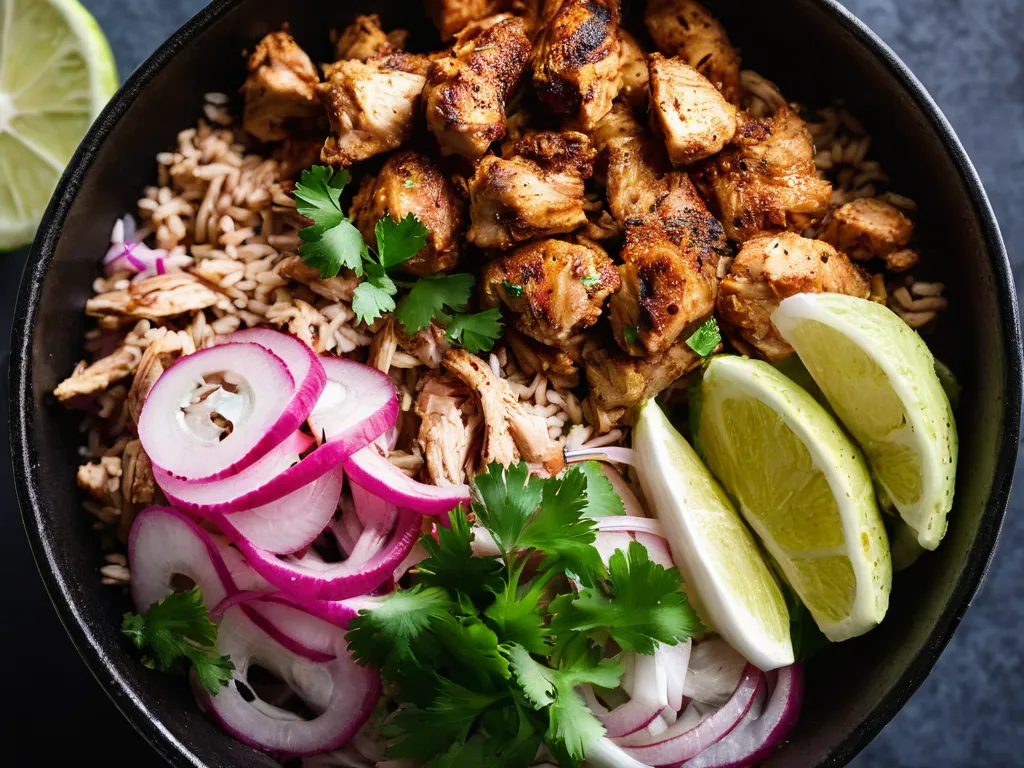
Chicken shawarma bowls became TikTok’s most-saved meal prep recipe because they solve a real problem: how do you make genuinely good food at home for a week of lunches without spending an hour every day cooking? The components take about 30 minutes to prepare on Sunday, store perfectly for five days, and assemble in two minutes each morning.
The other reason they went viral: the flavor is genuinely surprising. Most home cooks have never made shawarma before. That first bite — deeply spiced, charred at the edges, cut by the brightness of pickled onions and the richness of garlic sauce — is a legitimate revelation. This is not cafeteria meal prep.
TL;DR
Marinate chicken thighs overnight in a warm spice blend (cumin, coriander, turmeric, paprika, cinnamon, allspice, cardamom), sear on HIGH heat without moving for 5–6 minutes per side, slice thin, serve over rice with toum, quick-pickled onions, and hummus. Store components separately for five days of lunches.
What Is Shawarma?
The word comes from the Turkish “çevirme” — turning — which is exactly what the vertical rotisserie does. The technique originated with the Ottoman döner kebab and spread through the Levant (modern Syria, Lebanon, Palestine, Jordan) as the Ottoman Empire controlled the region in the 19th century. Each culture adapted it: Turkey kept it as döner, Greece developed gyros, the Arab world developed shawarma — same rotating-spit concept, genuinely different spice profiles and accompaniments.
Traditional street-cart shawarma uses stacked layers of spiced chicken (or lamb, or mixed meats) pressed onto a vertical rotating spit. A propane or charcoal burner heats one side; the fat from upper layers bastes the lower layers continuously as the meat turns; the outer caramelized layer is shaved off with a long blade as orders come in. This produces a ratio of caramelized crust to interior that you can’t perfectly replicate at home — but you can get close.
One unexpected legacy: Lebanese immigrants brought shawarma to Mexico in the 1960s, where it merged with local cooking traditions and eventually evolved — pork on the spit, achiote and chili marinade, pineapple on top — into tacos al pastor. The direct lineage from Ottoman döner to Lebanese shawarma to Mexican al pastor is one of the most underappreciated culinary chains in food history.
The bowl format is a modern Western adaptation. No traditional precedent exists for rice-based shawarma bowls; they emerged from the TikTok meal prep trend around 2020–2022, when creators discovered that the components stored and reheated better than shawarma wraps and that the rice format made the nutrition profile cleaner to communicate.
The Spice Blend
The spice mix is what separates shawarma from other seasoned chicken dishes. Most Western chicken recipes use one or two spices. Shawarma uses seven or eight — and the combination produces something that doesn’t taste like any individual ingredient.
Cumin is the base note: earthy, slightly smoky, deeply savory. It’s the loudest spice in the blend.
Coriander rounds the cumin with a slightly citrusy, floral note — they’re from the same plant (cilantro), and they work as a pair.
Turmeric adds the characteristic golden color and a faintly bitter, earthy undertone. Its active compound curcumin is fat-soluble, which is why marinating in olive oil matters — the turmeric’s flavor compounds dissolve into the fat and carry into the meat.
Paprika (smoked) adds color and a mild smoky sweetness. Regular paprika works but smoked paprika is closer to the char-forward flavor of the real thing.
Cinnamon is the ingredient that surprises people. Used in small amounts in savory cooking — a Middle Eastern, North African, and South Asian tradition — it adds warmth and depth without making the dish taste like dessert. It also caramelizes beautifully under high heat.
Allspice (not a blend of spices — it’s a single dried berry from the Pimenta dioica plant) adds a clove-like, slightly peppery complexity that’s native to Levantine spice profiles.
Cardamom adds a faintly floral, almost menthol note. Used sparingly, it’s a background element that adds something difficult to name — spice professionals call it “exotic” or “perfumed.”
The combined effect: a deeply savory, warm, complex flavor that reads as unfamiliar but immediately appealing to Western palates. It’s why shawarma travels so well culturally.
Why Chicken Thighs
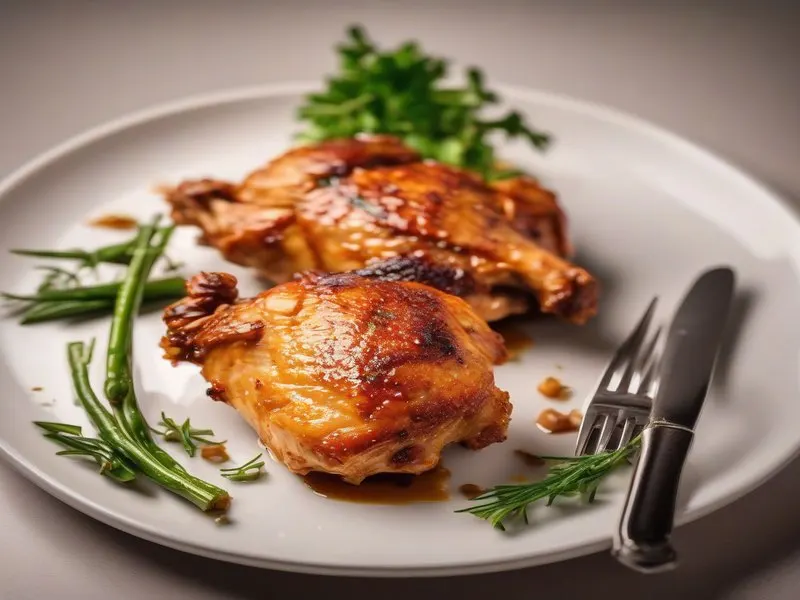
Thighs contain significantly more intramuscular fat than breasts. That fat does three things here: it carries the fat-soluble spice compounds (cumin, coriander, turmeric, cinnamon) deeper into the meat; it keeps the interior moist at the high cooking temperatures required for charring; and it bastes the surface continuously as it melts out, producing a self-basting effect that mimics the rotisserie.
Breast meat cooked to the same exterior char temperatures will be dry and stringy. Thighs at the same temperature are still juicy. For this recipe, there is no good substitute.
Bone-in thighs work if you have them — the bone adds flavor — but boneless is far easier to slice thin for bowl assembly.
The Marinade Science
An extended marinade matters here more than it does for most recipes.
Lemon juice: The acid partially denatures the surface proteins, creating microscopic texture changes that help the spice rub bind. It also begins tenderizing the connective tissue. Don’t over-marinate: more than 12–24 hours of acid exposure makes the surface mushy.
Olive oil: The fat-soluble spice compounds (turmeric, coriander, cinnamon) dissolve into the oil, which carries them into the meat’s fat layer. A dry spice rub can’t do this.
Garlic: Raw garlic in the marinade contributes allicin (the compound responsible for garlic’s sharp bite), which mellows under high heat into sweeter, roasted garlic notes.
Time: Salt draws moisture out initially, then osmotic pressure reverses and drives it back in — carrying dissolved flavors with it. 2 hours gets to the surface; overnight reaches the interior. The flavor difference between 2-hour and overnight is significant and worth planning for.
The High-Heat Method
The goal at the pan: recreate the char of the rotisserie.
The Maillard reaction — the protein-sugar browning reaction responsible for the complex flavors in seared meat, bread crusts, and roasted coffee — begins around 280–300°F on the food surface. The cinnamon and paprika in the marinade contain sugars that caramelize beginning around 320°F. A properly preheated cast iron pan running at high heat produces surface temperatures of 400–500°F on the food contact side.
Two rules: get the pan genuinely hot before the chicken touches it (2 minutes over high heat), and do not move the chicken for the first 5–6 minutes. Maillard browning requires sustained thermal contact. Moving the chicken releases steam and resets the contact — you get pale, steamed meat instead of char.
The char is not a mistake. Dark spots at the edges of the spice crust are exactly what makes this taste like shawarma.
Sheet pan alternative: If you’re cooking for a crowd or want hands-off cooking, spread marinated thighs on a sheet pan and roast at 425°F for 22–25 minutes. They won’t char as dramatically, but you can finish under the broiler for 3–4 minutes to get some surface caramelization. The cast iron method produces better results in the crust; the sheet pan produces more even interior cooking.
Air fryer: 380°F for 16–18 minutes, flipping once at 10 minutes. Good caramelization from the circulating air; less dramatic char than cast iron. For meal prep, this method’s hands-off convenience makes it worth considering. The air fryer technique for chicken thighs is covered in detail here.
Loaf pan rotisserie hack: Stack the marinated chicken thighs vertically in a loaf pan, pressing them tightly together to replicate the compression of the rotisserie stack. As the thighs roast at 425°F for 30–35 minutes, the layers baste each other with rendered fat — exactly what happens on the spit. Finish under the broiler for 3–5 minutes to caramelize the exposed surfaces. Slice thin from the loaf. This is the closest home approximation of the rotisserie experience.
Toum: The Real Garlic Sauce
Most TikTok chicken shawarma recipes call for “garlic yogurt sauce” — yogurt + garlic + lemon. That’s an easy substitute, but toum is the real thing and it’s worth making.
Toum is a Lebanese garlic sauce: pure garlic emulsified with a large amount of neutral oil and lemon juice, resulting in a sauce that is white, fluffy, spreadable, intensely garlicky, and completely different from any yogurt-based sauce. Think aioli but with no egg and about five times as much garlic.
The emulsification works because crushed garlic releases amphiphilic compounds — proteins and mucilaginous polysaccharides with both a water-loving and an oil-loving end — that surround the oil droplets and hold them suspended in the lemon juice and the water from the garlic itself, exactly the way egg yolk does in mayonnaise. (The sharp sulfur compounds like allicin drive the flavor, not the emulsion.) Garlic’s emulsifiers are less stable than egg-yolk lecithin — which is why toum breaks more easily than mayonnaise and demands slower technique — but they hold when the oil is added in a thin enough stream and the garlic is processed fine enough to maximize surface area.
Key technique points:
- Use neutral oil, NOT olive oil. Olive oil breaks and turns bitter when processed intensely; grapeseed, canola, or sunflower oil are correct.
- Add oil in a thin stream. Start with drops, then a thin pour once the emulsion forms. Rushing produces a broken sauce.
- Cold ingredients help. Use cold garlic, cold lemon juice, and ice water. Room-temperature or warm ingredients make the emulsion less stable.
- A food processor is required. Hand-whisking doesn’t generate enough speed to create the fine garlic emulsion.
If the toum breaks (becomes oily), it can sometimes be rescued by starting with fresh garlic and slowly incorporating the broken sauce. Easier to start over.
The Greek gyro equivalent is tzatziki (yogurt + cucumber + dill + garlic). The Greek gyro wrap version with tzatziki is covered here.
Quick-Pickled Onions
Traditional Levantine shawarma is served with pickled turnips — lifit — which turn bright pink from beet juice added to the pickling brine. They’re mild, crunchy, and bright with acidity.
The TikTok version substitutes quick-pickled red onions, which are faster (30 minutes vs. several days for traditional turnips) and more widely available. The color comes from the red onion’s anthocyanin pigments reacting with the acid. Both serve the same function: cutting through the richness of the chicken and garlic sauce.
For quick-pickled onions: 1 medium red onion + ½ cup red wine vinegar + 1 tsp sugar + ½ tsp salt, left to sit at room temperature for 30 minutes minimum. The longer they sit, the more mellow they become. Refrigerated, they keep for two weeks and improve over time.
Meal Prep Guide
This is the reason the recipe went viral. Stored separately, the components remain genuinely good for five days:
| Component | Storage | Duration |
|---|---|---|
| Chicken | Airtight container, refrigerated | 5 days |
| Rice | Airtight container, refrigerated | 5 days |
| Pickled onions | Jar with lid, refrigerated | 2 weeks |
| Toum | Airtight container, refrigerated | 2 weeks |
| Hummus | Airtight container, refrigerated | 1 week |
| Tomatoes/parsley | Add fresh at serving | — |
Critical: Do NOT combine chicken and rice in the same container. The chicken releases moisture that the rice absorbs overnight, producing gummy, mushy results. Pack separately and combine at serving.
Reheating: the chicken is best reheated in a dry skillet over medium heat for 2–3 minutes per side — this re-crisps the exterior. Microwave works (90 seconds, covered) but softens the crust.
Variations
Classic pita wrap: Warm a pita or flatbread in a dry skillet, layer with hummus, sliced chicken, pickled onions, tomatoes, parsley, and toum, and fold. This is the more traditional format. For meal prep, wraps don’t hold as well — the bread goes soggy overnight — so the bowl format is better for advance packing.
Lamb shawarma: Replace the chicken with 1.5 lbs boneless lamb shoulder, cut into 1-inch pieces. Add ½ teaspoon more cinnamon and a pinch of cloves. Lamb is fattier and can handle a more assertive spice blend. Cook similarly over high heat but longer — lamb shoulder should reach 165°F internally.
Cauliflower shawarma (vegan): Cut one large cauliflower into thick steaks or florets, marinate in the same spice blend with olive oil and lemon, roast at 425°F for 25–30 minutes until charred and caramelized. The cauliflower absorbs the marinade differently than chicken but produces genuinely good results. Use tahini-lemon sauce instead of toum.
Low-carb bowl: Replace the rice with shredded romaine and cucumber. Cauliflower rice also works and is less heavy. The chicken, toum, and pickled onions are already low-carb — it’s the rice that adds most of the carbohydrates.
Cost Comparison
| Restaurant (Mediterranean fast-casual) | Home batch (4 servings) | |
|---|---|---|
| Chicken shawarma bowl | $14–18 each | ~$14–16 total for 4 |
| Per serving | $14–18 | $3.50–4 |
| Time to first bowl | 20–45 min (travel, order, wait) | 15 min (after overnight marinate) |
The spices and pantry items — olive oil, lemon, garlic, vinegar — are reused across many recipes and have essentially zero marginal cost per batch once purchased. The primary cost is the chicken and rice.
Compared to other high-protein meal prep formats, chicken shawarma bowls cost less than Emily Mariko-style salmon rice bowls (salmon is more expensive) and deliver more flavor than plain grilled chicken. Chipotle-style burrito bowls are the closest comparison in the TikTok meal-prep space — shawarma wins on spice complexity; Chipotle-style wins on familiarity.
For another high-impact chicken technique in the same “marinate and sear” family, lemon butter chicken thighs use a different flavor profile (European rather than Levantine) with similar technique. Garlic confit can replace the raw garlic in the marinade for a milder, richer garlic flavor if raw garlic is too sharp for you.