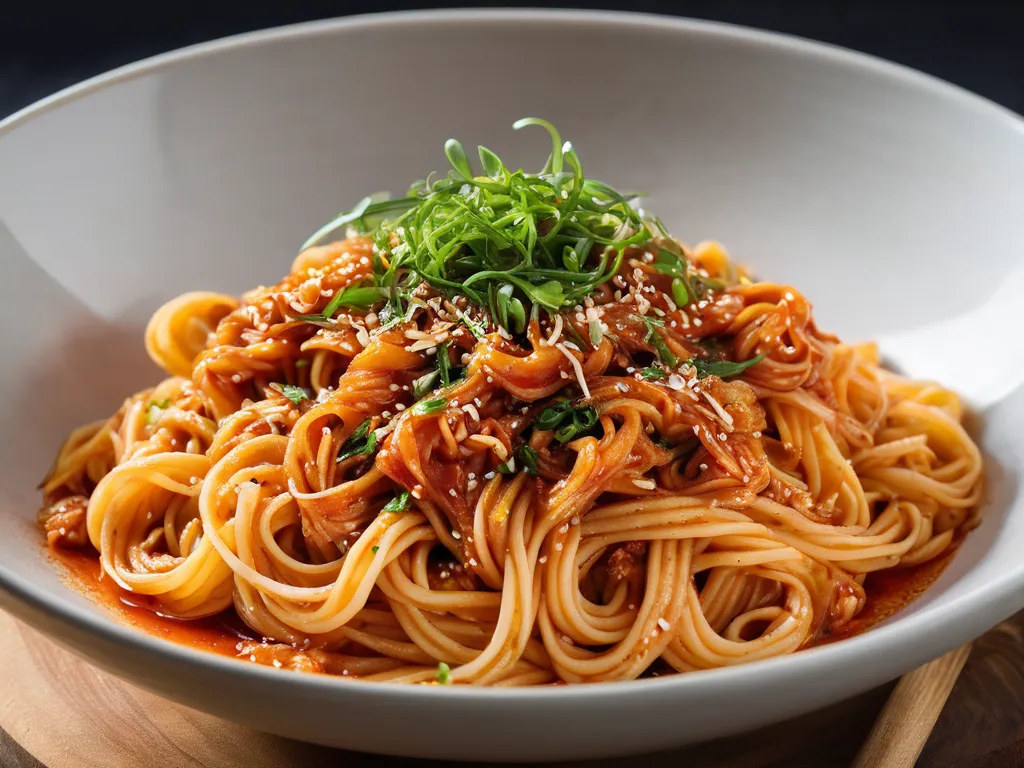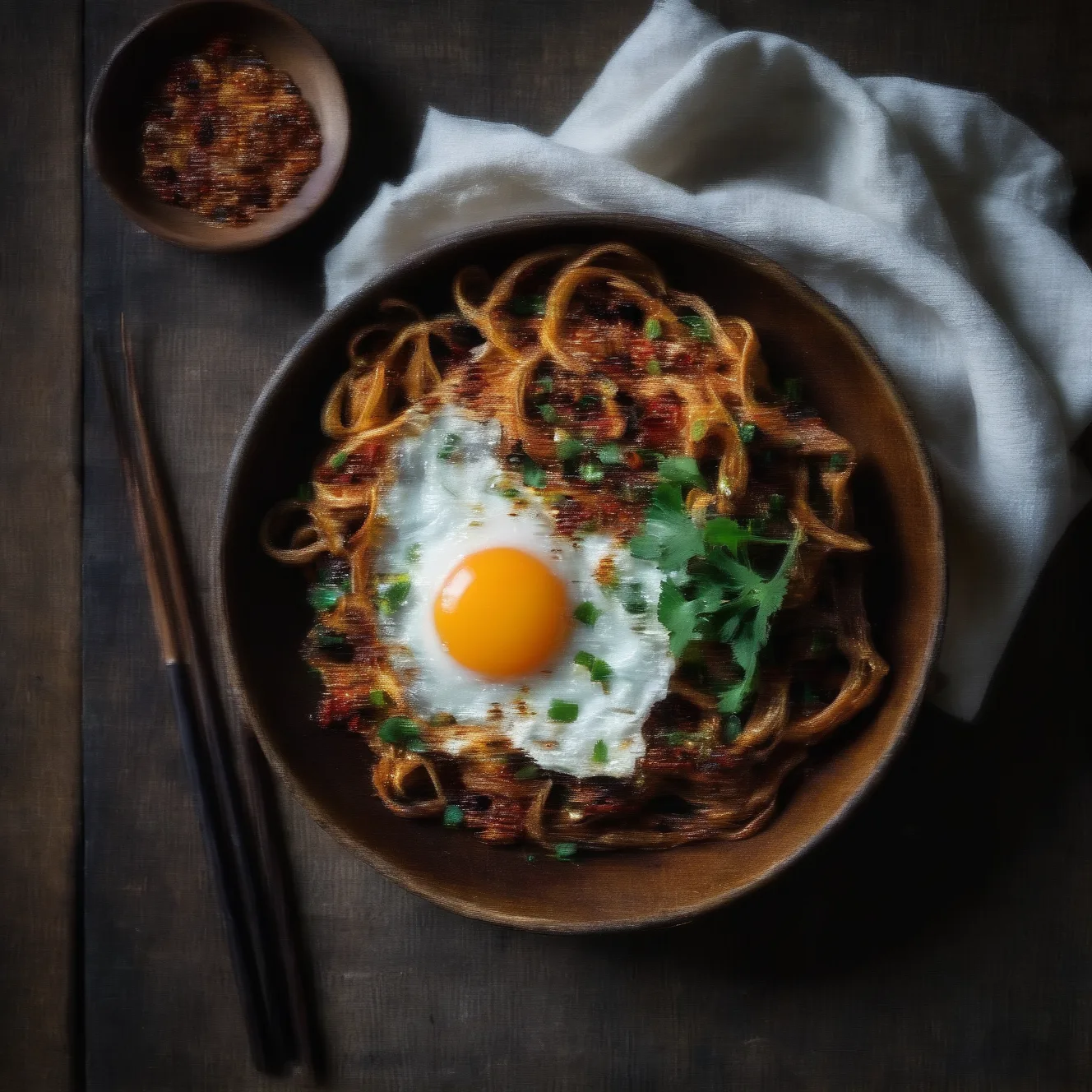
The sound of hot oil hitting chili flakes became one of TikTok’s most iconic food sounds. Sichuan chili oil noodles — simple, fiery, and deeply flavorful — went viral because the technique is as dramatic as the result: the three-second sizzle shot launched a million recreations. The finished bowl looks like it came from a Sichuan restaurant, takes 12 minutes, and costs less than $3 to make.
TL;DR
Cook wide wheat noodles al dente. Build a sauce base with soy sauce, black vinegar, sesame paste, and raw garlic. Pour hot oil (310°F) over chili flakes and Sichuan peppercorns for the signature sizzle. Toss noodles with sauce and chili oil. Top with scallions, sesame seeds, and an egg. The key variables: oil temperature, noodle width, and the black vinegar — don’t substitute rice vinegar.
Why This Went Viral
Two things drove the virality. First, the visual: the dramatic red bloom when hot oil hits chili flakes, filling the screen with color and steam. Second, the surprise that the technique looks complex but is actually 12 minutes start to finish with no special skills.
The dish is rooted in Sichuan and Shaanxi Chinese cooking traditions — specifically the hand-pulled biang biang noodle tradition from Shaanxi province and the ma la (numbing-spicy) flavor profile that defines Sichuan cuisine. TikTok stripped the technique down to its most essential form: build a sauce, make chili oil, toss noodles. That simplicity is the point.
Which Noodles to Use
The noodle choice matters more than most ingredient decisions in this dish. The chili oil’s intensity needs a thick, chewy noodle to stand up to it — thin noodles don’t hold the sauce and turn soggy quickly.
Best options, in order:
Wide dried wheat noodles: The most accessible choice at any grocery store. Dried flat linguine (yes, Italian linguine) works extremely well — the width and thickness are nearly identical to Shaanxi-style wheat noodles. Look for noodles between 3–5mm wide.
Fresh hand-pulled noodles (lamian): If you have access to an Asian grocery store, fresh hand-pulled noodles are the most satisfying texture in this dish — they’re slightly irregular, very chewy, and absorb the sauce at the edges while staying firm in the center. Cook time is shorter (2–3 minutes vs. 8–10 for dried).
Biang biang noodles: The traditional pairing from Shaanxi province — extremely wide (sometimes 3–4 inches), flat, hand-torn noodles. Their large surface area catches enormous amounts of sauce. Not widely available at most stores, but the width is something you can approximate by pulling fresh pasta dough.
Udon: A solid substitute — thick, chewy, and widely available frozen or fresh at Asian grocery stores. Japanese wheat-based, slightly milder than Chinese wheat noodles.
Avoid: Rice noodles (too delicate, absorb oil differently), thin ramen noodles (become mushy quickly in the sauce), angel hair (wrong texture entirely).
The Sizzle: Oil Temperature and the Bloom
The dramatic sizzle when hot oil meets chili flakes is the central technique in this recipe — and oil temperature is where most home cooks go wrong.
What you’re looking for at ~310°F: The oil shimmers and moves slightly when you tilt the pan. A small piece of scallion dropped in sizzles immediately and bubbles actively. The oil hasn’t smoked.
What happens when the oil hits the chili flakes: The heat rapidly drives off any surface moisture in the dried chili flakes, then begins extracting fat-soluble pigment compounds (capsanthin, capsorubin) from the chili flesh. These pigments are what turn the oil deep red. Simultaneously, the Maillard reaction begins on the exterior of the chili flakes themselves, creating toasted, smoky aromatic compounds. You’re essentially flash-frying the chili flakes in a process that takes about 30 seconds.
Too hot (380°F+): The chili flakes burn instantly — the capsanthin breaks down, the oil turns brownish-red, and the flavor is bitter and acrid instead of toasted and fruity. If you can smell acrid rather than toasted, the oil was too hot.
Too cool (under 270°F): The chili flakes don’t bloom properly. The pigments don’t extract, the oil stays pale, and you lose the aromatic toasting effect. The result is greasy rather than aromatic.
The Numbing Science: Sichuan Peppercorns and Ma La
Sichuan peppercorns (花椒, huājiāo) are not pepper. They’re the dried outer husks of berries from the Zanthoxylum genus — an entirely different plant family from black pepper (Piper nigrum) and chili peppers (Capsicum). Their flavor is floral, slightly citrusy, and piney — and their defining characteristic is a tingling, numbing sensation called “ma” (麻).
The active compound is hydroxy-alpha-sanshool. Unlike chili heat, which works by triggering the TRPV1 pain-and-heat receptor, sanshool acts mainly on the touch-sensing nerves: it excites the light-touch mechanoreceptors (the same fibers that detect a feather brushing your skin), primarily by blocking a class of “leak” potassium channels (KCNK / two-pore channels) that normally keep those neurons quiet. With those brakes released, the neurons fire in rapid bursts — roughly 50 cycles per second in lab measurements — which the brain interprets as buzzing, tingling, or vibration rather than heat. This is why the sensation feels electric and physical rather than purely “spicy.”
Combined with chili heat (“la,” 辣), you get “ma la” (麻辣) — the signature dual-sensation of Sichuan cooking: numb and hot simultaneously. The numbing sensation paradoxically makes the spiciness more pleasurable — it dampens the pain response while amplifying the aromatic and warming aspects of the chili.
For this recipe, use ground Sichuan peppercorns (you can buy them pre-ground, or toast whole peppercorns briefly in a dry pan then grind with a mortar and pestle). The amount in the recipe (1/2 teaspoon ground) produces a noticeable ma sensation without overwhelming the dish. Add more if you want the full ma la experience.
Sauce Ingredient Breakdown
Light soy sauce: Use light (thin) soy sauce here, not dark. Light soy sauce is salty and umami-forward; dark soy sauce adds color and slight sweetness but is more viscous and less salty — it’s used for braising and coloring. If you only have standard American soy sauce (like Kikkoman’s regular), it’s closer to light soy and works fine. Coconut aminos work as a lower-sodium, slightly sweeter substitute.
Chinese black vinegar (Chinkiang/镇江): The most important ingredient after the chili oil. Chinkiang vinegar is made from glutinous rice and has a malty, complex, slightly sweet acidity unlike any Western vinegar. It’s available at Asian grocery stores and many Whole Foods. See the FAQ below for substitutes — but try to find it.
Sesame paste: Chinese sesame paste is made from toasted unhulled sesame seeds ground with sesame oil — darker and more intensely nutty than Middle Eastern tahini. Tahini substitutes well with a few drops of toasted sesame oil added. The sesame paste is what gives the sauce its creaminess and helps it cling to the noodles.
Raw garlic: Must be raw, not cooked. The heat of the hot noodles cooks the garlic slightly as you toss — you get both the aromatic sharpness of raw garlic and the slight mellowing of brief heat exposure. Grating on a microplane produces a paste that distributes more evenly than mincing.
Homemade Chili Oil vs. Store-Bought
The recipe as written makes fresh chili oil in the pan — the classic technique. It produces the most aromatic result because the chili compounds bloom at their peak and the oil is used immediately.
If you want to make a larger batch of chili oil to keep in the fridge for a month of noodle bowls, scrambled eggs, dumplings, and everything else:
Batch chili oil (makes about 1 cup, lasts 1–2 months refrigerated):
- 1 cup neutral oil
- 1/2 cup gochugaru or Chinese chili flakes
- 2 tablespoons ground Sichuan peppercorns
- 2 whole star anise
- 1 small cinnamon stick (1-inch)
- 2 bay leaves
Heat oil with star anise, cinnamon, and bay leaves over medium heat for 5 minutes (they infuse the oil with a subtle background complexity). Remove the whole spices. Bring oil to 310°F. Pour over chili flakes and Sichuan peppercorns. Let cool completely. Transfer to a jar. Keeps refrigerated for up to 2 months; the flavor deepens over the first week.
The best store-bought options if you don’t want to make it: Lao Gan Ma Spicy Chili Crisp (the market standard — thick, textured, slightly crispy; widely available at Asian grocery stores and on Amazon), Fly By Jing Sichuan Chili Crisp (more Sichuan peppercorn-forward, slightly higher price point, available at Whole Foods), or S&B La-Yu Chili Oil (cleaner and more oil-based, less textured, good for purists). Use 2–3 tablespoons and skip the oil-heating step.
Variations
Dan dan noodle style: Replace the black vinegar with 1/2 tablespoon rice vinegar and add 1 teaspoon peanut butter alongside the sesame paste. Top with a spoonful of spiced ground pork (brown 100g ground pork with doubanjiang, soy sauce, and Sichuan peppercorns). This moves the dish toward the PF Chang’s dan dan noodle territory — the full dan dan noodle recipe is here.
Cold sesame noodles: Let the noodles cool to room temperature (or run briefly under cold water). Double the sesame paste to 2 tablespoons and add 1 tablespoon peanut butter. Serve at room temperature. The cold version is closer to Sichuan liangpi (cold skin noodles).
With crispy fried shallots: Slice 2 large shallots into thin rings. Fry in 1 cup of neutral oil at 325°F until golden brown (4–6 minutes). Drain and salt immediately — they will crisp further as they cool. Add these to the finished noodles for a textural contrast that makes the dish noticeably better.
Spicy garlic noodles (Cantonese style): Omit the Sichuan peppercorns. Use 4 cloves of garlic (sliced, not minced) and fry them gently in the oil at low heat for 2–3 minutes before raising the temperature and pouring over the chili flakes. The fried garlic adds crunch and a different aromatic depth than raw garlic in the sauce base.
What to Serve With It
Chili oil noodles are intensely flavored — light, cooling accompaniments work best alongside.
Cucumber: Smashed cucumber (bang bang style) with a little rice vinegar and sesame oil is the traditional pairing. The cool crunch cuts the heat and provides textural contrast.
Soft-boiled egg: The yolk acts as a sauce thickener when broken, enriching and tempering the chili oil. Marinated soft-boiled eggs (ramen-style — soy sauce, mirin, water, 30-minute soak) add another layer. A fried egg with a runny yolk works equally well.
Simple pickles: Quick-pickled daikon or carrots (rice vinegar + salt + a pinch of sugar, 15 minutes) provide acid relief between spicy bites.
Bok choy: Blanched baby bok choy (60 seconds in boiling salted water, shocked in ice water) served alongside is the cleanest, most traditional complement.
For a more substantial meal with the same flavor universe, the instant ramen upgrade uses some of the same pantry ingredients and works well as a weeknight double. The egg fried rice uses the same sesame oil, soy sauce, and egg format if you want something less spicy from the same pantry.
Cost Comparison
| At a Sichuan restaurant | At home | |
|---|---|---|
| Chili oil noodles (2 portions) | $26–32 total | $5–7 total |
| Per serving | $13–16 | $2.50–3.50 |
| Time to table | ~30 min (wait, order, serve) | ~12 min |
The pantry investment (bottle of Chinkiang vinegar: $3–5; Chinese sesame paste: $4–7; Sichuan peppercorns: $3–5) makes about 20–30 batches. After that, the recurring cost is noodles ($1.50 for 200g) and oil ($0.30 per batch). The per-bowl cost drops below $2 for pantry regulars.