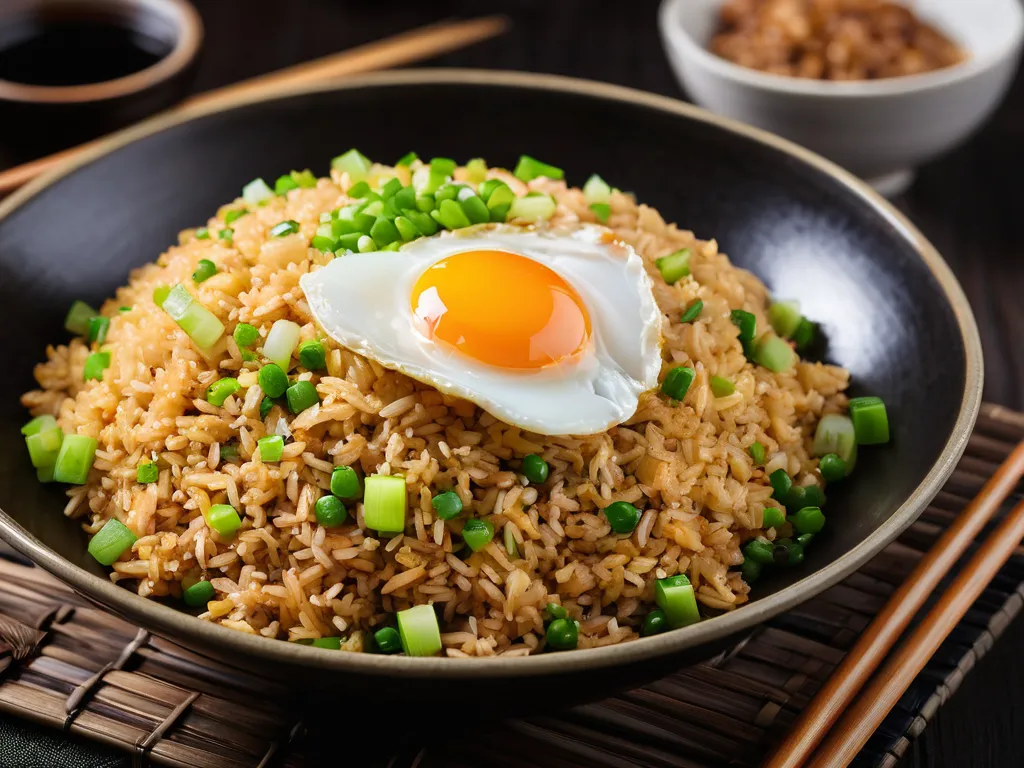
Uncle Roger would not be proud of most homemade egg fried rice. He would say “haiyaa.” The rice is wet, the wok is cold, and the eggs are overcooked and blended in so thoroughly you can barely find them. But the technique that makes restaurant egg fried rice work — real day-old dried rice, screaming-hot wok, fast hands — is not actually hard to replicate at home. It just requires understanding two principles.
The Uncle Roger Origin Story
In July 2020, British-Malaysian comedian Nigel Ng posted a reaction video to a BBC Food tutorial on egg fried rice presented by Hersha Patel. The issues: she drained the rice in a colander under running water (adding moisture to rice that needs to be dry), cooked it at medium heat in what appeared to be a non-stick pan, and added mushrooms. Uncle Roger’s reaction — equal parts comedic and genuinely horrified — pulled in over 18 million views on YouTube (and tens of millions more in re-uploads across Twitter, TikTok, and Facebook) and turned into an ongoing media franchise. Patel, to her credit, found it funny and later filmed collaboration videos with Ng.
The popularity was never just about the comedy. Underneath the jokes was a real lesson: the technique matters enormously for fried rice, and most Western recipes get it wrong in specific, correctable ways.
The Two Things That Actually Matter
Everything else about egg fried rice is preference. These two are non-negotiable:
1. Dry, Cold, Day-Old Rice
Freshly cooked rice is wet. Surface moisture turns fried rice into steamed rice in the wok — it clumps, it’s soft, and it absorbs sauce unevenly. Day-old rice has lost that surface moisture. Each grain is dry enough to fry individually on the hot wok surface, pick up a slight crust, and absorb sauce evenly across the batch.
The fastest method: cook your rice with slightly less water than usual (1:1.5 ratio instead of the standard 1:1.75 for jasmine). Spread it on a sheet pan or wide dish in a layer no more than 1 inch deep. Refrigerate, uncovered, for at least 4 hours. Overnight is better. The exposed surface dries out quickly, and cold rice breaks apart into individual grains instead of clumping.
If you’re starting from fresh rice: spread it on a baking sheet, run a fan on it for an hour, then refrigerate for 2 hours minimum. It won’t be quite as good as overnight, but it’s workable.
2. A Properly Hot Wok
This is where home cooking breaks down. Restaurant wok burners run 40,000 to 200,000 BTU — serious restaurant setups run 100,000 BTU or more, and the wok surface reaches 650–750°F. A good home gas range tops out around 8,000 to 20,000 BTU. You cannot get true wok hei — that smoky, roasted aroma from pyrazines and furans produced at extreme heat — on a home stove.
What you can do: get as close as possible. Use a carbon steel wok or a cast iron pan (they retain heat better than thin stainless). Turn the burner to maximum and leave the wok on it, empty, for at least 90 seconds before adding oil. The oil should shimmer and begin to smoke within 10 seconds of hitting the pan. If it doesn’t, the pan isn’t hot enough. Add more heat, wait longer.
Why Each Ingredient Is Here
Jasmine rice: Long-grain, relatively low starch content, grains that dry and separate easily after refrigeration. Avoid short-grain Japanese or Korean rice — it’s stickier and clumps.
3 eggs for 2 servings: This is the right ratio. One egg per cup of rice, plus one more. Fewer eggs and you lose the eggy richness; more and it becomes scrambled eggs with rice.
Oyster sauce, not just soy sauce: Oyster sauce adds sweetness and depth that soy sauce alone can’t provide. The combination — soy for salinity and color, oyster for body and umami — is what makes this taste like the takeout version.
MSG: A ¼ teaspoon. Not a tablespoon, a ¼ teaspoon. At this quantity it adds umami depth without any discernible “MSG flavor.” The FDA classifies it as generally recognized as safe; double-blind studies have consistently failed to replicate the “Chinese Restaurant Syndrome” effects originally attributed to it. It’s glutamate — the same compound that makes parmesan, tomatoes, and mushrooms taste savory. If you choose to skip it, add a small splash of fish sauce instead to compensate.
Sesame oil off heat: Sesame oil burns at high temperatures and loses its flavor when cooked. Adding it after the wok comes off heat gives you the aroma without the bitterness.
Technique Step by Step
Rice Preparation (Day Before)
Cook about ¾ cup dry jasmine rice (yields the 2 cups cooked this recipe needs, serving 2). Use roughly 1 cup plus 2 tablespoons water — a 1:1.5 ratio, slightly less than the usual 1:1.75, to produce a drier grain. Cool, spread on a sheet pan, refrigerate uncovered overnight.
Mise en Place
Set up everything before the wok goes on: sauce already mixed, eggs beaten, scallions cut, garlic minced. Once the wok gets hot, you are moving constantly and cannot stop to chop.
Eggs First, Then Out
The eggs go in first, get partially cooked, and come back out. If you add them with the rice, they blend in completely and disappear — you get yellow rice, not egg fried rice with egg in it. Scramble until just set (30 seconds), remove to a bowl. They’ll finish when you return them later.
The Rice Press-and-Rest Method
Add the cold rice to the smoking wok. Resist the urge to immediately stir. Press the rice against the hot surface with the spatula and leave it alone for 30 to 45 seconds. The grains in contact with the wok surface will develop a very light crust. Then toss, press again, rest again. This cycle — press, rest, toss — builds the texture that separates fried rice from boiled rice served at room temperature.
Sauce Around the Edge
Pour the soy and oyster sauce mixture around the rim of the wok, not directly onto the rice. It hits the superhot metal first, sizzles, and concentrates slightly before it contacts the rice. This gives you better soy flavor distribution and a little bit of the Maillard reaction on the sauce itself.
Variations
Char siu pork: Add ½ cup diced char siu (Chinese BBQ pork) with the aromatics before the rice. It’s the most common protein addition at Cantonese restaurants and adds a sweet smokiness.
Shrimp: 6–8 small shrimp, peeled and deveined. Add with the aromatics, cook 60–90 seconds until pink, then proceed.
Chicken: Slice thinly, velveted (marinated in soy, cornstarch, and a pinch of baking soda for 20 minutes). Sear before the aromatics, remove, return with the eggs.
Vegetarian: Omit oyster sauce, substitute with vegetarian oyster sauce or hoisin. Add frozen edamame or diced firm tofu (pressed well) with the aromatics.
Kimchi fried rice: Replace oyster sauce with 2 teaspoons gochujang, add ½ cup well-drained kimchi with the aromatics. Top with a fried egg. Korean-adjacent, not traditional, but excellent.
Common Mistakes
Using fresh rice: The single most common failure. If the rice is wet, nothing else matters.
Cold wok: If the oil doesn’t shimmer and begin to smoke within 10 seconds, you need more heat and more time. A cold wok produces steamed rice.
Adding everything at once: Eggs first (then out), aromatics, rice, sauce, eggs back. The order matters because each component needs direct contact with the hot wok.
Over-stirring: Constant stirring prevents the rice from making contact with the hot surface. Press, rest, toss. Not toss continuously.
Too much soy sauce: Adding too much liquid at once — soy sauce or otherwise — drops the wok temperature and steams the rice. Stick to the measured amounts.
Storage and Reheating
Egg fried rice keeps 3–4 days in an airtight container in the fridge. To reheat, add a splash of water (1 tablespoon per serving), cover, and microwave on high for 90 seconds, stirring once. Or reheat in a hot pan with a few drops of oil — this option partially restores texture.
Don’t freeze egg fried rice; the egg texture becomes rubbery after freezing.
Cost Breakdown
| Ingredient | Approx. Cost |
|---|---|
| 2 cups cooked jasmine rice (from ~¾ cup dry) | $0.25 |
| 3 eggs | $0.75 |
| Soy sauce + oyster sauce | $0.30 |
| Scallions, garlic | $0.30 |
| Oil | $0.15 |
| MSG (pinch) | $0.05 |
| Total (serves 2) | ~$1.80 |
| Per serving | ~$0.90 |
Chinese takeout egg fried rice: $4–7 per person. Restaurant wok hei included.
More Fried Rice Recipes
- Copycat Panda Express Fried Rice — the fast food version with frozen vegetables and a sweeter soy profile; designed to match the specific Panda Express style
- Copycat Benihana Chicken Fried Rice — hibachi-style, garlic butter and soy, cooked on a flat griddle instead of a wok; the Japanese-American steakhouse format
- Viral TikTok Sushi Bake — the deconstructed sushi casserole that uses seasoned rice as a base; the party dish version of Japanese-inspired flavors
- Viral TikTok Crack Chicken — the slow cooker recipe for when you need something equally easy but entirely different