

Viral TikTok Chopped Italian Salad — Every Bite Has Every Flavor
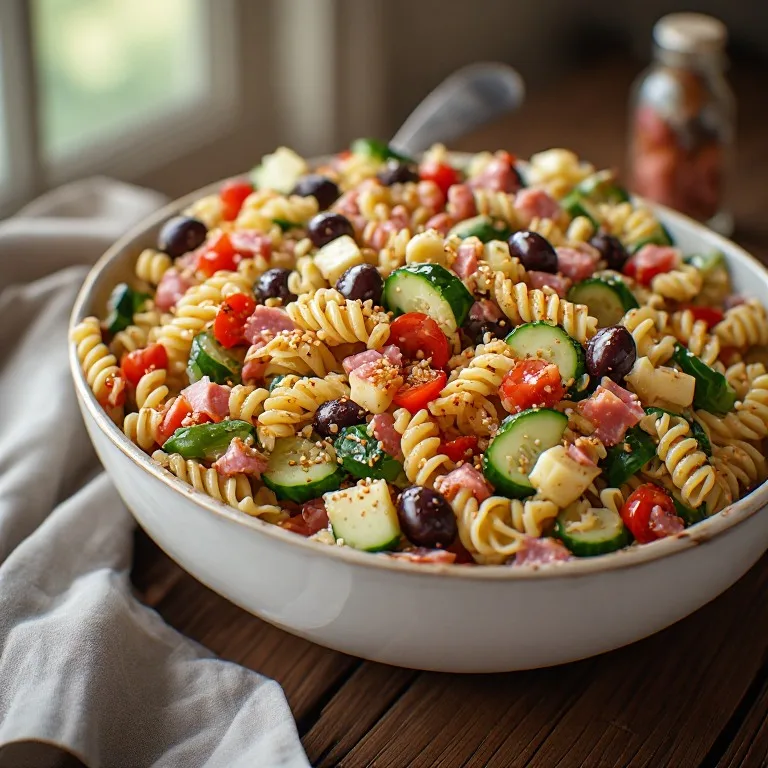
The idea is simple enough to fit in a single sentence: chop every ingredient to the same size, dress them in bold Italian vinaigrette, and let them sit together for ten minutes before serving. That’s it. That’s the whole technique. And yet when @feelgoodfoodie posted her version in 2023, the video racked up millions of views and sent an entire generation of home cooks to their cutting boards to try it.
The reason it worked — the reason it’s still being made and remade and riffed on years later — is that the concept reveals something genuinely useful about cooking. Salads are usually built as a hierarchy. A big leaf base, medium-sized toppings, small crumbles, and a drizzle of dressing that inevitably settles at the bottom. You get a forkful of mostly romaine, then one that’s mostly salami, then chickpeas and not much else. The experience is uneven.
The chopped salad dissolves that hierarchy entirely.
The Chop Is the Technique
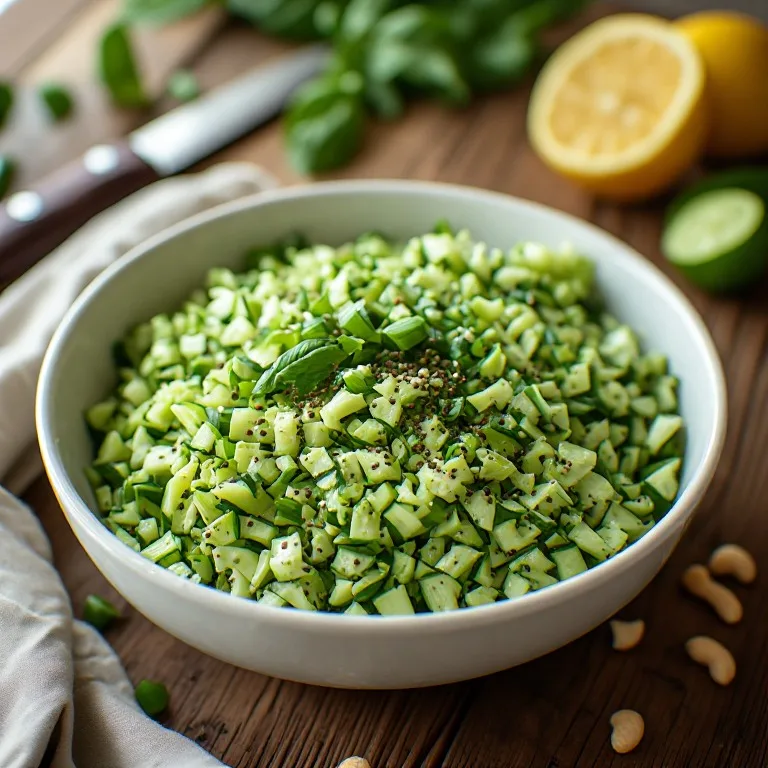
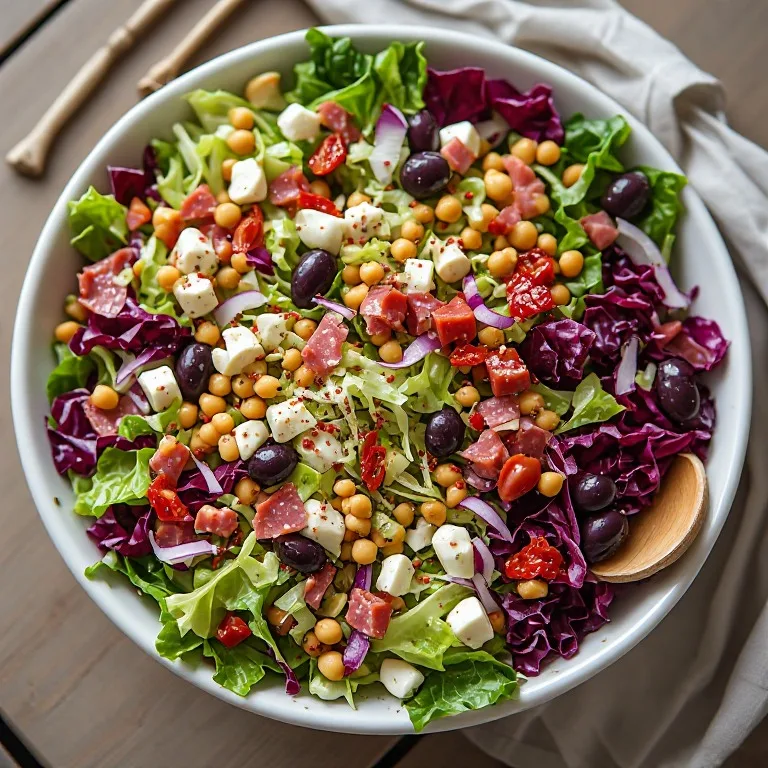
Everything goes to the same rough size — about a quarter-inch. The romaine, the radicchio, the salami, the mozzarella, the olives, the sun-dried tomatoes, the pepperoncini rings, the red onion. When you toss it all together and drive a fork in anywhere, you get a little of everything. The bitter radicchio lands in the same bite as the creamy mozzarella. The briny olive sits next to the chewy sun-dried tomato. The heat from the pepperoncini cuts through the richness of the salami. Every single forkful is complete.
This requires a sharp knife and some patience. A dull blade will bruise and tear the greens rather than slicing cleanly — you’ll end up with wilted, watery pieces rather than crisp, defined ones. Take your time on the romaine especially; the fine shred is what makes this feel different from a regular chopped salad. Think of it as closer to a slaw in construction, but with Italian antipasto flavors rather than a creamy dressing.
Why Radicchio Belongs Here
Radicchio is the ingredient home cooks are most likely to skip, and it’s the one most worth keeping. The mild bitterness — it reads almost like a very subtle coffee note — is what prevents this salad from being one-dimensional. Without it, the salty, acidic, and creamy elements dominate and the whole thing feels richer but somehow less interesting. The red wine vinegar and the radicchio are doing the same work from different directions, and both are necessary.
The 10-minute rest after dressing is when the radicchio earns its place. The acids in the dressing slowly mellow its bitterness while the greens absorb the vinaigrette. The salad at the 10-minute mark tastes noticeably more cohesive than the salad tossed and immediately served.
Building the Dressing
Red wine vinegar is the right call here — sharper and more savory than apple cider vinegar, with a fruit-forward acidity that pairs naturally with Italian ingredients. The Dijon emulsifies the dressing so it clings rather than beads. Italian seasoning is redundant with the salami and pepperoncini to a degree, but it amplifies the herbal notes in a useful way.
Taste the dressing before adding it. It should be noticeably tangy and a little aggressive on its own — when it hits the chickpeas, mozzarella, and greens, all that intensity distributes across the whole bowl and mellows to something balanced. If the dressing tastes mild in the bowl, it’ll taste flat on the salad.
Toss hard. Really toss it — use two large spoons and turn the whole salad repeatedly for 30 to 45 full seconds. You want the dressing inside the chickpeas, under the mozzarella, coating every shred of romaine. The point is complete integration, not a light gloss.
Three Ways to Riff
Vegetarian. Skip the salami and add a 14-oz can of quartered artichoke hearts (drained and patted dry). The artichokes provide a similar chewy-savory quality without the meat. Add ¼ cup of crumbled feta for extra salt and tang.
Greek twist. Swap kalamata olives for castelvetrano (milder, buttery), add ½ cup diced English cucumber and ½ cup halved cherry tomatoes, swap mozzarella for cubed feta, and use lemon juice in place of half the red wine vinegar. Keep everything else the same. The result reads clearly Greek without losing the chopped-salad architecture.
Meal-prep version. Chop all ingredients and portion them into four sealed containers. Keep the dressing in a small jar. Dress individual portions at lunchtime. Undressed, the chopped ingredients hold for three days in the fridge — the mozzarella and sun-dried tomatoes actually taste better on day two.
The best argument for this salad is the simplest one: it costs about $12 to make four substantial servings, it keeps well, and it’s genuinely more interesting to eat than almost any restaurant salad you’ll order for twice the price. The TikTok wasn’t lying.