In early 2021, a TikTok creator named Farrah Jalanbo (@spicednice) posted a video of an air fryer trick she’d seen on an Australian restaurant menu: corn on the cob, quartered lengthwise and roasted until the pieces curled into rib-like arcs. Within weeks, the video was everywhere — it racked up more than 12 million views on its own, and the #cornribs hashtag has since climbed past 107 million. The dish appeared on food-truck menus, backyard grills, and summer appetizer spreads across the country.
The original wasn’t a TikTok invention, though. Chef Max Ng at Momofuku Ssäm Bar had served deep-fried corn ribs — cut the same way, curled the same way — with squid ink aioli and whipped ricotta since around 2017. When TikTok made the home version viral, Momofuku made sure people knew. The concept traveled from fine dining to Australian casual to global TikTok in about four years.
This guide covers everything the stub recipes skip: who made it famous, why the pieces actually curl, how to cut corn safely (the genuinely tricky part), all three cooking methods, and seven complete seasoning approaches beyond the classic elote-style. For the deep dive on the Mexican-street-corn version with cotija, crema, and Tajín, see our Street Corn Ribs guide. This article focuses on the full flavor spectrum.
TL;DR
Quarter corn ears lengthwise, toss in oil and your seasoning of choice, air fry at 400°F for 10–12 minutes in a single layer, finish with any butter or topping. The cutting is the hardest step — sharp knife, body weight, no sawing. Seven complete seasoning variations below.
Why They Curl: The Actual Physics
The curling effect isn’t random — it’s a predictable structural response to heat.
Each corn quarter has two distinct components: the outer kernel layer (made of starchy, water-filled cells) and the inner cob (a dense, fibrous woody core). When you expose that piece to dry heat, the outer kernel surface loses moisture and shrinks much faster than the hard inner cob. Those two materials are attached to each other, so when one contracts and the other resists, the piece bows outward — curling away from the cob core.
It’s essentially the same principle as a bimetallic thermostat strip: two materials with different thermal or moisture response rates, bonded together, forced to curl when one changes faster than the other.
The air fryer produces the strongest curl because it circulates hot, dry air over all surfaces simultaneously — accelerating that differential contraction. An oven’s radiant heat is more uneven and introduces more steam, so the pieces curl less. A grill produces the least curl (the grates only contact one side) but adds char that no oven or air fryer can match.
If your corn ribs are flat after cooking, two things to check: heat is too low (increase temperature or extend cook time), or the pieces are stacked in the basket (overlap traps steam, which slows drying and kills the curl).
The Cutting Guide — The Hardest Part of the Recipe
This is what stops people from making corn ribs. The cob is dense and the knife can slip. Do it right and it’s completely manageable; do it carelessly and you’re in trouble. Here’s how to do it right.
Set up before you pick up the knife:
- Put a wet cloth or damp paper towel flat under your cutting board. This prevents the board from skidding when you apply pressure.
- Use a sharp chef’s knife (8–10 inch) or a cleaver. A dull knife requires more force and is more likely to slip. This is one of the cases where sharpness is genuinely a safety feature.
- Stand close to your work surface so you can lean your body weight into the cut rather than relying on arm strength alone.
The cut itself:
- Trim a thin slice off the base of each ear to create a flat, stable footing. This single step prevents the corn from rocking when you start cutting.
- Stand the ear upright on the flat base. Position the blade at the top center of the ear.
- Place your guiding hand on the flat spine of the knife blade — not on the corn below the knife path. When the blade breaks through the cob, it drops fast. Keep your hand on the blade, not below it.
- Press straight down with firm, steady pressure. Lean your weight into it. Do NOT saw — a sawing motion increases the chance of slipping sideways.
- Once the ear is halved, lay each half cut-side down (now it’s stable) and cut through the cob again to make quarters.
Easier if you’re nervous: Microwave the ear for 30–60 seconds before cutting. This softens the cob slightly and makes the cut go through with less resistance. It won’t affect the final texture.
From four ears you get 16 ribs — enough for a side dish for four.
The Base Recipe
All seven seasoning variations start here:
Toss the corn quarters in 2 tablespoons of neutral oil (avocado or vegetable oil) and ½ teaspoon kosher salt. Then add your seasoning of choice. Arrange in a single layer in the air fryer basket. Air fry at 400°F for 10–12 minutes, flipping once at the 6-minute mark. The kernels should be golden and slightly charred at the edges, and the pieces should have curved into rib shapes.
Seven Seasoning Variations
1. BBQ Spice Rub
The most crowd-pleasing non-elote option. Mix 1 teaspoon smoked paprika, 1 teaspoon garlic powder, ½ teaspoon cumin, ½ teaspoon chili powder, ½ teaspoon brown sugar, and ¼ teaspoon black pepper. Toss the oiled corn quarters in the dry rub. Air fry standard. The brown sugar caramelizes on the cut faces and creates a slightly sticky, BBQ-glazed surface. Serve with chipotle mayo or classic BBQ sauce for dipping.
2. Old Bay / Crab Boil
A combination one Tasting Table chef specifically recommends for corn ribs — Old Bay’s celery salt and paprika base pairs naturally with the sweet corn. Toss the oiled corn in 1 tablespoon Old Bay. Drizzle 1 teaspoon honey over the pieces before air frying to balance the salt. After cooking, squeeze fresh lemon or lime juice over everything. Optional finishing sauce: stir ¼ cup mayo with 1 teaspoon Old Bay, a pinch of smoked paprika, and a dash of hot sauce to make a remoulade-style dip. Garnish with freshly grated Parmesan and fresh dill if you have it.
3. Ranch
Mix-up the ranch trend into corn: coat the oiled corn quarters in 2–3 tablespoons of dry ranch seasoning (a Hidden Valley Original packet is the classic). Air fry standard. The powdered buttermilk in the ranch mix creates a slightly crispy, tangy coating on the kernel faces. Serve with sour cream thinned with lemon juice and chives as a dip, or with Wingstop ranch-style dipping sauce on the side.
4. Everything Bagel
Brush the corn quarters with 2 tablespoons melted butter (instead of oil for this one — the butter helps the seasoning stick and browns beautifully). Coat liberally in 3 tablespoons everything bagel seasoning — the sesame seeds, poppy seeds, and dried onion/garlic flake all toast against the hot kernels during air frying. Air fry at 400°F for 10–12 minutes. Finish with a drizzle of cream cheese thinned with lemon juice (whisk 2 tablespoons cream cheese + 1 tablespoon lemon juice + 1 tablespoon warm water until pourable). The result: savory, nutty, sesame-forward corn ribs with a cool cream cheese drizzle that cuts through the richness.
5. Honey Butter + Fresh Herb
The most elegant, summer-garden version. Mix 2 tablespoons softened butter with 1 tablespoon honey and 1 teaspoon fresh thyme leaves (or finely chopped rosemary). Toss the corn quarters in just 1 tablespoon neutral oil and salt, then air fry at 375°F (not 400°F — honey burns at higher temperatures). Cook 12–14 minutes, flipping once. In the last 2–3 minutes, brush the honey-herb butter over each piece and let it caramelize. The lower temperature and timing matter here — brush it on too early and the honey scorches; the finishing brush on the last 2–3 minutes is the correct technique. Finish with a pinch of flaky sea salt over everything. Pairs beautifully with anything else on a summer picnic table.
6. Parmesan Garlic
The Italian-leaning version and closest in spirit to the Momofuku original (which used whipped ricotta alongside). Toss the corn in 1 tablespoon oil and salt, air fry standard at 400°F for 10–12 minutes. While the corn cooks, warm 2 tablespoons butter in a small pan with 2 grated or minced garlic cloves — cook 60 seconds over medium-low until fragrant but not browned. When the corn comes out, immediately toss or brush with the garlic butter, then top generously with ¼ cup finely grated Parmesan (the pre-grated kind from a shaker doesn’t melt and stick the same way — use real Parmesan grated fine). Finish with 2 tablespoons fresh chopped parsley. The grated Parmesan adheres to the hot, oil-slicked kernels and melts slightly into the surface. Serve as-is or with marinara for dipping.
7. Miso Butter (Japanese Style)
The most distinctive of the seven — deeply savory, slightly sweet, completely different from every other version. Whisk together 2 tablespoons white miso paste, 3 tablespoons maple syrup, 1 tablespoon sesame oil, and 1 tablespoon rice vinegar. (White miso over red miso: white is milder and sweeter; red would overpower the corn.) Brush this mixture over the corn quarters before cooking. Air fry at 400°F for 10–12 minutes. The maple syrup caramelizes against the kernels and the miso creates a savory-umami crust with genuine depth. Serve with Kewpie mayo (it’s richer and slightly sweeter than American mayo) and a sprinkle of togarashi (Japanese seven-spice) or sesame seeds. This is the version that surprises people — corn ribs that taste like something you’d order at a serious restaurant, not a backyard snack.
For a miso herb butter variation: blend 2 tablespoons softened butter with 1 tablespoon white miso, a handful of fresh herbs (parsley + basil), and a squeeze of lemon juice. Apply as a finishing brush after cooking.
Elote (Mexican Street Corn) — See the Dedicated Guide
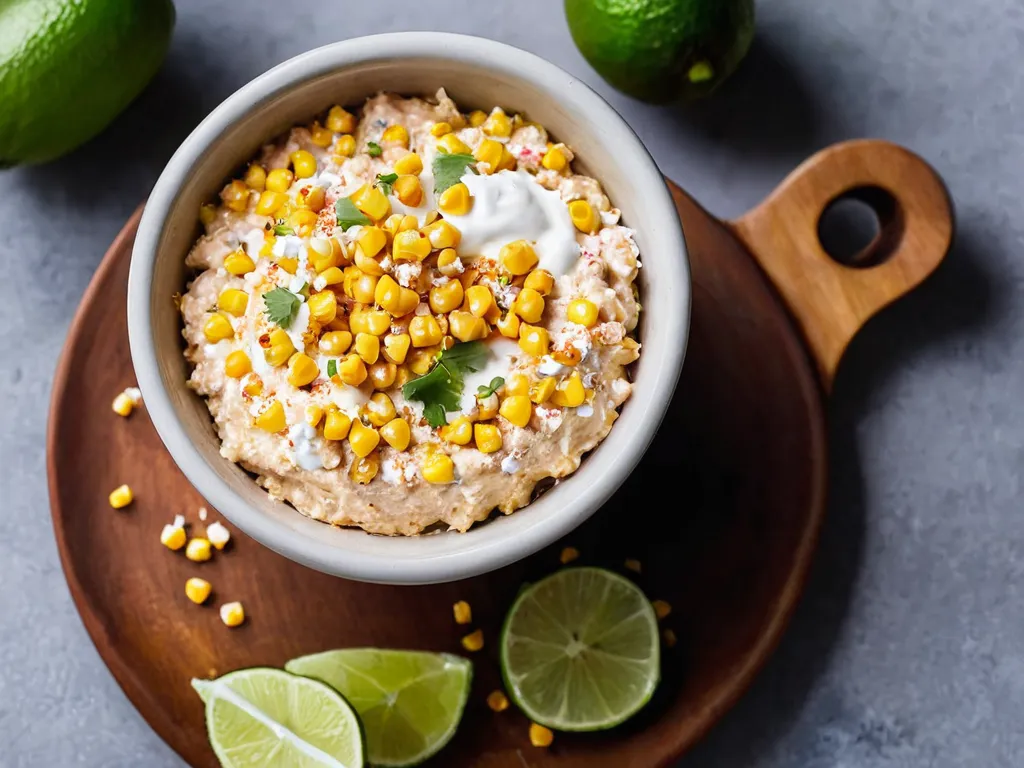
The elote version — cotija cheese, chili mayo, lime, cilantro — is arguably the most popular corn ribs preparation and the one most people recognize from TikTok. We covered it extensively in the Street Corn Ribs guide, including cutting technique for that specific version, all five topping variations, the crema vs. mayo debate, and how to build the full elote topping sauce. If that’s what you’re making, go there for the full treatment.
Fresh vs. Frozen Corn
Fresh, peak-season corn (July through September, when Brix sugar content is highest) is significantly better for corn ribs. The cutting works cleanly, the kernels are plump and full of moisture to caramelize, and the curl is the most dramatic.
You cannot cut a frozen ear of corn safely — the cob is rock hard and the knife will slip unpredictably. If you want to use frozen product, look for pre-cut frozen corn ribs, which some stores (including Trader Joe’s, seasonally) sell ready to cook. Thaw completely, pat completely dry, and air fry at 400°F for 12–15 minutes (2–3 minutes longer than fresh to account for extra moisture). The curl will be less dramatic because freezing affects the cell structure, but the flavor and caramelization are still solid.
The stub recipe note that “frozen corn works in a pinch” is approximately true for pre-cut frozen product, not for trying to cut a frozen ear yourself.
Off-season tip: look for fresh corn year-round at Latin grocery stores, which often carry it even in winter. The quality varies more than peak summer, but it’s workable.
Mistakes That Kill the Curl
Stacking in the basket. The most common mistake. Stacked corn ribs steam rather than roast — they never get crisp and they never curl. Single layer, always. Do two batches.
Low heat or undercooked. If the oven or air fryer isn’t fully preheated when you add the corn, you get steaming in the first minutes instead of immediate dry heat. Preheat fully before adding the corn.
Under-seasoning. Corn is sweet and starchy and can handle aggressive seasoning. What seems like a lot of dry rub raw will be the right amount after cooking. Don’t be timid.
Over-crowding with oil. Too much oil pools at the bottom of the basket and steams the corn instead of roasting it. Two tablespoons for four ears is the right ratio — enough to coat, not enough to pool.
Adding honey-based glazes at the start. Honey and maple syrup both burn above 375°F. Any seasoning with a sugary component (honey butter, miso-maple) needs either a reduced temperature or a finish-brush in the last 2–3 minutes, not tossed on before a full 12-minute cook at 400°F.
Dipping Sauces Beyond Elote
The seven seasoning variations each pair naturally with something different:
- BBQ rub: chipotle mayo (mayo + chipotles in adobo, blended) or classic BBQ sauce
- Old Bay: remoulade (mayo + Old Bay + lemon + hot sauce + pickle relish), or Parmesan + dill garnish
- Ranch: sour cream thinned with lemon juice, or ranch dressing straight
- Everything bagel: cream cheese thinned with lemon juice and warm water to a drizzleable consistency
- Honey butter: nothing needed — the glaze is the sauce
- Parmesan garlic: marinara, or whipped ricotta with lemon zest (the Momofuku original companion)
- Miso butter: Kewpie mayo with togarashi, or miso thinned with rice vinegar as a dip
You can also serve any variation alongside elote corn dip for a full corn-forward spread — the dip uses the same flavor family and the corn ribs are a natural scoop vehicle.
Cost and Yield
Four ears of corn: approximately $2–3 at peak summer pricing. Oil and seasoning for the base rub: another $0.50–1. The most expensive variation is parmesan garlic ($1–2 for good Parmesan). The miso butter version runs about $1.50 in ingredient cost per batch.
Total cost: $3–5 for a side dish for four — substantially cheaper than restaurant corn ribs, which have appeared on menus at $8–12 for a similar serving. The Momofuku version (deep fried, squid ink aioli, whipped ricotta) ran considerably more.
Yield is straightforward: 1 ear = 4 ribs = 1 modest personal serving. 4 ears = 16 ribs = side dish for 4 people.