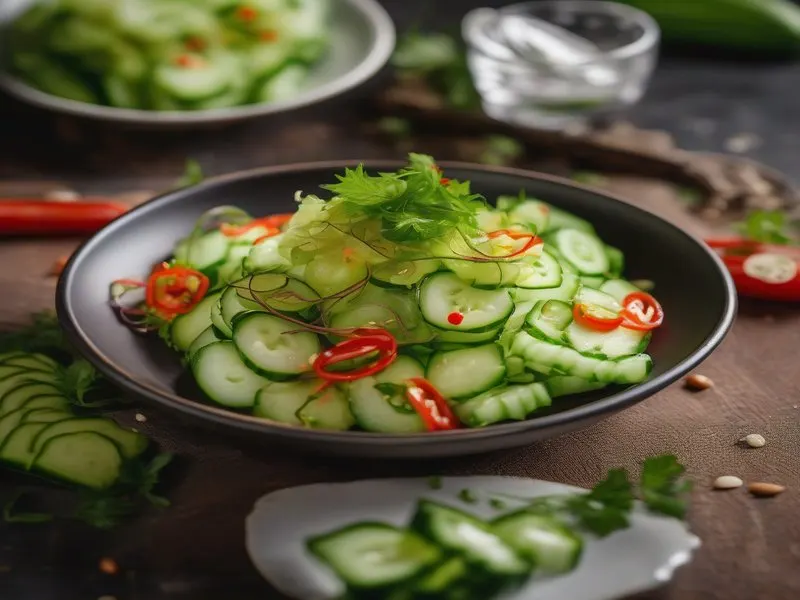
Viral TikTok Spicy Smashed Cucumber Salad (Pai Huang Gua)
The smashed cucumber salad was already a staple of Chinese home cooking and restaurant menus — a traditional cold appetizer called pai huang gua — long before TikTok found it. What the platform contributed was the video format: watching someone bring a rolling pin down hard on a cucumber, the crack and split, the jagged irregular pieces, the sizzling soy-sesame dressing poured over — it turned a recipe into a satisfying watch. The hashtag accumulated hundreds of millions of views. Grocers reported cucumber shortages in some markets during peak trend months in 2022.
The recipe itself is genuinely excellent. Five ingredients in the dressing, no cooking, ten minutes of active work, and the result eats nothing like what cucumber’s reputation suggests it should.
What Is Pai Huang Gua? The Chinese Dish Behind the Trend
TikTok did not invent this. Pai huang gua (拍黄瓜) translates directly as “smashed cucumber” — pai means to smash or pat, huang gua means cucumber. It is a traditional Chinese cold appetizer served in homes and restaurants across China, with regional variations in the dressing. Sichuan versions lean heavily on chili oil and Sichuan peppercorn for mouth-numbing heat. Northern Chinese versions tend toward soy sauce, vinegar, and garlic. Cantonese versions are often lighter, with more vinegar brightness.
The smashing technique itself — using the flat of a Chinese cleaver to crack open an ingredient before cooking or dressing it — is a standard method in Chinese cuisine, applied to ginger (to release oils), garlic (to loosen the skin and crack the cell structure for faster flavor release), and cucumbers. The cucumbers in pai huang gua are not merely a vessel for dressing — the smashing technique is specifically what makes the dish work at all.
What TikTok exported was a simplified, globally palatable version of the recipe: fewer ingredients than a traditional Sichuan version, the accessible chili crisp (now widely stocked in American grocery stores) replacing harder-to-find chili oil and Sichuan peppercorn, and the visual drama of the smash as the centerpiece of the content.
Why the Smashing Technique Works
Slicing a cucumber with a knife produces smooth, sealed surfaces. The skin and flesh on cut pieces remain intact along the edges, and the dressing sits on top rather than penetrating the surface. Smashing does something completely different.
When you bring the flat of a knife or a rolling pin down hard on a cucumber, you fracture the internal cell structure. The cucumber splits open, revealing the interior flesh, and breaks into irregular pieces with rough, jagged edges. These fractured surfaces have dramatically more surface area than clean knife cuts. Every crevice and crack holds dressing. The split interior flesh, now exposed, absorbs the liquid components of the dressing — the soy sauce, the vinegar — rather than just being coated by them.
The difference in the finished salad is immediately noticeable. A smashed cucumber piece is seasoned throughout. A knife-cut piece tends to have dressing only on the exterior. This is why the technique is described as a revelation by people who try it for the first time — the flavor penetration is genuinely different, not just a stylistic variation.
The Salt-and-Drain Step, Explained
Cucumbers are roughly 96% water by weight. If you dress them without first removing some of that water, the liquid inside the cucumber continues to seep out after dressing, progressively diluting the soy sauce, thinning the sesame oil, and producing a watery, under-seasoned salad within minutes.
Salting works via osmosis: salt on the exterior of the cucumber creates a concentration gradient that draws water out through the cell walls into the surrounding environment. Ten minutes of salting and draining removes a significant amount of free liquid, which you discard in the colander. The cucumber pieces that remain are drier, more concentrated in flavor, and hold their crunch longer after dressing because the mechanism driving water release has been largely satisfied.
Practical notes:
- 10 minutes minimum. This is the practical minimum. Longer is better — up to 20 minutes produces noticeably crunchier results.
- Don’t exceed 20 minutes. Past that point, the salt begins to break down the cucumber’s cell walls and the pieces become limp rather than crisp.
- Pat dry after draining. Surface moisture from the draining process will dilute the first pour of dressing. A quick pat with a clean towel takes 20 seconds and makes a meaningful difference.
- Don’t rinse. Rinsing removes the salt and reintroduces water, undoing the draining step.
Cucumber Variety Guide
Not all cucumbers are equal for this recipe.
| Variety | Skin | Seeds | Water Content | Best for |
|---|---|---|---|---|
| English cucumber | Thin, edible | Minimal | Low | Best choice — mild, crunchy, no prep besides ends |
| Persian cucumber | Thin, edible | Minimal | Low | Excellent substitute — same character, smaller size |
| Regular (American) | Thick, waxed | Many, large | High | Works in a pinch — peel and seed first |
| Kirby (pickling) | Thin, edible | Few | Medium | Good option — firm, slightly less refined flavor |
English cucumbers are the standard for this dish. Their thin skin doesn’t need to be peeled, their minimal seeds don’t need to be scooped, and their low water content means the salt-drain step removes liquid more efficiently. Persian cucumbers are nearly identical in result but smaller, so you’ll need 4–5 instead of 2 to hit the same volume.
Regular American cucumbers are not wrong, but they require peeling, deseeding, and produce more liquid even after salting. Their slightly bitter aftertaste is also more pronounced in a cold dish where it has nowhere to hide.
Building the Dressing: What Each Ingredient Does
Garlic: The sharp, pungent backbone of the dressing. Three cloves is not excessive — raw garlic in a dressing is different from cooked garlic. Mince it fine or grate it on a microplane; the finer the garlic, the more evenly it distributes and the less chance of a raw-garlic bite in one piece. If you want milder garlic flavor, let the minced garlic sit in the soy sauce for 5 minutes before adding the other ingredients — brief contact with the acidity softens the sharpness.
Soy sauce: The salt, umami, and body of the dressing. Regular soy sauce works; tamari is a good gluten-free substitute with a slightly rounder flavor. Low-sodium soy sauce is an option if you want to reduce sodium but the salt-drain step already contributes some, so the overall level in the finished dish is moderate.
Rice vinegar: Mild, slightly sweet, 4–4.5% acidity (compared to 5% for white wine vinegar and 5–8% for white distilled). The sweetness built into rice vinegar is part of why it works so well in Asian dressings — it adds brightness without harsh sharpness. Substitute: white wine vinegar used in slightly smaller quantity (about ¾ tablespoon), or a splash of apple cider vinegar.
Toasted sesame oil: Must be toasted (dark, nutty, amber-colored) — not the light, refined sesame oil used for cooking. Toasted sesame oil is a finishing ingredient; its flavor is the one you taste in takeout sesame noodles and cold Asian salads. One teaspoon is enough — it’s potent and goes rancid quickly, so store it in the fridge after opening. A bottle lasts a long time because you use it in small amounts.
Chili crisp: The element that separates this version from a plain sesame-soy dressing. See the section below.
Sugar: Balances the soy sauce and vinegar. One teaspoon is usually enough. The sugar also helps the dressing cling — it adds very slight viscosity as it dissolves. Honey works as a substitute; use about ½ teaspoon since honey is sweeter than granulated sugar.
The Chili Crisp Advantage
Chili crisp deserves its own explanation because it’s doing more than just adding heat.
Standard chili flakes are dried, ground dried chili — pure heat. When you toss them with cucumbers, they sit on the surface, and whoever bites into a concentrated flake gets a burst of heat while other bites are mild. The heat distribution is uneven.
Chili crisp is made by frying dried chilis, garlic, and shallots or onions in neutral oil until crispy, then combining the fried solids with the infused oil. The result is simultaneously spicy (from the chilis), crispy (from the fried aromatics), and deeply savory. When you dress a salad with chili crisp, the oil phase distributes the heat and flavor evenly over every piece, while the solid bits of fried garlic and shallot add textural contrast.
The two most widely available brands:
- Lao Gan Ma (Old Godmother) — the widely available version in Chinese grocery stores and many mainstream grocery stores. Fermented black beans in the mix add umami depth. Moderate heat. The standard choice.
- Fly By Jing — American-made, no fermented black beans, cleaner chili flavor, higher price point. Available at Whole Foods and online.
If you can’t find either, use ½ teaspoon dried chili flakes plus ½ teaspoon of a neutral oil (grapeseed, avocado) and accept slightly less textural complexity in the result.
Timing: Eat This Within 30 Minutes
Unlike most salads where you want the greens to soften slightly, cucumber salad is strictly better fresh. The texture degrades in a specific sequence:
- 0–30 minutes after dressing: Peak. The cucumbers are crunchy, the dressing is concentrated and bright, the sesame oil is fragrant.
- 30–60 minutes: Noticeable softening. The cucumbers have released more liquid and the dressing is visibly more dilute.
- 1–2 hours: Acceptable but noticeably watered down. The garlic has also mellowed from raw-pungent to more background.
- Next day: Not recommended. The cucumbers are soft and the dressing is thin.
If you’re making this for a group, prepare the components separately and dress at the last moment. The salted and drained cucumber pieces hold well in the fridge for up to 4 hours before dressing. The dressing keeps for a week refrigerated.
5 Variations Worth Making
Korean-style (oi muchim): Substitute gochugaru (Korean red pepper flakes) for the chili crisp, increase to 1 tablespoon, add 1 teaspoon fish sauce or anchovy paste for depth, and skip the sesame oil or reduce to ½ teaspoon. The flavor is brighter and less oily than the Chinese-style version, with a distinctly fruity heat from the gochugaru. Classic accompaniment to Korean BBQ.
Japanese (sunomono-style): Skip the chili entirely. Use rice vinegar (2 tablespoons), a splash of mirin (1 teaspoon), and ½ teaspoon salt. The result is a clean, refreshing, mildly sweet vinegared cucumber salad — the standard sunomono served in Japanese restaurants before sushi. Serve with thin cucumber slices rather than smashed pieces.
Cottage cheese cucumber: A separate TikTok trend that went viral around the same period. Mix full-fat cottage cheese with everything bagel seasoning (or plain salt and pepper), slice cucumbers rather than smash them, and top with a drizzle of hot honey or chili crisp. The protein (roughly 25g per cup of cottage cheese) turns it into a filling snack. The flavor pairing works because the mild, creamy cottage cheese is a blank canvas for the savory-spicy seasoning.
Peanut butter sesame: Add 1 tablespoon of natural peanut butter and a splash of warm water to the dressing, whisking until smooth. The peanut butter adds richness and slight sweetness that transforms this from a light appetizer into something more substantive. Pairs naturally with cold noodles or grilled chicken.
Spicy Thai: Substitute fish sauce for half the soy sauce, add fresh lime juice instead of rice vinegar, and use 1–2 thinly sliced Thai chili peppers instead of chili crisp. Finish with torn fresh mint and basil. This version is brighter and more aromatic than the Chinese-style original.
What to Serve It With
This salad pairs well with anything that benefits from a cool, acidic, spicy counterpoint:
- Grilled proteins (chicken thighs, salmon, skirt steak) — the acid cuts through char and fat
- Viral TikTok salmon rice bowl — a natural match; the cold cucumber cuts through the rich soy-glazed salmon
- Emily Mariko salmon bowl — the cucumber salad was often served alongside this bowl during the same TikTok era
- Viral TikTok crunchy ramen salad — double-crunch textures, complementary Asian dressing profiles
- Copycat PF Chang’s Dan Dan Noodles — the cold cucumber with warm spicy noodles is the kind of temperature contrast that works at a dinner party
- Cucumber sushi rolls — if you’re in a cucumber-forward mood, these make a light pairing
- Plain steamed rice or congee, where the strong flavors of the salad do the seasoning work
Common Mistakes
Not draining long enough. The most common issue. Ten minutes is the minimum; 15–20 is better. Watery salad is almost always from skipping or rushing this step.
Using light sesame oil. The pale, refined version has almost no flavor. The dark toasted version is what gives this dish its characteristic nutty, roasted sesame note. Check the color — if it’s light yellow, it’s not toasted.
Dressing too far ahead. Dressed cucumber salad does not hold. Prep components separately.
Under-seasoning. Taste the dressing before adding the cucumbers and verify it’s assertive — slightly too salty, slightly too sharp, slightly too spicy. The cucumbers will mellow everything once tossed. If the dressing tastes perfectly balanced before adding the cucumbers, the finished salad will be under-seasoned.
Mincing garlic too coarsely. A large chunk of raw garlic in one bite dominates everything. Fine mince or microplane grating distributes the flavor evenly.
Other Viral TikTok Recipes Worth Making
Viral TikTok crack broccoli uses similarly punchy seasoning (parmesan, spicy honey, high heat) on a vegetable that most people underestimate. Viral TikTok bang bang cauliflower follows the same “spicy-sweet sauce on a humble vegetable” playbook. For a more substantial companion dish, viral TikTok egg fried rice and the cucumber salad together are a complete, quick weeknight dinner.