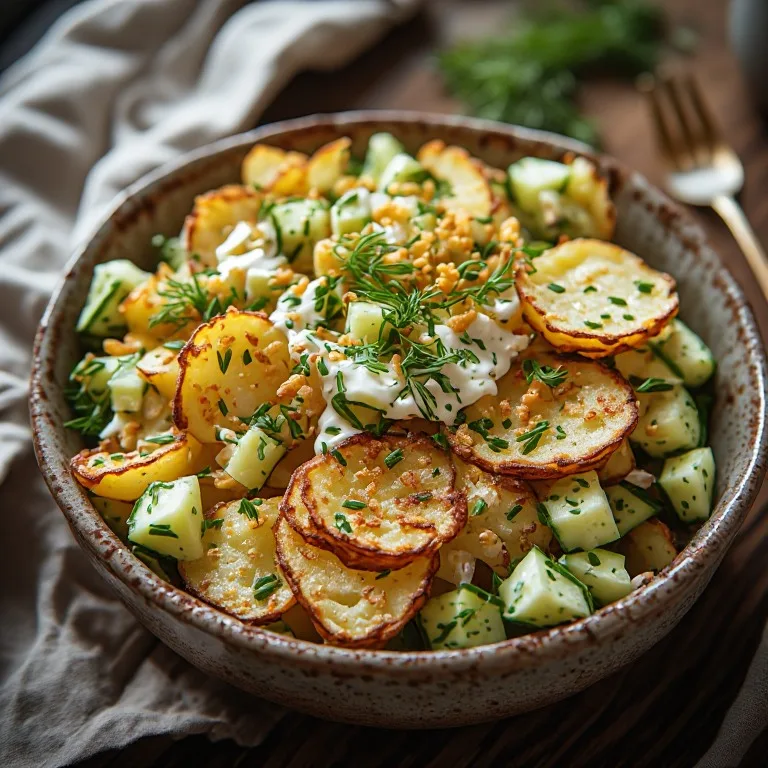


Potato salad has a reputation problem. It’s the dish that shows up at every cookout in a giant Tupperware, gets left in the sun, goes gluey by hour three, and becomes the thing nobody trusts on the leftover shelf. The crispy smashed version — pushed onto everyone’s feed by British chef Poppy O’Toole (@poppycooks) — fixes the one flaw that makes people wary of potato salad: the potatoes are roasted until shatteringly crisp before they ever touch the dressing, so the “salad” part enhances them instead of drowning them.
It went viral because it films beautifully — the smash, the craggy golden edges, the dill-flecked dressing — but it stuck around because it genuinely tastes better than the thing it’s replacing. You get the crunch of a roasted potato and the cool, tangy freshness of a herby dressing in the same bite, and that contrast is the entire point.
Why this beats regular potato salad
A classic potato salad uses potatoes that are soft all the way through, which means the dressing has nothing to push against — moisture migrates back and forth until the whole bowl equalizes into that familiar mush. Roasting changes the physics. The high, dry oven heat builds a dehydrated crust on every smashed surface, and that crust acts as a barrier. The dressing coats the outside; it can’t soak in and turn the potato to paste. You get a comfortable 20-to-30-minute serving window where everything stays crisp — which is exactly why this is a serve-fresh dish, not a make-and-forget one.
The other quiet upgrade is the dressing itself. Swapping half the mayonnaise for Greek yogurt cuts the heaviness that makes a big scoop of traditional potato salad feel like a commitment. It stays creamy enough to cling, but it’s bright and tangy rather than rich and cloying — the right foil for a deeply browned potato.
The three details that decide the outcome
Most failed attempts trace back to moisture. Salt the boiling water like pasta water so the potatoes are seasoned from the inside, then let them steam-dry in the strainer for a full two minutes — a wet potato steams in the oven instead of browning, and that single step is the difference between shatter and sad. Smash decisively to about half an inch so the craggy interior fans open and gives the oven maximum surface to crisp, then leave the pan alone: no flipping. The bottom face welded to the hot sheet is where the best crust forms, and flipping snaps it and lets steam escape.
The last detail is patience at the finish. Let the potatoes rest ten minutes off the heat before they meet the dressing. Fold mayo into steaming-hot potatoes and it splits and turns greasy; fold it into warm ones and it stays glossy and coats cleanly.
Ways to change it up
- Loaded. Crumbled bacon, extra chives, and a spoonful of sour cream fold the flavors of a loaded baked potato into salad form.
- Herby and green. Blitz the dressing with a big handful of parsley and basil for a green-goddess lean — see our green goddess salad for that dressing template.
- Extra tang. Fold in 2 tablespoons of capers or a spoonful of chopped cornichons for a briny, French-leaning bite.
- Spiced. A half teaspoon of smoked paprika tossed on the potatoes before roasting adds smoke and color.
What to serve it with
This is a natural partner for anything off the grill — burgers, sausages, grilled chicken thighs, or a plank of salmon. Because it eats lighter than mayo-heavy potato salad, it also holds up next to richer barbecue without feeling redundant. For a fuller vegetarian spread, pair it with a dense bean salad and call it lunch.
Storage
Store the roasted potatoes and the dressing separately and combine within 20 to 30 minutes of serving. The potatoes hold at room temperature on the pan for a few hours; don’t refrigerate them undressed or they turn starchy and dense. Dressed leftovers are still tasty the next day — just accept that the crispy edges will have softened. Re-crisp bare leftover potatoes in a 400°F oven or air fryer for a few minutes and dress a fresh batch rather than reheating the whole salad.