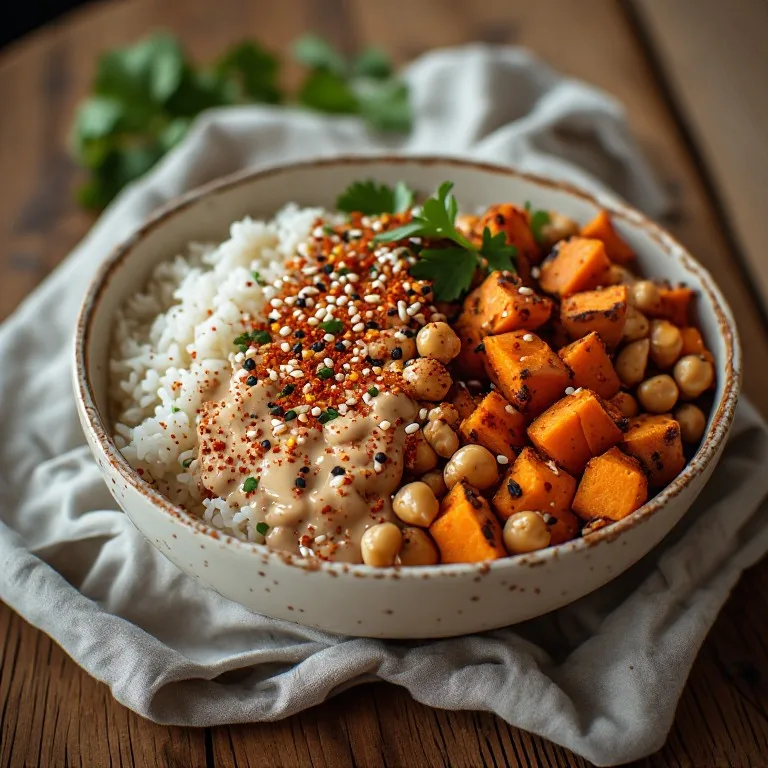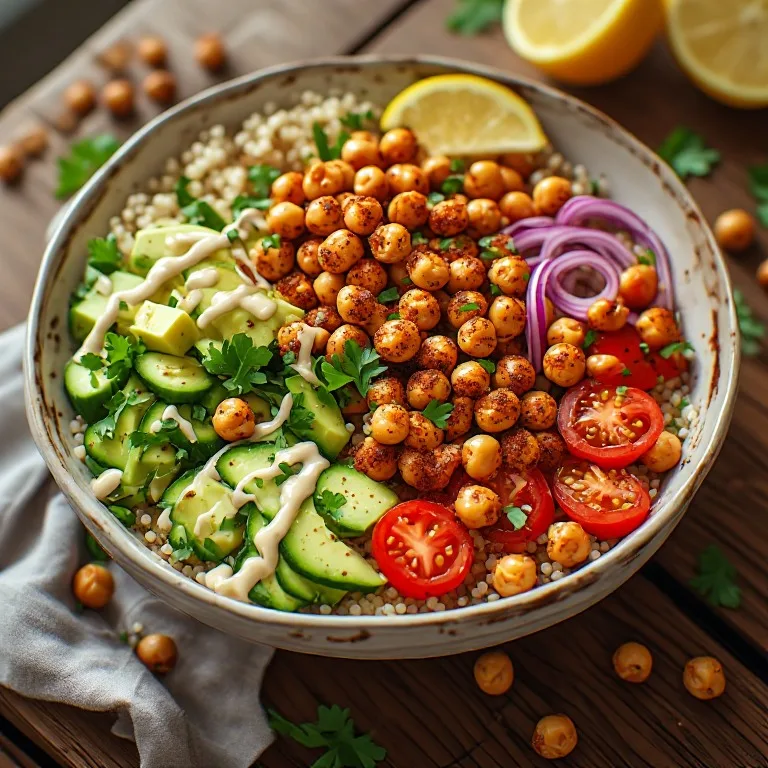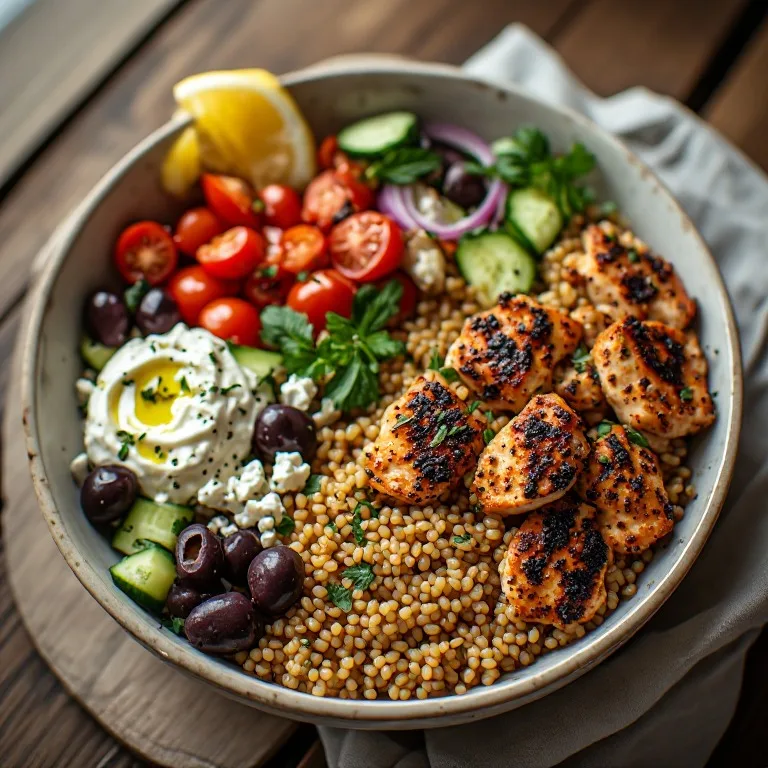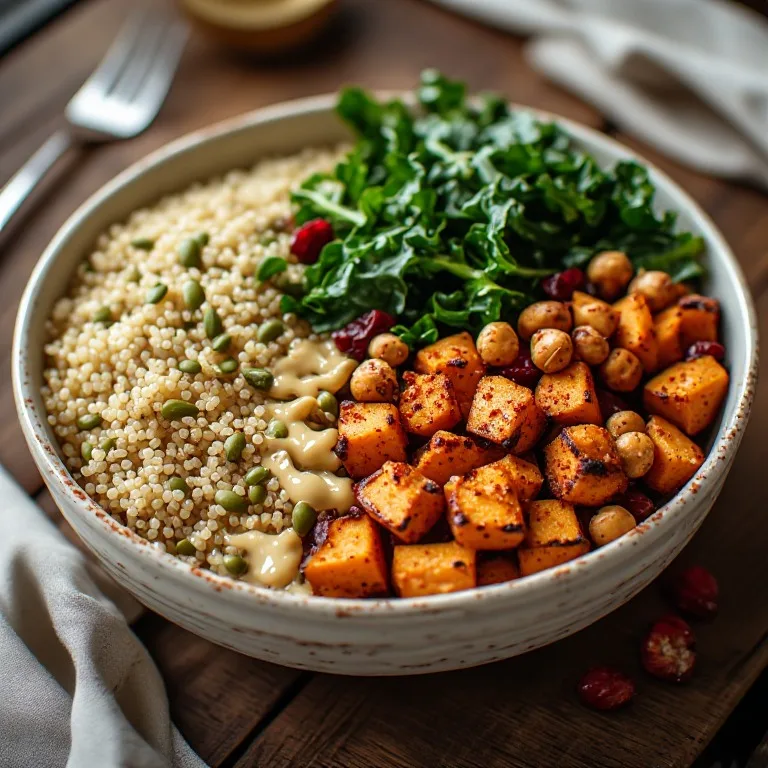


The TikTok harvest bowl is the fall grain bowl format that actually delivers on its promise. Roasted sweet potato and crispy chickpeas over quinoa, a handful of massaged kale that is genuinely tender, and a lemon tahini dressing that comes together in a small bowl in five minutes. From prep to table: 35 minutes. Most of that is oven time.
The format has two techniques worth knowing before you start. The first is the 2-minute kale massage — the step that converts every skeptic who has ever pushed raw kale to the side of their plate. The second is the tahini dressing seize, which looks wrong and is not: tahini seizes into a thick paste when lemon juice first hits it, then transforms into a creamy, pourable sauce after three tablespoons of cold water are whisked in one at a time. Both techniques are explained below.
The TL;DR: rinse and cook quinoa (15 min, covered); roast chickpeas and sweet potato simultaneously on separate sheet pans at 425°F; massage kale 2 full minutes; whisk maple lemon tahini dressing from a seized paste to pourable with cold water; assemble.
Why the Harvest Bowl Is a Fall 2026 FoodTok Staple
The fall harvest bowl format works for two reasons that most bowl recipes get wrong.
First, quinoa is a better base for a warm, autumn-flavored bowl than rice. It is nuttier, it absorbs the lemon tahini dressing differently (the smaller grain surface area means more dressing-to-grain contact with every forkful), and it adds complete protein — all nine essential amino acids — that rice does not. One cup of dry quinoa provides about 24 grams of protein across four servings. That is 6 grams per bowl before the chickpeas and tahini add their share, putting this bowl closer to 17 grams total per serving without any animal protein.
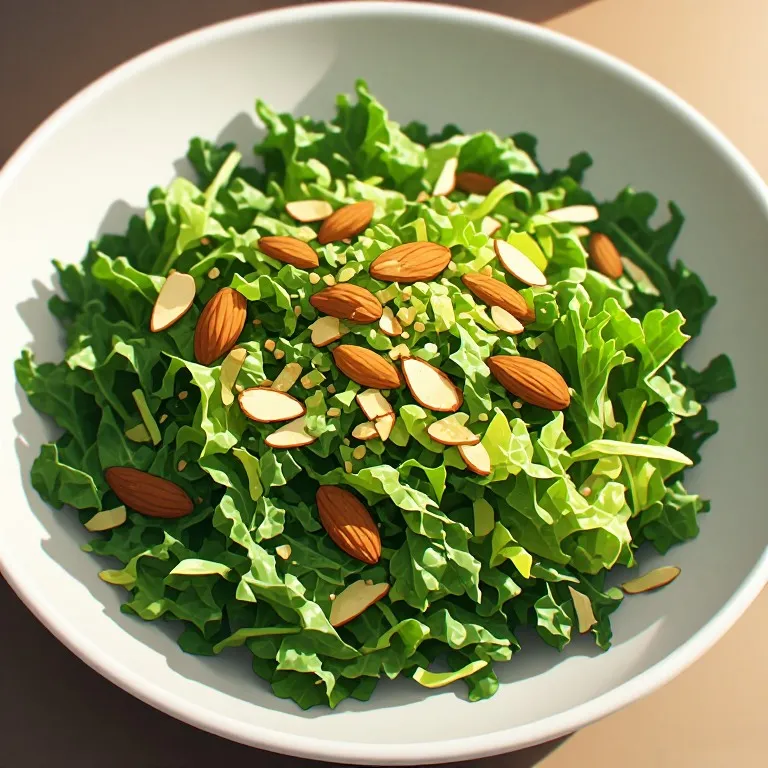
Second, the kale. Fall bowl recipes that use baby spinach as a green component are easy; baby spinach needs nothing done to it. Curly kale does — and the 2-minute massage is the reason TikTok harvest bowl videos rack up millions of views. Viewers watch the kale transform from stiff, voluminous, slightly waxy raw leaves to a tender, dark, reduced-volume heap that tastes mild and slightly sweet. The transformation is visible and fast and it happens in real time on camera. The technique is also genuinely useful information for anyone who has been avoiding raw kale because it tastes bad.
The Kale Massage: What It Does and Why 2 Minutes Matters
Raw curly kale contains a high concentration of thick cell walls reinforced by a waxy cuticle on the leaf surface. These structures are what make raw kale fibrous in the mouth and what slow the release of the bitter glucosinolate compounds stored in the cells. Massaging with oil and salt physically breaks both: the mechanical pressure fractures the cell walls and the salt draws moisture out through osmosis, which softens the cuticle from the outside.
The result is visibly different kale: darker in color (the cell damage releases chlorophyll), significantly reduced in volume (roughly half), and soft enough to absorb dressing evenly rather than repelling it.
The 2-minute time marker matters because most people stop too early. The kale looks softer at 30 seconds — but the bitterness is still largely intact and the cell walls are mostly intact. At 2 full minutes of firm squeezing and scrunching, the structural change is complete. If you are not sure whether you have massaged long enough, taste a leaf. Properly massaged kale is mild and slightly sweet; under-massaged kale is still noticeably bitter.
The Two-Pan Oven Strategy
Chickpeas and sweet potato roast simultaneously in the same oven at 425°F — but they need separate sheet pans and separate racks. Sweet potato cubes release significant steam as they roast, and that moisture circulates in the oven. Chickpeas need completely dry heat to form their crispy outer shell: any steam softens the shell before it can harden into a crunch.
The solution is simple: chickpeas on the upper rack, sweet potato on the lower rack. The sweet potato steam rises, concentrating at the top of the oven, but by the time the chickpeas are on the upper rack they are already past the point where steam can soften them. Both components finish at the same time.
For the chickpeas: dryness before roasting is the most important step. After draining and rinsing, tip them onto a clean kitchen towel and rub for 30 seconds — remove the thin outer skins where they come off easily. Dry chickpeas roast into a crispy shell-within-shell texture; damp chickpeas produce a softer, chewy result that holds together but never crunches.
For the sweet potato: single-layer spacing is the most important step. Sweet potato cubes touching each other trap steam between them and effectively steam instead of roast. The goal is caramelized edges — the natural sugar concentration that happens when the surface of the cube dries out and the sugars brown. Give each cube room.
The Maple Lemon Tahini Dressing
This dressing is not the chili crisp tahini sauce from other TikTok bowl recipes. It is the Sweetgreen-style version: tahini, lemon juice, maple syrup, garlic, salt, cold water. The maple syrup is not a sweetener in the dessert sense — it is a balancer. It softens the edge of the lemon and adds the faint caramel undertone that makes this dressing taste more complex than its five-ingredient list suggests.
When lemon juice contacts tahini, the emulsion breaks and the paste stiffens into a thick, clay-like texture. This looks wrong. It is not. Add cold water one tablespoon at a time and whisk firmly between each addition. After 3 to 4 tablespoons, the emulsion reverses and the sauce transforms from a gluey paste into a creamy, light-colored, pourable dressing.
Taste for salt and lemon. The dressing should be tangy-sweet — not sweet the way a dessert is sweet, but balanced. The lemon should be clearly present. If it tastes flat, add another half teaspoon of lemon juice. If it tastes too sharp, add another quarter teaspoon of maple syrup.
Assembly: Order and Temperature
The order of assembly affects both texture and eating experience.
Start with the quinoa — it should be warm, not hot. Piping hot quinoa under the kale will wilt it further and can make the bowl feel heavy. Quinoa that has sat 5 minutes off heat is the right temperature.
Add the kale alongside the quinoa in the bowl rather than mixing it in — this keeps the two textures distinct. If you stir them together, the kale disappears into the grain and you lose the visual contrast and the textural difference between chewy grain and silky leaf.
Pile the sweet potato over the grain side. It adds color and height.
Add the chickpeas last — after the dressing. The chickpeas lose crunch fastest; keeping them on top and adding the dressing as the final step (right before eating) maximizes the window where they stay crunchy.
Finish with pumpkin seeds for crunch, dried cranberries for tartness, and a lemon wedge. Pumpkin seeds add magnesium and zinc and a toasty nuttiness that works with both the tahini and the sweet potato. The dried cranberries are not incidental — their tartness cuts through the richness of the tahini and the sweetness of the roasted sweet potato. Without them (or pomegranate seeds), the bowl can taste slightly monotone.
Meal Prep Notes
This bowl is one of the best fall meal-prep formats precisely because all four main components store separately and reheat well:
- Quinoa keeps refrigerated 5 days.
- Sweet potato keeps refrigerated 4 days; re-crisp in a 400°F oven for 8 minutes.
- Massaged kale keeps refrigerated 3 days and actually improves overnight as the oil and salt continue to tenderize the cell walls.
- Tahini dressing keeps refrigerated 1 week; loosen with a tablespoon of cold water and a quick whisk before using.
- Roasted chickpeas do not keep well — they lose crunch within hours. Roast fresh on the day, or re-crisp stored chickpeas in a 425°F oven for 8 to 10 minutes.