


The TikTok Onion Boil — What Makes It Stop the Scroll
The onion boil is one of those recipes that sounds either obvious or bizarre until you open the foil. Then it makes complete sense.
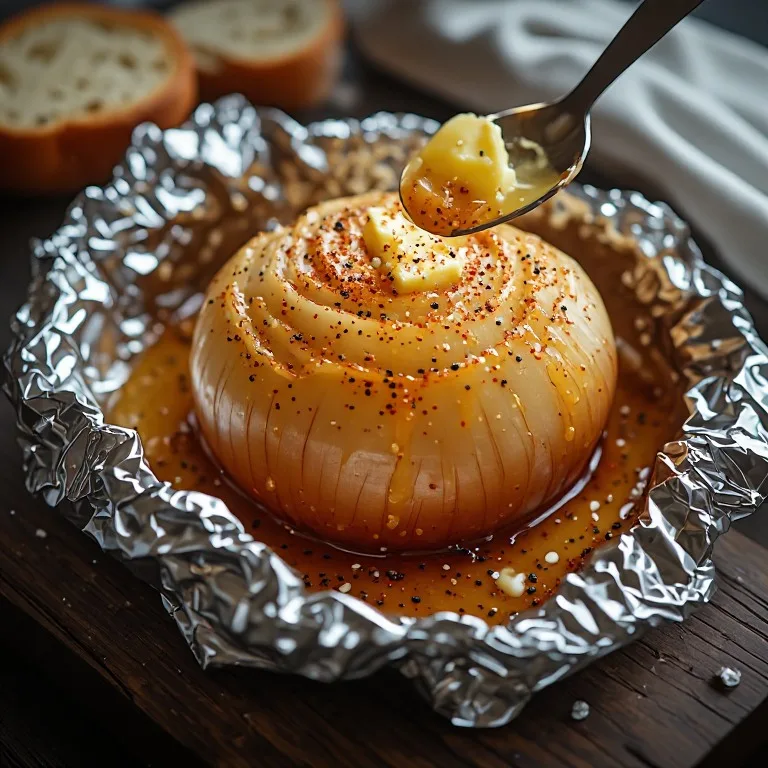
The core idea: you take a whole sweet onion, cut a cavity into the top, fill it with cold butter and Old Bay seasoning, seal it in foil, and roast it for an hour. What emerges is not a normal roasted onion. The outer layers steam into silky, jammy softness. The cavity fills with a pool of seasoned butter that has absorbed every compound from the onion as it cooked — sweet, savory, slightly smoky, deeply caramelized. The top of the exposed core browns and concentrates into something almost candy-like.
It became a TikTok staple because it borrows the exact aesthetic and flavor of a seafood boil — the Old Bay, the butter, the messy foil-tear reveal, the communal pour-it-over-everything presentation — and delivers it in a single vegetable that costs less than a dollar and requires about five minutes of active work.
Why It Works
The foil packet is the whole mechanism. Sealed foil traps steam from the onion’s own moisture and the added broth, which cooks the onion from the inside while the butter bastes the cavity walls continuously. Open roasting would dry the onion out and caramelize the exterior before the interior softened. The sealed packet creates a miniature steam environment — more like a braise than a roast — while still allowing enough top-surface exposure (the cut top is exposed inside the packet) for some caramelization.
Old Bay is the right spice blend for a specific reason: its primary flavors are celery salt, paprika, black pepper, and dried mustard, all of which complement sweet onion the way a compound butter would. The celery-seed note in Old Bay is what drives the “seafood boil” flavor cue even without any seafood. If you’ve ever had Old Bay-seasoned corn at a crab boil, you already know the flavor this onion will produce.
Three Ways to Serve It
As a side dish. Place the open foil packet on a plate alongside grilled steak, roasted chicken, or sausages. Everyone scoops directly from the foil, using bread to capture the buttery liquid. The onion is soft enough to eat with a spoon.
As a dip. Let the onion cool slightly, then scoop out the insides into a bowl and roughly mash with the juices from the packet. Serve warm with toasted pita, bread, or crudités. The result is essentially a seasoned caramelized onion dip without any cream cheese or mayo.
As a pasta sauce. Toss 8 oz of cooked thin pasta (spaghetti or linguine) directly in the juices from one onion boil packet, adding 2–3 tablespoons of pasta water to emulsify. Add the mashed onion, a squeeze of lemon, and fresh parsley. This five-minute pasta sauce uses every drop of liquid from the packet.
Common Failure: Undercooking
The single most common mistake is pulling the onion too early. An undercooked onion boil tastes harsh and sulfurous — the sugars haven’t had time to convert and the sharp raw-onion compounds are still present. A fully cooked onion boil is completely transformed: sweet, collapsing-soft, without any trace of sharpness.
Test with a paring knife through the foil. If you feel any resistance at all, it needs more time. Return it to the oven for another 10 minutes without opening the packet. The difference between 50 minutes and 65 minutes in the oven is the difference between a decent roasted onion and a deeply jammy, almost melted core that people photograph before they eat.
Internal Links
- Viral TikTok How to Caramelize Onions — the stovetop slow-cook method that produces the same flavor transformation on the stove
- Viral TikTok French Onion Soup Pasta — the same deep caramelized-onion flavor built into a one-pan pasta
- Viral TikTok French Onion Tortellini Bake — refrigerated tortellini baked directly in caramelized onion broth
- Viral TikTok Cowboy Butter Chicken — compound-butter technique applied to chicken, same TikTok flavor tradition