Pin It

Croffles (Viral Korean Croissant Waffles)

Croffles (Viral Korean Croissant Waffles)
Jump to Recipe
Prep 5 min Cook 12 min Serves 4
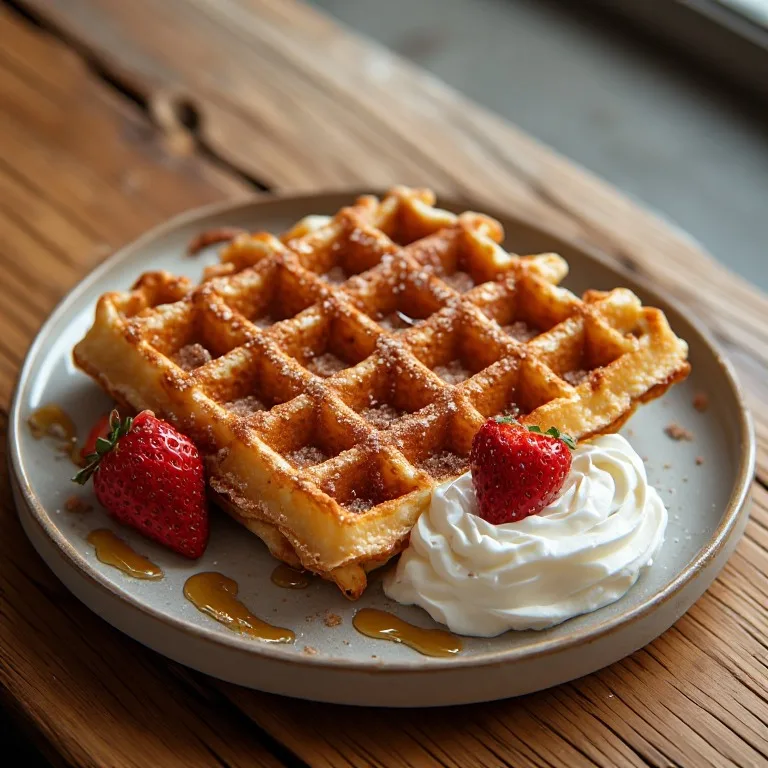
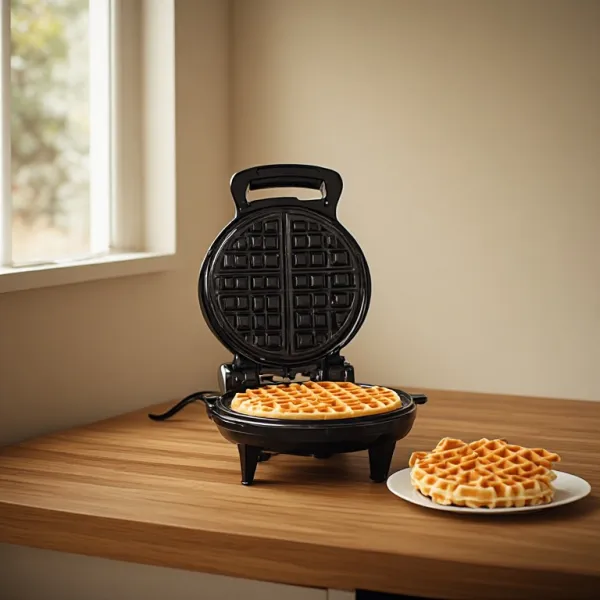
Quick answer: Preheat your waffle iron to medium-high and spray with nonstick cooking spray. Open a can of Pillsbury refrigerated crescent roll dough (8 triangles). For each croffle, pinch two adjacent triangles together along their long seam, roll the combined piece from wide end to tip into a loose cylinder, then flatten it slightly with your palm. Place in the center of the preheated waffle iron, close the lid firmly, and cook 2–3 minutes without opening. The croffle is done when you see deep golden-brown color through the grid and the steam slows noticeably — pale yellow means the dough is still raw inside. Transfer to a wire rack; the crust crisps further as it cools for 1–2 minutes. Serve immediately with a dust of cinnamon sugar, a drizzle of honey, or fresh whipped cream and berries. One tube makes 4 croffles.

Shop the tools

Gear matched to this recipe. These are Amazon affiliate links — we may earn a small commission if you buy, at no extra cost to you.

As an Amazon Associate, Copycat Spices earns from qualifying purchases. Product images are generic illustrations, not the exact item listed.

Croffles (Viral Korean Croissant Waffles)

How to make croffles at home: croissant dough pressed in a hot waffle iron until caramelized and flaky. The Korean café creation that took TikTok to 155M+ videos — with cinnamon sugar, Nutella-stuffed, and savory variations.

Easy Prep: 5 min Cook: 12 min Total: 17 min4 servings ~$2.45/serving
Prep5 min
Cook12 min
Total17 min
Servings
4
At home~$2.45/serving
vs
Restaurant~$11.02/serving
You save ~78%

The Story Behind the Recipe

Croffles were invented by Irish pastry chef Louise Lennox, working with Cuisine de France, who discovered that unbaked croissant dough pressed in a waffle iron caramelizes into something altogether different from the original pastry — crunchier outside, more compact inside, with the butter browning into a near-toffee finish from the iron's direct heat. South Korean cafés picked up the idea around 2019 and transformed it into a café phenomenon: in café districts like Seoul's Hongdae, specialty croffle shops drew long queues. A viral April 2020 Instagram post by Korean singer Kang Min-kyung put croffles in front of millions of followers overnight. By 2021–2022, the format had arrived on TikTok — 155M+ videos — and spread to Korean-American cafés in New York's Flushing and LA's Koreatown before reaching mainstream American brunch menus.

What makes croffles work isn't just novelty. Pressing laminated dough against hot cast iron compresses the thin butter layers into a dense, caramelized grid while the interior stays soft and pull-apart. It's the same Maillard reaction that makes a croissant's crust brown, but applied to every surface simultaneously. The result is a pastry that's genuinely different from both a croissant and a waffle — crunchier and more uniform than the former, butterier and flakier than the latter, and ready in under 3 minutes from tube to table.

Nutrition Facts

Per serving (4 servings)
Calories275
Total Fat14g
Total Carbs32g
Dietary Fiber0g
Sugars8g
Protein4g
Sodium460mg

* Estimated values based on standard recipe preparation. Actual values may vary.

Ingredients

Instructions

💡
Pro tip: This recipe tastes even better the next day. The flavors need time to meld together in the fridge.
❄️
Storage: Keeps in an airtight container in the fridge for up to 2 weeks. Freezer-friendly for up to 3 months.
🎃 Free Halloween cookbook — download now The Copycat Halloween Cookbook A ready-made, photo-illustrated PDF of our best halloween copycat recipes — free to download, no building required. Pay what you want to support if you love it.

Free PDF — instant download. We'll also send new seasonal copycat recipes now and then; unsubscribe anytime. Or just download it →

The Korean Café Pastry That TikTok Turned Into a Global Phenomenon

A croffle is what happens when you press unbaked croissant dough into a hot waffle iron: the butter-layered dough caramelizes against the iron’s grid, building a crackling, toffee-tinged exterior while the inside stays soft and pull-apart flaky. It’s a faster, more dramatic way to eat a croissant — and it produces a texture that neither a croissant nor a waffle achieves on its own.

The concept originated with Irish pastry chef Louise Lennox (at a 2017 Cuisine de France pop-up in Dublin) and was rapidly adopted by South Korean cafés around 2019–2020, where specialty croffle shops in Seoul drew hour-long queues. A viral April 2020 Instagram post by Korean singer Kang Min-kyung sent the format to millions of followers, and by 2021–2022, TikTok had racked up 155M+ croffle videos. In the US, Korean-American cafés in New York’s Flushing and LA’s Koreatown were the early adopters before croffles spread to mainstream brunch menus.

The at-home version, using Pillsbury crescent roll dough, is nearly identical in result — and takes under 3 minutes in the waffle iron.

The One Rule: Preheat Fully, Don’t Open Early

Two things determine whether you get a caramelized, flaky croffle or a gummy, torn mess:

Fully preheat the waffle iron. The iron needs to be genuinely hot — at least 5 minutes on medium-high — before the dough goes in. A half-warm iron doesn’t sear the dough surface quickly enough; instead it steams the dough from the outside in, producing a pale, soft, undercooked interior even if you wait longer. At full heat, the butter in the dough hits the iron surface and immediately begins caramelizing, building the crunchy exterior layer within the first 60 seconds.

Don’t open the lid for the first 2 minutes. This is the most violated rule. Croissant dough is tacky and sticky before it has cooked enough to release cleanly. Opening at 90 seconds will tear the layers apart and leave pieces of dough on both surfaces of the iron. At the 2-minute mark, the dough has set structurally — the outside is caramelized and the interior has mostly cooked through. After that, you can open to check color without risking a tear.

Dough Options: What Actually Makes a Difference

Pillsbury crescent roll triangles are the standard TikTok shortcut and they work genuinely well. The dough has pre-laminated layers (the same butter-pastry structure as croissant dough, just less precise) that caramelize correctly under heat. Pinch two triangles together at the seam before forming — this gives you the right dough thickness for a croffle that’s not undercooked in the center.

Store-bought croissant dough (sold refrigerated at Trader Joe’s, Whole Foods, and specialty grocery stores) is the step up. It has more pronounced, cleaner layers than crescent roll dough, and the resulting croffle separates more dramatically when you pull it apart. The exterior caramelization is similar; the interior texture is noticeably flakier and more layered.

Homemade laminated dough is overkill. The waffle iron’s grid compresses the layers significantly during cooking; the subtle differences between rough laminated dough and precise laminated dough largely disappear. Use your effort elsewhere.

Four Variations Worth Making

Classic cinnamon sugar — the most popular TikTok version. Press each formed croffle into a plate of cinnamon sugar (2 tbsp sugar + 1 tsp cinnamon) on both sides before it goes into the iron. The sugar caramelizes against the hot surface into a thin, slightly crunchy glaze that coats every grid square.

Nutella-stuffed — spread half a teaspoon of Nutella on the wide end of the triangle before rolling. Don’t use more — it seeps out and burns on the iron’s surface. The Nutella inside stays melted and gooey while the exterior caramelizes. Dust with powdered sugar when it comes out.

Korean café style — no filling. Top the finished plain croffle with a generous spoonful of lightly sweetened whipped cream, thin-sliced fresh strawberries, and a drizzle of sweetened condensed milk. This is the version you’ll see in every Korean café TikTok — visual, creamy, and genuinely better than the sum of its parts.

Savory — scatter a tablespoon of shredded cheddar and fresh chives across the wide end before rolling. The cheese melts inside and some escapes to caramelize against the iron, which is the best part. Top with a fried egg for a complete breakfast.

Why the Rest Step Matters

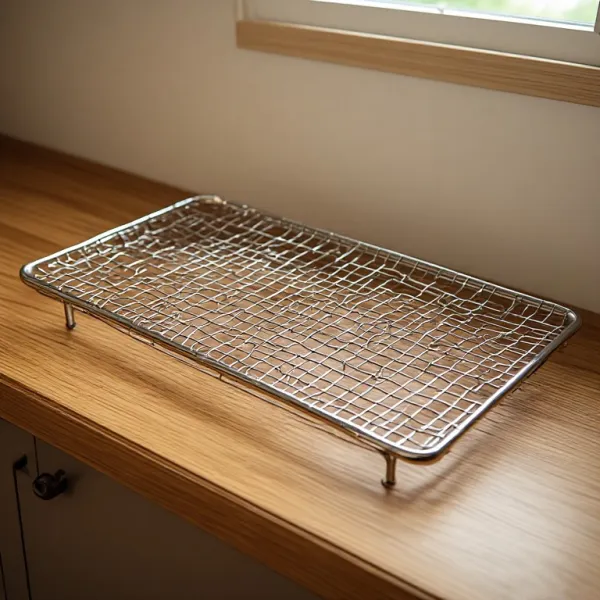
The 1–2 minute rest on a wire rack is not optional. Croissant dough is loaded with butter, and when the croffle comes off the iron, some of that butter is still hot and liquid, softening the crust from the inside. Setting it on a plate traps steam from the bottom, instantly making it soggy. A wire rack lets air circulate on all sides, the butter re-solidifies, and the crust hardens into a proper snap. The cinnamon sugar coating, which is soft right out of the iron, firms into a crackly glaze during this rest.

Serve within 5–10 minutes. These do not hold well — the crust softens significantly as the butter redistributes over time. If you’re cooking for a group, keep finished croffles in a single layer on a wire rack in a 250°F oven for up to 20 minutes. Reheating in a toaster oven at 375°F for 3–4 minutes largely restores the crispiness.


🥗

Make It Healthier

Love Croffles (Viral Korean Croissant Waffles) but want a lighter version? Try these simple swaps:

  • ✓Use Pillsbury Crescent Rolls Made with Less Fat (or the reduced-fat variety if available) to cut about 15% of the calories with minimal textural difference.
  • ✓Skip the sugar coating and serve with a tablespoon of honey and fresh berries instead — you lose the caramel crust but gain real fruit sweetness and flavor.
  • ✓The savory version (shredded cheese + herbs, no sugar) eliminates 8g of added sugar per croffle entirely — pairs well with a fried egg on top.
  • ✓One croffle (instead of two) with a side of full-fat Greek yogurt and fresh fruit makes a complete, more balanced breakfast.

Frequently Asked Questions

What is a croffle?

A croffle is croissant dough pressed in a preheated waffle iron. The name combines 'croissant' and 'waffle.' The iron's heat caramelizes the butter in the dough while simultaneously creating a crispy grid exterior and a soft, flaky interior — something neither a croissant nor a waffle achieves on its own. The pastry was created by Irish chef Louise Lennox around 2017, became a South Korean café phenomenon by 2019–2020, and went viral globally on TikTok in 2021–2022.

What dough do I use for croffles?

Pillsbury refrigerated crescent roll dough (the tube in the refrigerator section) is the standard shortcut and makes excellent croffles. Use the plain sheet version if you can find it — regular crescent roll triangles work equally well, just pinch two together at the seam before forming. For flakier, more authentic results, use store-bought croissant dough from the refrigerated section at Trader Joe's or Whole Foods. Homemade laminated dough works but is overkill for this application — the tube dough caramelizes beautifully.

How do I know when croffles are done?

Deep golden brown on both sides — not pale yellow, not quite dark brown. At the right doneness, the steam from the iron slows from a steady hiss to an occasional puff, which signals the dough's moisture has cooked off and the caramelization phase has started. In practice: after 2 minutes, open the iron and look. If the croffle is still pale yellow, close it for another 30–60 seconds. A golden-brown croffle will also have visibly caramelized edges along the grid lines and will release cleanly from the iron without pulling.

Why did my croffles turn out doughy inside?

Two causes: the waffle iron wasn't fully preheated, or you opened the lid too early. Croissant dough contains a lot of butter, which needs a fully hot iron surface to sear quickly and start caramelizing while the interior cooks through. A lukewarm iron just steams the dough without browning it. Preheat the iron for at least 5 minutes on medium-high, and don't lift the lid for the first 2 minutes — the dough needs to set before the layers can separate cleanly.

Can I make croffles ahead of time?

Croffles are at their best within 5–10 minutes of cooking. Like all laminated pastries, they lose their crunchy exterior as the butter and moisture redistribute — a croffle from an hour ago will be noticeably softer and less satisfying. If you need to batch-cook them (for a brunch gathering), keep them in a single layer on a wire rack in a 250°F oven to hold for up to 20 minutes. Reheating in a toaster oven at 375°F for 3–4 minutes largely restores the crispiness.

What's the difference between a croffle and a regular waffle?

The main difference is the dough. Waffle batter is a pourable, leavened mixture (typically flour, eggs, buttermilk, and baking powder) that puffs up as it cooks. Croffle dough is pre-laminated — thin layers of pastry and butter pressed together — which creates a denser, flakier texture with visible layer separation when you pull it apart. Croffles are also much richer and more buttery than waffles, and the surface caramelizes more deeply because of the butter content.

Love this recipe? Share it!

Free PDF: our 12 most-wanted copycat recipes — instant download.

Made it? Buy us a coffee

Every recipe here is free, with no paywalls. If this one was a hit at your table, a small tip keeps new copycats coming.

$

Ratings & Reviews

—
No ratings yet

Rate this recipe

Click a star to rate

Leave a Review

0/500

CS

Copycat Spices Editorial

Researched + fact-checked. Every recipe on Copycat Spices is built from published sources — official ingredient lists, brand-published recipes, interviews and food-science references — and fact-checked before it goes live, then written as clear, step-by-step instructions for home cooks of all skill levels.

Learn more about our mission →