Pin It

Viral TikTok Mini Croissant Cereal

Viral TikTok Mini Croissant Cereal
Jump to Recipe
Prep 20 min Cook 12 min Serves 2
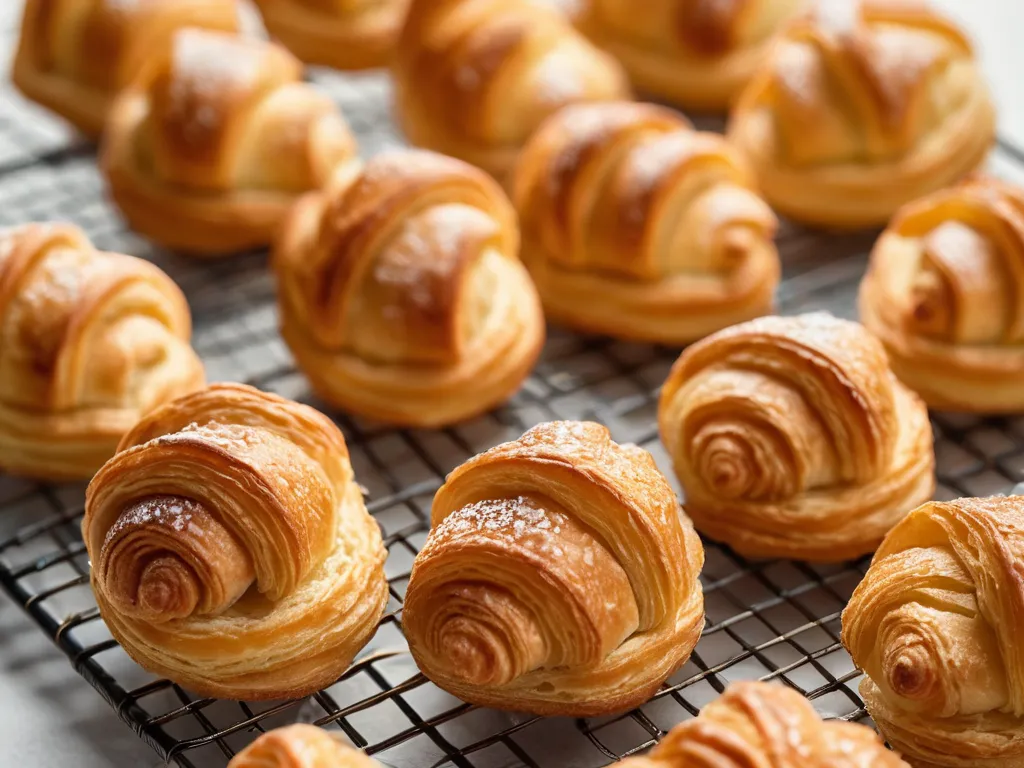
Quick answer: Preheat oven to 375°F and line two baking sheets with parchment. Roll out one sheet of thawed puff pastry on a lightly floured surface to roughly 12x12 inches. Cut into small triangles — a 1.5-inch base is the sweet spot for cereal-sized croissants. Starting at the wide base of each triangle, roll firmly toward the tip to form a mini croissant shape (about the size of a grape); curve the ends inward slightly. Place on parchment with the tip tucked under. Brush with beaten egg. Sprinkle with cinnamon-sugar. Bake 10–12 minutes until deeply golden — they puff dramatically in the first 5 minutes. Pour into a bowl, drizzle with Nutella or maple syrup, add cold milk, and eat immediately. The croissants stay crispy for roughly 2 minutes once milk hits them — eat fast. From one Pepperidge Farm puff pastry sheet you get 30–40 mini croissants, enough for 2 generous cereal bowls.
Viral TikTok Mini Croissant Cereal

Viral TikTok Mini Croissant Cereal

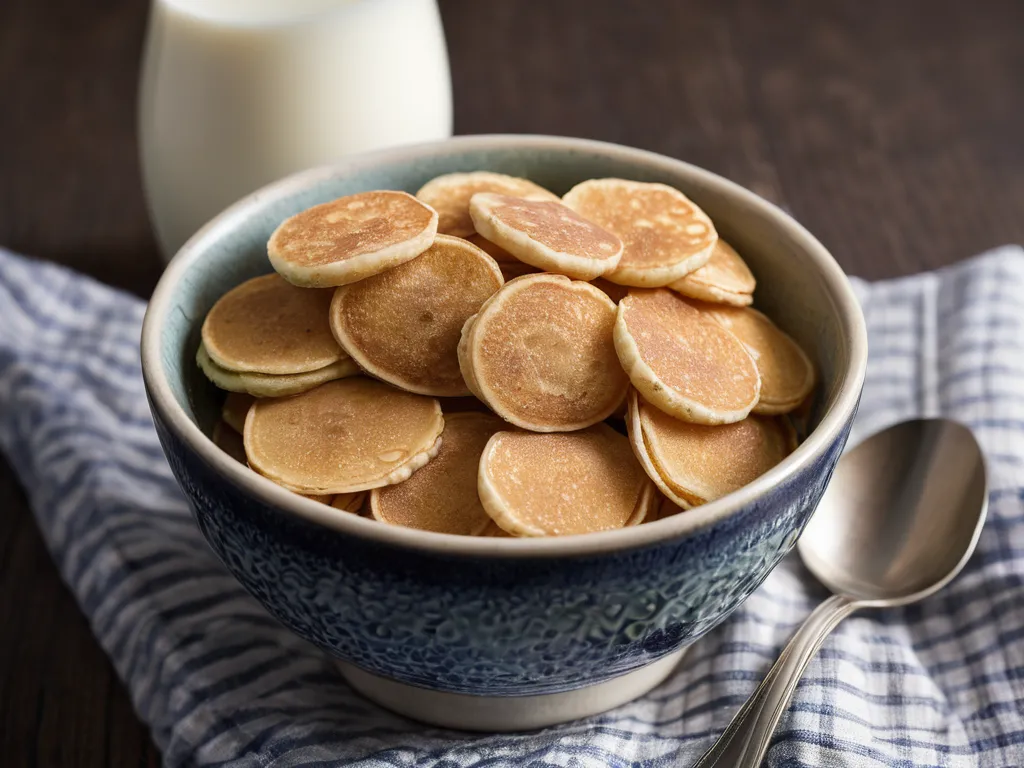
Tiny golden puff-pastry croissants baked until shatteringly flaky, eaten in a bowl with cold milk. The May 2020 bougie upgrade to pancake cereal — with the correct bake temp, triangle size, 729 butter layers, and the 2-minute crispy window before the milk wins.

Easy Prep: 20 min Cook: 12 min Total: 32 min2 servings ~$2.45/serving
Prep20 min
Cook12 min
Total32 min
Servings
2
At home~$2.45/serving
vs
Restaurant~$11.02/serving
You save ~78%

Ingredients

Instructions

💡
Pro tip: This recipe tastes even better the next day. The flavors need time to meld together in the fridge.
❄️
Storage: Keeps in an airtight container in the fridge for up to 2 weeks. Freezer-friendly for up to 3 months.
~300-500 cal/serving

The Story Behind the Recipe

Mini Croissant Cereal — Pancake Cereal’s Fancy French Cousin

Prep time: 20 min | Bake time: 10–12 min | Servings: 2

After pancake cereal conquered TikTok in 2020, the question was inevitable: what’s the next tiny-food-in-a-bowl? Mini croissant cereal arrived in May 2020 — just weeks after pancake cereal peaked — and immediately became the bougie upgrade nobody knew they needed. Tiny, golden, shatteringly flaky puff-pastry croissants the size of a grape, served in a bowl with cold milk — it’s absurd, it’s extra, and those first two minutes before the milk wins are genuinely excellent.

TL;DR

SituationRecommendation
Classic TikTok presentationWarm croissants + Nutella drizzle + cold whole milk
Best flavor upgradeDufour all-butter puff pastry, flaky sea salt, raspberry jam for dipping
Savory versionNo cinnamon sugar, egg wash only, serve with labneh and smoked salmon
Filled croissantsThin Nutella or small dark chocolate square at the base before rolling
Make-aheadRoll and refrigerate overnight; bake cold, 10–12 min
Slower soggy windowCool croissants to room temp before adding milk — buys ~90 extra seconds
Where This Trend Started

Pancake cereal launched on TikTok around April 2020, at the height of quarantine boredom, when @sydneymelhoff’s video of tiny pancakes eaten in a bowl generated hundreds of thousands of views within days. It was the right trend at the right moment: a simple idea, satisfying to watch, and perfectly irrational in the best way.

Mini croissant cereal followed the same playbook — the upgrade version. Where pancake cereal required only a squeeze bottle and a stovetop, croissant cereal added a tactile element: rolling 30–40 tiny pastry triangles by hand, one at a time, felt meditative and craft-like in a way that squeezing batter dots did not. The resulting bowl — dozens of golden, flaky, crescent-shaped miniatures — photographed better and had a more dramatic payoff when the first bite snapped.

Guiltyeats.com documented the trend as early as May 28, 2020, calling it “a crime against humanity” (in a fond way). Among the early creators credited is @wijayaachristine. The trend proved durably appealing: Brooklyn Heights bakery L’Appartement 4F offered croissant cereal as a crowdfunding incentive on TikTok and spent a full year fulfilling orders — enough staying power to fund their first brick-and-mortar store.

The trend hasn’t fully faded because the result is genuinely delicious, not just visually satisfying. This is the distinction that separates it from many food trends: you’d make it again even if no one was watching.

Why Oven Temperature Matters — The Puff Pastry Science

The most important rule in this recipe is oven temperature. Puff pastry’s signature flakiness comes from a process called lamination: during production, butter is folded repeatedly into the dough, creating hundreds of alternating thin layers of dough and butter. Classic puff pastry goes through 6 “turns” — each turn tripling the layer count — producing 729 distinct alternating layers of dough and butter. That’s what separates puff pastry from croissant dough (which gets only 3 turns, creating 27 larger, airier layers) or crescent roll dough (which is yeast-leavened and barely laminated at all).

When laminated dough enters a hot oven, the water content in the butter layers — butter is roughly 15–18% water by weight — instantly vaporizes into steam. That steam is trapped between the thin dough sheets, expands rapidly, and pushes the layers apart. The dough sets around those expanded air pockets, locking the structure in place. The result: the pastry can triple in thickness in the oven, and every layer is individually crispy and flaky.

At lower temperatures (below 350°F), the butter melts slowly rather than flash-vaporizing. Instead of creating steam, it seeps into the dough layers. The pastry bakes through but never puffs — you get a dense, slightly greasy result with no flakiness to speak of.

The right temperature for mini croissant cereal is 375°F — hot enough to flash-vaporize the butter quickly, but slightly lower than the 400°F used for a full-size puff pastry tart. The reason: mini croissants are small (grape-sized) and have a large surface-to-volume ratio. At 400°F they can brown on the outside before the center has fully set. At 375°F you get 10–12 minutes of controlled browning with the centers cooked through.

The visible sign that your oven is working correctly: at minutes 4–5, the mini croissants will visibly puff and lift off the parchment. At minute 8, the first browning appears. By minutes 10–12, they should be deep amber-gold — not pale yellow. Pale puff pastry is underbaked in the center. Deeply golden puff pastry is flaky all the way through.

The Triangle Cut: Getting the Size Right

The size of your triangles determines the size of your croissants, which determines whether this is a cereal bowl or just a plate of small pastries.

1.5-inch base triangle → grape-sized croissant → genuine cereal proportions (fits 3–4 on a spoon)

2-inch base triangle → large-olive-sized croissant → good, but eats more like a mini pastry than cereal

Under 1-inch base → too small to roll cleanly and they dry out before the center cooks

A pizza cutter is the fastest tool for cutting uniform triangles: cut the sheet into strips, then cut diagonally across each strip to create triangles in alternating directions (you get more triangles this way than cutting all the same direction). A sharp knife works just as well. Scissors are surprisingly effective.

From one Pepperidge Farm puff pastry sheet (one-half of a 17.3-oz box), expect 30–40 mini croissants at the 1.5-inch base size. That makes 2 generous cereal bowls.

The Rolling Technique

Each triangle gets rolled starting at the wide base, rolling firmly toward the tip — 4 or 5 tight rotations. The key word is firmly: a loose roll unravels in the oven. After rolling, curve the ends inward slightly to form the crescent shape, and place the croissant tip-side down on the parchment. Tucking the tip under the body of the roll prevents it from opening during baking.

The rolling takes about 15 minutes for a full sheet. It’s repetitive and slightly meditative. This is part of the appeal — the process is as satisfying as the product.

One exception: if you’re adding a filling (Nutella, chocolate, almond paste), spread or place a tiny amount at the wide base of the triangle before rolling. Keep it well away from the edges — about 1/3 inch — so it doesn’t immediately bubble out. Chocolate and Nutella fillings stay inside cleanly; high-moisture fillings like fresh fruit will steam during baking and tend to burst out.

The Egg Wash Does Two Things

Brushing with beaten egg isn’t just cosmetic. The egg wash:

  1. Seals the tip flap — the beaten egg acts as an adhesive, gluing the tip of the triangle to the body of the roll and preventing unrolling during baking.

  2. Creates golden color — egg yolk contains sugars and proteins that undergo rapid Maillard browning in the oven’s heat, producing the deep amber-gold color that makes baked goods look bakery-quality. Without egg wash, puff pastry bakes to a pale, slightly dull gold. With egg wash, it achieves the deep lacquered color that looks professional.

Brush gently — you don’t need to saturate the surface, just a thin, even coat. Immediately sprinkle with the cinnamon-sugar while the egg wash is still wet so the sugar adheres.

The 2-Minute Milk Window

This is the most important operational fact about mini croissant cereal: once cold milk hits warm puff pastry, you have roughly 2 minutes of crispy, flaky texture before the pastry absorbs the liquid and the layers collapse.

Puff pastry’s airy structure — those hundreds of steam-puffed pockets — absorbs liquid aggressively. The milk wicks into the air pockets, softens the butter layers, and collapses the laminated structure almost immediately. At 2 minutes the croissants are half-crispy, half-soft, which many people find is actually the ideal state (like a well-dunked cookie). At 5 minutes they’re fully soft — still edible, with a custard-y quality, but no longer flaky.

Strategies to manage the window:

  • Have everything ready before the croissants come out of the oven. Bowl, Nutella, milk, spoon on the counter.
  • Add milk in small amounts as you eat — pour a little, eat, pour more — rather than drowning the bowl immediately.
  • Cool the croissants to room temperature before adding milk (the thermal contrast still works; the crispness lasts about 90 seconds longer because cold milk hitting cold pastry wicks more slowly).
  • Skip the milk entirely and eat dry, with Nutella for dipping — no window, pure crunch.
Serving Options
StyleWhat to doNotes
Classic cereal bowlNutella drizzle + cold whole milkThe defining TikTok version; 2-min crunch window
Maple syrup bowlMaple syrup + cold milkSweeter; more breakfast-forward
Jam dipping bowlServe dry; small ramekin of raspberry or strawberry jamNo soggy risk; the tartness cuts the butter
Dessert bowlCooled croissants, powdered sugar, warm chocolate sauceElegant; no milk needed
Savory breakfastNo cinnamon sugar; serve with labneh + soft-boiled eggExcellent with flaky salt
Honey and fruitHoney drizzle + fresh berries + a splash of milkLighter; works for a less indulgent version
Flavor Variations

Chocolate-filled mini croissants. Place a 1/4-inch square of dark chocolate at the base of each triangle before rolling — pain au chocolat in miniature. Use 70% dark chocolate rather than milk chocolate; the slight bitterness balances the butter. When the croissants come out of the oven, the chocolate inside will have melted and begun to solidify again. Serve immediately before it fully sets.

Nutella-filled. Spread approximately 1/4 teaspoon of Nutella on the wide base of each triangle, keeping clear of the edges. Roll as usual. The Nutella filling will melt during baking and create a hazelnut-chocolate sauce inside each croissant. These are richer than the plain version; reduce the Nutella serving drizzle if serving these.

Almond croissant cereal. Spread a thin layer of almond paste (or a simple almond cream: 2 tbsp almond flour + 1 tbsp butter + 1 tbsp sugar + a few drops of almond extract, blended smooth) at the base of each triangle. Roll. After baking, scatter sliced almonds over the bowl. Serves well with a honey drizzle instead of Nutella.

Cheese and herb (savory). Skip the cinnamon sugar entirely. Sprinkle a small amount of finely grated Gruyère or Parmesan at the wide base before rolling. Season with a crack of black pepper. Brush with egg wash, add a pinch of flaky salt on top. Bake at 375°F. Serve with a small bowl of Dijon mustard or herbed cream cheese for dipping. These are excellent alongside scrambled eggs or a green salad.

Cinnamon roll-style. Mix 1 tablespoon softened butter, 1 tablespoon brown sugar, and 1/2 teaspoon cinnamon. Spread a thin smear on the base of each triangle before rolling. Bake as usual. Drizzle with a simple glaze (2 tablespoons powdered sugar + 1 teaspoon milk, whisked) immediately after baking. Skip the milk-cereal bowl presentation; serve on a small plate.

Common Problems

The croissants unroll in the oven. The egg wash didn’t seal the tip properly, or the tip wasn’t tucked under when placed on the parchment. Fix: press the tip firmly against the body of the roll before brushing with egg wash, or brush the tip specifically with egg wash before placing it on the sheet.

They don’t puff — they bake flat. The pastry was too warm when it went into the oven (was left at room temperature too long), or the oven temperature was too low. Puff pastry needs to go from cold directly into a hot oven for maximum puff. Try chilling the rolled, shaped croissants in the freezer for 10 minutes before baking.

They’re pale and doughy-tasting in the center. Under-baked. Increase the baking time by 2–3 minutes. Deeply golden is the correct color — not pale yellow. If the exterior is browning but the center tastes raw, your oven may run cold; use an oven thermometer to confirm it holds 375°F.

The filling is bubbling out everywhere. Too much filling, placed too close to the edges. Use less — 1/4 teaspoon of Nutella per triangle is plenty. Keep the filling at least 1/3 inch from the edges of the triangle.

They go soggy immediately. This is expected and not a mistake — just the physics of puff pastry in milk. The strategies above (add milk in small amounts, or skip milk entirely) are the only reliable solutions. The soggy window is built into the format.

Nutrition vs. Actual Breakfast Cereal

Mini croissant cereal is a treat, not a nutritionally optimized breakfast. Puff pastry is butter-forward: a single Pepperidge Farm sheet contains roughly 14g of fat and 150 calories per ounce. A serving of mini croissant cereal (approximately 1/2 sheet) runs about 480 calories before toppings, with 29g fat, 44g carbs, and 8g protein — more like a pastry breakfast than a bowl of Wheaties.

SourceCalories (1 serving)FatNotes
Mini croissant cereal (~15–18 minis, 1/2 sheet)~450–575~28gBefore Nutella and milk; ~32 cal per mini
Cheerios with whole milk~200~4gVery different nutritional profile
A bakery croissant~240–300~12–17gPer single croissant
Pancake cereal (same recipe size)~420~13gLower fat, more carbs

The cost comparison is simpler: a box of Pepperidge Farm puff pastry (two sheets) costs about $5–6 and makes enough for 4 cereal bowls, or about $1.25–1.50 per serving. Less than a bakery croissant, and the experience is more playful.

Storage

Mini croissant cereal is a same-day food. Once baked, the croissants lose their flakiness as they cool and start to absorb moisture from the air. They’re best eaten within 1–2 hours of baking.

If you want to make them ahead: roll and shape all the croissants, place on a parchment-lined baking sheet, cover loosely with plastic wrap, and refrigerate overnight. Bake cold the next morning — the cold rest actually improves the puff because the butter layers have time to firm up. Bake time stays at 10–12 minutes.

Leftover baked croissants reheat at 350°F for 5–6 minutes and regain some of their crispness. They won’t be as good as fresh, but they’re better than expected.


Also in our TikTok cereal series: Viral TikTok Pancake Cereal — the squeeze-bottle original that started the mini-food-in-a-bowl genre; Viral TikTok Nature Cereal — the no-cook fruit version. For more with puff pastry: Starbucks Chocolate Croissant copycat — the pain au chocolat you can make at home with store-bought puff pastry. And for the classic TikTok breakfast comparison: Copycat IHOP Pancakes — the fluffy restaurant stack explained.

Nutrition Facts

Per serving (2 servings)
Calories480
Total Fat29g
Total Carbs44g
Dietary Fiber1g
Sugars14g
Protein8g
Sodium310mg

* Estimated values based on standard recipe preparation. Actual values may vary.

🥗

Make It Healthier

Love Viral TikTok Mini Croissant Cereal but want a lighter version? Try these simple swaps:

  • Skip the cinnamon sugar and serve savory — the egg wash alone is enough, and the croissants are delicious with a sprinkle of flaky salt and a smear of labneh or cream cheese.
  • Use reduced-fat milk or oat milk to trim calories while keeping the cereal-bowl experience. Oat milk's mild sweetness works particularly well with the buttery puff pastry.
  • Reduce portion to about 15 mini croissants and serve alongside fresh berries and Greek yogurt instead of milk — adds protein and fiber without changing the fun.
  • Serve them dry with a tiny jar of jam for dipping instead of pouring milk — avoids the 2-minute clock pressure and cuts calories by skipping the milk.

Equipment You'll Need

Two baking sheets with parchment

Parchment prevents sticking and lets you keep one sheet in the oven while the second batch is rolling

Pizza cutter or sharp knife

The fastest way to cut uniform triangles from puff pastry. A pizza cutter lets you cut the whole sheet in under 30 seconds

Pastry brush

For egg wash — the egg wash is what gives mini croissants their bakery-golden color and glossy finish

Rolling pin

For thinning the puff pastry sheet slightly before cutting. Optional but produces more consistent triangle sizes

Frequently Asked Questions

What puff pastry should I use for mini croissant cereal?

Store-bought frozen puff pastry is correct for this recipe — not homemade croissant dough, which uses a different lamination technique and proofing step. Pepperidge Farm puff pastry sheets are the most widely available option in the U.S. and produce excellent results: each 17.3-oz box contains two sheets, and one sheet makes 30–40 mini croissants depending on the triangle size. Dufour Pastry Kitchens makes an all-butter puff pastry that produces a richer, more complex flavor and slightly more dramatic puffing due to the higher-quality butter. The key rule regardless of brand: thaw in the refrigerator overnight, not at room temperature. Cold pastry rolls cleanly and puffs better; room-temperature pastry becomes greasy and produces a denser result.

Why do mini croissants go soggy in milk so fast?

Puff pastry is a laminated dough — hundreds of thin alternating layers of dough and butter, separated by air pockets created during baking. Those air pockets are the structural core of the flaky texture, and they absorb liquid almost instantly on contact. When you pour cold milk over warm croissants, the air pockets rapidly fill with milk, the butter layers soften, and the crispy laminated structure collapses. This is the same reason croissants from a bakery turn soggy quickly when dunked in coffee. The 2-minute window is real: eat within 2 minutes of adding milk for the maximum crunch-to-soft ratio. If you want to extend the window, pre-cool the croissants to room temperature before adding milk — the thermal contrast still works and the crispness lasts about 90 seconds longer.

What makes puff pastry puff? Why does bake temperature matter so much?

Puff pastry contains hundreds of alternating layers of dough and butter created by a process called lamination — repeatedly folding and rolling the pastry with a layer of butter between folds. Commercial puff pastry like Pepperidge Farm typically goes through multiple fold cycles that create roughly 144 or more individual layers. When the laminated dough enters a very hot oven (400–425°F), the water content in the butter layers (butter is roughly 15–18% water) instantly vaporizes into steam. That steam is trapped between the thin dough layers, expanding and pushing the layers apart. The dough layers simultaneously bake and set, holding their newly separated positions. The result: the pastry expands dramatically — often tripling in thickness — and each layer is individually flaky and distinct. At lower temperatures (below 375°F), the butter melts slowly rather than flash-vaporizing; it seeps into the dough layers instead of creating steam. The pastry bakes through but doesn't puff, producing a dense, greasy result instead of a flaky one. This is why the oven temperature instruction in this recipe is not negotiable — the entire flaky texture of the mini croissants depends on the correct heat.

Can I roll the mini croissants the night before?

Yes — this is actually one of the better make-ahead options for this recipe. Roll and shape all the mini croissants, place them on parchment-lined baking sheets, and cover loosely with plastic wrap. Refrigerate overnight (up to 18 hours). The cold rest has an added benefit: the rolled croissants firm up in the refrigerator, which helps them hold their shape more cleanly during baking and produces slightly better puff. Brush with egg wash and sprinkle with cinnamon-sugar immediately before baking (not the night before — the egg wash becomes sticky and the sugar draws moisture). Pull from the refrigerator, egg-wash and season, bake immediately at 375°F. The bake time remains 10–12 minutes.

What's the difference between mini croissant cereal and pancake cereal?

Mini croissant cereal and pancake cereal are both TikTok 'tiny food in a bowl' trends, but the process is completely different. Pancake cereal uses a leavened batter (flour, milk, egg, baking powder) cooked in a pan — the tiny pancakes puff because baking powder releases CO2 when heated. The texture is soft and pillowy, with a mild sweetness. Mini croissant cereal uses laminated puff pastry baked in an oven — the flakiness comes from steam in butter layers separating the dough into hundreds of individual sheets. The texture is shattery and crispy with rich butter flavor. Pancake cereal has a roughly 2-minute window in milk before going soft; mini croissant cereal has the same 2-minute window but goes softer faster because the laminated layers absorb liquid more aggressively than a spongy pancake. On effort: pancake cereal takes longer to cook (20–25 minutes of pan batches) but requires no oven. Mini croissant cereal has a 10–12 minute bake but requires rolling 30+ tiny croissants by hand, which takes about 15 minutes. Both take roughly 30–35 minutes total.

What are the best serving options beyond just milk?

The most popular TikTok serving style is Nutella drizzled over warm mini croissants before the milk goes in — the Nutella softens from the heat and creates a chocolate-hazelnut sauce that coats each croissant as you eat. The second most popular is maple syrup, which complements the buttery puff pastry and works in the cereal-bowl format more like a warm syrup-drenched breakfast. For a Parisian-inspired version, skip the milk entirely: serve the warm croissants with a small ramekin of high-quality strawberry or raspberry jam for dipping. The jam's tartness cuts through the richness of the buttery pastry. Savory version: egg wash but no cinnamon sugar, serve with a bowl of soft-boiled egg and labneh or cream cheese. The croissants become savory dippers. Dessert version: let the croissants cool completely, dust with powdered sugar, and serve with a small bowl of warmed raspberry compote.

Can I add a filling before rolling the croissants?

Yes, and it works well for several fillings. The technique: spread or place the filling on the wide base of the triangle (about 1/3 inch from the edge, so it doesn't leak immediately) before rolling. Fillings that work: a thin spread of Nutella (about 1/4 teaspoon per triangle — don't overfill or it bubbles out); a small square of dark chocolate placed at the base (pain au chocolat style, about 1/4-inch square); a teaspoon of almond paste or frangipane spread across the base; a small amount of brie or gruyère for a savory cheese version. The key constraint: fillings with high moisture content (fresh fruit, cream cheese) will steam during baking and can cause the pastry layers to separate or the filling to bubble out excessively. Chocolate, Nutella, almond paste, and aged cheeses work best because their moisture content is low enough to stay inside during the 10–12 minute bake.

Love this recipe? Share it!

Shop the tools

The right tools make all the difference. We earn a small commission if you buy through these links — at no extra cost to you.

Free PDF: our 12 most-wanted copycat recipes — instant download.

Ratings & Reviews

No ratings yet

Rate this recipe

Click a star to rate

Leave a Review

0/500

CS

Copycat Spices Test Kitchen

Every recipe on Copycat Spices is developed and tested in our home test kitchen. We reverse-engineer beloved restaurant dishes and refine each one until the flavors and the instructions work reliably for home cooks of all skill levels.

Learn more about our mission →