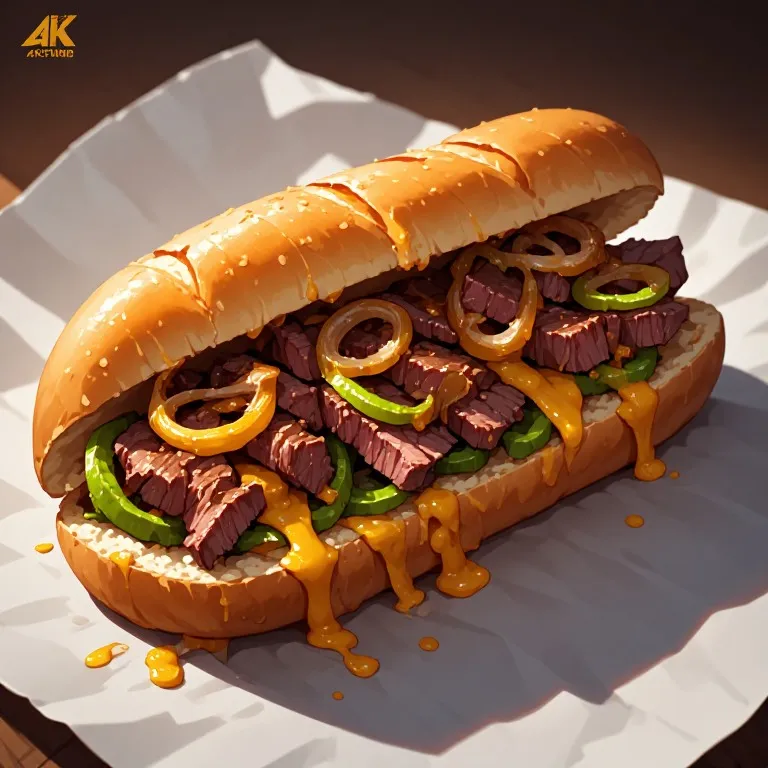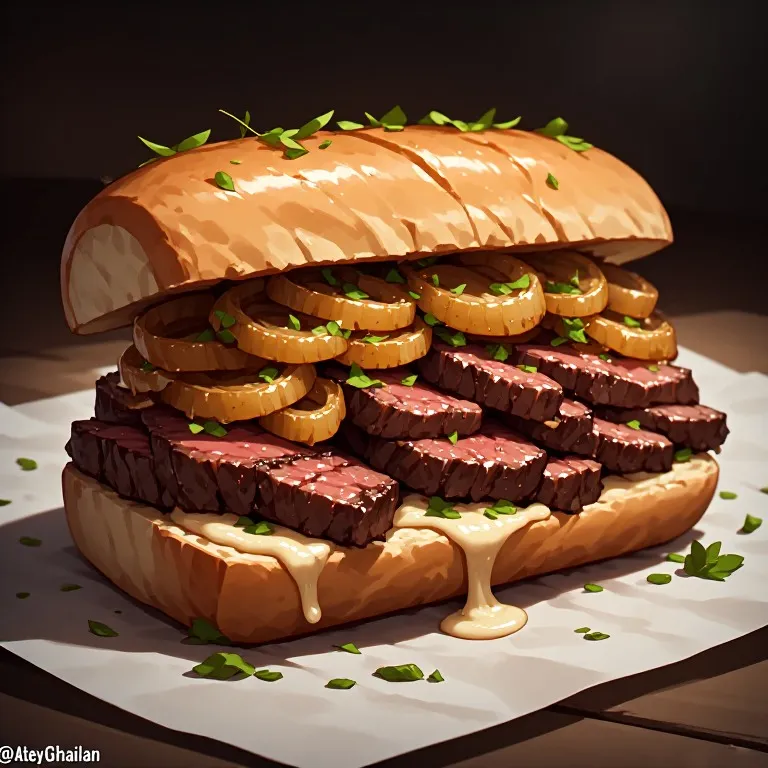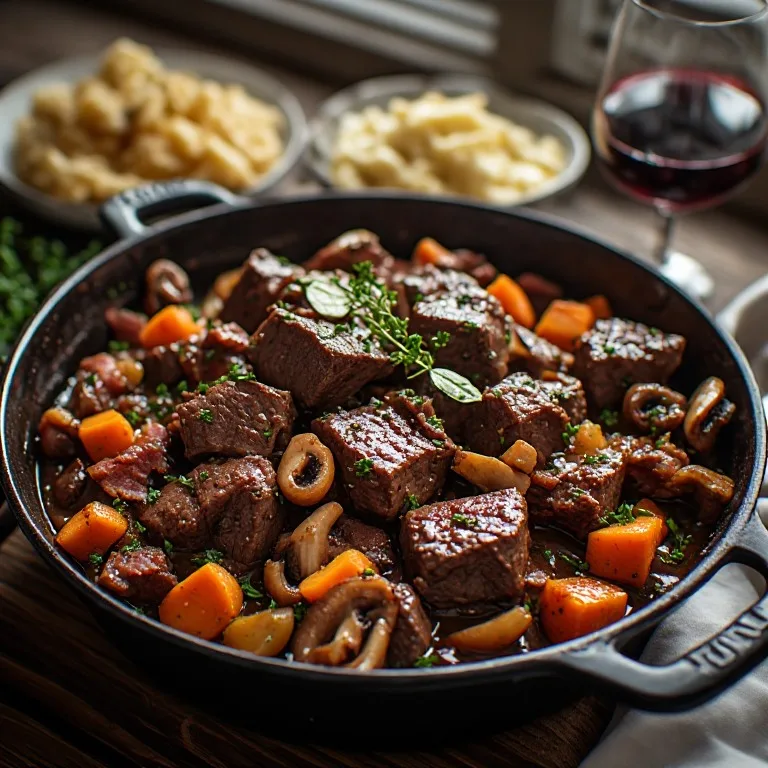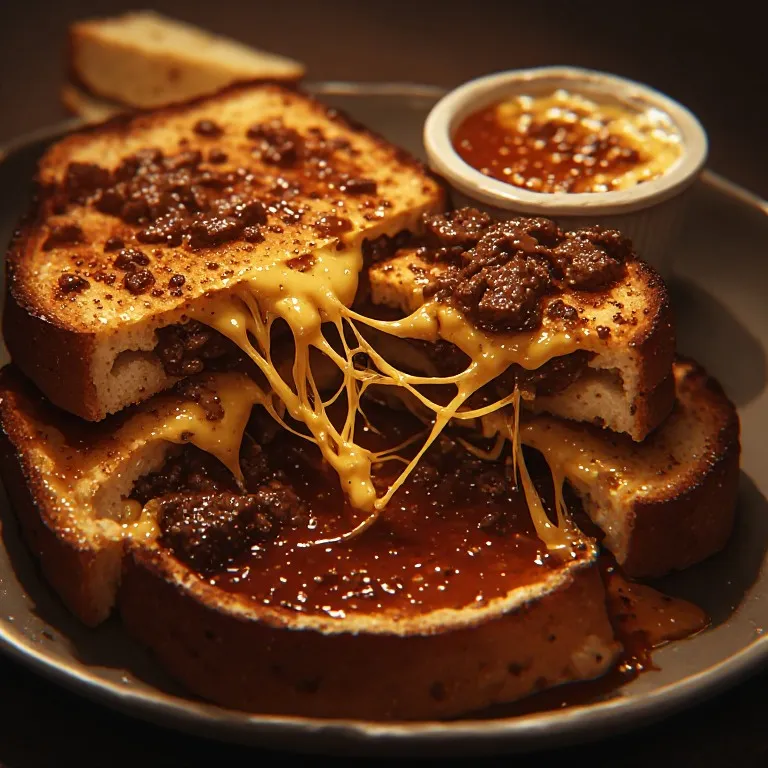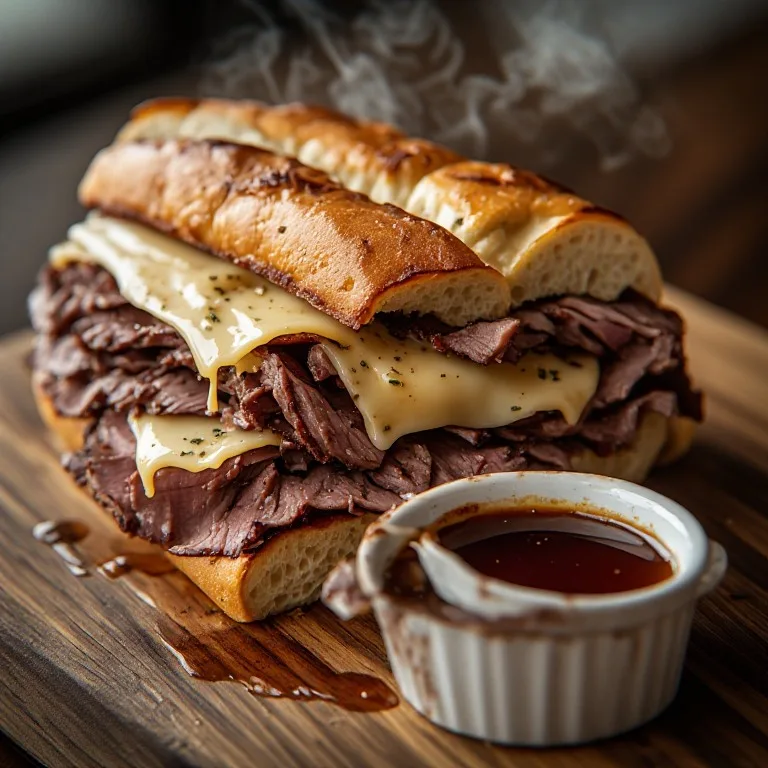



French Dip Sandwich — Slow-Roasted Beef, Au Jus, Melted Swiss
The French dip has one trick that no other sandwich has: it gives you a sauce to dip it in. That dipping ritual — loading a bite with beef and melted Swiss, dragging it through hot au jus, and eating it while it’s still dripping — is one of the most satisfying eating experiences in American comfort food. On TikTok, it generates a particular category of reaction: people watching and immediately deciding they need to make it right now.
The recipe is also unusually practical for a weeknight crowd-feeder. A single braise makes six substantial sandwiches. The au jus comes free, built from the braising liquid. It actually improves if made a day ahead. And the assembly is straightforward enough that anyone can execute it once the roast is done.
The LA Origin Story
The French dip was born at Philippe the Original in downtown Los Angeles, where it’s been served since 1918. The oft-repeated story is that a cook accidentally dropped a French roll into meat drippings and served it to a police officer who reportedly came back the next day asking for the same thing. The “French” refers to the style of roll — a crusty French-style bread — not the country of origin.
Cole’s Pacific Electric Buffet, also in downtown LA and opened in 1908, claims an earlier version of the same sandwich. The argument between these two restaurants has been ongoing for over a century and shows no signs of resolution.
The Braise: Building the Au Jus
The sear is not cosmetic. When you brown a roast at high heat, the Maillard reaction creates hundreds of complex flavor compounds in the crust and on the pan surface — the fond (the brown bits). When liquid goes into that pan, it dissolves the fond and becomes the base of your au jus. If you skip the sear and just braise the raw roast, your au jus will be thin and flat.
The braising liquid is minimal — beef broth, water, Worcestershire, soy sauce, thyme, and bay. The soy sauce adds glutamates (savory depth) without tasting Asian; most people who taste it can’t identify it but know the broth tastes richer. Worcestershire adds complexity and color.
Slicing and Au Jus Technique
After a 3-hour braise, the chuck roast will be very tender — slice or pull, depending on preference. For the most visually satisfying sandwich, slice thin against the grain for clean, elegant pieces that layer. For the most tender, richest-tasting version, pull the meat slightly so it has some texture variation.
The deli trick is the brief return to simmering au jus before assembly. Thirty seconds to a minute in hot broth reheats the beef, re-coats every surface in the reduced beefy liquid, and keeps the sandwich moist from the inside out.
The Dip Itself
Pour the hot au jus into individual ramekins or small cups. The ratio matters: enough to dip a full sandwich bite without fishing around, but not so much that the bread sits in liquid and gets soggy while you eat. About 4-5 oz per person, served in something small enough that the bread can be dunked quickly and withdrawn.
Variations
The Slow Cooker Shortcut: Same recipe, skip the oven — sear on the stovetop, transfer to the slow cooker with all the liquids, 7 hours on low. Simmer the strained liquid for 15 minutes to tighten it. This is the most popular TikTok version because you can start it in the morning and build the sandwich at dinner.
The Loaded Version: Add caramelized onions (the 30-minute kind) and roasted pepperoncini on top of the Swiss before broiling. The sweetness and brine elevate an already great sandwich.
The Cheese Board French Dip: Use sliced prime rib instead of braised chuck, a proper beef consommé-based au jus, and aged gruyère instead of Swiss. This is the restaurant-tier version — expensive to build but extraordinary to eat.