


Viral TikTok Red Wine Braised Short Ribs — The 200°F Rule
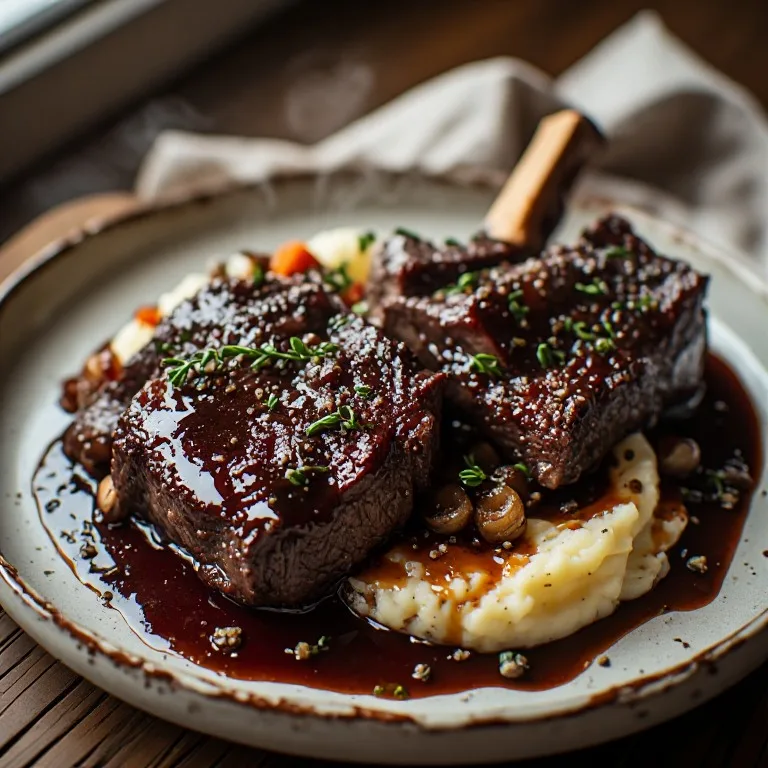
Every fall, braised short ribs reclaim TikTok. The fork-tender pull, the glossy mahogany sauce, the single rib resting on a pillow of mashed potatoes — it photographs like fine dining but comes from a Dutch oven in your home kitchen.
The recipe is not complicated. But there is one thing most home cooks get wrong, and it produces ribs that are technically cooked but subtly disappointing: they pull the ribs too early.
Why the 200°F Rule Matters
Short ribs are cut from the chuck — the heavily worked shoulder and rib section of the cow. That work means a lot of connective tissue: collagen. Collagen is what makes short ribs tough when undercooked and silky when fully braised.
Here’s the science: collagen begins softening around 160°F, which is why your ribs technically become “food-safe” well before they’re done. But collagen doesn’t fully convert to gelatin — the substance responsible for that luxurious, pull-apart texture — until 200–205°F. At 185°F, the ribs look done, a fork goes in, and they taste good. At 200°F, the same fork slides through with no resistance and the meat falls from the bone in sheets. The difference is 15–20 more degrees and another 45 minutes of patience.
This same principle is why the braising liquid turns glossy: gelatin from the bones and collagen releases into the wine, and when you strain and reduce that liquid, it thickens naturally. You’re not making a starch-thickened sauce — you’re concentrating the biological byproduct of a long, patient braise.
The Sear Matters More Than You Think
The single most visually dramatic moment in braised short rib TikToks is the sear — and it’s also the most skipped step. A proper sear on short ribs takes 12–15 minutes of actual standing-over-the-pot work. All four long surfaces. Ripping hot oil. Deep mahogany color, not just brown. The fond that forms on the bottom of the Dutch oven — those caramelized bits — dissolves into the wine and carries more flavor than any other step in the recipe.
Crowding the pot dilutes the heat and you steam instead of sear. Work in batches. The extra 10 minutes is the sauce.
The Wine Is the Sauce
A full bottle of red wine for four ribs sounds like a lot. It isn’t. Roughly a third cooks off when you reduce it after adding; the rest braises for 3+ hours with the bones and aromatics, absorbing their flavor and releasing gelatin. What comes out is not wine — it’s a transformed braising liquid that reduces in minutes to a sauce with no resemblance to the bottle you started with.
Use something you’d drink. Not expensive — a $12 Malbec or Côtes du Rhône is perfect. Just not “cooking wine,” which is loaded with salt and produces a briny, flat sauce regardless of how long you braise.
Make-Ahead Is Better
The overnight rest trick is not a shortcut — it’s an improvement. After braising, the fat from the ribs rises and solidifies as a white cap over the chilled liquid. Lift it off cleanly. The cold also firms the meat so you can plate and portion without the ribs collapsing. Reheating them gently in the reduced sauce lets them absorb flavor they didn’t have time to pick up fresh out of the oven.
If you’re serving guests, braise two days ahead, refrigerate, and give yourself the second day entirely for sauce reduction and reheating. The ribs improve. You stay calm.
Step-by-Step
The full recipe is above. Key checks:
- Ribs are completely dry before searing — moisture = steam = no crust
- Sear all four sides, not just two
- Liquid comes halfway up the ribs, not over them
- Internal temp hits 200–205°F — use a thermometer
- Strain, skim fat, reduce to 1 cup sauce — it will look dramatic and be worth it
- A knob of cold butter off heat is optional but makes the sauce look like restaurant plating
The result: short ribs that fall from the bone in sheets, a sauce that glazes itself, and the exact pull-apart reveal that made this dish a fall TikTok staple. Nail the 200°F rule and the sear, and the rest is just patience.