

Steak Sandwich — Seared Ribeye, Caramelized Onions, Garlic Butter
A proper steak sandwich requires two things that most home cooks skip: patience and a cast iron skillet. The patience is for the onions — real caramelization takes 25-30 minutes at medium-low heat, not 5 minutes at high. The cast iron is for the steak — you need ripping heat to create a crust in the 2-3 minutes per side it takes to hit medium-rare. Together, these two elements are why a great steak sandwich transcends the sum of its parts.
Why Sandwich-Tok Loves This Build
The steak sandwich is a natural TikTok recipe because it has cinematic moments built in: the sizzle when the steak hits the cast iron, the slow transformation of raw onions into jammy gold, the melt of provolone under the broiler, and the cross-section reveal when you slice it. It also scales to any budget — ribeye is the dream, flat iron is the weeknight workhorse.
Caramelized Onions: The Real Work
This is where most steak sandwich fails start. “Caramelized” onions that took 8 minutes are sautéed onions. Real caramelization is a slow Maillard reaction that breaks down the onion’s sugars into deeply complex, sweet-savory compounds. Medium-low heat, a wide pan, a pinch of sugar to help browning, and 25-30 minutes of occasional stirring. That’s it.
A splash of beef stock toward the end deglazes the dark fond from the pan bottom and gets it back into the onions. This is concentrated flavor — don’t waste it.
Steak Technique
Dry the steak completely. Any surface moisture creates steam in the pan, which prevents browning. Season aggressively — far more than you think is reasonable. A thick layer of coarse salt and cracked black pepper on both sides.
Get the cast iron screaming hot before the steak goes in. You should see a wisp of smoke. Add the oil (not butter — it burns at searing temperatures), place the steak, and don’t touch it. The crust releases naturally when it’s ready. Two to three minutes per side for medium-rare. Add cold butter and a smashed garlic clove in the last 30 seconds and tilt the pan to baste the steak continuously. This is the move.
Building the Sandwich
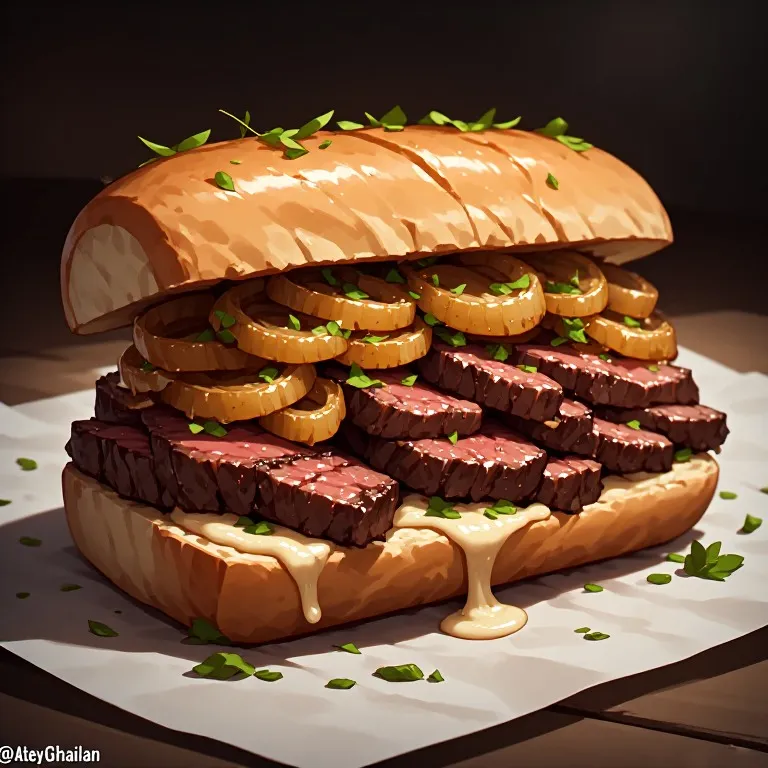
Rest the steak on a wire rack (so air circulates underneath) while you toast the rolls in the same cast iron with the residual garlic butter. Every bit of flavor from that pan is going on your bread. Slice the steak thin against the grain — the visual reveals the technique and the result is tender, not chewy.
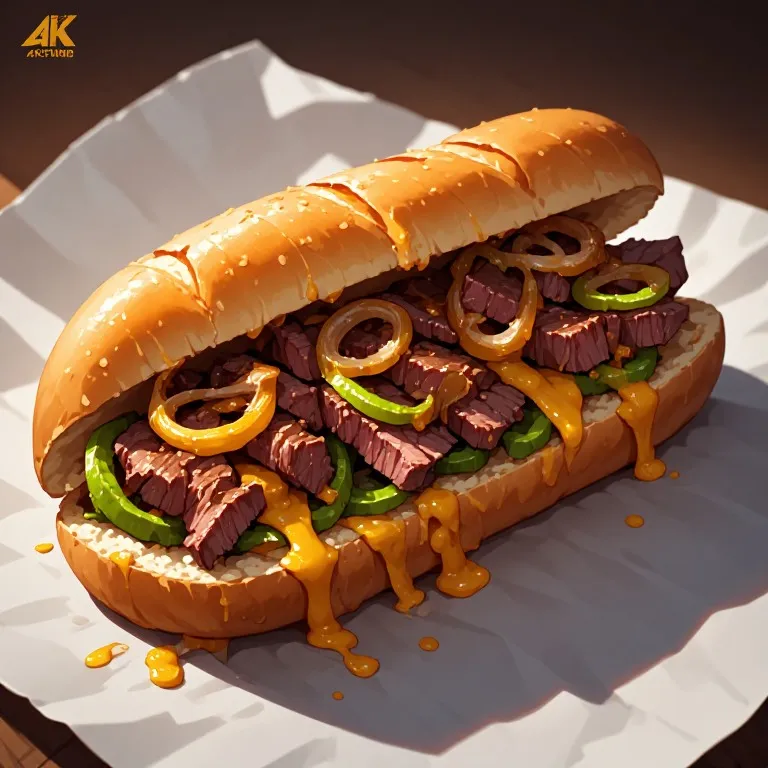
Stack: steak slices, provolone under the broiler, caramelized onions on top of the cheese, horseradish aioli on both halves. The aioli is the counter to the richness — it has heat, acid, and sharpness that cuts through the beef fat and cheese.
Variations
The French Influence: Swap the horseradish aioli for Dijon-herb butter. Add thinly sliced cornichons for brine and crunch. This is a French-inspired take that’s cleaner and brighter than the original.
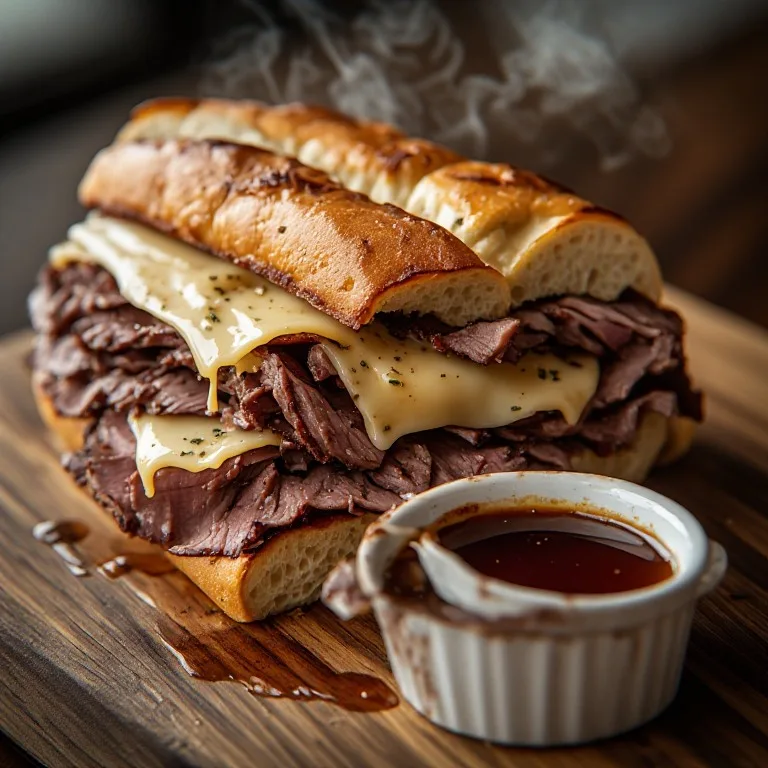
The Italian Beef Variant: Skip the horseradish aioli and instead spoon hot giardiniera on top of the caramelized onions. Dip the whole sandwich in warm beef au jus. This blurs the line between a steak sandwich and a Chicago Italian beef.
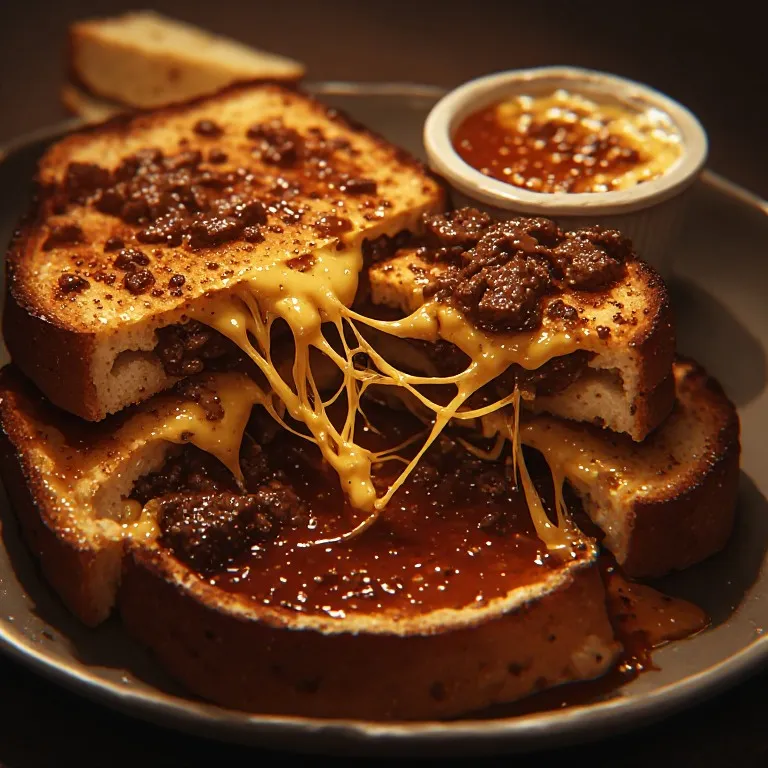
The Open-Face Steak Toast: Skip the roll and serve the steak and onions on thick-cut sourdough toast spread with bone marrow butter or compound herb butter. Top with a fried egg. This is brunch, lunch, and dinner simultaneously.