


The French onion baked rice that FoodTok keeps rediscovering every fall has one technique that makes every video worth watching: you do nothing. No stirring, no watching, no pulling a pot off the heat at the right moment. You pour everything into a dish, seal it completely with foil, slide it into the oven, and come back 55 minutes later to rice that has absorbed an entire can of French onion soup into every grain — fragrant with beef, thyme, and caramelized onion — topped with Gruyère that is about to go under the broiler.
The TikTok reveal is the foil lift. When you peel back two layers of crimped aluminum after nearly an hour, the steam that hits you smells exactly like French onion soup. The rice has disappeared into the broth; there is no standing liquid. What goes from there is two steps: scatter cheese, broil until spotted gold.
Why this works
Long-grain white rice at a 1:2 ratio with liquid — cooked in a sealed environment — is one of the most reliable techniques in American casserole cooking. The foil traps steam, which circulates through the dish and cooks the upper layers of rice the same way direct liquid heat cooks the bottom. The result is evenly cooked rice without any stirring, monitoring, or guessing at water absorption.
What makes the French onion version different from plain baked rice is the condensed soup. Campbell’s condensed French onion soup is not diluted in this recipe — you use it straight from the can. Undiluted condensed soup is thick, intensely flavored, and salty; it acts more like a flavor base than a liquid. Combined with beef broth and Worcestershire sauce, it creates a broth that is much more concentrated than anything you could achieve with broth alone in the time it takes for the rice to cook. The butter pats on top melt into the liquid during the bake and get absorbed grain by grain, producing a rice that tastes noticeably richer than the ingredient list suggests.
The cheese finish is practical as well as visual. Gruyère melted over the top of the casserole provides the same function it does on the crouton in a classic French onion soup: it seals in the moisture and adds the dairy richness that rounds out the beef and onion flavor.
The one thing that makes baked rice fail
The foil seal. Every report of dry, crunchy rice on top with mushy rice on the bottom is a foil seal failure. The steam that builds up under the foil cooks the upper half of the rice; steam escaping through gaps in the foil leaves the top layer to cook in dry oven heat, which takes much longer and produces an uneven result.
Use two sheets of heavy-duty foil — one lengthwise, one crosswise — and crimp both firmly to the outer rim of the pan rather than laying them loosely across the top. The foil should feel taut against the pan edge all the way around. This is less intuitive than it sounds: most people cover a baking dish by setting one sheet of foil on top, folding the edges down once, and calling it done. That method works for dishes that are meant to steam loosely; it does not maintain the pressurized steam environment this rice needs. Crimp the foil as tightly as you would seal a tent over food you were storing — that degree of snugness is correct here.
What you’re actually building
The condensed soup, broth, Worcestershire sauce, and melting butter add up to about 3¼ to 3½ cups of liquid for 1½ cups of dry rice. Long-grain white rice absorbs liquid at roughly a 2:1 ratio; the slight excess here covers some evaporation and ensures the rice does not turn out dry. When the foil comes off after 55 minutes, you should see no standing liquid but grains that are fully hydrated and slightly glistening from the butter.
The Gruyère topping is not a garnish — it is a structural component of the finished dish. The fat in the cheese binds the surface layer of rice into a cohesive crust that portions cleanly. Without the cheese, baked rice casseroles tend to fall apart when served; with it, each scoop holds together.
Variations
With caramelized onions: Slice 2 large yellow onions pole-to-pole and cook them in 2 tablespoons of butter over medium heat for 40 to 45 minutes, stirring every 5 minutes, until deeply golden and jam-soft. Spread them on top of the rice before sealing with foil and baking as directed, or lay them on top of the rice after removing the foil and before adding the cheese. The homemade caramelized onions add a sweeter, more complex depth than the condensed soup alone provides. This is the “elevated” version that appears in longer-form FoodTok videos.
With chicken: Nestle 1 to 1½ pounds of bite-sized boneless chicken thigh pieces directly into the raw rice-and-broth mixture before sealing. They cook completely during the 55-minute bake. Use thighs, not breasts — chicken breasts will dry out during the long covered bake.
Mushroom and herb: Add 8 ounces of sliced cremini mushrooms to the liquid mixture before sealing. The mushrooms cook down and contribute umami depth. Replace half the Gruyère with sharp Provolone for a more assertive cheese flavor.
This casserole scales well: for 6 servings, use a 2-quart (8×11-inch) or larger dish with 2 cups of rice, 1½ cans of condensed soup, and 2½ cups broth, and extend the covered bake time by 5 to 8 minutes. The foil-seal rule becomes even more important at larger volumes.
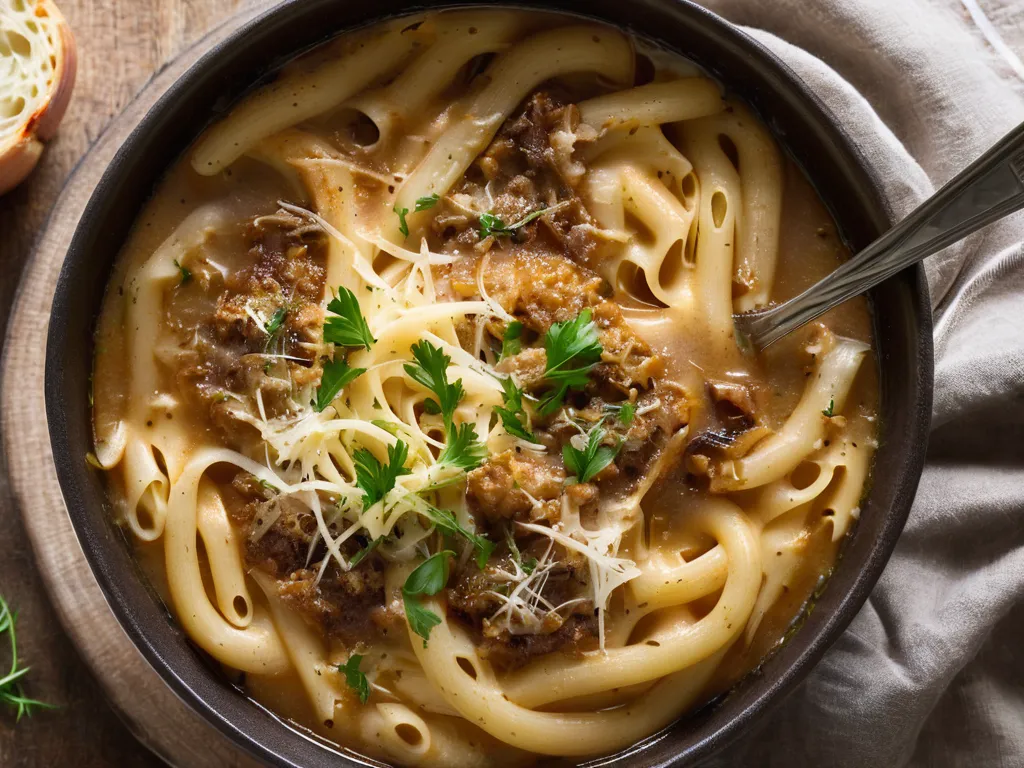
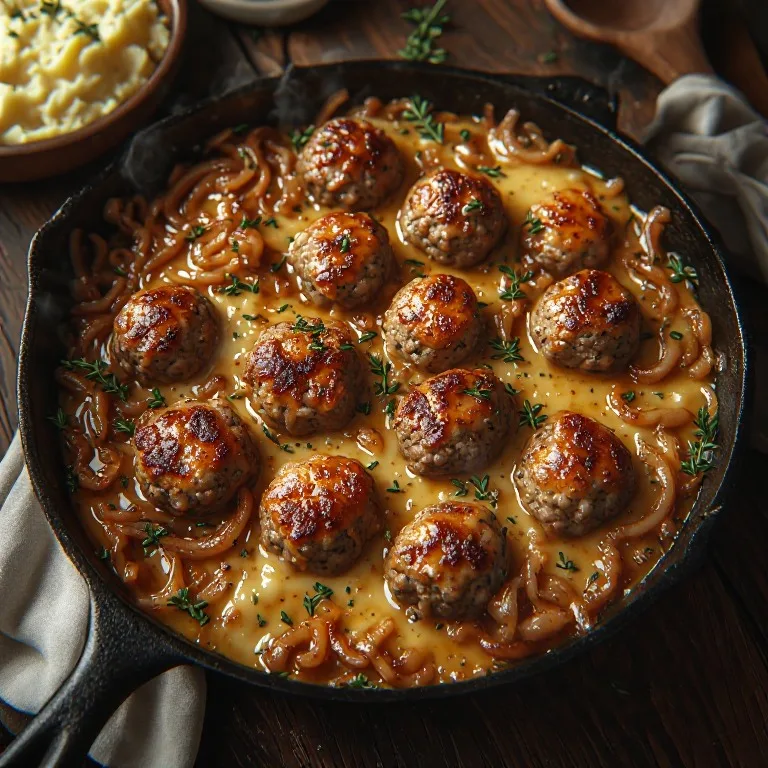
This recipe is related to the other French onion format recipes on the site — the French onion soup pasta, French onion chicken, and French onion meatballs all use the same caramelized onion and beef broth flavor profile in different formats. For other dump-and-bake rice dishes in the same one-dish style, see the stick of butter chicken and rice and one-pan chicken and rice.