


Pin It

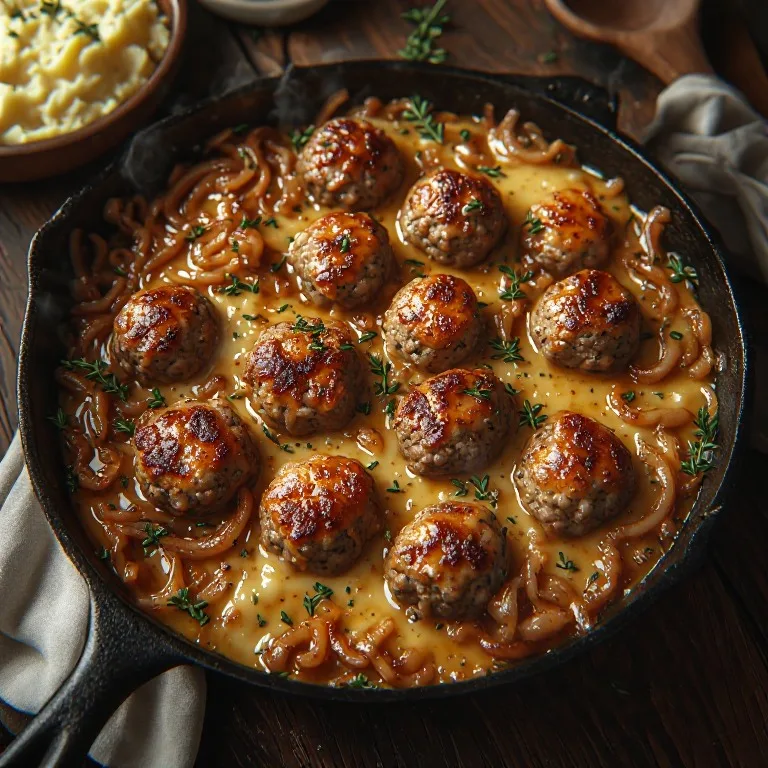
Viral TikTok French Onion Meatballs (One-Skillet, Gruyère-Broiled)

Viral TikTok French Onion Meatballs (One-Skillet, Gruyère-Broiled)
Jump to Recipe
Prep 20 min Cook 55 min (including 35–40 min onion caramelization) Serves 4–5
Quick answer: Soak panko in milk 5 min, mix into 1.5 lbs beef/pork, form 2-inch balls. Sear 2–3 min per side in a cast iron skillet, remove (they're not cooked through yet). Add 4 tbsp butter to the same skillet, add 3 sliced yellow onions and 1 tsp salt, cook low-and-slow 35–40 min stirring every 5 min until deep mahogany. Deglaze with 1/4 cup cognac or dry sherry, add 1.5 cups beef broth + 1 tbsp Worcestershire + fresh thyme. Nestle meatballs back in, cover and simmer 12–15 min. Top with shredded Gruyère, broil 3–4 min. Serve over mashed potatoes.

Shop the tools

Gear matched to this recipe. These are Amazon affiliate links — we may earn a small commission if you buy, at no extra cost to you.

As an Amazon Associate, Copycat Spices earns from qualifying purchases. Product images are generic illustrations, not the exact item listed.

Viral TikTok French Onion Meatballs (One-Skillet, Gruyère-Broiled)

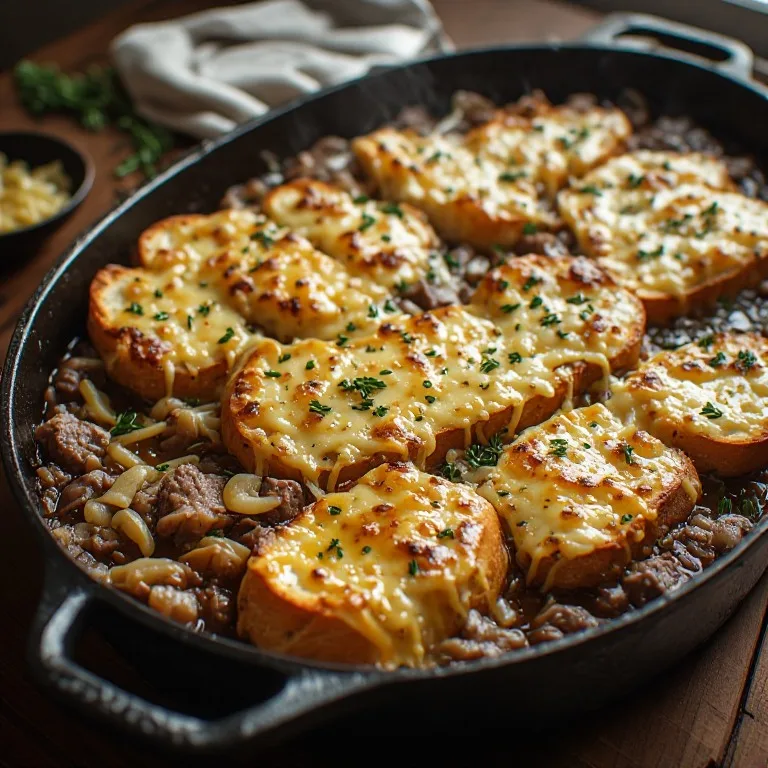
The French onion meatballs taking over TikTok: beef meatballs seared in cast iron, braised in a proper caramelized-onion sauce with beef broth and Worcestershire, then blanketed in Gruyère and broiled until bubbly. What the onion caramelization actually does to the sauce, why pan-searing without cooking through matters, and how to pull this off in a single skillet.

Medium Prep: 20 min Cook: 55 min (including 35–40 min onion caramelization) Total: 1h 15m4–5 servings ~$4.50/serving
Prep20 min
Cook55 min (including 35–40 min onion caramelization)
Total1h 15m
Servings
4
At home~$4.50/serving
vs
Restaurant~$20.25/serving
You save ~78%

The Story Behind the Recipe

The French onion meatballs taking over TikTok: beef meatballs seared in cast iron, braised in a proper caramelized-onion sauce with beef broth and Worcestershire, then blanketed in Gruyère and broiled until bubbly. What the onion caramelization actually does to the sauce, why pan-searing without cooking through matters, and how to pull this off in a single skillet.

Ingredients

  • For the meatballs
  • For the French onion sauce
  • For the cheese topping
  • To serve

Instructions

💡
Pro tip: This recipe tastes even better the next day. The flavors need time to meld together in the fridge.
❄️
Storage: Keeps in an airtight container in the fridge for up to 2 weeks. Freezer-friendly for up to 3 months.
~350-550 cal/serving · Rich & Indulgent🔥
🎃 Free Halloween cookbook — download now The Copycat Halloween Cookbook A ready-made, photo-illustrated PDF of our best halloween copycat recipes — free to download, no building required. Pay what you want to support if you love it.

Free PDF — instant download. We'll also send new seasonal copycat recipes now and then; unsubscribe anytime. Or just download it →

French onion meatballs are what happens when two fundamentally good ideas collide in one skillet: a properly caramelized French onion sauce — the kind you build for 40 minutes and can’t rush — and beef meatballs that get a hard sear before braising low and slow until they’re tender all the way through. Then Gruyère goes on top. Then the broiler. Then mashed potatoes. Then everyone asks what you made.

The TikTok version has millions of views across dozens of creators, and the appeal is exactly what you’d expect: it looks restaurant-quality, it comes out of one pan, and the caramelized onion sauce does most of the flavor work once you’ve waited long enough for it to develop.


The Two Things That Make This Work

Everything else in this recipe is technique support for two non-negotiable steps.

Step one: the caramelized onions. This is the sauce. Not a topping, not a garnish — the onions, cooked down for nearly 40 minutes until they’re deep mahogany and jammy, become the backbone of every spoonful. At minute 10 they’re translucent and collapsing. At minute 20 they’re pale gold and softening. At minute 35 they’re concentrated, sweet, and deeply browned. The difference between the sauce you get at 20 minutes and the sauce you get at 40 minutes is not subtle. This cannot be faked with high heat. High heat burns the exterior before the interior can break down and caramelize from within.

Step two: the pan-sear without cooking through. When you sear the meatballs first and then braise them in the sauce, two things happen: the Maillard crust on the exterior contributes flavor compounds to the sauce as the meatballs braise, and the gentle liquid environment finishes the interior without drying it out. A meatball cooked all the way through in a hot skillet and then dropped into sauce has a tighter, slightly rubbery interior compared to one that finishes in liquid. The raw center going into the braise is intentional — it’s how you end up with a meatball that’s firm on the outside and silky on the inside.


What the Panade Actually Does

The wet breadcrumb-milk mixture that anchors the meatball mix isn’t just filler. It’s a moisture reservoir. As the meatball cooks, the proteins in the meat tighten and expel liquid — this is true of every cooked meat. The panko-milk paste, distributed throughout the mix, holds onto that moisture and slowly releases it back into the surrounding meat rather than letting it evaporate. The result is a meatball that stays tender even after a 13-minute braise. Without it, even 80/20 ground beef dries out and tightens into a ball you could bounce.

Mix the meat just enough to incorporate everything. Stop at the moment it looks uniform — not a second more. Overworked meat = overdeveloped protein = dense meatball that no panade can rescue.


The Cheese Rule: Always Freshly Shredded

Pre-shredded cheese from the bag contains anti-caking agents — usually potato starch or cellulose — that prevent the shreds from clumping. They also prevent the cheese from melting properly. Under the broiler, pre-shredded Gruyère separates into a slightly oily, grainy mess instead of the creamy, bubbling blanket you want. Fresh-shredded Gruyère from a block takes 2 minutes with a box grater and produces dramatically better results. Do it right before using — freshly shredded cheese left out dries and clumps back together.

Gruyère specifically: its fat content and semi-hard protein structure produce clean melt with excellent browning. Swiss (Emmental) works as a substitute but melts more flatly and flavors more mildly. Provolone melts cleanly and browns better than mozzarella — good in a mix. Mozzarella alone goes pale and rubbery under the broiler; save it for pizza.


Serving

Mashed potatoes are the original pairing and still the best. The caramelized onion sauce thins slightly when it hits hot potato and soaks in the way good gravy should. Egg noodles are the second-best option — they absorb the sauce without adding bulk. Crusty bread turns this into something between pot roast and French onion soup: you tear pieces off and mop. Rice works but is the least interesting vehicle.

The skillet comes to the table. That’s the presentation.


If You Liked This

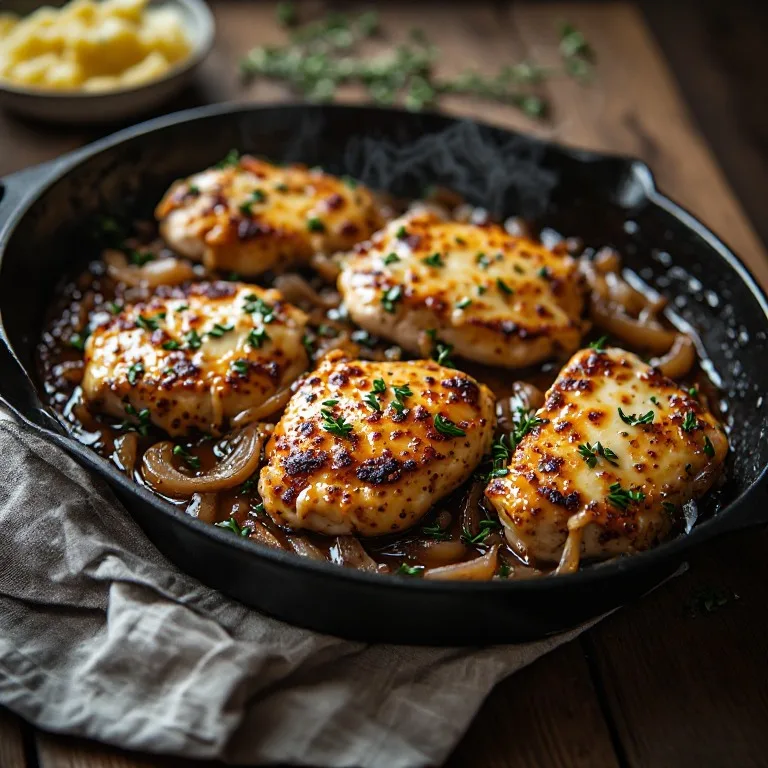
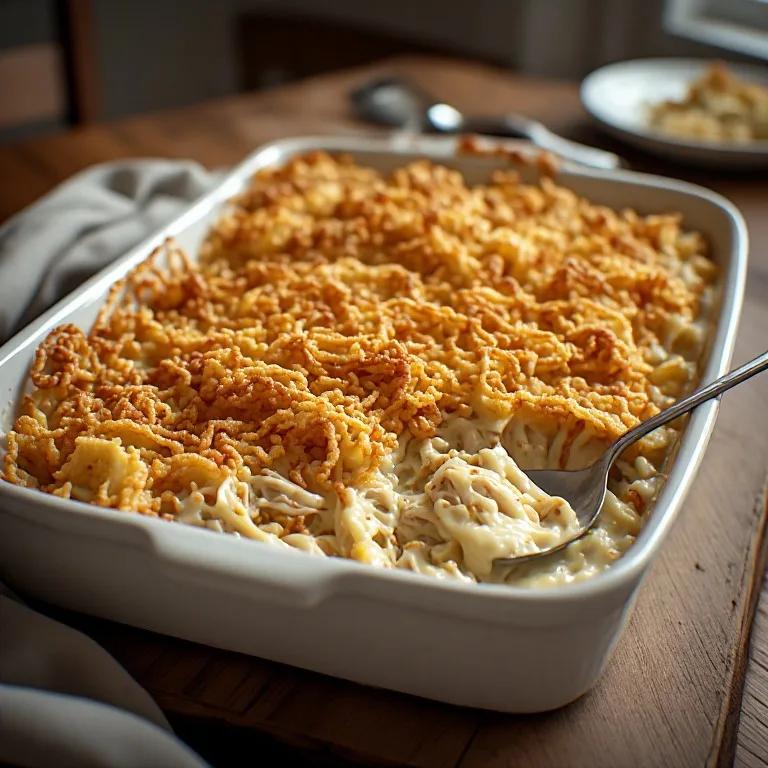
The same caramelized-onion logic drives the viral TikTok French onion chicken — bone-in thighs seared in a dry pan, braised in the same onion broth, and broiled under Gruyère — and the viral TikTok French onion soup pasta, worth reading if you want to understand the sauce on its own. For more dump-and-braise comfort food, the viral TikTok Mississippi pot roast runs on the same low-and-slow principle with almost no active work, and marry me chicken is the creamy-skillet cousin of this dish. If the one-pan format is what you’re after, stick of butter chicken and rice is the weeknight version.
🥗

Make It Healthier

Love Viral TikTok French Onion Meatballs (One-Skillet, Gruyère-Broiled) but want a lighter version? Try these simple swaps:

  • ✓Use 90/10 ground beef and skip the pork — to compensate for the lower fat, work 1 tablespoon of olive oil into the meatball mixture and add an extra tablespoon of milk to the panade. The meatballs will be slightly leaner but still tender.
  • ✓The caramelized onions add natural sweetness with no added sugar — they are a genuinely low-calorie flavor base. Don't skip them or substitute onion powder; you'd be removing the most nutritionally sound part of the sauce.
  • ✓A 4-meatball serving over half a cup of mashed potatoes runs approximately 480–520 calories with 32–36g protein, depending on the beef-pork split. The sauce itself is relatively lean — most calories come from the cheese and the meat.
  • ✓Serve over steamed cauliflower mash instead of potato mash to reduce carbohydrates substantially. The sauce is flavorful enough that the substitution reads as a feature rather than a compromise.
  • ✓Reduce the Gruyère to 3 oz and skip the provolone if you want to lower the saturated fat. The broil will produce less visual drama but the dish is still very good.

Frequently Asked Questions

My onions are still pale and crunchy after 20 minutes. Is something wrong?

Nothing is wrong — you're at the halfway point, not the end. Onion caramelization is a chemical process that happens in stages: first the onions soften and become translucent (minutes 10–20), then they collapse and turn golden (minutes 20–30), then the natural sugars concentrate and brown (minutes 30–40). The deep mahogany color you want — the one that drives the flavor of the sauce — only appears in the final 10 minutes. If you stop at pale golden, the sauce will taste like onion soup rather than French onion soup. Keep going. The only way to mess this up is to use high heat, which burns the outside before the inside softens, or to rush it.

Can I use all beef instead of beef and pork?

Yes — the pork adds fat and a slightly looser texture, but it's not essential. Use 1.5 lbs of 80/20 ground beef and the meatballs will still be excellent. The panade (panko soaked in milk) does most of the heavy lifting for moisture. What you lose is a small amount of the silky fat that pork contributes to the sauce during braising. If you want to compensate, add 1 tablespoon of olive oil to the meatball mix when you use all beef.

Do I have to use cognac or alcohol? I don't keep it in the house.

No. Substitute an additional 1/4 cup of beef broth. The cognac or sherry serves two purposes: it loosens the dark fond stuck to the bottom of the pan (any liquid does this, though alcohol does it faster), and it adds a layer of sweetness and complexity to the sauce. Broth works fine. If you want to approximate the depth without alcohol, stir in 1 teaspoon of soy sauce or a small splash of balsamic vinegar with the broth.

Why Gruyère specifically? Can I use mozzarella or Swiss?

Mozzarella melts beautifully but doesn't brown well under the broiler — it stays pale and stretchy rather than developing golden spots. Swiss cheese (Emmental) is a direct cousin of Gruyère and works well, but it has a milder flavor and slightly less complex melt. Gruyère is the right cheese here because its nutty, slightly sharp flavor reinforces the sweetness of the caramelized onions, and its fat content and protein structure produce the ideal broiler behavior: creamy melt with proper browning. If you can't find it, provolone is the best substitute (browns well, mild enough to not compete with the onions). Swiss works but expect a less flavorful result.

Can I make this ahead of time?

Yes — and it actually improves overnight. Make everything through step 8 (braising), skip the cheese and broiling step. Let cool, cover the skillet or transfer to a container, and refrigerate up to 3 days. To reheat: warm the meatballs in the sauce on the stovetop over medium-low until heated through, about 10 minutes. Then add the cheese and broil fresh just before serving. The onion sauce deepens and mellows overnight in a way that improves the dish. Don't add the cheese until right before serving — broiled cheese that's been refrigerated and reheated turns rubbery.

What if my skillet isn't oven-safe?

Transfer the meatballs and sauce after the braising step to a broiler-safe baking dish (a 9x13 works well). Top with cheese and broil from there. You lose the one-pan simplicity but the result is identical. Most stainless steel skillet handles are oven-safe to at least 400°F, but check your specific pan before assuming — some non-stick coatings and plastic or silicone handle components are not broiler-rated.

Can I use a bag of frozen meatballs as a shortcut?

Yes, and many people do — this is a popular crockpot version. Use 24 oz of frozen Italian-style meatballs (fully cooked from the freezer section). Skip steps 1 through 4. Caramelize the onions as written, deglaze, build the sauce. Add the frozen meatballs directly to the sauce (they'll thaw and heat through in about 15 minutes of simmering). Top with Gruyère and broil. You lose the seared exterior on the meatballs and some of the depth that pan drippings add to the fond, but the caramelized onion sauce still carries the dish. For a crockpot version: sauté onions in butter on the stovetop until caramelized, transfer to slow cooker with all sauce ingredients and frozen meatballs, cook on HIGH 2–3 hours, top with cheese under the broiler at the end.

Love this recipe? Share it!

Free PDF: our 12 most-wanted copycat recipes — instant download.

Made it? Buy us a coffee

Every recipe here is free, with no paywalls. If this one was a hit at your table, a small tip keeps new copycats coming.

$

Ratings & Reviews

—
No ratings yet

Rate this recipe

Click a star to rate

Leave a Review

0/500

CS

Copycat Spices Editorial

Researched + fact-checked. Every recipe on Copycat Spices is built from published sources — official ingredient lists, brand-published recipes, interviews and food-science references — and fact-checked before it goes live, then written as clear, step-by-step instructions for home cooks of all skill levels.

Learn more about our mission →