
Sweet Potato Casserole — The TikTok Upgrade That Actually Works
Prep: 15 min | Cook: 1 hr 10 min | Serves: 10 | Make-ahead friendly | Better than Ruth’s Chris
Sweet potato casserole is the Thanksgiving side dish that everyone fights over and nobody changes — until TikTok food creators started filming side-by-side comparisons of boiled sweet potato filling versus roasted sweet potato filling, and the difference was impossible to ignore.
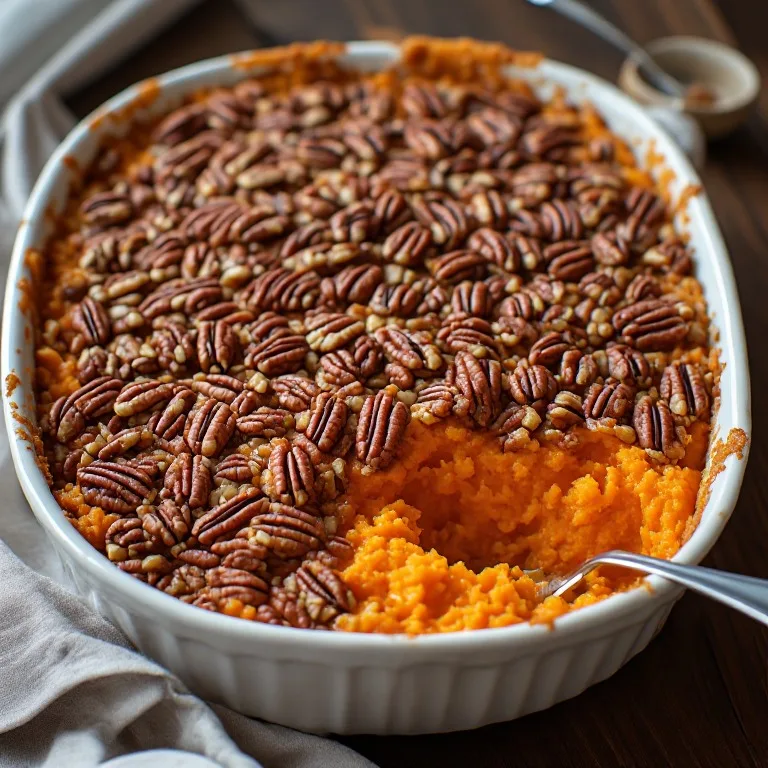
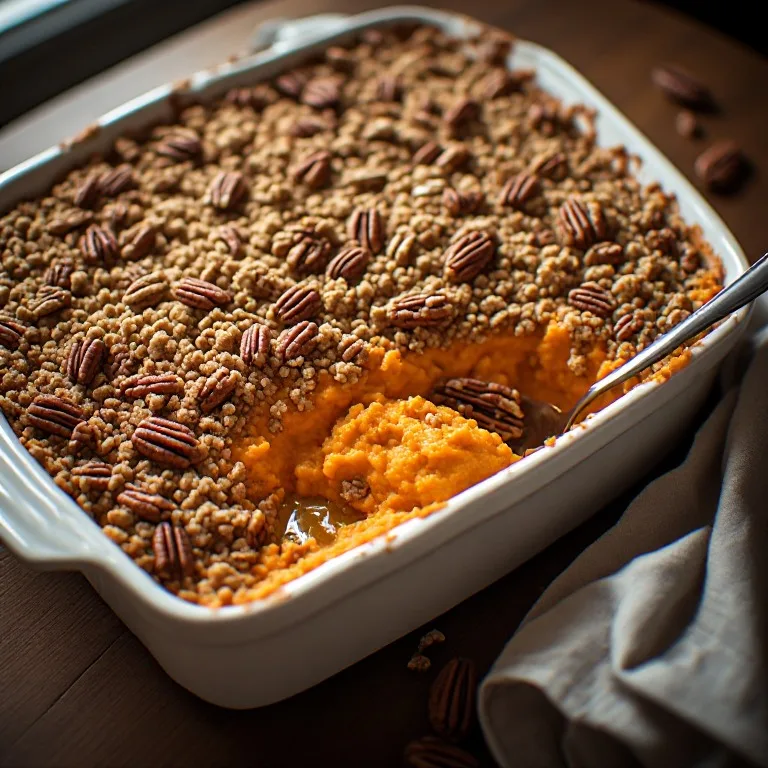
This version makes two changes to the traditional recipe. Roast the sweet potatoes instead of boiling them. Brown the butter instead of melting it. That’s it. The result tastes like a professional pastry chef made your Thanksgiving casserole: deeply caramelized, intensely sweet-potato-forward, with a pecan streusel topping that shatters on the spoon.
The One Technique That Changes Everything
The standard sweet potato casserole recipe is boil, drain, mash. The TikTok version is roast, scoop, beat. The difference between these two methods is the difference between a side dish that tastes watery and a side dish that tastes like the best sweet potato pie filling you’ve ever had.
When you boil sweet potatoes, the water draws out two things: moisture (which you want to lose) and dissolved sugars and aromatic compounds (which you don’t). The liquid you pour down the drain after boiling is not just water — it’s brown, faintly sweet, and smells like sweet potato. You threw away the best part.
Roasting is the opposite: a whole, unpeeled sweet potato in a 400°F oven loses moisture through steam while keeping the sugars trapped inside. Those concentrated sugars then begin to caramelize as the interior temperature rises. The flesh gets darker orange and denser. By the time the potato is fully roasted, it’s sweeter, more complex, and slightly jammy — a completely different ingredient than the boiled version, despite starting with the exact same potato.
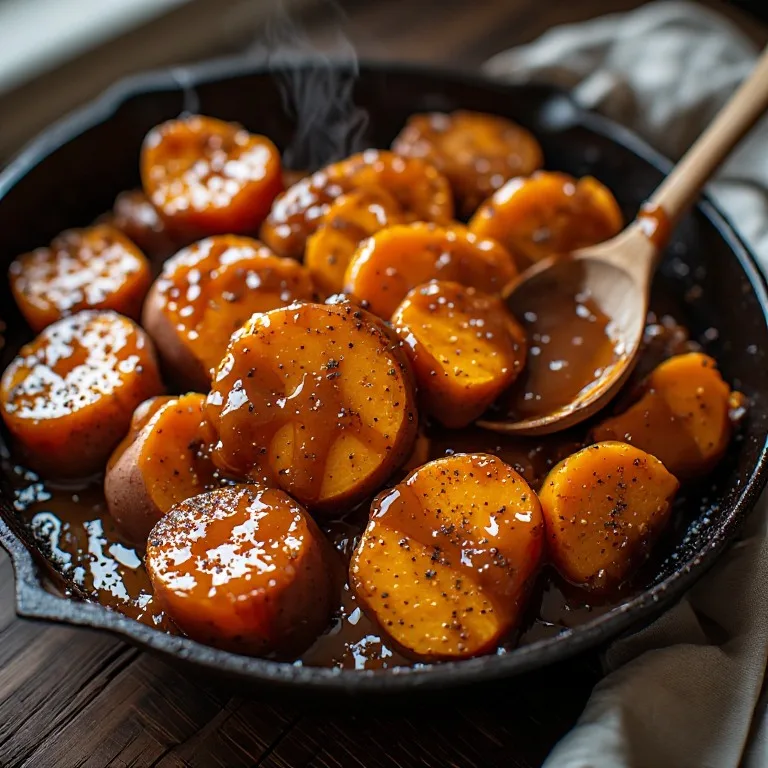
The proof is in the syrup: when you pull roasted sweet potatoes off the baking sheet, there’s a dark amber puddle of concentrated sugar syrup around each one. That’s the excess caramelized sugar that couldn’t be contained. Compare that to the pale starchy water left after boiling. The two methods are not equivalent.
The Brown Butter Step
Brown butter is made by cooking butter past the “melted” stage until the water evaporates and the milk solids caramelize. The process takes about 3 minutes and produces a butter that smells like toasted hazelnuts and tastes like caramel.
In a sweet potato casserole, brown butter in the filling doesn’t read as brown butter specifically — it’s not obvious or distinctive. What it does is add a layer of depth that makes the filling taste more complex without tasting like anything in particular. Tasters usually describe the brown butter version as “richer” or “more savory” than the plain-butter version, without being able to identify why.
How to know it’s done: The butter melts and foams. The foam means water is evaporating. When the foam subsides, the milk solids at the bottom of the pan begin to turn gold, then amber. The moment they’re the color of a hazelnut shell and the butter smells like toasted caramel, pour it into a heatproof bowl immediately. It will keep cooking from residual heat for 10–15 seconds. Pull it a moment before you think it’s done.
Pecan Streusel vs. Marshmallows
| Pecan Streusel | Marshmallow | |
|---|---|---|
| Texture | Crunchy, crumbly, shatters on a spoon | Sticky, gooey, melted |
| Flavor | Nutty, buttery, caramel-brown sugar | Sweet, vanilla, slightly toasted |
| Reheat | Stays crunchy, reheats beautifully | Goes flat and sticky on reheat |
| Make-ahead | Make 3 days ahead, keep separate | Goes on right before serving only |
| Visual (TikTok) | Deep golden clusters, photogenic | Pull-apart gooey strings, also photogenic |
Both are correct. The most broadly appealing approach is to do both: streusel on two-thirds of the pan, marshmallows on the remaining third. Everyone gets what they remember from their family’s version, and no one has to choose.
The Filling: Texture Dial
Smooth and fluffy (restaurant-style): Use a hand mixer for 1–2 minutes on medium speed after adding all the filling ingredients. This beats in a small amount of air, resulting in a lighter, airier filling that holds its shape when scooped. This is the Ruth’s Chris style.
Chunky and rustic: Use a potato masher instead of the mixer — fold roughly rather than beating smooth. Leave visible pieces of sweet potato in the filling. This style is more textural and reads as more home-style; it bakes with visible variation rather than a uniform surface.
Silky (very smooth): Pass the filling through a fine-mesh strainer or process briefly in a food processor. This removes every fiber and produces a velvet-smooth filling. Warning: if you over-process in a food processor, the starch structure can become gluey — pulse briefly rather than running the motor continuously.
Make-Ahead for Thanksgiving
Sweet potato casserole is one of the best candidates for advance cooking in the Thanksgiving lineup.
Two days ahead: Roast the sweet potatoes, make the filling, spread it in the buttered baking dish. Cover tightly with plastic wrap and refrigerate.
Up to three days ahead: Make the pecan streusel and store in an airtight container in the refrigerator. (Freezes well for up to 2 weeks.)
Thanksgiving day: Pull the dish from the fridge 30 minutes before baking. Scatter the cold streusel over the cold filling. Bake at 350°F for 35 to 40 minutes (10 minutes longer than from room temperature). Add marshmallows, if using, for the last 5 minutes only.
Timing note for the oven: At 350°F this bakes alongside roasted vegetables and casseroles without competing for oven temperature. At 325°F (a lower temperature if your oven is crowded), add 10 to 15 more minutes and watch for doneness by the streusel color.