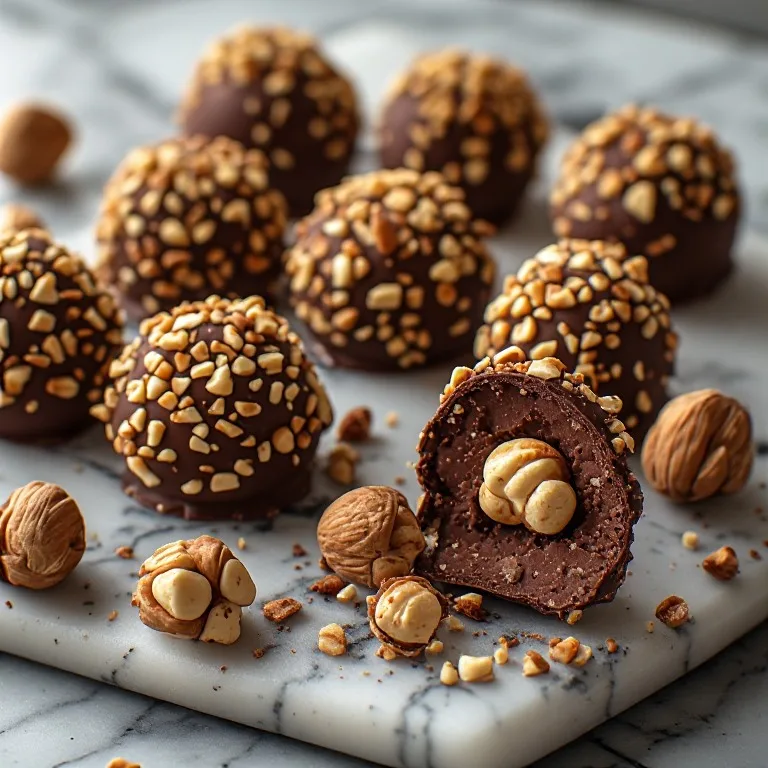

Homemade Ferrero Rocher is one of those recipes that looks harder than it is. The commercial product uses industrial equipment to form the wafer shell around the center — that’s the one step you can’t replicate exactly. Everything else is accessible at home, and the result is close enough that you need to look at the packaging to tell which is which.
The technique that makes this work is simple: freeze twice. Once after shaping the ganache balls, and once after the wafer coating. Both freezes serve the same purpose — they keep the center firm enough to survive the next handling step without collapsing. The dipping chocolate is hot enough to melt a soft ganache center on contact. A frozen one sets the chocolate in about 10 seconds.
Why the wafer layer matters
The crunch in a real Ferrero Rocher doesn’t come from the hazelnut coating on the outside — it comes from the thin wafer shell hidden just inside the chocolate. That’s the distinctive texture: bite through the outer chocolate and hazelnut crust, then a thin crispy layer, then creamy ganache, then the whole nut.
The best home substitute is crushed hazelnut wafer cookies — specifically Loacker Quadratini, which are widely sold at grocery stores and Italian delis. Their hazelnut flavor matches the filling and they crush to the right sandy texture. Pailleté feuilletine (crushed crêpes dentelle / Gavottes) is the professional choice and gets closer to the real wafer texture, but it’s harder to find at a regular grocery store. Plain crushed cornflakes also work and are cheap and accessible — they give a slightly coarser, more neutral-flavored crunch.
Do not skip the wafer layer. Without it, you have a hazelnut truffle — good, but not Ferrero Rocher.
Getting the ganache right
Pure Nutella alone doesn’t set firm enough to hold its shape at room temperature. It stays soft even when cold, which makes the balls collapse when you try to roll and dip them.
Adding melted milk chocolate changes the fat crystallization structure: as the chocolate sets during chilling, it creates a firmer matrix around the Nutella. The ratio — roughly 2 parts Nutella to 1 part melted milk chocolate by weight (here, 1 cup Nutella to ¾ cup chips) — gives a ganache that scoops cleanly from the fridge and stays firm through the dipping step when frozen.
Do not add cream to this ganache. Cream is right for a softer truffle filling, but here you need the ganache to be firm. Heavy cream would make it softer and more fragile.
The dipping step
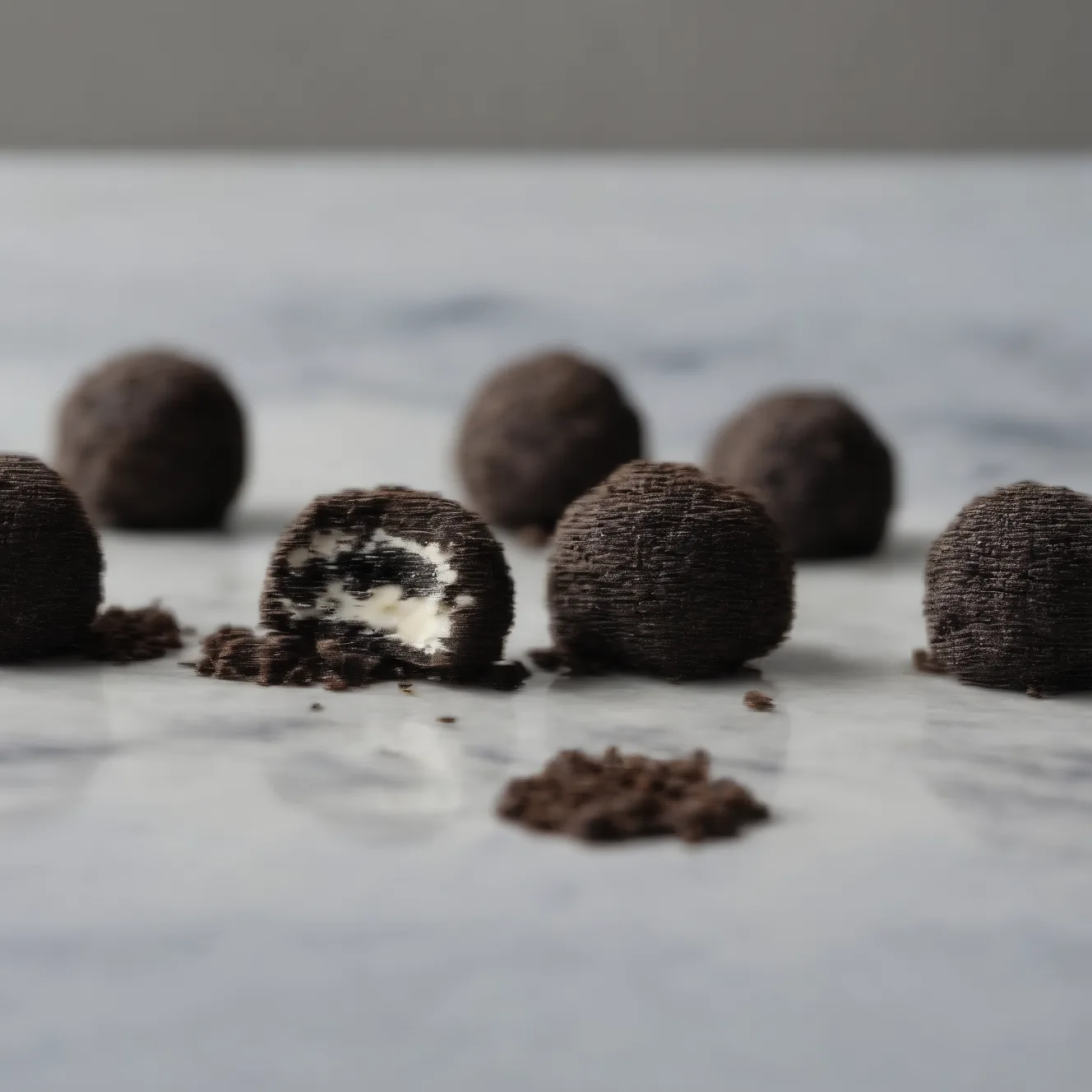
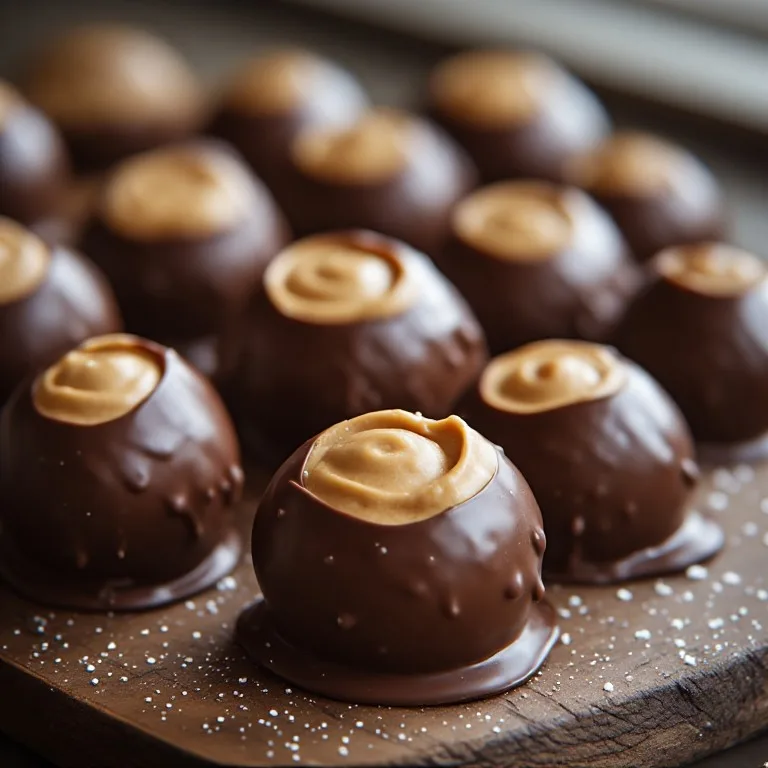
Keep your batches small. Take 4 to 6 balls out of the freezer at a time and leave the rest frozen. Once a frozen ball warms to room temperature, the ganache inside softens and the ball becomes fragile. Working in small batches means each ball stays cold enough through the dipping step — the same small-batch dipping discipline that keeps our no-bake Oreo truffles and buckeye balls from smearing.
The coconut oil in the dipping chocolate matters — it thins the chocolate slightly so it flows smoothly and sets to a thinner, cleaner shell. Without it, the chocolate can be too thick and leave a heavy, uneven coating. One teaspoon per 2 cups of chips is the right ratio. You can also use a neutral vegetable oil; the taste is identical.
Gifting
These look genuinely luxurious when wrapped properly. Buy small gold or silver foil candy twist wrappers and brown pleated paper bonbon cups — both are inexpensive on Amazon (around $5 for 100 of each) and are what give Ferrero Rocher its distinctive look. Wrap each truffle, set in a cup, and arrange in a small box lined with tissue paper. A box of 12 homemade Ferrero Rocher has an effective retail value of $7 to $8 and costs under $5 to make. At a holiday party, they’re the candy people photograph first.