

Pin It

Viral TikTok Hot Honey Halloumi

Viral TikTok Hot Honey Halloumi
Jump to Recipe
Prep 3 min Cook 6 min Serves 4
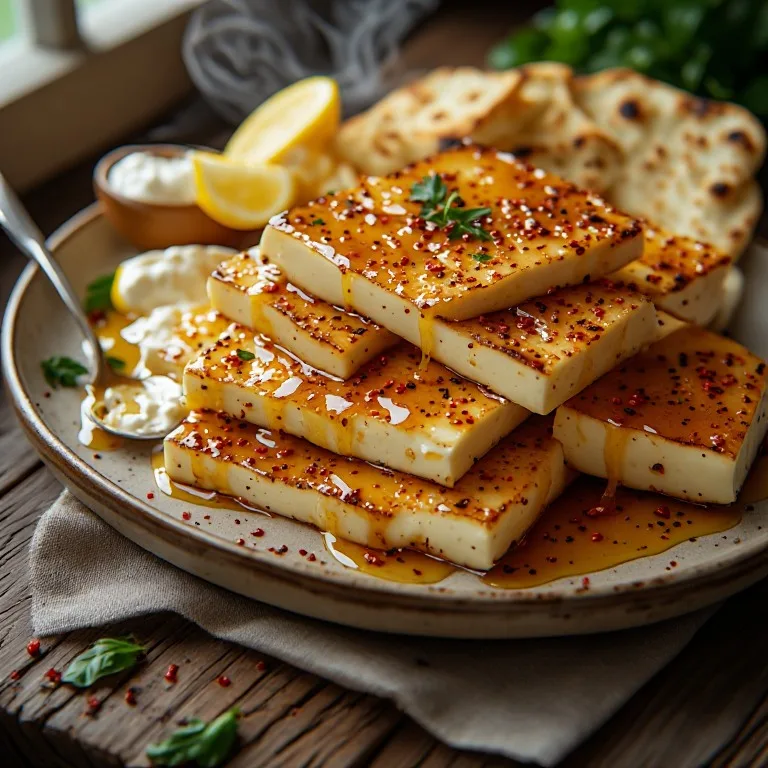
Quick answer: Slice a 225g block of halloumi into ½-inch slabs (about 8 slices). Pat them thoroughly dry. Heat a nonstick or cast-iron skillet over medium-high heat for 2 full minutes until very hot — no oil needed yet. Lay the halloumi slices flat in the dry pan. Press each one gently with a spatula. Cook undisturbed for 2–2½ minutes until deep golden on the bottom. Flip. Cook another 2 minutes until the second side matches. Remove from heat. Immediately drizzle with hot honey: 2 tablespoons honey mixed with ½ teaspoon red chili flakes (or 1 teaspoon chili crisp). Serve right away on warm flatbread with a spoonful of yogurt and a squeeze of lemon, or as a standalone appetizer. The key: get the pan very hot before the halloumi goes in, cook in a dry pan (halloumi releases its own moisture and doesn't stick at high heat), and add the honey off the heat — honey in a hot pan burns in under a minute.

Shop the tools

Gear matched to this recipe. These are Amazon affiliate links — we may earn a small commission if you buy, at no extra cost to you.

As an Amazon Associate, Copycat Spices earns from qualifying purchases. Product images are generic illustrations, not the exact item listed.

Viral TikTok Hot Honey Halloumi

The hot honey halloumi blowing up on TikTok: golden-crusted Cypriot cheese finished with a sweet-spicy honey glaze in under 10 minutes. The one heat-level mistake that ruins it, why halloumi is the opposite of feta, and how to get the crust without burning the honey.

Easy Prep: 3 min Cook: 6 min Total: 9 min4 servings ~$4.50/serving
Prep3 min
Cook6 min
Total9 min
Servings
4
At home~$4.50/serving
vs
Restaurant~$20.25/serving
You save ~78%

The Story Behind the Recipe

Halloumi is a semi-hard cheese from Cyprus with a property almost unique in the dairy world: a high enough melting point that it holds its shape in a scorching-hot pan. The reason is technique — its curds are cooked a second time before the cheese is pressed and set, which denatures the proteins enough to withstand direct heat. That's what makes the crust possible. At a taverna in Nicosia or Limassol, grilled halloumi runs €10–15 as a meze. At home, a 225g block costs $4–7 and takes six minutes.

The hot honey version became the dominant TikTok format in 2025 and continued into 2026. The hook is the contrast: halloumi is brined during aging, so it's one of the saltier cheeses you can buy. Hot honey — honey spiked with chili flakes or chili crisp — adds sweetness that cuts the salt and a slow, building heat that unfolds after the bite. The combination photographs well and takes under 10 minutes, which is the exact format that spreads fast. Delhaize and other European grocers reported halloumi shortages in early 2026 after a wave of TikTok videos turned the cheese into a staple.

Nutrition Facts

Per serving (4 servings)
Calories260
Total Fat21g
Total Carbs6g
Dietary Fiber0g
Sugars5g
Protein12g
Sodium890mg

* Estimated values based on standard recipe preparation. Actual values may vary.

Ingredients

  • Halloumi
  • Hot honey glaze
  • To serve (optional but recommended)

Instructions

💡
Pro tip: This recipe tastes even better the next day. The flavors need time to meld together in the fridge.
❄️
Storage: Keeps in an airtight container in the fridge for up to 2 weeks. Freezer-friendly for up to 3 months.
🎃 Free Halloween cookbook — download now The Copycat Halloween Cookbook A ready-made, photo-illustrated PDF of our best halloween copycat recipes — free to download, no building required. Pay what you want to support if you love it.

Free PDF — instant download. We'll also send new seasonal copycat recipes now and then; unsubscribe anytime. Or just download it →

In 2025 and 2026, hot honey halloumi became the dish that lived in two TikTok communities at once — the one that posts easy 10-minute dinners, and the one that posts things that are visually hard to resist. The golden crust against the pale cheese, the glossy honey pooling in the cracks, the lemon wedge on the side. It photographs in a single shot without styling.

The recipe itself is genuinely fast. The hardest part is not touching the cheese for 2½ minutes while it develops a crust — an instruction that goes against the instinct to keep things moving in a hot pan.

Why Halloumi Behaves Differently From Every Other Cheese

Most cheese melts when heat hits it. Brie softens at around 80°F. Mozzarella turns into strings by 130°F. Feta crumbles and softens even at medium-low heat.

Halloumi holds its shape until around 250°F because its curds are cooked twice during production — once during curd formation and again submerged in hot whey before pressing. This second cook denatures the proteins in a way that stiffens the matrix. The result is a cheese that behaves more like a protein than a dairy fat when it hits a hot pan: the exterior undergoes the Maillard reaction and turns golden, while the interior stays firm and slightly springy rather than liquefying.

This structure means the technique is essentially the opposite of cooking feta. Feta: medium-low heat, oil-assisted, slow. Halloumi: high heat, dry pan, fast. Low heat on halloumi produces grey, rubbery slabs — the most common complaint from people who’ve tried it and given up. High heat is what cracks the surface golden.

The Hot Honey: Build Your Own or Buy It

Buy: Many grocery stores now carry bottled hot honey (Mike’s Hot Honey, Trader Joe’s house brand, Whole Foods 365). These work perfectly — drizzle straight from the bottle over off-heat halloumi.

Make it: Stir together 2 tablespoons of any honey with ½ teaspoon of crushed red chili flakes. For a longer infusion, warm them gently (not simmer) in a small saucepan for 3 minutes, then cool. The warmth extracts more capsaicin from the flakes.

Chili crisp version: Substitute 1 teaspoon of chili crisp for the chili flakes — the crispy shallots and garlic in the crisp add texture and a roasted, umami note that makes the glaze more complex. This is the TikTok version that spread the most widely.

Why you add honey off heat: Honey is about 80% sugar, and those sugars can go from caramelized to scorched in under a minute at cooking temperature. Halloumi in a medium-high pan is producing surface temperatures well above 300°F. Adding honey at that heat means the first drop is already past caramelization. The fix is straightforward: pull the pan entirely off the burner (not just turn the heat down — remove it from the element), then add the honey. The pan stays hot enough to warm the honey to a loose, glossy pour, but cools fast enough to prevent burning.

The Flatbread Version

The version most common on TikTok pairs the halloumi with warm pita or flatbread and a simple yogurt sauce.

Yogurt base: Thin 3 tablespoons of Greek yogurt or labneh with a teaspoon of cold water. Stir in a small pinch of salt and a squeeze of lemon. Spread onto the flatbread first — it acts as a sauce and a cushion that prevents the halloumi from sliding around.

Build the flatbread: Yogurt → 2–3 halloumi slabs (still warm) → hot honey drizzled over → torn fresh mint or thyme → lemon wedge on the side. The sequence matters: yogurt down first so the warm cheese can soften it slightly from below, honey last so it doesn’t absorb into the bread.

The yogurt’s tartness is the balancing element against halloumi’s salt and the honey’s sweetness. If you omit it and just put halloumi directly on bread, the overall effect is one-note salty-sweet. The yogurt is quick to make and earns its place.

Without Flatbread

Three other contexts where this works:

As a salad protein: Lay 2–3 freshly cooked halloumi slabs over dressed arugula, sliced peaches or figs (if in season), toasted walnuts, and a simple lemon-olive oil dressing. The hot honey on the halloumi doubles as part of the dressing. A complete dinner with virtually no carbs.

Over grain bowls: Warm farro, freekeh, or bulgur dressed with lemon, olive oil, and a pinch of za’atar. The halloumi goes on top, hot honey drizzled over, with a handful of cherry tomatoes and fresh herbs. The grain absorbs the honey and pan oil from the halloumi beautifully.

As a standalone appetizer: Stack the halloumi slabs on a small board with lemon wedges, Castelvetrano olives, cucumber, and extra flatbread. The hot honey in a small bowl for dipping. This is the format for serving to guests — it looks deliberately arranged with almost no effort, and people reach for it constantly.

Cost at a Restaurant vs. Home

At a Mediterranean restaurant, grilled halloumi as an appetizer runs $14–22 depending on the city and the presentation. The cheese is the same — halloumi from a 225g block that costs $4–7 at Trader Joe’s, Whole Foods, or a Greek grocer. At home, the entire dish for four runs about $5–8 in ingredients: the block, 2 tablespoons of honey, a flatbread ($1.50–2.50 for a pack of four), and yogurt you likely have. The restaurant margin on this dish is significant; the technique is 6 minutes.

Serving and Storage

Eat immediately. Halloumi tightens and toughens as it cools — the texture difference between hot-off-the-pan and room temperature is substantial. Cold leftover halloumi from the fridge is chewy, firm, and noticeably less enjoyable than when fresh.

If you have leftovers, the best revival is a dry pan over medium heat, 1 minute per side — it won’t match the original crust but it’s far better than eating it cold. Don’t microwave it; it goes rubbery and steams rather than crisps.

Raw, uncooked halloumi keeps in the fridge for 1–2 weeks in its original brine, or up to 6 months frozen. If you bought it in a vacuum pack, once opened transfer any unused portion to an airtight container and submerge it in lightly salted water to keep it from drying out.
🥗

Make It Healthier

Love Viral TikTok Hot Honey Halloumi but want a lighter version? Try these simple swaps:

  • ✓Serve on a simple arugula salad with lemon and olive oil instead of flatbread — the peppery bitterness of the greens cuts through halloumi's salt and fat well, and the carbs drop to under 8g per serving.
  • ✓Reduce the honey to 1 tablespoon across all 4 servings (about ¾ teaspoon per person) to bring sugar down to 2g per serving while keeping the hot-sweet contrast that makes the dish work.
  • ✓Halloumi is naturally high in sodium from its brine curing — you cannot cook that out. If you need to manage sodium, soak the sliced halloumi in cold water for 20–30 minutes before patting dry; this pulls out some surface brine and can reduce sodium by 10–15%.
  • ✓For a lighter option, slice the block thinner (¼ inch instead of ½ inch) — you get more pieces, more crust surface per bite, and naturally smaller portions with fewer calories.

Frequently Asked Questions

What is halloumi and why doesn't it melt?

Halloumi is a semi-hard brined cheese originally from Cyprus, traditionally made from a blend of goat's and sheep's milk (commercial versions often include cow's milk). Its defining characteristic is a very high melting point — around 250°F / 120°C — compared to most soft cheeses, which melt between 90–120°F. The reason is the production method: halloumi curds are cooked in the whey before the cheese is pressed, which denatures and tightens the protein structure, making it stable under direct heat. This is what allows it to be grilled or pan-fried until golden without losing its shape.

Do you need oil to pan-fry halloumi?

No, and using oil is actually the less common approach for good reason. Halloumi has a significant fat content — around 25g per 100g — that releases as the cheese heats up. This released fat lubricates the pan surface naturally and prevents sticking if the heat is high enough. Cooking halloumi in a dry, very hot pan produces a cleaner, drier crust than oil-frying, which can make the exterior greasy. The exception: if you want to sear halloumi in butter or ghee for a richer crust, that does work — but start with a just a small amount and watch carefully since the milk solids in butter burn faster than halloumi fat.

Why is my halloumi rubbery instead of golden?

The pan wasn't hot enough before the halloumi went in. Halloumi needs genuinely high heat — medium-high, with the pan preheated for at least 2 minutes before any cheese touches it — to produce the Maillard reaction quickly on the surface. At lower temperatures, the interior of the slab heats through and softens, the cheese goes rubbery, and the surface never gets the chance to brown. Low-and-slow works for feta, which has a lower protein structure; halloumi requires the opposite approach. If your halloumi is coming out grey, soft, and chewy, the single fix is more preheat time and higher heat.

Can I add the hot honey while the halloumi is still in the hot pan?

Not over a live flame or active burner heat. Honey is mostly sugar, and at cooking temperatures (above 320°F), sugar goes through caramelization and then scorches quickly. In practice this means halloumi in a pan over medium-high heat will burn honey to a bitter, acrid glaze in under a minute. The reliable approach is to pull the pan off the heat source entirely, then add the honey to the hot-but-cooling-down pan. The residual metal heat warms the honey to a loose, glossy consistency without burning it. Alternatively, you can drizzle the honey directly over the plated halloumi — the hot cheese warms it enough to pool and glaze without burning.

What's the difference between hot honey halloumi and pan-fried halloumi?

Pan-fried halloumi is the base technique: dry-fry slabs in a very hot pan until deeply golden on both sides and serve with lemon. Hot honey halloumi is a TikTok-popularized finish: pan-fried halloumi with a sweet-spicy honey glaze added at the very end, off the heat. The honey softens into the hot crust and creates a contrasting sweet layer over the naturally salty-savory cheese. The technique is identical; the glaze is the viral upgrade. You can also find versions finished with pomegranate molasses, balsamic reduction, or a simple chili oil — all follow the same off-heat drizzle logic.

Is halloumi vegetarian?

Most commercially available halloumi is vegetarian. Traditional Cypriot halloumi uses animal rennet — an enzyme from calf stomachs that sets the curd. However, the vast majority of halloumi sold in US supermarkets (Trader Joe's, Whole Foods, Costco, most Greek grocery brands) uses microbial or vegetable rennet instead, making it vegetarian. Check the label if rennet source matters to you: it will typically say 'microbial rennet,' 'vegetable rennet,' or simply list no animal-derived enzymes. Halloumi is not vegan — it is a dairy product.

What should I serve with hot honey halloumi?

On flatbread or pita with Greek yogurt or labneh is the most common TikTok presentation — the yogurt's tang and creaminess offsets the salty, chewy cheese. Beyond flatbread: over a grain bowl of farro, freekeh, or quinoa; tossed into a warm lentil salad; on top of roasted vegetables (especially beets, zucchini, or chickpeas); or as a standalone appetizer with a wedge of lemon and fresh herbs. The hot honey glaze also makes it work as a pizza topping — lay browned halloumi slabs over a cooked pizza in the last 2 minutes and drizzle hot honey over before slicing.

Can I make this ahead of time?

The halloumi is best the moment it comes off the pan — within 3–4 minutes. As it cools, it firms and toughens significantly, which is why cold leftover halloumi has a completely different (and less appealing) texture than fresh. If you need to prep ahead, you can slice and dry the halloumi up to a day in advance (keep dry, refrigerated, covered) and make the hot honey at any point — then do the actual cooking right before serving. Leftovers can be revived in a dry pan over medium heat for about 1 minute per side, but will not return to fresh-off-the-heat softness.

Love this recipe? Share it!

Free PDF: our 12 most-wanted copycat recipes — instant download.

Made it? Buy us a coffee

Every recipe here is free, with no paywalls. If this one was a hit at your table, a small tip keeps new copycats coming.

$

Ratings & Reviews

—
No ratings yet

Rate this recipe

Click a star to rate

Leave a Review

0/500

CS

Copycat Spices Editorial

Researched + fact-checked. Every recipe on Copycat Spices is built from published sources — official ingredient lists, brand-published recipes, interviews and food-science references — and fact-checked before it goes live, then written as clear, step-by-step instructions for home cooks of all skill levels.

Learn more about our mission →