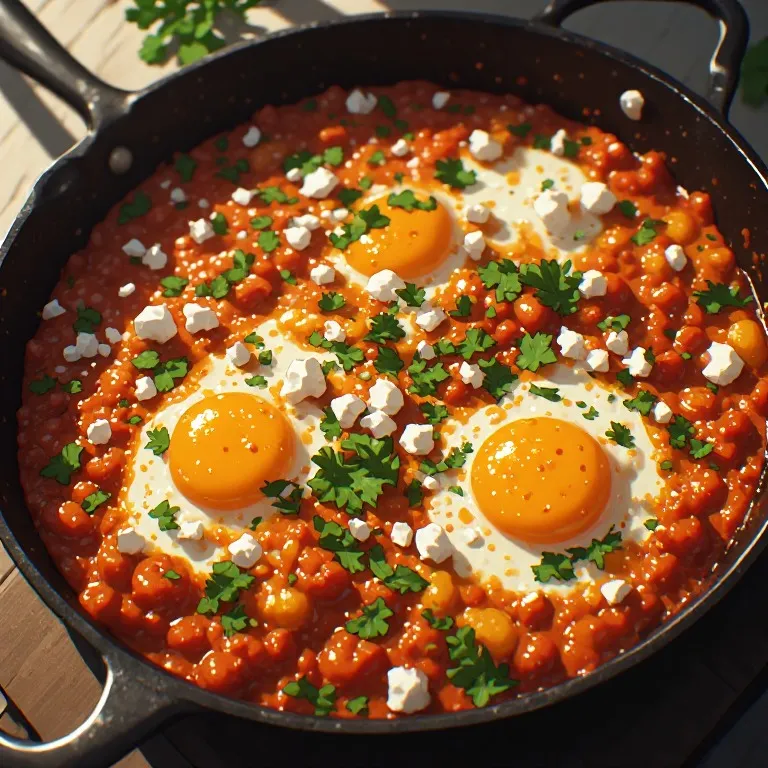



Shakshuka — The One-Pan Brunch That Became a Global Obsession
Shakshuka has been having a moment for about ten years now, which means at this point the moment has become its permanent state. It appears on brunch menus everywhere from Tel Aviv to Toronto. Food magazines write about it every spring. TikTok rediscovers it every six months when a new wave of creators makes it for the first time and cannot believe they’ve been eating inferior breakfasts their entire lives.
The enthusiasm is justified.
How a North African Dish Conquered Global Brunch
Shakshuka’s route to global brunch stardom is a story about diaspora and food media. The dish has roots in North African Jewish and Arab cooking — a practical meal built on pantry staples that happened to be extraordinarily delicious. When Maghrebi Jewish immigrants brought it to Israel in the mid-twentieth century, it took hold quickly and became embedded in Israeli food culture.
The food media wave of the 2010s — Ottolenghi cookbooks, Israeli food journalism, the rise of brunch culture — exported it globally. By the time TikTok emerged as a food platform, shakshuka was already known in major cities, but it hadn’t yet reached suburban home cooks who don’t follow food media closely. TikTok finished the job. A shakshuka video in a cast iron skillet, with a runny yolk breaking over spiced red sauce, is one of the most reliably high-performing food formats on the platform.
The Technique That Makes It Work
Sauce thickness is the foundational skill. Too thin and the egg whites spread across the surface of the sauce, white tendrils running everywhere, yolks drifting off-center. Too thick and the eggs sit on top like a fried egg on solid ground, never integrating with the sauce beneath. You want the sauce to be thick enough to hold a well cleanly but liquid enough to bubble gently around the eggs as they cook.
The test: drag a wooden spoon through the sauce. The line it creates should hold for several seconds before the sauce slowly closes back in. That’s the right consistency.
Spice blooming is not optional. Adding spices directly to liquid sauce produces a flat, one-dimensional flavor. Pressing the spices into hot oil for 30 seconds before any liquid enters the pan is what gives shakshuka its layered, complex character. The fat-soluble aroma compounds in cumin and paprika need heat and fat to release properly.
The lid controls everything. An uncovered pan produces eggs with a rubbery film on top — the yolk surface dries out before the whites finish setting. The lid traps steam and cooks the egg whites from above while the sauce heat works from below. Four minutes with the lid on typically sets the whites without cooking the yolk past runny. Your specific pan and stove will calibrate this quickly.
The Feta Question
Crumbled feta over shakshuka is not traditional North African or Israeli — it’s a Greek-inspired Western adaptation that TikTok has largely standardized. It’s also genuinely delicious. The salt, the slight tang, the way it softens in the steam but doesn’t fully melt — it adds a counterpoint to the warm tomato sauce that works.
If you want to stay traditional: skip the feta, add harissa paste to the sauce base (1–2 tbsp), and serve with khobz or pita rather than crusty European bread.
Serving Shakshuka
Bring the pan directly to the table. This is a communal dish — people scoop eggs and sauce directly from the skillet onto bread that goes into their mouth as a shovel. Individual plating is fine but loses something. The drama of the cast iron landing on the table is part of the experience.
Scoop one egg with plenty of surrounding sauce per person. The yolk should break at the table when scooped, not in the pan.
Variations
Green shakshuka: Swap tomatoes for a sauce of tomatillos, roasted jalapeños, and cilantro blended together. Add white beans to the base. Use cotija instead of feta. It’s a Mexico-North Africa fusion that tastes entirely coherent.
Lamb and spiced tomato: Brown 150g of ground lamb with the onions, add ras el hanout (a North African spice blend) with the cumin and paprika, then proceed as normal. The lamb creates a heartier, almost stew-like version.
Single-serving overnight: Make individual portions in small cast iron skillets for brunch parties. Each guest gets their own pan to control egg doneness timing. It looks incredibly professional and requires no coordination between eggs.
Shakshuka is a dish that’s easier than it looks, more flavorful than most breakfast food, and scales from one to twelve without any structural changes — just a bigger pan. It earns its place in the permanent rotation.