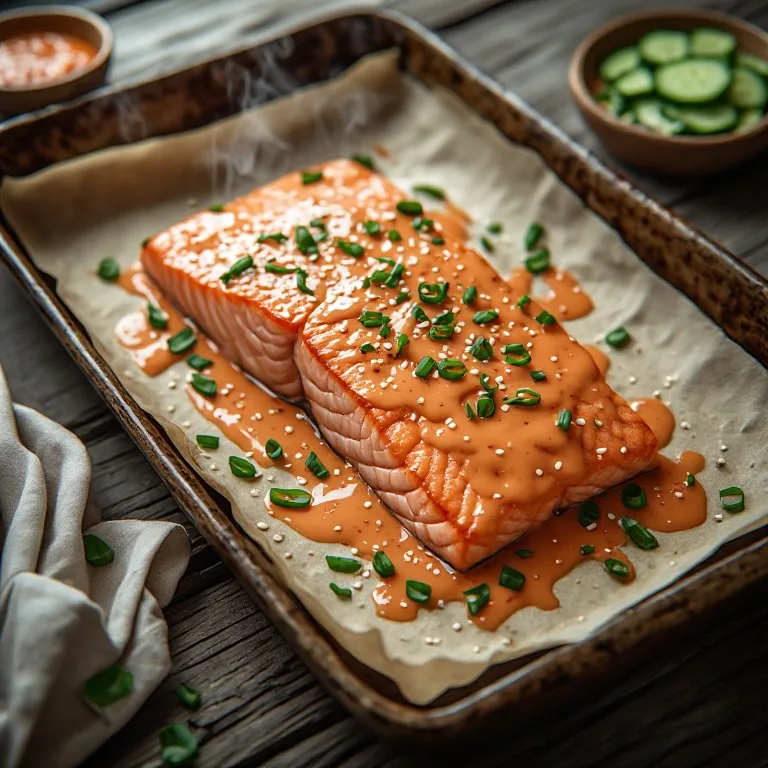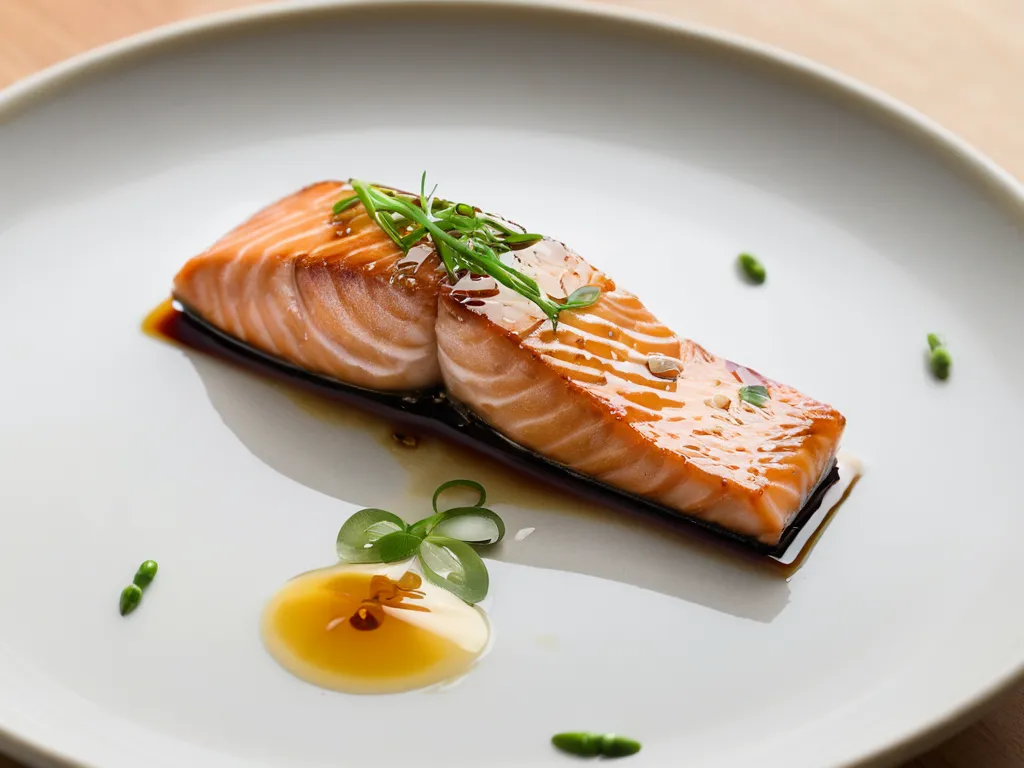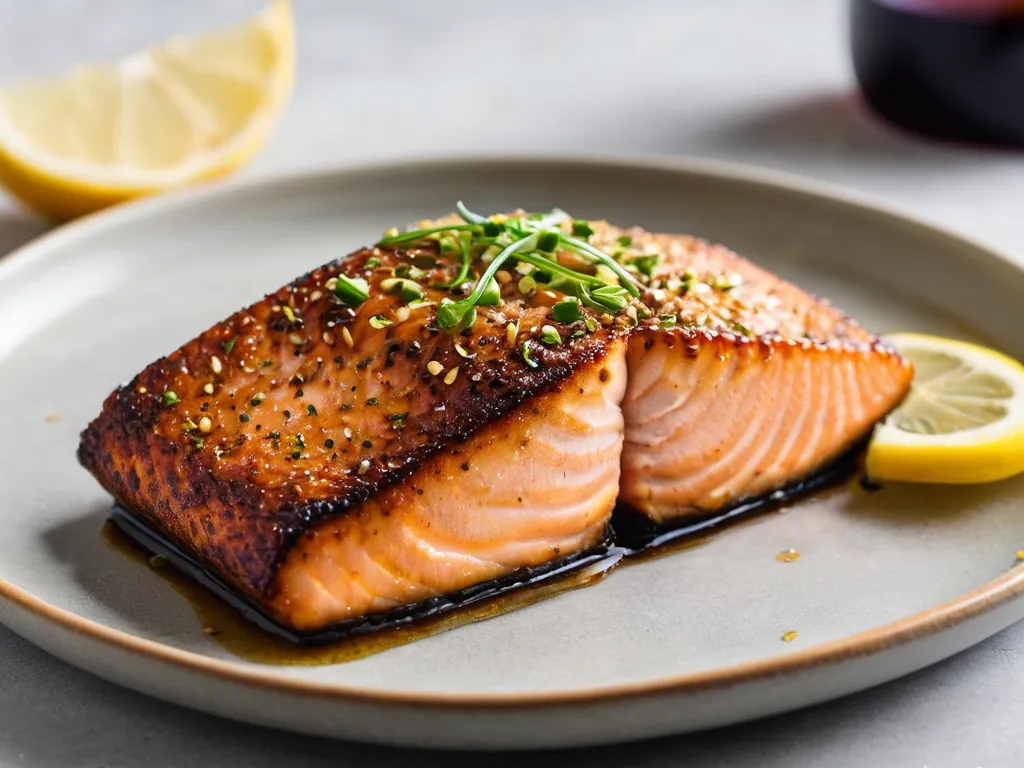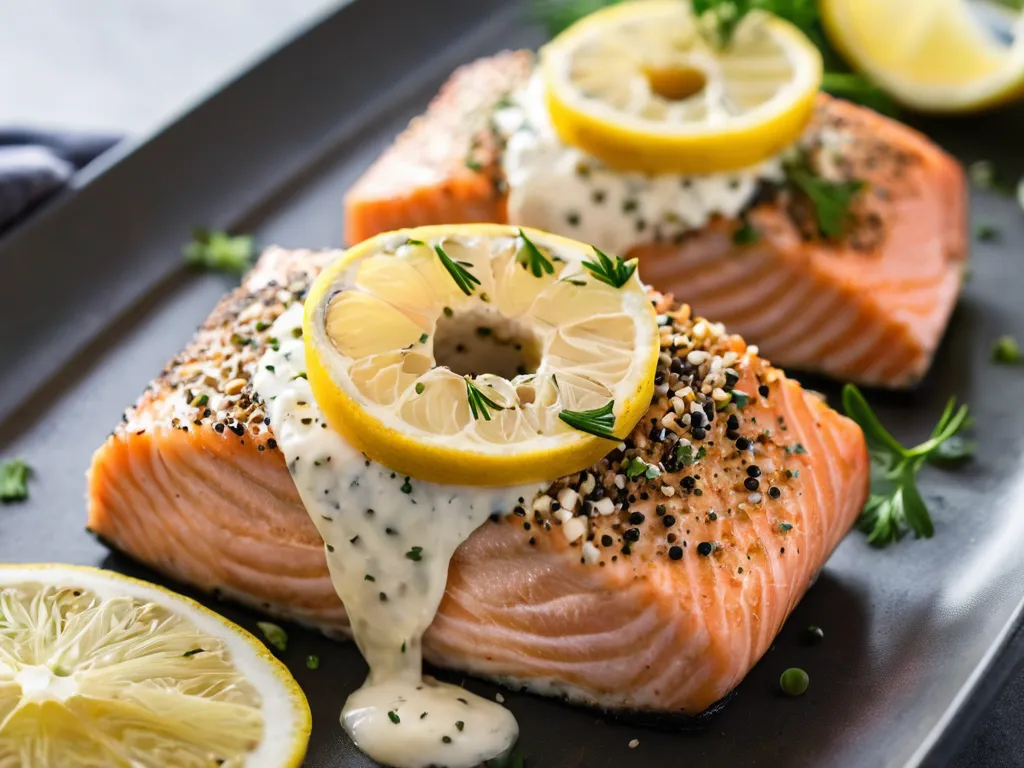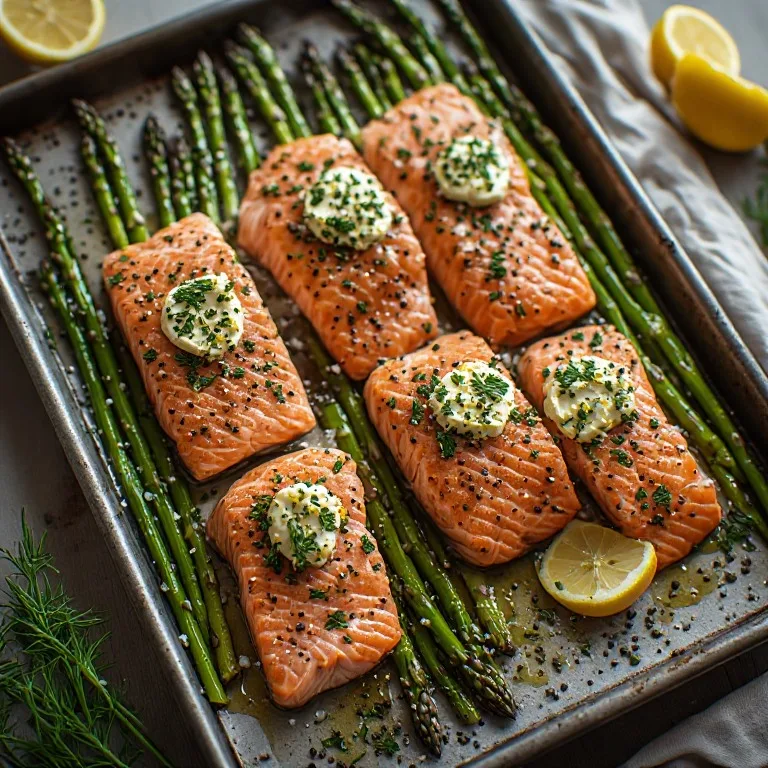


Sheet pan salmon is one of the most-shared #EasyDinner formats on TikTok in fall 2026 for a simple reason: it produces a restaurant-quality result — flaky, moist, herb-buttered salmon alongside tender roasted vegetables — in one pan, in 25 minutes, with no other dishes to wash.
The specific technique that makes this version circulate is the compound herb butter. Instead of drizzling olive oil and squeezing lemon over the fish before it goes in the oven, you press a tablespoon of softened butter that’s been mashed with lemon zest, minced garlic, and fresh dill onto the top of each fillet. As the oven heat rises, the butter melts slowly and continuously over the fish, basting it from inside the oven rather than from outside. When the pan comes out, the herb butter has pooled around and under each fillet — and you spoon it back over the salmon before serving.
The TL;DR: make compound herb butter, pat salmon dry and press butter onto fillets, toss asparagus (or give broccolini a 5-minute head start), roast everything at 400°F for 12 to 15 minutes, rest 3 minutes, spoon herb butter pan juices over the top.
Why the Herb Butter Is Better Than a Simple Drizzle
Olive oil drizzled over salmon before roasting does one thing: it prevents sticking and adds a neutral fat. Lemon juice squeezed over raw salmon before cooking does something counterproductive — the acid begins denaturing the proteins in the flesh, turning the surface slightly opaque and firm before it even reaches the oven, and most of the lemon flavor evaporates during roasting rather than being retained.
Compound herb butter solves both problems at once.
Butter is roughly 80% fat and 16 to 17% water, with the small remainder being milk solids. When the butter disc hits the oven, it melts in two phases: first the water evaporates as steam (which keeps the surface of the fish moist during the early part of cooking), then the remaining fat and milk solids brown gently, adding a faint nutty quality to the salmon’s exterior that straight olive oil doesn’t produce. The garlic, embedded in the fat, infuses into the salmon surface as the butter melts rather than sitting raw on top. The lemon zest releases its oils into the warm fat, flavoring everything the butter touches.
This is why the butter needs to be at room temperature and applied as a cohesive disc rather than cold chunks dropped on top: a flat disc melts evenly across the whole surface, basting from center to edge. Cold butter sits in place and melts only at the edges, producing a small circle of herb-basted fish surrounded by a larger area of plain salmon.
The Asparagus vs. Broccolini Timing Problem
One of the most common complaints about sheet pan salmon recipes is vegetables that are either overcooked by the time the fish is done, or undercooked and chewy while the salmon is perfectly flaky. The difference is almost always rooted in misunderstanding how different vegetables behave in a hot oven.
Asparagus (medium thickness, about the diameter of a pencil and a half) loses moisture quickly and becomes tender in the same 12 to 15 minutes the salmon needs. They go in together, in one step.
Broccolini (Tenderstem broccoli) is different. The stalks are firmer and more fibrous than asparagus, and even at 400°F they need about 17 to 20 minutes total to become tender through to the center. This means broccolini needs a 5-minute head start before the salmon enters the oven — otherwise when the salmon hits 130°F and comes out of the oven, the broccolini will be about two-thirds cooked.
This two-stage approach adds one step but eliminates the most common sheet pan dinner failure mode. Check the broccolini at 5 minutes: it should be starting to darken at the tips and shrink slightly. Add the salmon at that point and set a 12-minute timer from there.
Checking for Doneness Without Overcooking
Sheet pan salmon is forgiving by the standards of fish, but not infinitely so. At 400°F, the window between beautifully flaky and rubbery is about 3 minutes.
The most reliable method is an instant-read thermometer inserted horizontally into the thickest part of each fillet. Pull at 125°F for a slightly translucent, very moist center (the result most restaurant-trained cooks prefer); 130°F for fully opaque and flaky throughout while still retaining moisture; 145°F for the FDA’s recommendation of fully cooked, which is noticeably firmer and drier than 130°F.
If you don’t have a thermometer, press the thickest point of the fillet gently with your fingertip: raw salmon feels like pressing a water balloon (no resistance, gives immediately); perfectly cooked salmon at 130°F feels like pressing the base of your thumb with your hand relaxed — it gives slightly but springs back. Overcooked salmon feels firm all the way through, like pressing a firm eraser.