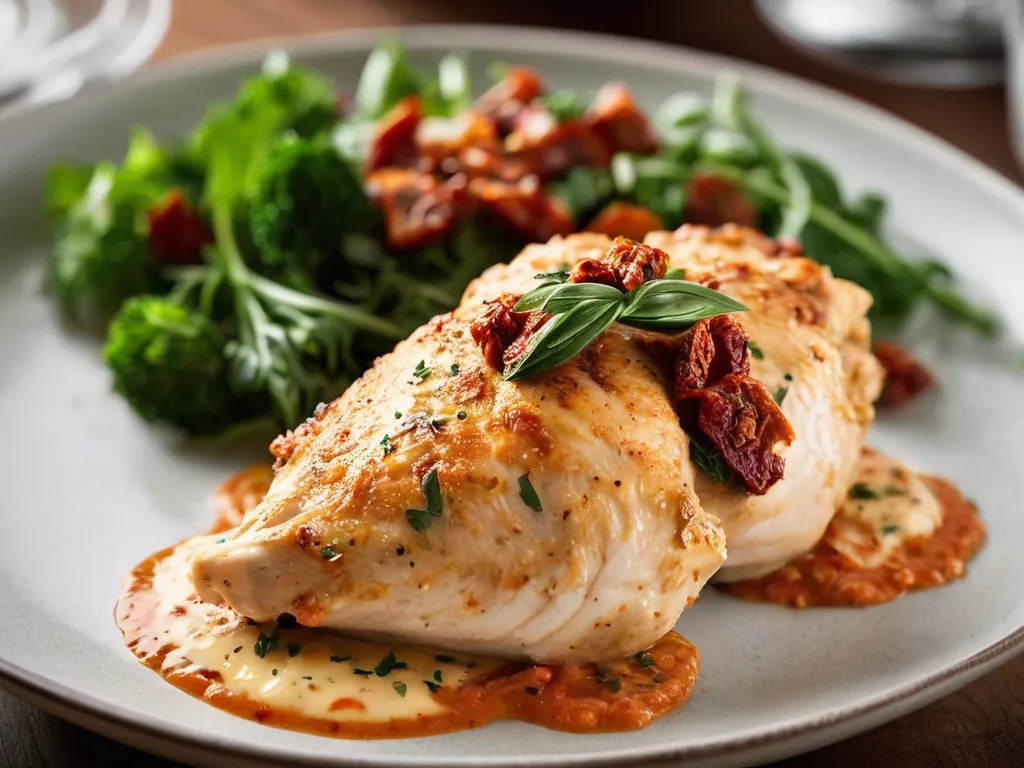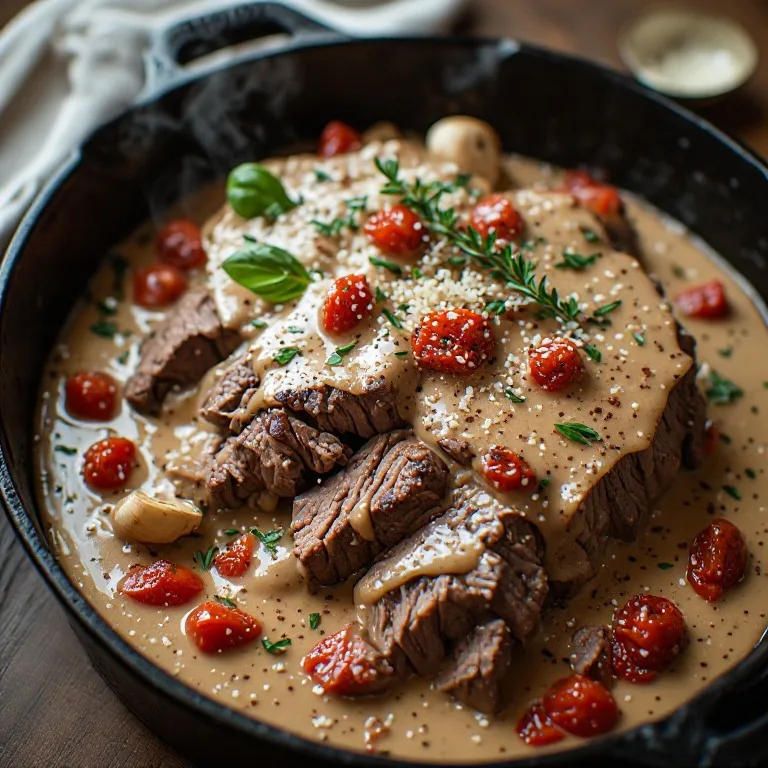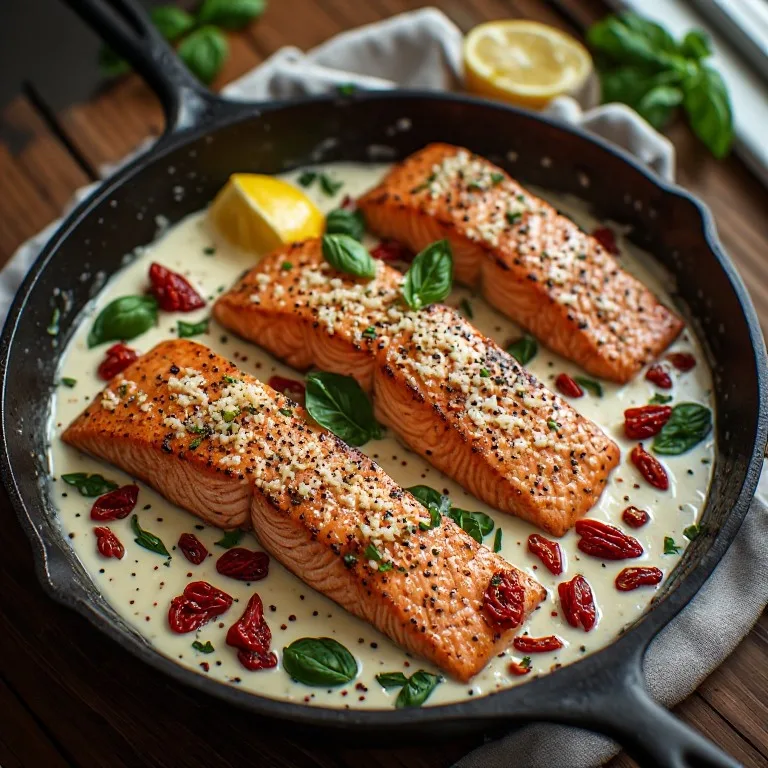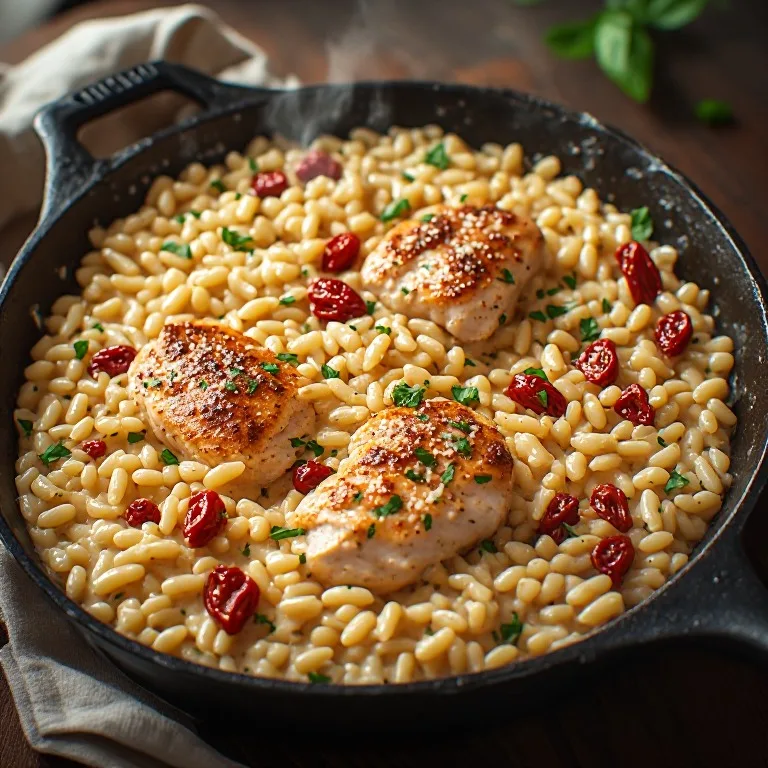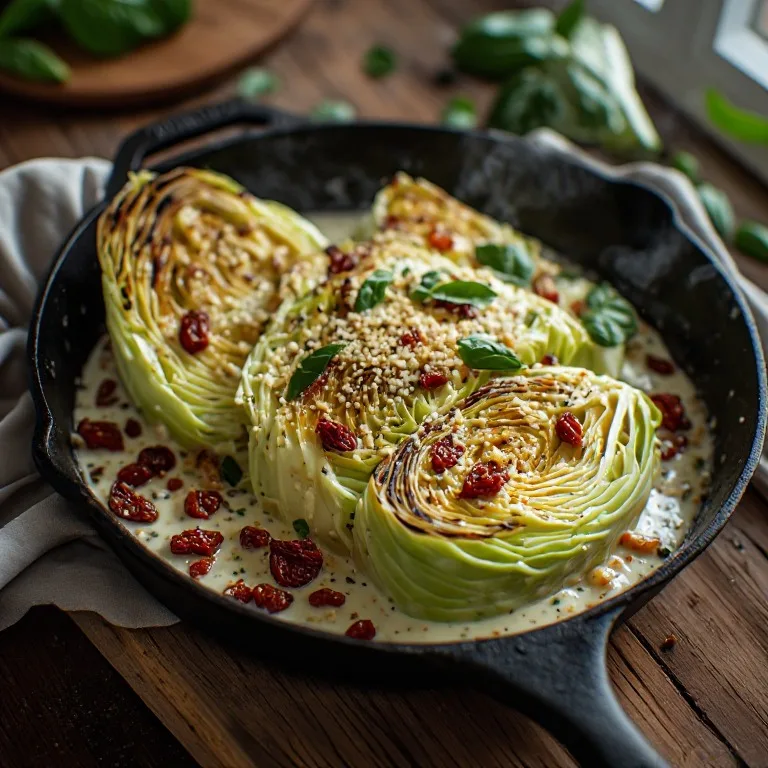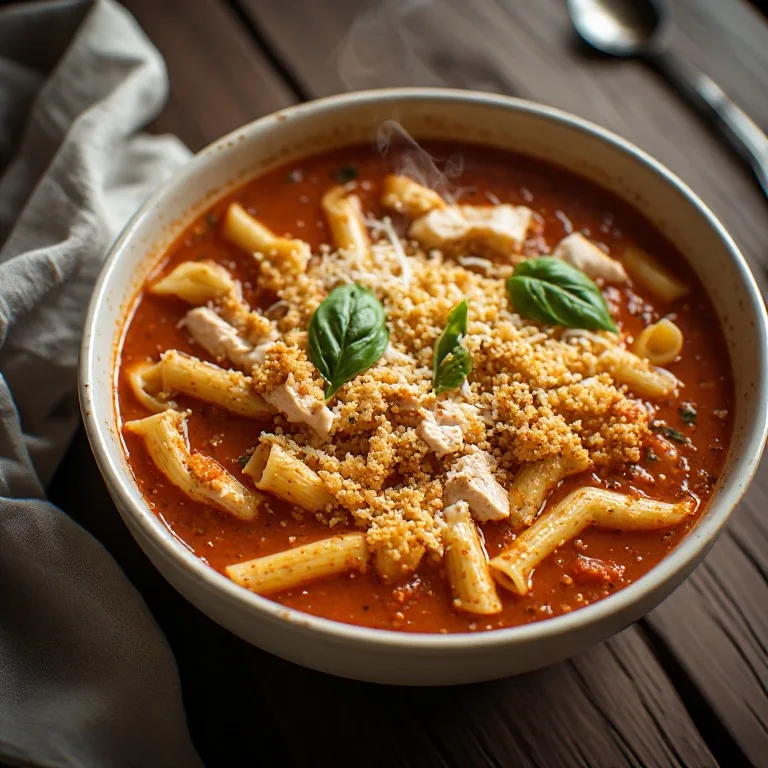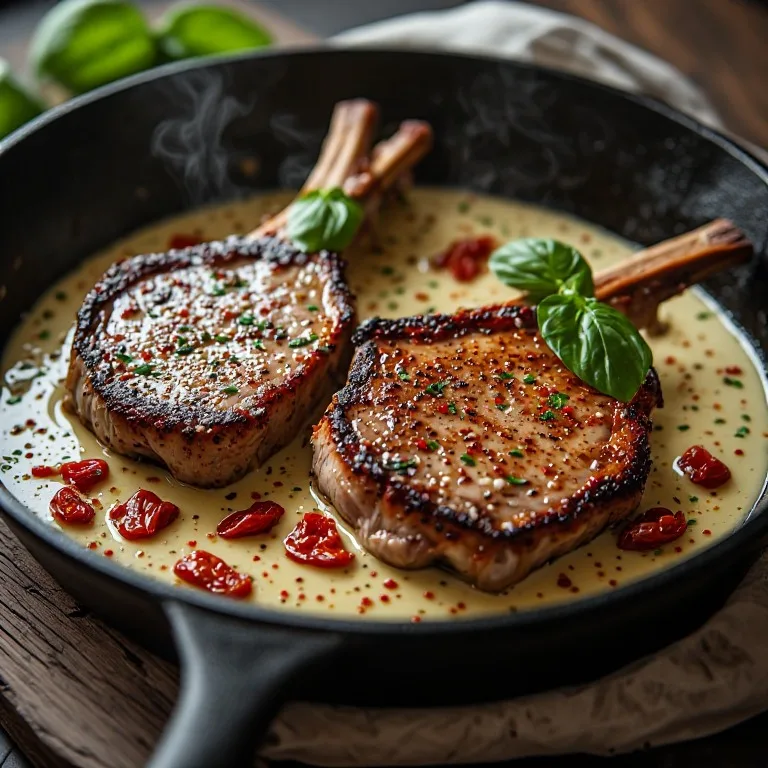



Thick bone-in pork rib chops, seared dark and hard, then pulled from the heat to rest while you deglaze everything they left behind in the pan — the browned bits, the rendered fat, the flavor — into a cream sauce that is heavy and rich and sharp from sun-dried tomatoes and parmesan.
This is the marry me sauce, applied to pork chops. The sauce has been running through TikTok’s food cycle since 2022 — first on chicken breasts, then on gnocchi and orzo and tortellini and butter beans and pot roast — and it works as well or better on pork chops than it did on any of them.
The reason is the fond. Bone-in rib chops have more intramuscular fat than chicken breast. When they sear, they leave a richer, stickier layer on the pan bottom. When you deglaze that layer with chicken broth and cream, it becomes the most flavorful part of the sauce.
The one thing that determines whether pork chops are good
Internal temperature. That is it. That is the entire variable.
Pork chops cooked to 145°F are juicy, slightly pink at the center, and taste like a well-seasoned piece of meat that still has some fat in it. Pork chops cooked to 165°F — chicken’s safe temperature, which a surprising number of recipes still apply to pork even though the USDA updated its guidance in 2011 — are dry, chewy, and require the cream sauce to do all the work.
At 145°F with a 3-minute rest, the chop carries itself. The sauce makes it better. At 165°F, the sauce is covering for the cooking error.
Buy an instant-read thermometer if you do not have one. Pull the chops at 140 to 143°F and let carry-cooking do the rest during the 3-minute rest.
The sear setup matters more than the recipe
The marry me sauce is forgiving — it comes together in 10 minutes and is difficult to ruin. The sear is where most people lose this dish.
Three requirements for a proper sear:
Dry surface. Pat the chops completely dry before seasoning. Any moisture on the surface turns to steam the instant it hits the hot pan, which means the first minute of cooking evaporates water instead of building crust. A paper towel pass before seasoning costs 10 seconds and changes the result significantly.
Hot enough pan. The oil should shimmer and just start to smoke before the chops go in. If you add chops to a pan that is not yet fully hot, they stick, steam, and cook unevenly. Give the pan 2 to 3 minutes over medium-high heat after adding the oil.
No crowding. The chops need space for steam to escape. In a 12-inch pan, four standard chops fit; in a 10-inch pan, cook in two batches rather than crowding. Crowded chops steam instead of sear.
The sauce: what each element does
Sun-dried tomatoes (oil-packed): The concentrated, jammy version of tomato — more umami per tablespoon than fresh tomatoes or even canned. Oil-packed tomatoes are softer and release flavor faster than dry-packed; use those. Rough-chop them so they integrate into the sauce rather than sitting as whole pieces.
Fond: The brown layer the pork leaves in the pan. When the chicken broth hits it, the fond dissolves into the liquid and carries months of flavor into the sauce in about 30 seconds of scraping. Do not wipe the pan.
Heavy cream: The fat in heavy cream prevents the sauce from breaking when the parmesan is added. Do not substitute milk — it will thin the sauce and the parmesan may seize. Half-and-half works but produces a thinner sauce that takes longer to reduce.
Parmesan: Added at the end, off the boil. Adding parmesan to a boiling sauce causes it to turn grainy. Reduce heat to low, add in two additions, stir after each.
Red pepper flakes: They are not optional. Heavy cream and parmesan are rich; the heat balances them. Half a teaspoon for four servings is mild warmth, not spice.
How this differs from marry me chicken
The technique is similar but three details change:
- Target temperature: 145°F for pork (not 165°F for chicken). If you cook pork chops like you cook chicken breasts, they will be dry every time.
- Sear time: Bone-in rib chops take 4 to 5 minutes per side at 1 to 1.5 inches thick, versus 5 to 6 minutes per side for pounded chicken breasts. The bone insulates the meat, but the cut is thicker.
- Fond quality: Pork rib chops with their higher fat content leave a richer, more deeply browned fond than chicken breast. The cream sauce in this version has more depth than the chicken version as a direct result.
Serving
The sauce is rich — it needs something to soak it up. Rigatoni or pappardelle alongside the chops is the most popular pairing. Mashed potatoes or polenta work well and are more seasonally appropriate through fall and winter. Crusty bread catches everything left in the pan.
For a lighter pairing, roasted broccolini or steamed green beans cut through the cream without competing with the sauce’s flavor.