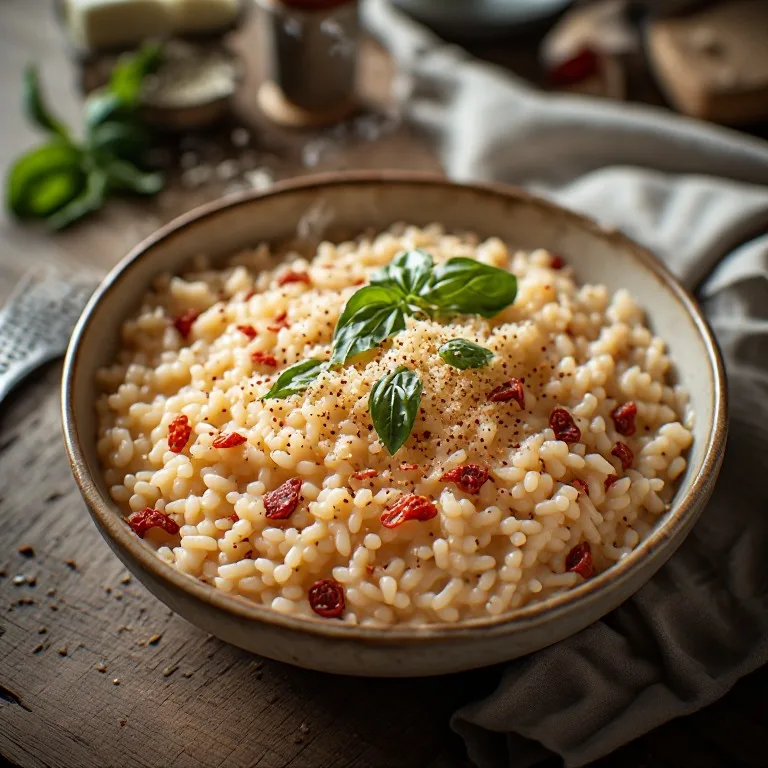


TikTok’s Marry Me Risotto, Made at Home — Three Mistakes That Separate Good Risotto From Great
Marry Me Risotto blew up on TikTok for the same reason Marry Me Chicken did: the flavor profile is completely specific and almost absurdly good. Sun-dried tomato oil as the cooking fat. A tight hit of wine to cut the richness. Heavy cream and Parmesan added off heat so they emulsify instead of breaking. The result is a risotto that is simultaneously rich and bright, creamy without being heavy, and specific — you know exactly what you are eating.
The problem is that risotto has a reputation for being difficult, and most TikTok shortcut versions skip the three techniques that actually make it work. The recipes that go viral tend to be the ones that show the finished product — not the process. So most home cooks end up with gluey, grainy, or one-note risotto and blame the recipe when the issue is technique.
Three mistakes account for 90% of bad home risotto:
One: Adding cold stock. Stock must be kept at a bare simmer in a separate saucepan throughout cooking. Cold stock dropped into hot rice causes a temperature shock that cooks the outer starch too fast before the center has absorbed anything. The result is gluey on the outside, hard in the center. Warm stock maintains the gradual, even starch release that creates creamy risotto.
Two: Skipping the rice toast. The Arborio rice must go into the hot oil and shallot mixture and stir-toast for a full 2 minutes before any liquid is added. The toast forms a partial starch seal on the outer surface of each grain, slowing down the rate of starch release. Without this seal, the outer starch dissolves all at once in the first ladle of liquid and the finished texture is paste, not risotto.
Three: Adding cream over live heat. The Marry Me cream-and-butter finish — mantecatura — must happen off heat. Cream and butter added to a bubbling pan separate: the fat breaks from the liquid and you get greasy, grainy risotto. Off heat, the residual temperature of the rice emulsifies everything together into a silky, glossy finish. This is the step that makes the finished risotto look restaurant-quality in photos.
Get these three right, and the rest is just patience and a ladle.