


Pin It

Viral TikTok Marry Me Salmon (One-Pan Creamy Sun-Dried Tomato, 30 Minutes)

Viral TikTok Marry Me Salmon (One-Pan Creamy Sun-Dried Tomato, 30 Minutes)
Jump to Recipe
Prep 8 min Cook 22 min Serves 4
Quick answer: Pat 4 salmon fillets (6 oz each, skin-on or off) completely dry. Season both sides with salt, pepper, garlic powder, and Italian seasoning. Heat 1 tablespoon of olive oil in a large skillet over medium-high until shimmering. Lay the salmon in skin-side or flesh-side down, press gently for 5 seconds, then leave it alone — do not touch it — for 3 to 4 minutes until it releases cleanly and has a deep golden crust. Flip and cook 2 to 3 more minutes to your target temperature (130°F for medium, 145°F for fully cooked). Transfer to a plate. Reduce heat to medium. In the same pan, melt 2 tablespoons of butter, then add 4 minced garlic cloves and cook 30 seconds until fragrant. Add ½ cup of chopped oil-packed sun-dried tomatoes and stir for 1 minute. Pour in ½ cup of chicken broth and scrape up every bit from the bottom of the pan. Add ¾ cup of heavy cream and ½ teaspoon of red pepper flakes. Simmer 2 to 3 minutes until slightly thickened. Stir in ⅓ cup of freshly grated Parmesan and the juice of half a lemon. Taste and adjust salt. Spoon the sauce over the salmon — do not return the fillets to the pan to simmer; the residual sauce heat finishes the surface without breaking the fish. Finish with fresh basil or dill and serve immediately.

Shop the tools

Gear matched to this recipe. These are Amazon affiliate links — we may earn a small commission if you buy, at no extra cost to you.

As an Amazon Associate, Copycat Spices earns from qualifying purchases. Product images are generic illustrations, not the exact item listed.

Viral TikTok Marry Me Salmon (One-Pan Creamy Sun-Dried Tomato, 30 Minutes)

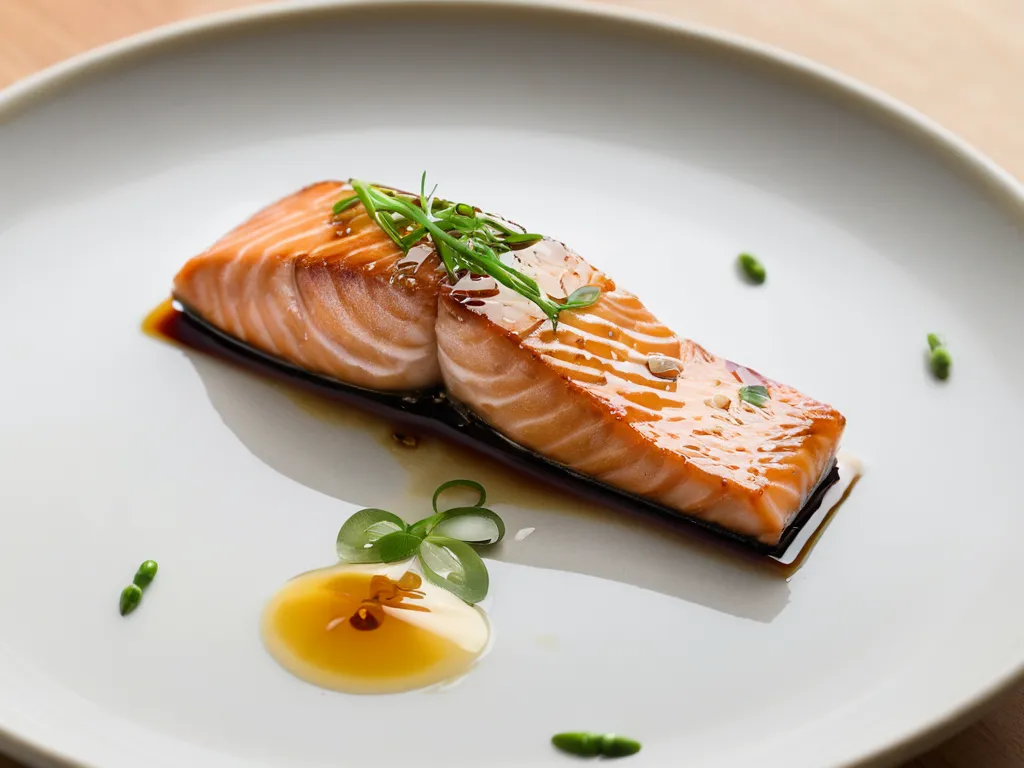
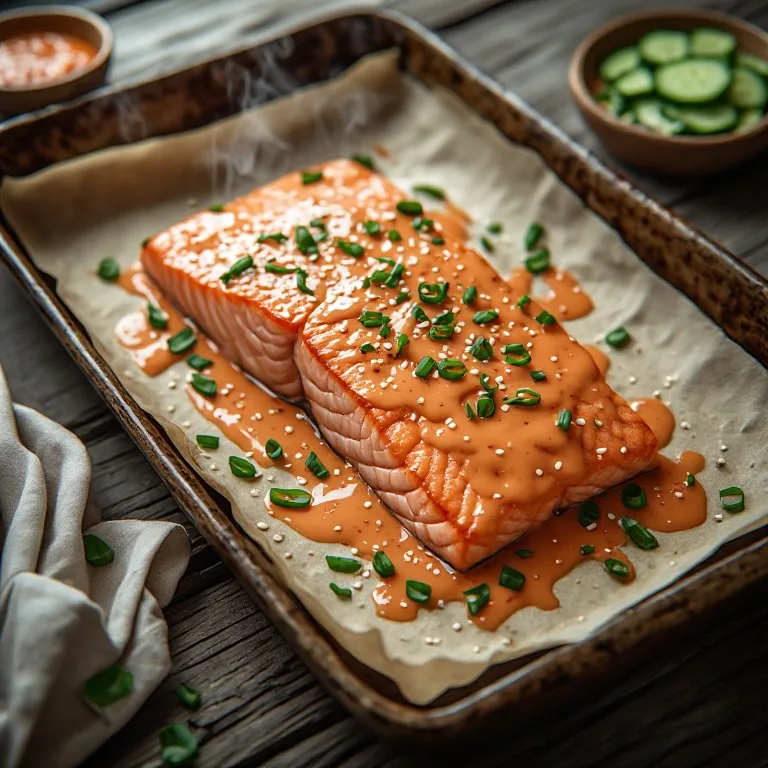
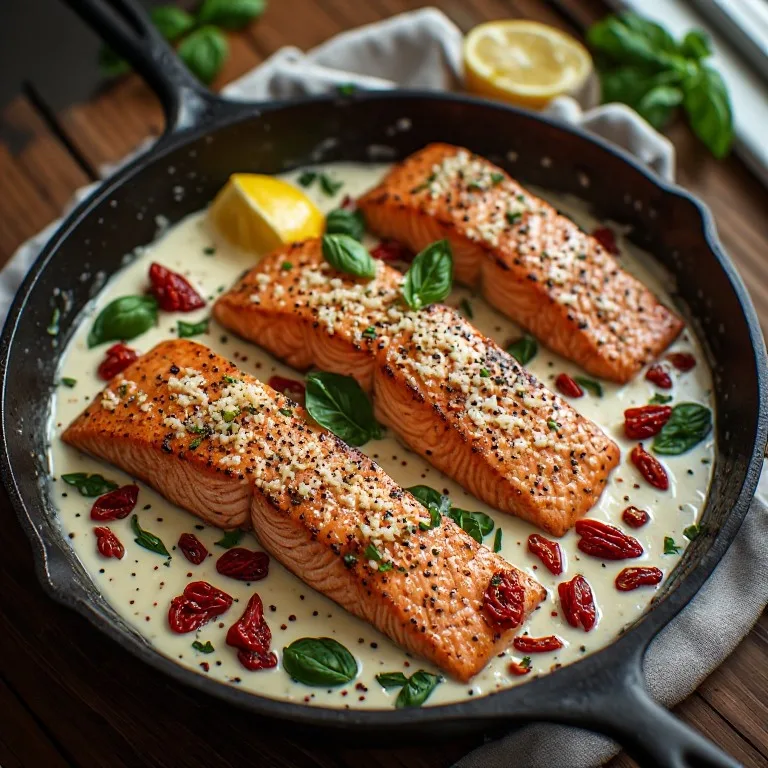
The Marry Me Salmon going viral on TikTok: salmon fillets seared golden then spooned with a creamy sun-dried tomato parmesan sauce that's made in the same pan. Ready in 30 minutes, one skillet, and the sauce is so good it speaks for itself.

Easy Prep: 8 min Cook: 22 min Total: 30 min4 servings ~$4.50/serving
Prep8 min
Cook22 min
Total30 min
Servings
4
At home~$4.50/serving
vs
Restaurant~$20.25/serving
You save ~78%

The Story Behind the Recipe

The Marry Me Salmon going viral on TikTok: salmon fillets seared golden then spooned with a creamy sun-dried tomato parmesan sauce that's made in the same pan. Ready in 30 minutes, one skillet, and the sauce is so good it speaks for itself.

Nutrition Facts

Per serving (4 servings)
Calories580
Total Fat41g
Total Carbs9g
Dietary Fiber1g
Sugars5g
Protein43g
Sodium680mg

* Estimated values based on standard recipe preparation. Actual values may vary.

Ingredients

  • For the salmon
  • For the Marry Me sauce
  • Optional additions
  • To finish
  • To serve

Instructions

💡
Pro tip: This recipe tastes even better the next day. The flavors need time to meld together in the fridge.
❄️
Storage: Keeps in an airtight container in the fridge for up to 2 weeks. Freezer-friendly for up to 3 months.
🎃 Free Halloween cookbook — download now The Copycat Halloween Cookbook A ready-made, photo-illustrated PDF of our best halloween copycat recipes — free to download, no building required. Pay what you want to support if you love it.

Free PDF — instant download. We'll also send new seasonal copycat recipes now and then; unsubscribe anytime. Or just download it →

The Marry Me Format, Applied to Salmon

The original Marry Me Chicken went viral in 2022-2023 because the format was nearly perfect: one pan, 35 minutes, a visually gorgeous creamy sauce, and a name that guaranteed clicks. The dish works because sun-dried tomatoes, cream, garlic, and Parmesan are all flavor maximum — separately or together, they are among the most universally appealing cooking ingredients.

Marry Me Salmon applies the same sauce to a different protein — and changes two things that matter. First, the timing: salmon is done in half the time, which makes the full dish 30 minutes rather than 35 to 40. Second, the plating: you do not return the salmon to the sauce. Instead, you build the sauce in the same pan after the fish comes out, then spoon it over the fillets at the end. This keeps the salmon from breaking apart and prevents the kind of overcooking that makes fish chewy.

The TikTok visual is arguably better than the chicken version. Coral-pink salmon against a glossy, red-flecked cream sauce is almost absurdly photogenic. That contrast — the warm orange of the fish, the cream’s ivory, the deep red sun-dried tomatoes — is the kind of thing that stops a scroll.

Why Salmon Works So Well Here

Salmon has three qualities that make it ideal for the Marry Me format.

First, fat content. Salmon is one of the fattiest fish — rich in omega-3s with a naturally buttery texture. A cream-based sauce could easily overwhelm a lean fish like cod or tilapia, making it feel heavy and one-dimensional. Salmon stands up to it. The richness of the cream and Parmesan amplifies the salmon’s own fat rather than masking it.

Second, flavor intensity. Salmon has a strong, distinctive flavor that pairs well with assertive seasonings — garlic, sun-dried tomatoes, red pepper flakes. These same bold flavors can feel too strong against a mild white fish, but they’re in balance with salmon.

Third, the sear. Salmon develops a beautiful golden crust in 3 to 4 minutes over medium-high heat. The skin crisps, the flesh develops Maillard browning, and that crust is what makes the visual so striking when the sauce is spooned over it. A thin, lean fish doesn’t sear the same way — it flakes apart, dries out, or sticks. Salmon is forgiving at the temperatures needed to develop color.

The Sauce: Why Sun-Dried Tomatoes Are Non-Negotiable

The recipe title includes “creamy sun-dried tomato” and this is not just a flavor choice — it’s the structural reason the sauce is so good.

Sun-dried tomatoes are one of the most concentrated sources of savory depth in a standard pantry. They carry acidity from the tomato, sweetness from the caramelization during drying, and the glutamates that trigger the brain’s umami response. When you add them to butter and let them sit for a minute, they release the oil they were packed in — flavored with garlic, herbs, and the tomatoes themselves — into the sauce base. By the time the cream goes in, the oil has already distributed tomato flavor through the fat phase of the sauce.

The Parmesan adds another layer of glutamate concentration. Aged hard cheeses are among the highest naturally occurring sources of umami compounds — more than soy sauce, more than fish sauce by some measures. The combination of sun-dried tomatoes and Parmesan in a cream sauce produces a level of savory depth that is genuinely greater than the sum of its parts.

Oil-packed sun-dried tomatoes are essential. Dry-packed tomatoes are too chewy and lack the jammy softness that distributes through the sauce — and they do not release flavorful oil into the pan. If all you have is dry-packed, reconstitute them in warm water for 20 minutes, drain, and pat dry. The result is close but not identical.

The Sear: Don’t Touch It

The instruction to leave the salmon completely alone for 3 to 4 minutes after it hits the pan is the most violated step in every fish recipe, and it’s the one that determines whether you have a beautiful golden crust or pale, torn fish.

Here’s what happens if you move it early: salmon has water-soluble proteins near the surface that set into a crust as heat penetrates. If you try to flip or slide the fish before this crust has fully formed, it is still adhering to the pan through moisture rather than releasing cleanly through the crust. Moving it tears the surface. Waiting until the fish releases cleanly — meaning it slides with almost no resistance when you slide a spatula under it — means the crust is complete and the fish will flip in one intact piece.

The same principle applies to the initial 5-second press: salmon bowls upward as the proteins contract when they hit the heat. The very center of the fillet rises off the pan surface, losing contact. Pressing for 5 seconds counteracts this and ensures you get even browning across the entire fillet rather than a ring of crust around an uncooked pale center.

A fully dry surface is the prerequisite. Any moisture on the salmon before it hits the pan turns to steam and delays browning — sometimes for the entire cook. Pat the fillets dry until the paper towel comes away with nothing on it.

The Lemon Question

This is the one departure from the original Marry Me Chicken sauce, and it’s non-optional for fish.

Cream sauces are rich, and that richness needs acid to balance. Chicken is fatty enough that the cream’s richness feels complete — the sauce reads as round and full. Salmon is even fattier, and the combination of very rich fish with cream sauce can tip into cloying territory without something to cut through it.

Lemon juice does this without adding competing flavor. Half a lemon’s worth of juice — about 1½ tablespoons — brightens every other element in the sauce. It makes the sun-dried tomatoes taste more vivid. It sharpens the Parmesan. It gives the salmon a final lift that turns a very good dish into something that makes people put their forks down and ask what you did.

Add the lemon juice off heat or on very low heat — high heat drives off the volatile aroma compounds that make lemon fresh-tasting, leaving behind flat acidity. The right sequence is: lower the heat, stir in Parmesan, then immediately add lemon juice and taste.

Lemon zest (from the same half lemon, added with the garlic) adds the aromatic component separately from the acidity — a layer the juice alone doesn’t provide. This is optional but worth doing if you have a microplane.

What to Serve With It

The sauce is substantial — it needs something to sit on or soak into.

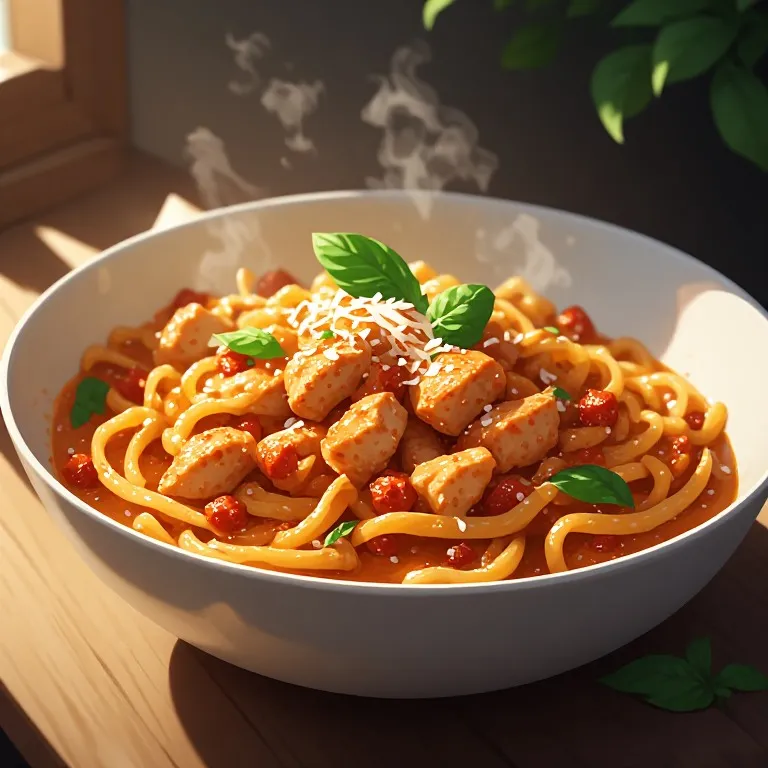
Pasta is the most popular TikTok pairing. Linguine, fettuccine, or rigatoni work best. Toss the hot pasta with the sauce directly in the pan before plating the salmon on top — the pasta coats completely and the dish looks like a restaurant plate.

White rice works almost as well. The sauce soaks into cooked rice from the edges, and the mild starch provides a clean backdrop for the assertive flavors.

Crusty bread is the simplest option and, arguably, the best vehicle for the sauce. A loaf of sourdough or ciabatta with a good crust soaks the cream sauce differently than pasta or rice — more absorbent, with the bread’s tang cutting through the richness.

Mashed potatoes are underrated here. The sauce is thin enough to pool around mashed potatoes the way a light gravy does, and the richness of the potato amplifies the cream sauce rather than competing with it.

Four Variations Worth Making

Lemon-caper salmon. Add 2 tablespoons of drained capers with the sun-dried tomatoes. Add the zest of a full lemon (not just the juice). The capers add brininess that makes the sauce taste more specifically Italian rather than generically creamy. Reduce the salt slightly since capers are already quite salty.

Spinach-artichoke version. Stir 2 cups of baby spinach into the sauce just before the Parmesan, and add ¼ cup of chopped marinated artichoke hearts with the sun-dried tomatoes. This version is particularly good over pasta — it reads almost like a spinach-artichoke dip crossed with a cream sauce, and the salmon on top ties it together.

Spicy version. Double the red pepper flakes to 1 teaspoon and add a teaspoon of smoked paprika to the salmon’s seasoning blend. The spice cuts through the cream in a way that makes the dish feel less heavy and more exciting. Add a splash of the sun-dried tomatoes’ packing oil for extra heat.

Dairy-free. Full-fat coconut cream at the same volume as heavy cream, nutritional yeast in place of Parmesan. The sauce changes character — slightly lighter, less coating, with a faint sweetness that the regular version doesn’t have — but it holds up. See the FAQ for technique details.

Marry Me Salmon vs. Marry Me Chicken: The Comparison

If you’ve made the Marry Me Chicken, here’s what changes with salmon:

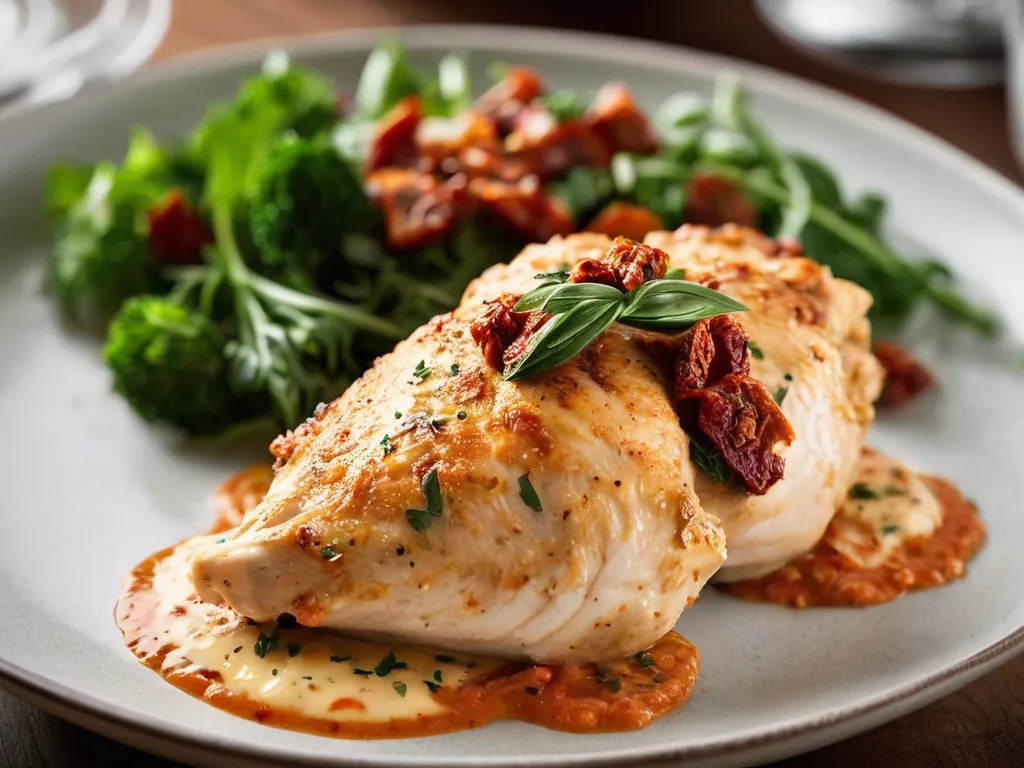
The sauce is the same formula. The protein technique is completely different: chicken is pounded flat, seared, and returned to the sauce to finish cooking in the liquid for 2 to 3 minutes. Salmon is seared intact (skin-on or off) and NOT returned to the sauce — it is too delicate to braise, and it is already at temperature when it comes off the sear.

The timing is 5 to 10 minutes faster. The lemon is essential in the salmon version, optional in the chicken. The presentation is reversed: chicken sits under the sauce in the pan; salmon sits on top with the sauce poured over it at the plate.

If you are making this for the first time after knowing the chicken version: the sauce-building steps are identical. The only adjustments are the protein technique and the lemon.

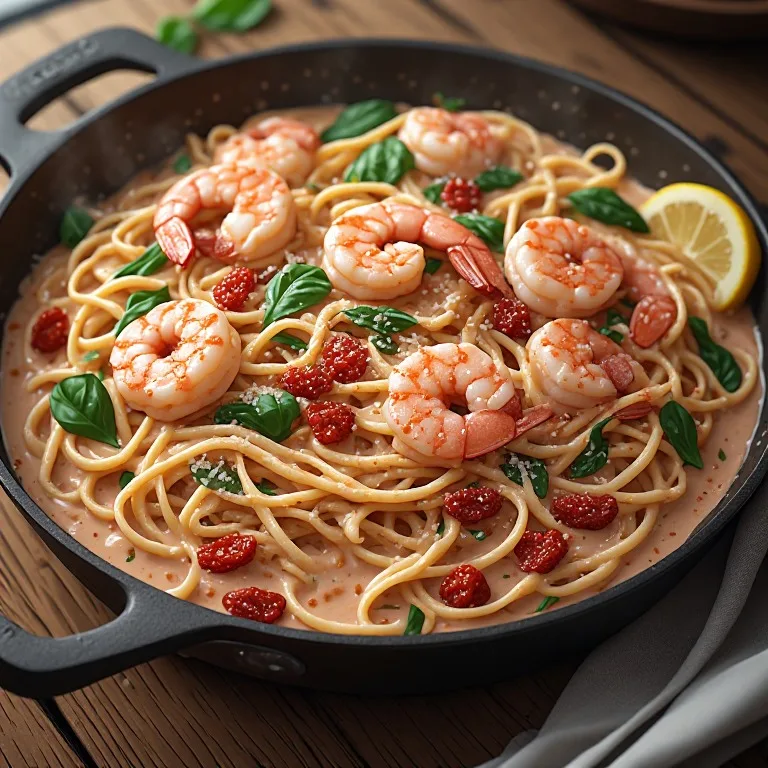
For shrimp, see Marry Me Shrimp Pasta. For a meatless version, see Marry Me Lentils or Marry Me Butter Beans.

The Three Failure Modes

Salmon sticks and breaks. You tried to flip before the crust formed. Next time: wait until the fillet slides cleanly with no resistance, even if that means 4 to 5 minutes on the first side. If you’re not sure, try sliding a thin spatula under one edge — if it goes in without tearing, it’s ready. If it resists, give it another 60 seconds.

Sauce is too thin. Either the cream didn’t reduce long enough, or the cream was added when the pan was too hot and it never properly simmered. Fix: simmer uncovered over medium-low for another 2 to 3 minutes, stirring. The sauce should coat a spoon — if you drag a finger across the back, the line should hold.

Salmon tastes heavy and dull. The lemon juice is missing or was added to a very hot pan (where the aromatics evaporate immediately). Add a fresh squeeze of lemon directly onto the salmon at the plate and a pinch of flaky salt. The combination of acid and salt lifts every other flavor in the dish almost instantly.

Storage and Reheating

The sauce stores well — refrigerate in an airtight container for up to 3 days. It thickens substantially when cold; reheat over low heat with a splash of broth or water to return it to a pourable consistency.

The cooked salmon is best eaten the day it’s made. Reheated salmon has a strong odor and tends to dry out. If you have leftover salmon, flake it cold into the reheated sauce and serve over pasta or rice — it is more forgiving in that format than reheated as whole fillets.

If making ahead for company: sauce can be fully prepared up to 3 days in advance. Sear the salmon fresh while the sauce reheats in a separate saucepan. The 30-minute total time becomes closer to 15 minutes if the sauce is already done.
🥗

Make It Healthier

Love Viral TikTok Marry Me Salmon (One-Pan Creamy Sun-Dried Tomato, 30 Minutes) but want a lighter version? Try these simple swaps:

  • ✓Use half-and-half instead of heavy cream to cut roughly 80 calories and 10g of fat per serving. The sauce will be thinner and less coating, but still very flavorful — compensate by reducing it slightly longer.
  • ✓Reduce Parmesan to 3 tablespoons across all four servings (about half the recipe quantity) — you lose some body and saltiness but the sun-dried tomato flavor still carries the sauce.
  • ✓Use 2% Greek yogurt in place of cream: whisk 3 tablespoons of Greek yogurt with 2 tablespoons of the warm broth before adding to the pan, then stir in slowly over low heat (don't boil it or the yogurt curdles). Cuts calories significantly and adds protein.
  • ✓Serve over zucchini noodles or cauliflower rice instead of pasta or regular rice to reduce carbohydrates substantially. The sauce is rich enough that even a light base feels satisfying.
  • ✓Choose a thinner salmon fillet (the tail-end cut) rather than the thick belly piece — it cooks faster and contains slightly less total fat, though it is still rich in beneficial omega-3s.

Frequently Asked Questions

What temperature should I cook the salmon to?

This is genuinely a preference question. The FDA recommends 145°F (fully opaque all the way through, firmer texture). Most restaurant kitchens serve salmon at 125°F to 130°F — the center is slightly translucent, very silky, and moist in a way that fully-cooked salmon is not. Medium (130°F) is what most food professionals prefer. If you are cooking for pregnant or immunocompromised guests, cook to 145°F. For everyone else, 130°F produces noticeably better texture. The difference is about 1 to 2 minutes of total cook time — which is why a thermometer matters here.

Why do I not return the salmon to the sauce to finish cooking?

Two reasons. First, salmon is already at or near its target temperature when it comes off the sear — returning it to a simmering liquid adds aggressive heat to a protein that is done cooking and produces dry, overcooked fish. Second, salmon breaks apart easily once cooked — simmering in liquid flakes the fish, and you end up with crumbled salmon in sauce instead of a beautiful intact fillet. The hot sauce spooned over the salmon glazes it and adds residual heat to warm the surface, which is all you need. The Marry Me Chicken works differently because chicken can safely return to the sauce to finish cooking through — salmon does not have that margin.

Skin-on or skin-off salmon?

Either works. Skin-on gives you a crispy skin layer when you sear flesh-side down at the end — this is a textural contrast that some people love. Skin-off (which is what the fishmonger usually defaults to) is simpler and gives you a more uniform crust on the flesh side. If using skin-on, sear skin-side down first for 4 minutes (you want the skin deeply golden and crisp), then flip and sear the flesh side 1 to 2 minutes, then plate skin-side up so it stays crisp while you build the sauce. If you sear flesh-side first with skin-on, the skin traps steam and you end up with rubbery skin.

Can I use frozen salmon?

Yes — thaw overnight in the refrigerator (preferred) or under cold running water for 30 minutes. The critical step is drying: frozen salmon releases more surface moisture as it thaws, so pat it especially aggressively with paper towels before seasoning and searing. Surface moisture is the main enemy of a proper sear — water steams instead of browning. If you are in a hurry, thawing in cold water and then drying thoroughly still produces a good result. Do not microwave-thaw — it cooks the outer layer unevenly.

What is the difference between Marry Me Salmon and Marry Me Chicken?

The sauce is essentially the same — sun-dried tomatoes, cream, Parmesan, garlic, red pepper flakes, Italian seasoning. The differences are in execution. Salmon is more delicate and cooks much faster (30 minutes total vs. 35 to 40 for chicken). Salmon needs lemon juice in the sauce — cream sauces paired with fish need an acidic note to balance the richness in a way chicken does not require as urgently. Salmon goes over the sauce at serving instead of back into it — the fish would break apart and overcook otherwise. And the finished plate looks different: the coral-pink salmon against the red-flecked cream sauce is one of the most visually striking of the Marry Me variants, which is part of why the salmon version has blown up on TikTok. See the full comparison with the [Marry Me Chicken recipe](/blog/viral-tiktok-marry-me-chicken).

What if I don't have sun-dried tomatoes?

The sun-dried tomatoes are the flavor backbone of the dish — without them, this is just a cream sauce. The best substitute is a concentrated tomato paste (add 1 tablespoon, cook it in the butter for 2 minutes before adding garlic to caramelize it slightly) plus 1 tablespoon of balsamic vinegar stirred into the cream for sweet acidity. A roasted red pepper paste works similarly. If you happen to have a jar of Carbone or Rao's arrabiata, stirring 2 tablespoons into the cream produces a similar concentrated tomato depth. None of these are exact substitutes, but they get close.

Can I make this dairy-free?

Full-fat coconut cream works surprisingly well — it adds richness and body without a strong coconut flavor in a sauce this heavily seasoned with garlic and sun-dried tomatoes. Use the same volume as heavy cream. Nutritional yeast (1 to 2 tablespoons) can partially replace the Parmesan's umami and saltiness. The result is a slightly different texture (coconut cream is slightly grainy vs. silky dairy cream) and a lighter, less coating sauce, but the flavor profile holds. Skip the lemon juice if using coconut cream — the sauce needs it less because coconut cream is less fatty in the same heavy way.

Why is it called Marry Me Salmon?

It borrows the name from Marry Me Chicken, the dish that went viral in 2022 on the premise that the sauce is so good it could prompt a marriage proposal. The name is a marketing hook, not a literal claim — but it stuck because the sauce genuinely delivers. Marry Me Salmon is the seafood spin-off: the same sun-dried tomato, cream, and Parmesan sauce spooned over seared salmon instead of chicken. The salmon version took off separately on TikTok because the coral-pink fish against the red-flecked cream sauce photographs even better than the original.

Is Marry Me Salmon healthy?

It's rich but nutritionally solid. Each serving runs about 580 calories with 43g of protein and only 9g of carbohydrates, so it's naturally high-protein and low-carb. Salmon brings heart-healthy omega-3 fatty acids and vitamin D. The heavy cream and Parmesan are where most of the 41g of fat and 680mg of sodium come from — if that matters for you, the healthier swaps above (half-and-half or Greek yogurt for the cream, less Parmesan, a vegetable base instead of pasta) cut the calories and fat meaningfully while keeping the protein high. Served over zucchini noodles or cauliflower rice, it's a genuinely lean, high-protein dinner.

Can I make this ahead of time?

The sauce can be made up to 3 days ahead and refrigerated — it reheats well over low heat with a splash of broth to loosen it. The salmon should be cooked fresh to order; reheating seared salmon produces dry, overcooked fish. If you want a faster weeknight version: make the full sauce ahead, reheat gently while you sear fresh salmon, and spoon to serve. The full dish is 30 minutes start to finish anyway, so the time savings are modest, but it does simplify timing when cooking for company.

Love this recipe? Share it!

Free PDF: our 12 most-wanted copycat recipes — instant download.

Made it? Buy us a coffee

Every recipe here is free, with no paywalls. If this one was a hit at your table, a small tip keeps new copycats coming.

$

Ratings & Reviews

—
No ratings yet

Rate this recipe

Click a star to rate

Leave a Review

0/500

CS

Copycat Spices Editorial

Researched + fact-checked. Every recipe on Copycat Spices is built from published sources — official ingredient lists, brand-published recipes, interviews and food-science references — and fact-checked before it goes live, then written as clear, step-by-step instructions for home cooks of all skill levels.

Learn more about our mission →