



Pin It

Viral TikTok French Onion Pot Roast (Dutch Oven, Gruyère-Broiled Baguette)

Viral TikTok French Onion Pot Roast (Dutch Oven, Gruyère-Broiled Baguette)
Jump to Recipe
Prep 15 min Cook 4.5 hours (40 min caramelizing + 3.5–4 hr braise) Serves 6–8
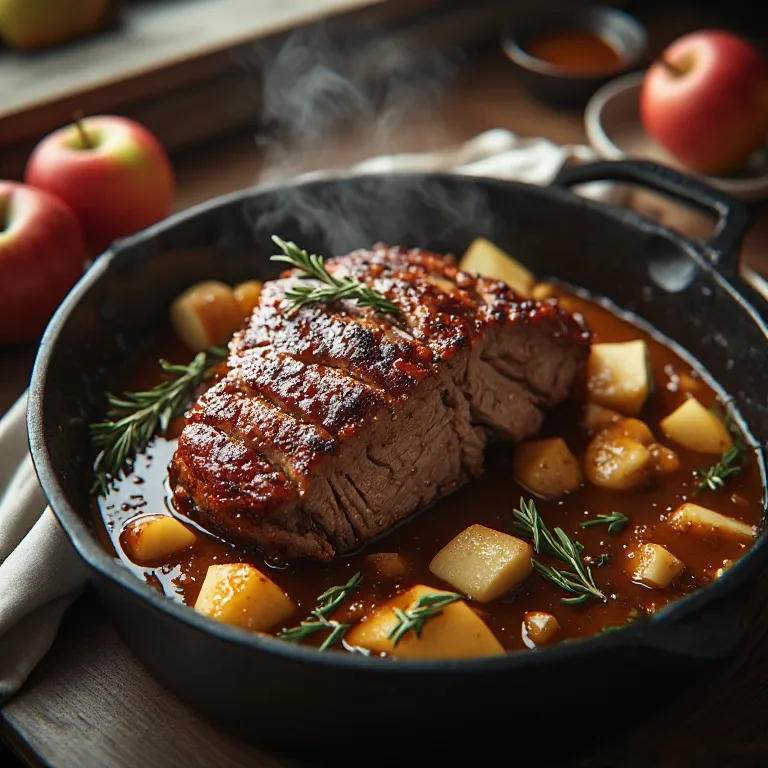
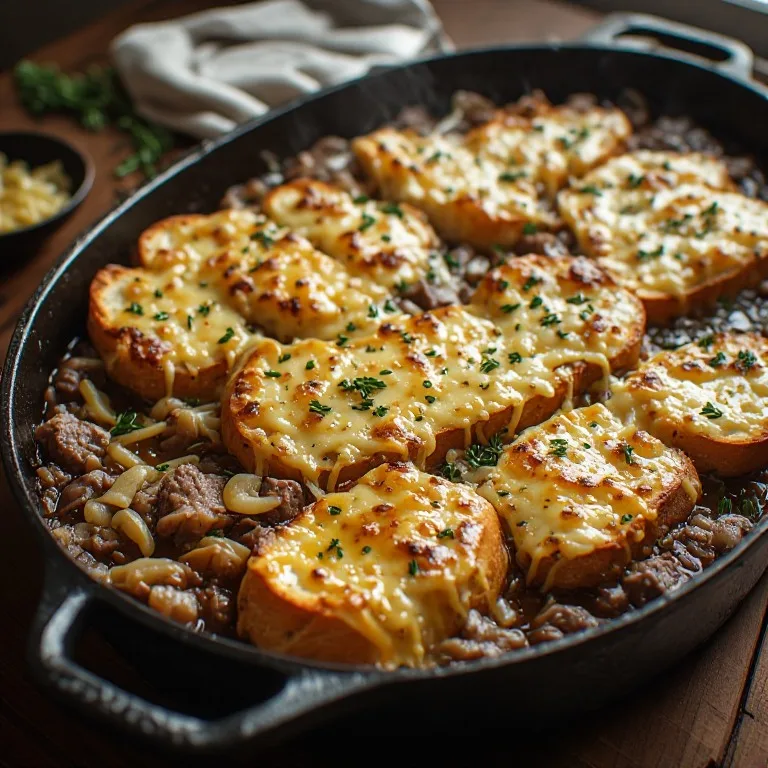
Quick answer: Season a 3–4 lb chuck roast generously with salt and pepper. Sear in a Dutch oven with 1 tablespoon oil over high heat, 4 minutes per side, until a deep mahogany crust covers all surfaces — do not skip this. Remove the roast. Reduce heat to medium, add 3 tablespoons butter, then add 3 large yellow onions (halved and thinly sliced). Cook over medium-low, stirring every 7 minutes, for 40–45 minutes until the onions are deep amber. Add 4 minced garlic cloves, cook 1 minute. Deglaze with ½ cup dry red wine, scraping up every bit of fond from the bottom of the pot. Add 2 cups low-sodium beef broth, 1 tablespoon Worcestershire sauce, 4 fresh thyme sprigs, and 2 bay leaves. Nestle the roast back in — it should sit about halfway into the liquid. Bring to a simmer, cover, and braise at 325°F for 3.5–4 hours until the meat is completely fork-tender and beginning to fall apart. Transfer the roast to a cutting board. Taste the braising liquid — it is French onion soup; adjust with salt and pepper. Lay 8–10 half-inch baguette slices directly on the surface of the liquid. Top with 6 oz freshly shredded Gruyère. Broil on high 3–4 minutes until bubbling and golden-spotted. Slice or shred the roast and serve in bowls with the cheesy baguette on top.

Viral TikTok French Onion Pot Roast (Dutch Oven, Gruyère-Broiled Baguette)

The French onion pot roast taking over TikTok's #fallrecipes: a chuck roast braised low and slow in a proper caramelized-onion broth with red wine and beef stock — then finished exactly like French onion soup, with baguette slices floated over the braising liquid and blanketed in Gruyère under the broiler. What makes the sear non-negotiable, why you need 40 full minutes on the onions, and how the same Dutch oven does all the work from stovetop to oven.

Medium Prep: 15 min Cook: 4.5 hours (40 min caramelizing + 3.5–4 hr braise) Total: 5h 55m6–8 servings ~$4.50/serving
Prep15 min
Cook4.5 hours (40 min caramelizing + 3.5–4 hr braise)
Total5h 55m
Servings
6
At home~$4.50/serving
vs
Restaurant~$20.25/serving
You save ~78%

The Story Behind the Recipe

The French onion pot roast taking over TikTok's #fallrecipes: a chuck roast braised low and slow in a proper caramelized-onion broth with red wine and beef stock — then finished exactly like French onion soup, with baguette slices floated over the braising liquid and blanketed in Gruyère under the broiler. What makes the sear non-negotiable, why you need 40 full minutes on the onions, and how the same Dutch oven does all the work from stovetop to oven.

Nutrition Facts

Per serving (6–8 servings)
Calories490
Total Fat26g
Total Carbs14g
Dietary Fiber2g
Sugars5g
Protein42g
Sodium780mg

* Estimated values based on standard recipe preparation. Actual values may vary.

Ingredients

  • For the pot roast
  • For the French onion braise
  • For the soup finish
  • To serve

Instructions

💡
Pro tip: This recipe tastes even better the next day. The flavors need time to meld together in the fridge.
❄️
Storage: Keeps in an airtight container in the fridge for up to 2 weeks. Freezer-friendly for up to 3 months.
🎃 Free Halloween cookbook — download now The Copycat Halloween Cookbook A ready-made, photo-illustrated PDF of our best halloween copycat recipes — free to download, no building required. Pay what you want to support if you love it.

Free PDF — instant download. We'll also send new seasonal copycat recipes now and then; unsubscribe anytime. Or just download it →

French onion pot roast is the fall 2026 mashup that finally made sense on TikTok: take the two things everyone already loves — French onion soup and a fall-apart Sunday pot roast — and cook them in the same pot so they become one dish. The braising liquid isn’t a gravy poured over the beef; it is French onion soup, built from onions you caramelized in the roast’s own drippings. Then you float baguette slices on top, blanket them in Gruyère, and run the whole Dutch oven under the broiler. The reveal — cracking a bubbling cheese crust to find tender beef in dark onion broth — is why the videos work.

Why this is different from every other pot roast

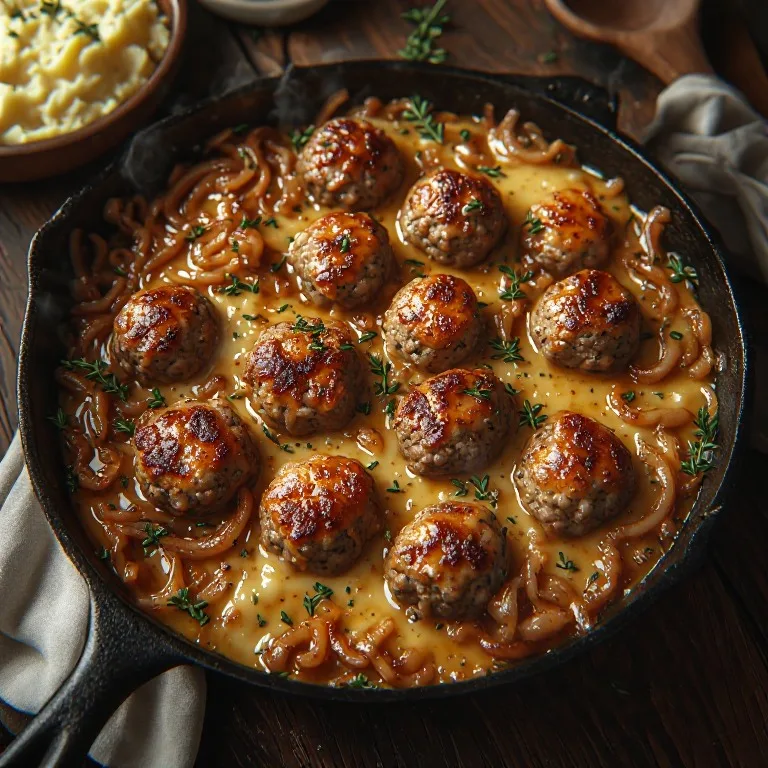
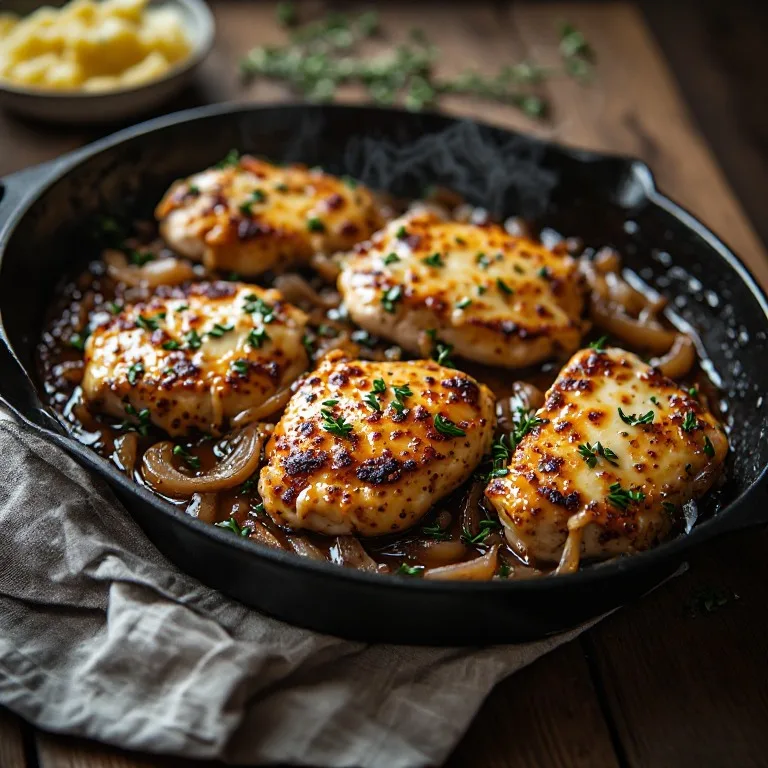
A standard pot roast treats the liquid as a means to an end — it keeps the meat moist and gets discarded or thinned into gravy. Here the liquid is the co-star. Because you caramelize the onions directly in the pot after searing the beef, every bit of that dark seared crust (the fond) dissolves into the onions and then into the broth. By the time the roast has braised for four hours, the liquid has the exact profile of a long-simmered French onion soup — deep amber, sweet from the onions, savory from the beef and Worcestershire — plus the body that only comes from collagen melting out of a chuck roast. You can’t get that from a can of soup or a seasoning packet. It’s the same technique family as the viral French onion meatballs and French onion chicken, scaled up to a centerpiece roast.

Why the sear is non-negotiable

Searing does two things, and only one of them is about the meat. The obvious part is color and flavor on the roast itself. The part people skip and regret is the fond — the dark, sticky layer that forms on the bottom of the pot during the sear. That fond is concentrated browned-meat flavor, and when you caramelize the onions on top of it and later deglaze with wine, it lifts off and dissolves into the braising liquid. A pale sear leaves you with a pale-tasting broth, no matter how long you braise. Get the roast dry, get the pot ripping hot, and give each side four honest minutes without moving it.

The 40-minute onion rule

This is the step that separates the real version from the disappointing one. Onions that look golden at 15 minutes are softened, not caramelized. Caramelization — the browning that produces French onion soup’s signature sweet-savory depth — only kicks in after the onions have shed most of their water and their surface temperature can climb. That takes a genuine 40–45 minutes over medium-low heat, stirring every 6–8 minutes. High heat doesn’t speed it up; it just burns the edges before the middle collapses. If the pan threatens to scorch, add a splash of water and scrape the fond back up. The dark bits are flavor. Budget the time or make a different recipe. (Want the standalone technique? See our how-to-caramelize-onions guide.)

Why chuck roast and nothing else

Chuck comes from the shoulder, a hard-working muscle laced with collagen. At 325°F over 3.5–4 hours that collagen melts into gelatin, which is what makes the meat pull apart and gives the braising liquid its silky body. Lean cuts — bottom round, eye of round, sirloin — have little collagen, so they cook through in the same time but come out dry and stringy because there’s nothing to convert. Bone-in short ribs are the only worthy upgrade (same collagen profile, richer result), and they need an extra 30–45 minutes. Don’t substitute a lean cut and expect tenderness; the braise can’t manufacture what the cut doesn’t have.

Why beef broth, not chicken stock

French onion soup is a beef-broth dish. The dark color, the glutamate-heavy savoriness, the depth that stands up to 40 minutes of caramelized onion — all of it comes from beef stock. Chicken stock produces a thinner, paler liquid that tastes like onions in weak gravy rather than French onion soup. Use low-sodium beef broth so you control the salt as the liquid reduces; a spoon of Better Than Bouillon beef base whisked in deepens a carton broth toward restaurant intensity.

The soup finish, and the one timing rule

Once the roast is out and resting, the braising liquid is your soup. Float half-inch baguette slices — day-old is better, it absorbs slower and holds its structure — directly on the surface, cover with freshly grated Gruyère (never pre-shredded; the anti-caking starch stops it browning cleanly), and broil 3–4 minutes until bubbling and golden-spotted. Watch it the whole time; Gruyère goes from perfect to burnt in under a minute. The one rule: serve within 10–15 minutes. The bread absorbs broth from the bottom while the cheese crust slows it from the top, but past that window the baguette saturates and collapses. If you’re serving guests, do the broil step at the last minute, not ahead. Everything up to that point (through the braise) reheats and even improves overnight — see the make-ahead note in the FAQ.

What to serve it with

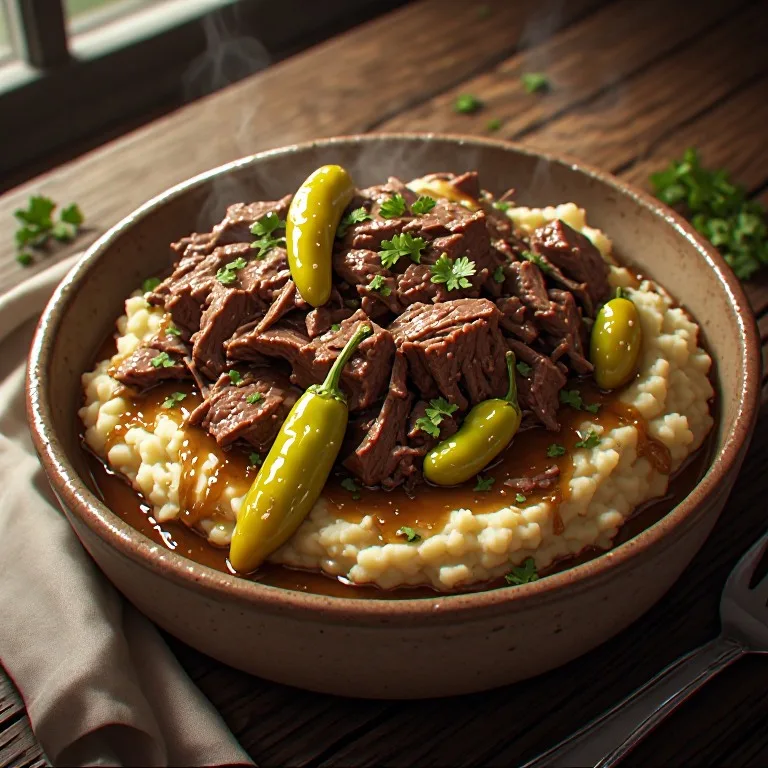
Nothing is required — the beef, broth, and cheesy baguette are a complete plate. If you want a starch to catch the extra onion broth, mashed potatoes or wide egg noodles are the natural picks. For a lighter table, skip the baguette and ladle the roast and onion broth over cauliflower mash; the sauce works identically as a gravy. Looking for the low-effort cousin of this dish? The Mississippi pot roast is the five-ingredient, dump-and-walk-away version.
🥗

Make It Healthier

Love Viral TikTok French Onion Pot Roast (Dutch Oven, Gruyère-Broiled Baguette) but want a lighter version? Try these simple swaps:

  • ✓Chuck roast releases substantial fat during the 4-hour braise. After removing the roast to rest, skim the surface of the braising liquid with a wide spoon — you can remove 3–5 tablespoons of rendered fat, cutting roughly 40–60 calories per serving from the sauce alone. A fat separator makes this easier.
  • ✓Use 4 oz of Gruyère across the baguette slices instead of 6 oz. The cheese still browns and bubbles; you get a thinner crust and save about 80 calories per serving across the pot.
  • ✓Skip the baguette if you want to cut carbs and serve the roast over cauliflower mash instead — the caramelized onion broth works identically as a gravy over cauliflower as it does soaked into baguette.
  • ✓The roast itself (meat only, no baguette or cheese) runs approximately 280–310 calories per 5 oz serving with 36–40g protein. The baguette and Gruyère add roughly 200 calories per serving — so if you skip the soup finish, this is a clean, protein-dense braise.

Frequently Asked Questions

Why can't I just use a slow cooker like the Mississippi Pot Roast?

You can braise the roast in a slow cooker, but you will need to sear and caramelize on the stovetop first — the slow cooker cannot do either. Dump-and-walk-away slow cooker pot roasts skip the sear and use packet seasoning to shortcut depth. The French onion pot roast depends entirely on technique: the sear builds the fond, the caramelized onions build the broth, and the broth IS the dish. Without those steps, you get a braised roast in pale onion liquid, which is not the same thing. If you use a slow cooker for the braise itself, sear and caramelize on the stovetop, transfer everything to the slow cooker insert, cook on LOW for 8–9 hours, then do the baguette and Gruyère finish under the broiler at the end.

Why chuck roast specifically — can I use a different cut?

Chuck roast only, for one mechanical reason: fat and collagen. The chuck comes from the shoulder, an area the animal uses constantly, which means abundant connective tissue (collagen) interwoven through the muscle. At 325°F over 3.5–4 hours, that collagen breaks down into gelatin — making the braising liquid silky and the meat genuinely melt-apart. Leaner cuts like bottom round, eye of round, or sirloin roast lack collagen. They will cook through in 3.5 hours but emerge dry and stringy, not tender, because there is nothing to convert. Bone-in short ribs work as a more luxurious alternative (same connective tissue profile) but require longer braising at around 4–4.5 hours.

Can I make this ahead?

Yes — and the braising liquid genuinely improves overnight. Braise the roast through step 8 (before the baguette and cheese finish). Let everything cool completely, then refrigerate the roast in its braising liquid in the covered Dutch oven for up to 3 days. The next day, the fat from the beef will have solidified on the surface of the braising liquid — lift it off with a spoon. Reheat the covered Dutch oven over medium-low heat for 20–25 minutes until simmering, taste and adjust the broth, then do the baguette and broil finish. The braising liquid will be deeper and more cohesive than it was on day one.

What's the difference between this and just French onion soup with a piece of beef in it?

The braising liquid is deliberately not as salty or thin as a classic French onion soup — it's richer (more collagen from the beef has released into it) and slightly less wine-forward, because the chuck roast needs the broth to be a braising medium, not a finished soup. When you plate, the liquid that goes into the bowl is the pot roast's braising reduction, not a separately made soup. The experience is: tender beef, deeply savory onion broth that has been concentrating for 4 hours, bread that has absorbed that broth from the bottom while the top crisped under Gruyère. It's French onion soup reorganized as a main course.

My onion broth tastes too sweet. How do I fix it?

Add more Worcestershire (1 teaspoon at a time), a drop of balsamic vinegar (it sharpens without adding vinegar flavor), or more fresh thyme. Sweetness in the sauce comes from the onions having caramelized correctly — the answer isn't less caramelization, it's better balance. If the sauce still tastes flat after adjusting: a tablespoon of soy sauce adds umami depth without sodium overload (the salt in soy sauce is more integrated than table salt). And if the sauce is sweet AND thin (hasn't reduced enough), simmer it uncovered on the stovetop for 10–15 minutes after removing the roast.

How do I prevent the baguette from getting soggy before I can serve it?

Move fast: the baguette slices float on the braising liquid and absorb it from the bottom. Day-old baguette is structurally firmer and absorbs slower than fresh — this is why slightly stale bread is preferred. Once you've placed the baguette and cheese and run it under the broiler, serve within 10 minutes. The Gruyère crust forms a barrier that slows absorption from the top, but within 15–20 minutes the bread becomes completely saturated and collapses. If you are making this for guests and need a buffer: add the baguette and broil just before serving, not ahead.

Can I add vegetables to the braise?

Vegetables added at the start of the braise will be fully cooked to mush after 3.5 hours — which is sometimes the goal. Carrots cut into 2-inch chunks and peeled, quartered turnips, or celery stalks work if you want them as textured sides; add them to the Dutch oven when you return the roast to the braise. Potatoes can be added the last 1.5 hours. If you add any vegetables, taste the braising liquid before the baguette finish — vegetables add sweetness and can further tip the balance away from savory.

Love this recipe? Share it!

Free PDF: our 12 most-wanted copycat recipes — instant download.

Made it? Buy us a coffee

Every recipe here is free, with no paywalls. If this one was a hit at your table, a small tip keeps new copycats coming.

$

Ratings & Reviews

—
No ratings yet

Rate this recipe

Click a star to rate

Leave a Review

0/500

CS

Copycat Spices Editorial

Researched + fact-checked. Every recipe on Copycat Spices is built from published sources — official ingredient lists, brand-published recipes, interviews and food-science references — and fact-checked before it goes live, then written as clear, step-by-step instructions for home cooks of all skill levels.

Learn more about our mission →