


One-Pot Chili — The Weeknight Bowl That Fixes Everything
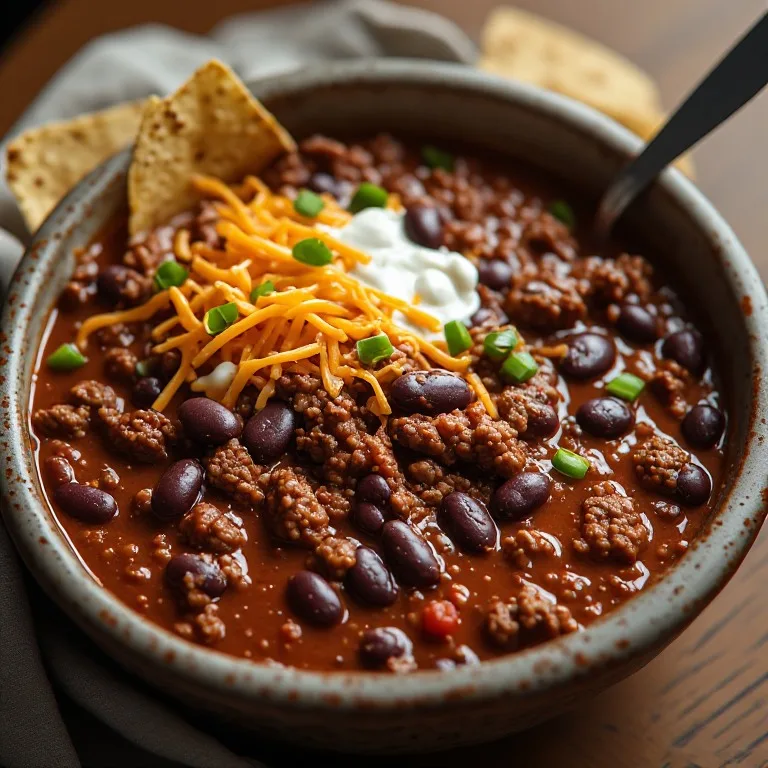
There’s something about a pot of chili that feels complete. It’s the kind of food that improves a bad day, makes a good one better, and requires almost nothing beyond dumping things in a pot in roughly the right order. One-pot chili went viral on TikTok because the process is genuinely satisfying to watch: ground beef sizzling into a crust, spices hitting hot fat, tomatoes bubbling down into something thick and brick-colored. The end result is a bowl of food that tastes like you spent hours on it.
You didn’t. You spent 45 minutes, most of which was the pot doing the work.
The Step Everyone Skips That Matters Most
Blooming the spices. When you add dried chili powder, cumin, and paprika directly to wet tomatoes, you get a flat, raw spice flavor that never quite integrates. When you add those same spices to the hot fat from the beef and stir for 60-90 seconds before adding any liquid, something different happens — the fat-soluble flavor compounds in the spices activate and deepen.
This is the technique used in Indian curries, Mexican mole, and countless other spice-forward traditions. It takes 90 seconds and transforms the final dish.
Understanding the Fat Question
The debate over whether to drain ground beef fat is real, but mostly applies to very fatty meat. At 80/20, the fat renders into the pot and carries the spice bloom, enriches the sauce, and adds the richness that makes chili feel substantial rather than watery. If you use 90/10 or leaner turkey, you won’t have much fat to drain anyway.
If the finished chili looks greasy after simmering, tilt the pot and use a spoon to skim fat from the surface. But in most cases, that fat has emulsified into the sauce during the 30-minute simmer and the chili will look glossy rather than oily.
Building Depth Without All-Day Simmering
The reason chili develops better flavor over time is Maillard reaction products and spice integration — the same flavors that develop slowly also develop more quickly at higher heat. A few shortcuts:
Toast the spices. Already covered above — the most impactful step.
Don’t skip the fond. When you add the tomatoes and broth, scrape up every browned bit from the pan bottom. That’s concentrated, caramelized beef protein and flavor.
Simmer uncovered. Evaporation concentrates flavor. Covered chili simmers, but uncovered chili reduces and intensifies.
Season at the end. Taste and adjust after the simmer — spices change in intensity as they cook, and what tasted balanced at 10 minutes may need more heat or salt at 40.
The Topping Situation
The right toppings aren’t garnish — they’re functional flavor and texture elements:
- Shredded sharp cheddar — melts into the hot chili, adds dairy fat and sharpness
- Sour cream — cools the heat and richness, the cooling contrast that makes spicy chili sustainable
- Sliced green onions — brightness and a mild allium note
- Tortilla chips — the crunch, the vehicle, the childhood memory
Consider adding: pickled jalapeños, diced avocado, a drizzle of hot sauce, fresh lime juice, cotija cheese.