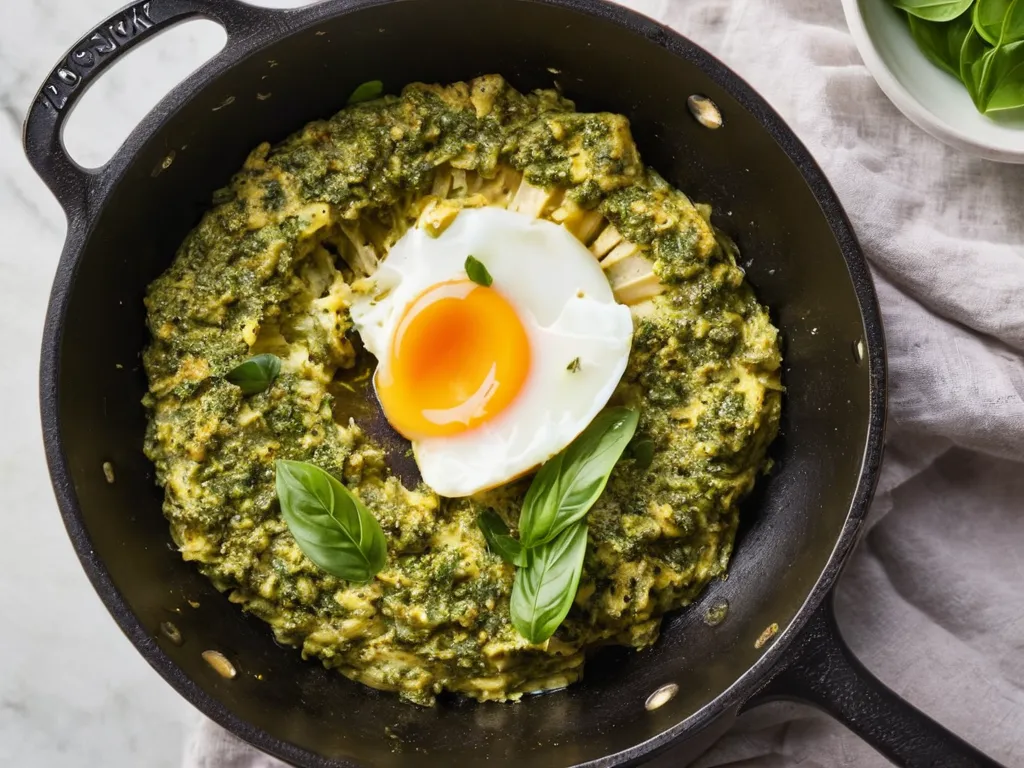
In late April 2021, Amy Wilichowski — a registered dietitian posting to TikTok as @amywilichowski — tried cooking eggs in pesto instead of butter. Her video drew more than 10 million views. The #pestoeggs hashtag hit 90 million views. The Boston Globe and Today both covered it. Grocery stores briefly ran out of pesto.
It is one of the rare TikTok food trends that actually made sense. The pesto doesn’t just sit on the eggs as a condiment — it becomes the cooking oil, which changes everything about how the eggs taste.
TL;DR
Add 2 tablespoons of pesto to a cold nonstick pan, warm it on medium-low until fragrant, crack 2 eggs into it, cook 3–4 minutes uncovered for runny yolks. Season in the pan with salt, pepper, and red pepper flakes. Slide onto toasted sourdough. Total time: 7 minutes.
Why Pesto Is a Better Cooking Fat Than Butter (For This)
The reason the trend resonated is that it’s not just a gimmick. Pesto is roughly 60–65% oil by weight. When you add pesto to a warm pan, the olive oil separates slightly from the solids and becomes the cooking medium — your eggs are cooking in garlic-basil-infused olive oil, not plain neutral fat.
This matters in two ways. First, the flavor compounds in garlic, basil, and toasted pine nuts are fat-soluble — meaning they dissolve into the oil and then transfer directly into the egg whites as the proteins set. Eggs cooked in pesto taste like pesto from the inside out, not just from a layer added on top. Second, the parmesan cheese solids in the pesto create small amounts of Maillard browning around the egg edges — the same browning reaction that makes seared steak taste different from boiled steak. Those little cheese-caramelized edges on the egg whites add a nutty, savory depth that you simply can’t get from a plain fried egg.
The One Thing That Goes Wrong: Heat
Pesto burns faster than butter. The garlic is the culprit — garlic contains sugars and amino acids that caramelize quickly above medium heat, turning from fragrant and sweet to bitter in under a minute.
The rule is medium-low, always. The pesto should sizzle gently when you add the eggs — a soft, bubbling sizzle, not an aggressive one. If you add the pesto to the pan and it starts browning immediately, the pan is too hot. Reduce the heat, wipe the pan, and start again. No high heat, ever.
Nonstick is also not negotiable here. Pesto contains parmesan, which sticks to stainless steel and cast iron at the low temperatures required. A nonstick pan lets the pesto slide freely and the eggs release cleanly.
Jarred vs. Refrigerated vs. Homemade Pesto
Refrigerated deli-section pesto is the best everyday option. It has brighter basil color, fresher garlic, and more aromatic intensity than shelf-stable jarred pesto. Look for it next to fresh pasta — common brands include Buitoni, Rana, and store brands in most larger grocery chains.
Shelf-stable jarred pesto works but produces a noticeably more muted result. The canning process heat-treats the pesto, which oxidizes the basil and softens the garlic punch. The eggs will still taste like pesto — just a slightly mellower, less vibrant version. Check the basil color: if it’s khaki or brownish rather than green, the oxidation has progressed too far.
Homemade pesto is the best-tasting option if you have basil and a few minutes. Fresh-processed pesto has an intensity that no packaged version quite matches — the garlic is sharper, the basil is brighter. The recipe standard: 2 cups fresh basil, 1/3 cup pine nuts, 2 cloves garlic, 1/2 cup parmesan, 1/2 cup olive oil, salt, blend until smooth. A batch covers about 8–10 servings of pesto eggs.
Four Ways to Cook Pesto Eggs
Standard (Runny Yolk, Crispy-Edged Whites)
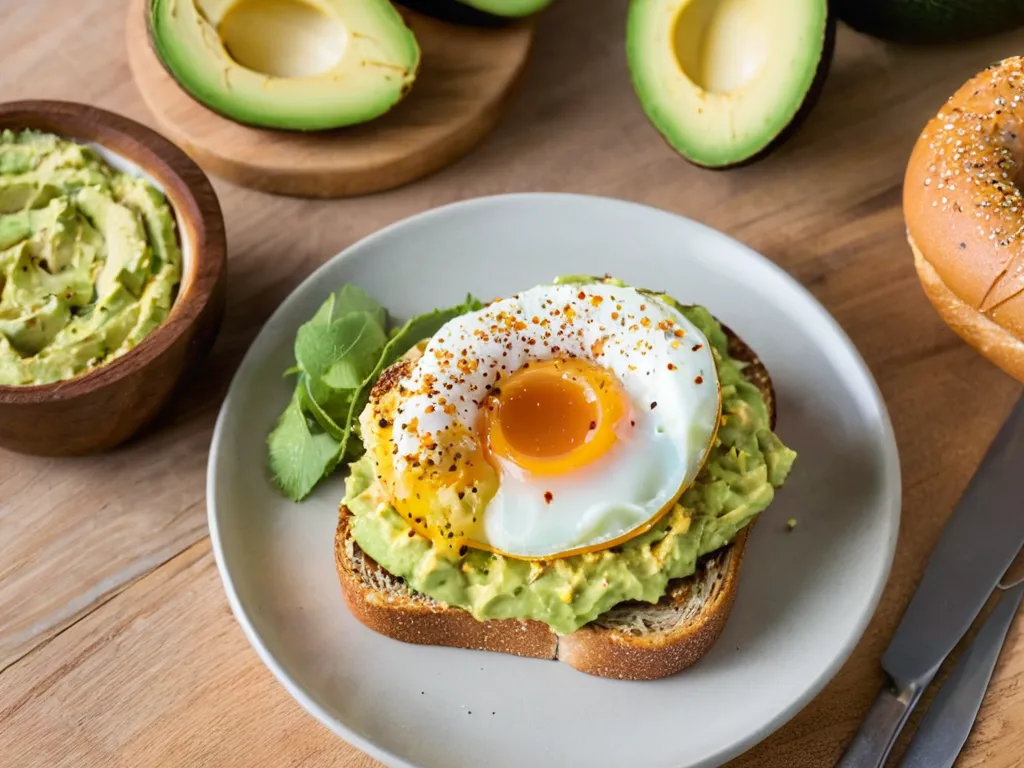
Uncovered, medium-low, 3–4 minutes. The white sets from the bottom up and around the yolk. Edges of the white may have a light crisping where the pesto is thinnest. Yolk remains fully runny. This is the version in the viral video and the most common approach.
Steamed (Set Whites, Jammy Yolk)
After 2 minutes uncovered, cover the pan with a lid for 1–2 additional minutes. The trapped steam sets the top of the whites without direct heat, which means they firm up faster — no translucent center. The yolk gets a thin film on top but stays runny to jammy inside. Best for people who want fully-set whites without sacrificing the yolk.
Over-Easy
Cook 2–3 minutes uncovered, then flip once with a thin spatula for 20–30 seconds. The yolk stays runny or barely set depending on how fast you move. Slightly trickier because pesto-cooked whites can be more fragile — flip gently.
Fully Set
Cover and cook 4–5 minutes total. Yolks are hard. This works, but the whole point of pesto eggs is the runny yolk mixing with the pesto — a hard yolk loses most of that payoff.
Beyond Sourdough: What Else to Serve Pesto Eggs On
Sourdough is the canonical vessel — the tang of sourdough against the richness of pesto and egg yolk is genuinely excellent — but it’s not the only option.
Toasted bagel (everything or plain): The denser crumb holds up to pesto better than standard sandwich bread, and the everything bagel seasoning adds an onion-garlic layer that amplifies the pesto.
Polenta rounds (gluten-free): Slice a log of pre-cooked polenta into 1/2-inch rounds and pan-fry until golden. Rich, neutral base; holds the egg without the bread texture.
Grain bowl base: Serve directly over farro, quinoa, or brown rice with some arugula. Pesto eggs become a composed meal with built-in protein, grain, and a punchy dressing from the pesto pooling around the yolk.
No carbs (keto): Directly on a plate with sliced avocado alongside, or serve inside a halved avocado. The avocado does the same textural job as toast.
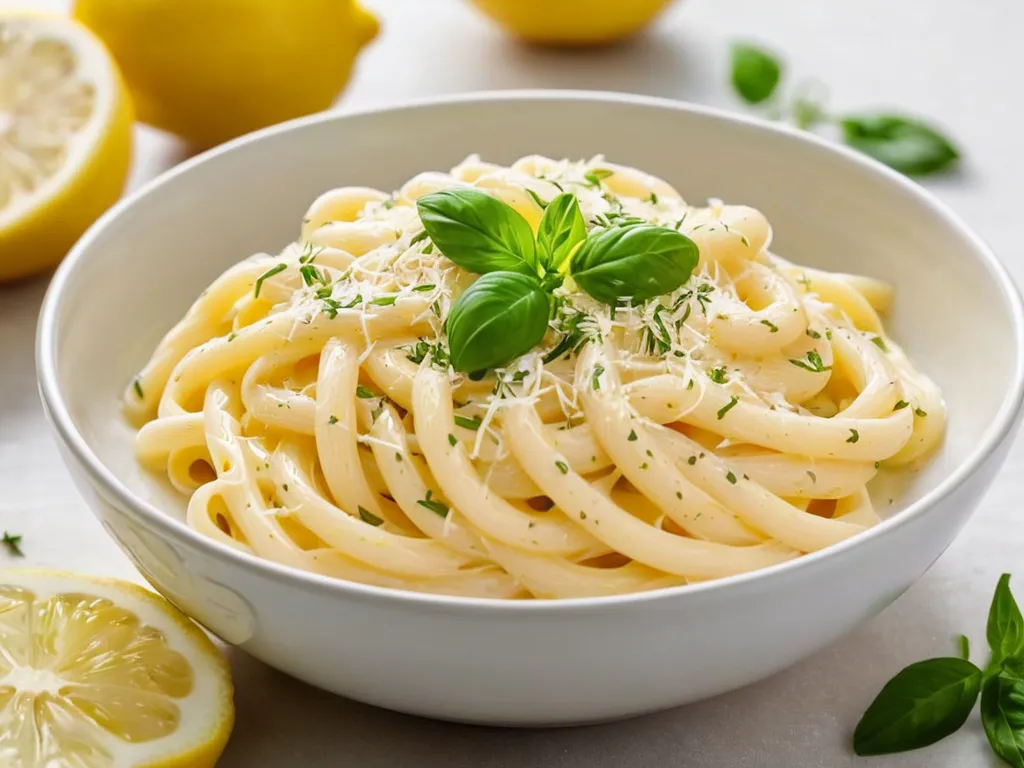
Over pasta (dinner version): This is the path fewer people explore but worth mentioning — pesto eggs on al dente pasta with extra grated parmesan is a legitimate dinner, not just a breakfast novelty.
Six Pesto Variations
Classic basil pesto: The original. Pine nuts, parmesan, basil, garlic, olive oil. Fresh or refrigerated jarred.
Red pesto (pesto rosso): Sun-dried tomatoes, roasted red peppers, almonds, parmesan, olive oil. The eggs take on a sweet, tomato-forward character. Pairs especially well with feta crumbled on top.
Walnut pesto: Walnuts substituted for pine nuts, sometimes with baby kale or arugula added. Earthier, slightly bitter. Good for people who find classic basil pesto too sweet.
Chimichurri: Not technically pesto, but the same principle — a flavored fat-based sauce used as the cooking medium. Fresh parsley, cilantro, garlic, red wine vinegar, olive oil, red pepper flakes. Produces a South American-flavored egg with a bright acidic note instead of Italian richness.
Arugula pesto: Arugula replaces basil; pistachios replace pine nuts. Peppery, slightly bitter, less sweet. Pairs better with fried eggs served over a salad than on toast.
Sun-dried tomato pesto (store-bought shortcut): Barilla and similar brands sell sun-dried tomato pesto in jars — it’s richer and more savory than red pesto, with a concentrated umami character that makes the eggs taste almost meaty. Good for people who want big flavor with minimal effort.
Toppings Worth Adding
The pesto already has basil, garlic, parmesan, and pine nuts. Effective toppings either amplify those elements or provide genuine contrast:
- Freshly grated parmesan: Amplifies the cheese note. Add it right at the end so it barely melts.
- Crumbled feta: Salty, creamy contrast to the pesto’s richness. Better than extra parmesan when the pesto is already cheese-heavy.
- Sliced avocado: Adds fat and creaminess. Makes the dish significantly more filling.
- Cherry tomatoes, halved: Acidity and brightness. The only topping that adds real contrast to the richness.
- Lemon zest: Grate it over the top after plating. Citrus lifts the whole dish.
- Fresh basil: Deepens the basil character already in the pesto.
- Red pepper flakes: Heat. Use however much you want.
Cost: Home vs. Restaurant
At a brunch restaurant, eggs with pesto on sourdough runs $13–18 depending on the city and menu. At home: 2 tablespoons of refrigerated pesto (from a $5–7 jar that yields about 15 servings) costs roughly $0.40–0.50; two large eggs cost $0.50–0.80 depending on your market; two slices of sourdough cost about $0.30. Total per serving: $1.20–1.60. The ingredient total for the pesto alone in a restaurant version often exceeds the full home recipe cost.
Nutrition: With and Without Toast
| With Sourdough Toast (2 slices) | Without Toast (eggs + pesto only) | |
|---|---|---|
| Calories | ~400 | ~230 |
| Protein | 20g | 14g |
| Carbs | 30g | 3g |
| Fat | 25g | 18g |
The eggs-plus-pesto combination is naturally low-carb and high in fat from the olive oil in the pesto. The toast is where the carbs come from. If you’re eating a low-carb diet, skip the toast and add sliced avocado instead — you preserve the richness of the dish while keeping carbs under 5g.
See Also
- Copycat Starbucks Egg Bites — the other viral egg hack, sous vide-style at home
- Viral TikTok Cottage Cheese Flatbread — high-protein, two-ingredient base for eggs and toppings
- Viral TikTok Avocado Egg Toast — the layered avocado-and-egg toast that’s a natural companion to pesto eggs
- Viral TikTok Egg Sandwich — the McGriddle-style layered egg sandwich TikTok made famous