


Viral TikTok Pistachio Kunafa Croissant — The Dubai Bakery Trend Made at Home
TikTok’s pastry spiral that started with the Dubai chocolate bar reached its logical next step: the pistachio kunafa croissant. Dubai bakeries selling it drew long weekend lines and viral queue videos through early 2026, and the recipe was soon attempted in home kitchens across TikTok with mixed results — mostly because the technique for the kunafa filling isn’t obvious from the videos.
This version breaks down what’s actually happening in the filling and fixes the three mistakes that produce soggy, clumped, or flavorless results.
What Makes It Different from Other Stuffed Croissants
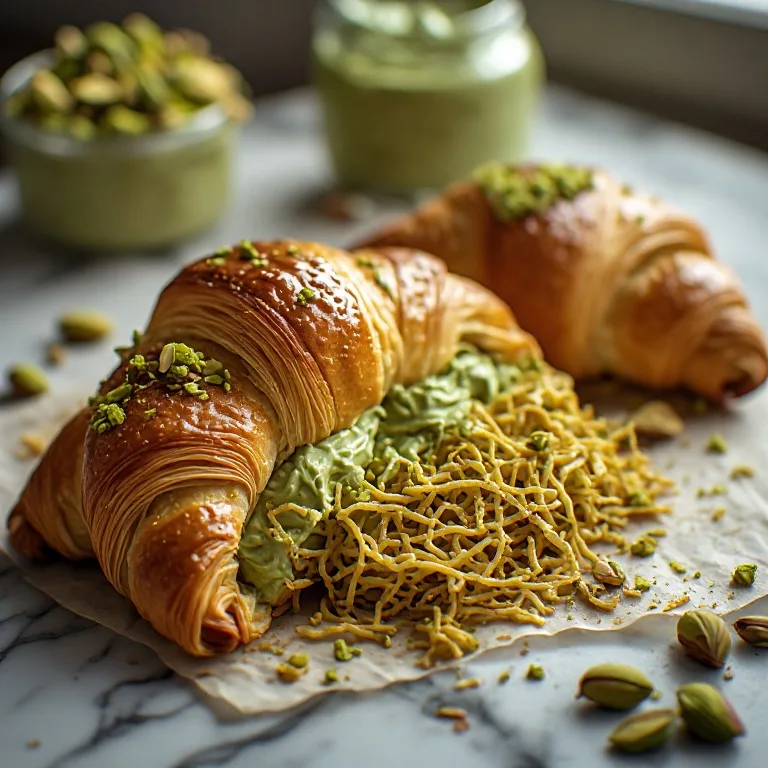
The pistachio kunafa croissant isn’t just a croissant with pistachio spread. The filling is a version of kunafa — the Middle Eastern baked cheese pastry — compressed into a warm, crispy layer that brings a completely different texture than any Western pastry filling.
The two components are genuinely distinct:
Kataifi filling: Shredded phyllo toasted in butter until deeply golden, then tossed with low-moisture mozzarella and a drizzle of simple syrup. It’s crunchy, stringy, lightly sweet, and slightly salty. The cheese binds the strands loosely without turning the filling into a solid block.
Pistachio cream: A thick, smooth pistachio butter that melts slightly in the warm croissant and acts as a sauce running through the filling. The kataifi provides structure; the pistachio cream provides richness.
Together they create something that doesn’t exist in traditional Western bakery: a pastry that’s simultaneously crisp, stretchy, sweet, and rich, with a distinct nuttiness from both the toasted phyllo and the pistachio.
The Three Mistakes Most Copycat Recipes Make
Every bad version of this dish makes at least one of these errors:
1. Undertoasted kataifi. The most common mistake. If the kataifi strands are pale yellow rather than deep bronze when you take them off the heat, they will go limp and tasteless inside the croissant. Raw kataifi tastes like undercooked pasta and releases steam into the filling. Toast it past the point where you think it’s done — the strands should look noticeably darker than you’d expect, with a nutty, almost buttery aroma.
2. The wrong mozzarella. Fresh mozzarella packed in water is the enemy here. It contains roughly 40–50% moisture by weight, which releases directly into the kataifi strands within minutes. The filling becomes wet, the strands clump and stick together, and the croissant base gets soggy from the inside. Low-moisture mozzarella (the block type) has roughly 15% moisture and holds its structure in the warm filling.
3. Assembling cold. Both the croissant and the filling need to be warm when they come together. A room-temperature croissant will hold the filling without immediately absorbing moisture. A cold croissant — straight from a pastry case — acts like a sponge. Five minutes in a 300°F oven is all it takes; the goal is a warm, slightly crisped shell.
Finding Kataifi
Kataifi is available at Middle Eastern grocery stores, Greek specialty shops, and increasingly at mainstream stores like Whole Foods (look in the freezer section near phyllo dough). The Apollon brand and MIMI brand are both reliable. Online through Amazon, specialty Greek importers, or via nuts.com.
The product is sold frozen in 1-pound packages (which makes about 6–8 croissants worth of filling). Thaw in the refrigerator overnight — it thaws unevenly at room temperature and the outer strands can dry out before the center is soft. Once thawed, separate the strands gently with your fingers before they go into the pan; they want to stay tangled.
Do not substitute regular phyllo dough sheets. The texture is fundamentally different — phyllo sheets produce a flaky, papery layer when baked, not the crispy-stringy texture that kataifi provides. The entire point of this dish is the contrast between the filament-like crunch and the soft cheese, which only kataifi produces.
The Pistachio Cream — Store-Bought vs. Homemade
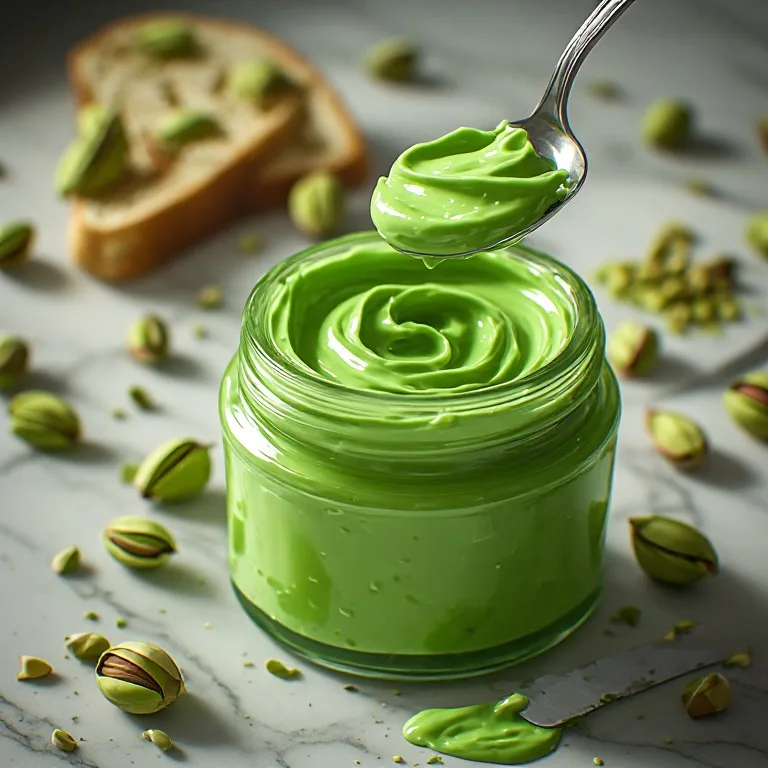
Store-bought pistachio cream is genuinely good here. Bonne Maman Pistachio Spread (widely available at Target and Whole Foods) is the most practical option — the right consistency for spreading and drizzling, mild sweetness, and a clean pistachio flavor that doesn’t compete with the kataifi.
If you want to make your own: blend 1 cup roasted unsalted pistachios with 3 tablespoons sweetened condensed milk, 2 tablespoons melted white chocolate chips, and a pinch of salt. Process for 3–4 minutes in a food processor until completely smooth — it takes longer than you’d expect. The homemade version has a more intense, slightly grassy pistachio flavor and less sweetness than the Bonne Maman version. Both work.
One technique note: warm the pistachio cream for 15 seconds in the microwave before using it as a top drizzle. At room temperature it’s spreadable but stiff. Warmed, it flows in a thin line and looks glossy — which is the visual that gets the TikTok views.
How the Filling Should Look at Each Stage
After 8 minutes of toasting, the kataifi should be deep golden-brown across all the strands — pull a small handful apart and look for uniform color. If any strands look pale at the center of the pan, keep tossing for another 1–2 minutes.
After adding the cheese: the filling should look like a loose, shaggy pile — stringy strands with cheese clinging to them, not a solid mass. If it looks like melted mozzarella with strands embedded in it, the heat was too high or you stirred too aggressively. It should stay strand-forward.
After adding the syrup: the whole thing should glisten slightly and smell faintly of roses if you added rose water. The strands will start to mat together as the cheese sets while cooling — which is actually fine; they’ll pull apart again when you scoop them into the croissant.
Make-Ahead Notes
The kataifi can be toasted and cooled completely, then stored at room temperature in an airtight container for up to 2 days. Warm it briefly in a dry skillet for 1–2 minutes before adding the cheese — it crisps back up almost to its original texture.
Once you add cheese and syrup, use the filling within 2 hours. After that, the cheese continues releasing moisture, the strands soften, and you lose the crispy contrast that makes the dish work.
The pistachio cream keeps for 2 weeks in the refrigerator whether you use store-bought or make your own.
The croissants themselves are best day-old — slightly stale croissants have a drier, firmer interior that holds the filling better than fresh-baked ones, which are still moist from lamination and tend to compress under the weight of the filling.
Serving
Eat within 10–15 minutes of assembly. This is unambiguously a made-to-order dish — the kataifi softens with time, the cheese sets, and the croissant shell absorbs moisture from both. It doesn’t reheat well either; reheating dries out the cheese and toughens the kataifi. Make it, plate it, eat it.
For a group, mise en place all the components first — toasted kataifi, warm pistachio cream, warm croissants — and assemble to order rather than making all four at once. The 2-minute-per-croissant assembly time makes this practical.
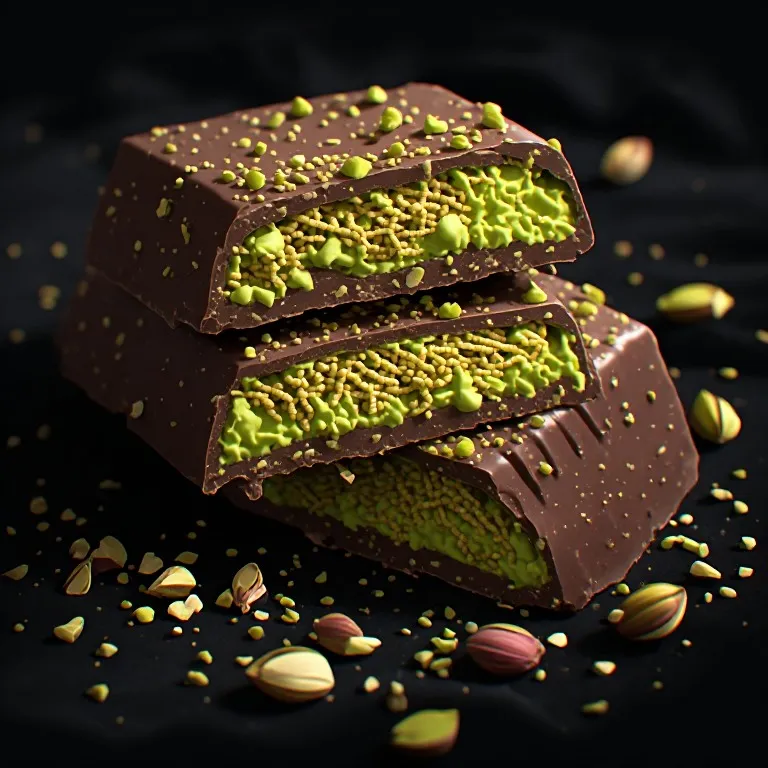
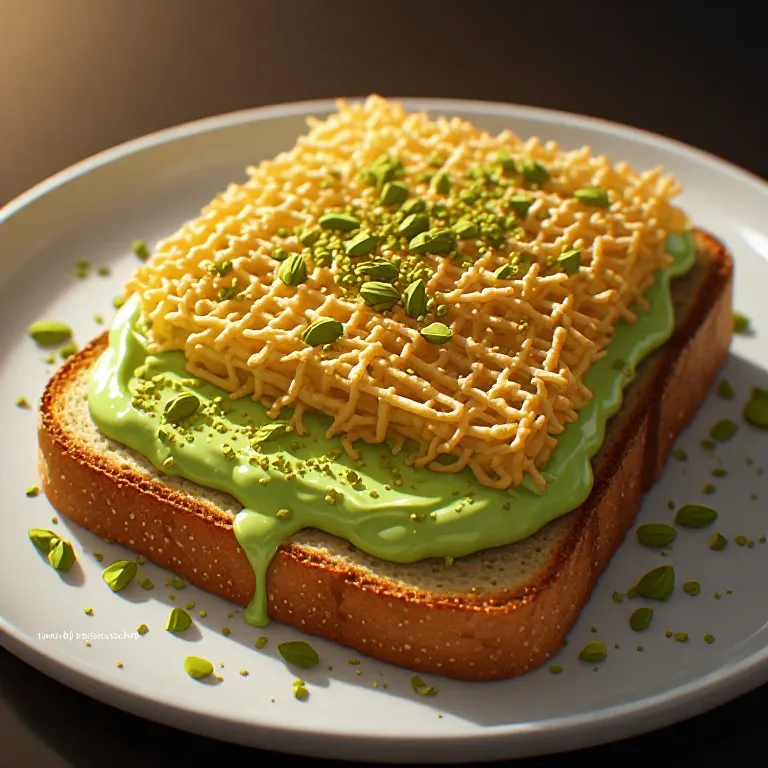
The Dubai chocolate bar and the Dubai knafeh toast use overlapping pantry items — if you’ve sourced kataifi and pistachio cream for this recipe, you have most of what you need for both of those as well.