Viral TikTok Pistachio Tiramisu — The No-Bake Dessert That Took the Dubai Chocolate Craze Somewhere Better
Prep: 20 min active + 5 hrs chilling (overnight best) | No-bake, no raw eggs | Serves: 8 | Make-ahead
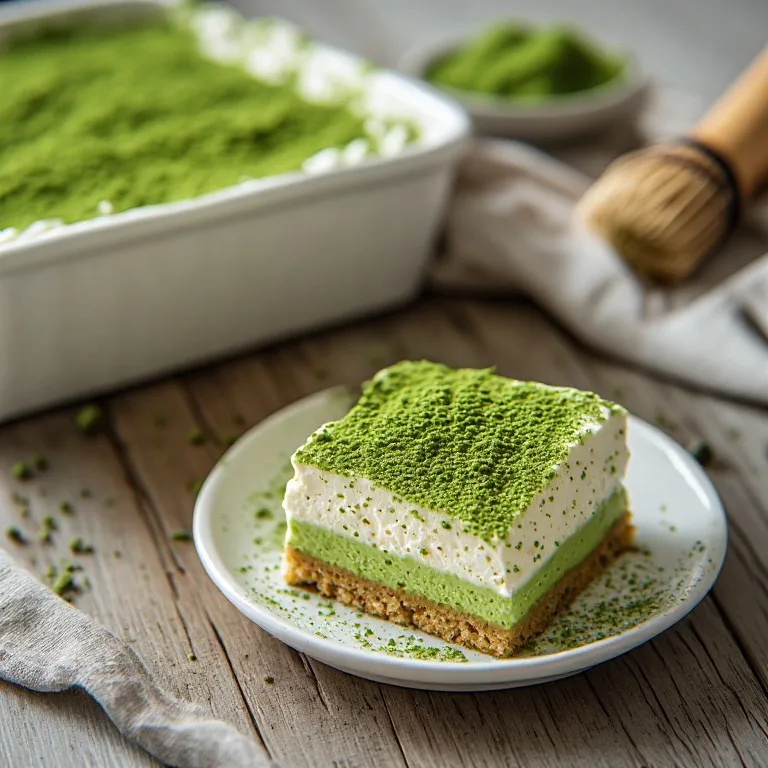
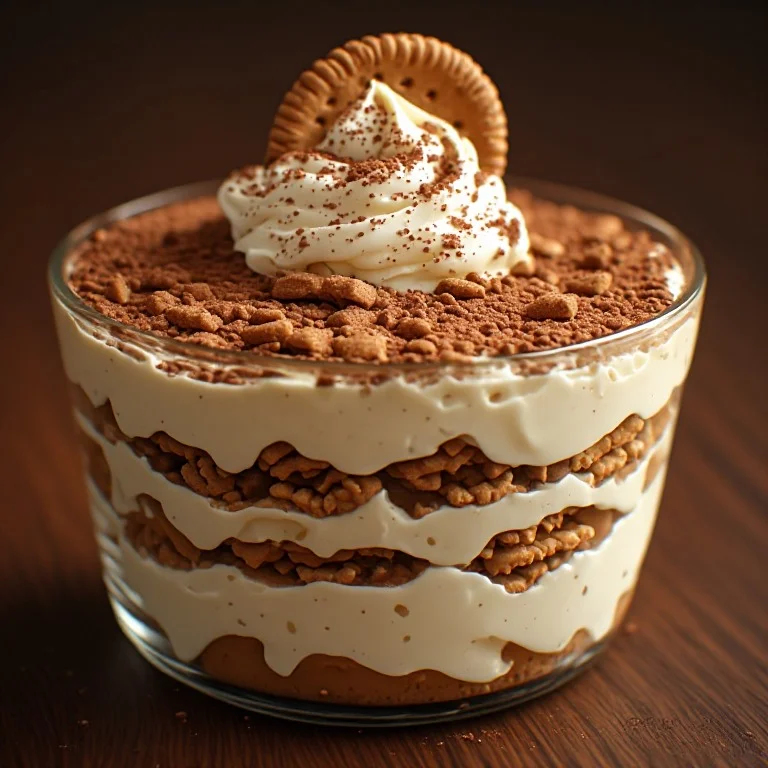
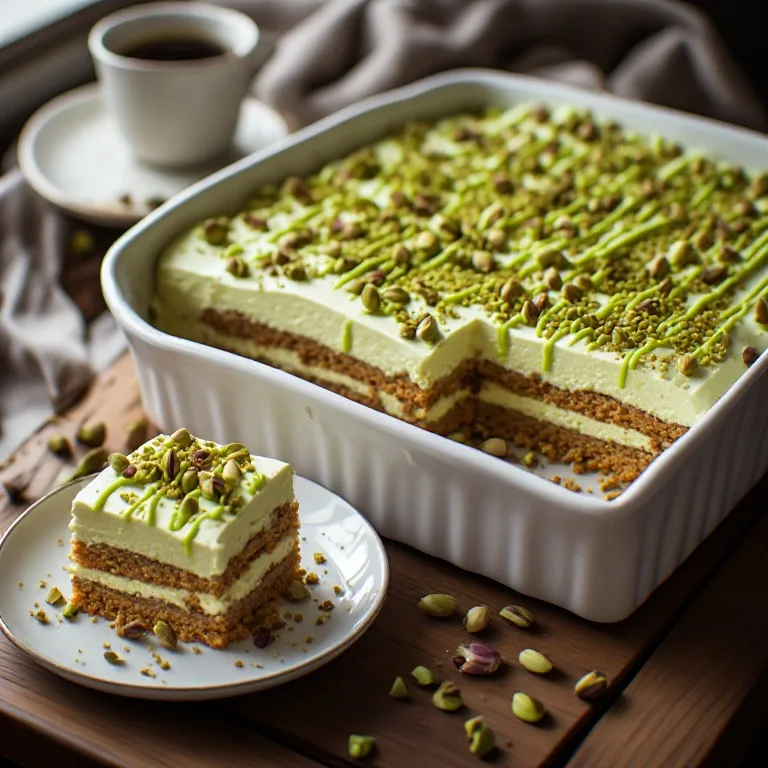
Pistachio tiramisu is what happened when the Dubai chocolate bar’s central discovery — that pistachio cream is one of the best flavor pairings for espresso and ladyfingers — finally made it to the dessert most people actually know how to assemble. The concept spread rapidly on FoodTok in 2025 and has stayed there: it’s visually distinctive (the pale green cream against the espresso-soaked cookie layers, finished with a pistachio cream swirl on top), requires no baking, no tempering eggs, and produces something that genuinely improves in the refrigerator overnight.
This recipe covers the two technique points that determine whether the cream is silky or grainy (mascarpone temperature and folding method), the critical difference between pistachio cream and pistachio paste, and why your dessert may look beige instead of green — and what to do about it.
Why This Went Viral
Pistachio tiramisu has a clear origin story: it’s the downstream of the Dubai chocolate bar craze of 2024–2025. The Dubai bar’s revelation was that pistachio cream — specifically sweetened Sicilian-style pistachio cream — has an extraordinary affinity for dark chocolate and bitter espresso flavors. The bar used knafeh pastry for texture and pistachio cream as the core flavor; tiramisu already has the espresso and the layered structure. The connection was obvious once someone made it.
The execution is simpler than Dubai chocolate (no tempering chocolate, no sourcing kataifi pastry), the flavor payoff is arguably better (the pistachio cream dispersed throughout a mascarpone cream is more harmonious than a pistachio layer inside a chocolate shell), and it photographs strikingly — the pale green-cream swirl against the dark ladyfinger edges, finished with roughly chopped pistachios on top.
The other reason it holds: no raw eggs. Traditional tiramisu requires a zabaglione (egg yolks beaten with sugar over heat) or raw whipped egg whites, which adds complexity and food-safety considerations. This version uses whipped heavy cream as the aerating agent. The result sets cleaner, slices more reliably, and is genuinely easier.
The Critical Technique: Mascarpone Temperature and the One Thing That Ruins the Cream
This is the same principle that applies to every mascarpone-based tiramisu, and it’s more important here than in the classic version because pistachio cream has a slightly different fat-and-water ratio.
Cold mascarpone will not blend with pistachio cream. Mascarpone is roughly 42% fat. At refrigerator temperature, that fat is solid and resistant. Pistachio cream has its own fat from the ground pistachios. When you combine two cold, fat-rich ingredients, neither incorporates into the other smoothly — you get lumps, the mixture looks grainy or curdled, and no amount of additional stirring fixes it without breaking the emulsion.
Room-temperature mascarpone (30 minutes on the counter — the container should feel cool but yielding when you press it) has softened enough to blend in a few gentle folds. The pistachio cream and mascarpone come together uniformly in under a minute.
The second error: over-beating. Mascarpone’s fat emulsion breaks under sustained mechanical force. Using an electric mixer on the mascarpone-pistachio mixture (as opposed to just the heavy cream) creates centrifugal shear that separates the fat from the water phase, producing a grainy, wet mass that can’t be saved. Mix the mascarpone and pistachio cream strictly by hand, with a spatula, stopping the moment they’re evenly combined.
The correct sequence:
- Mascarpone by hand → smooth
- Add pistachio cream, sugar, vanilla, salt → fold until uniform
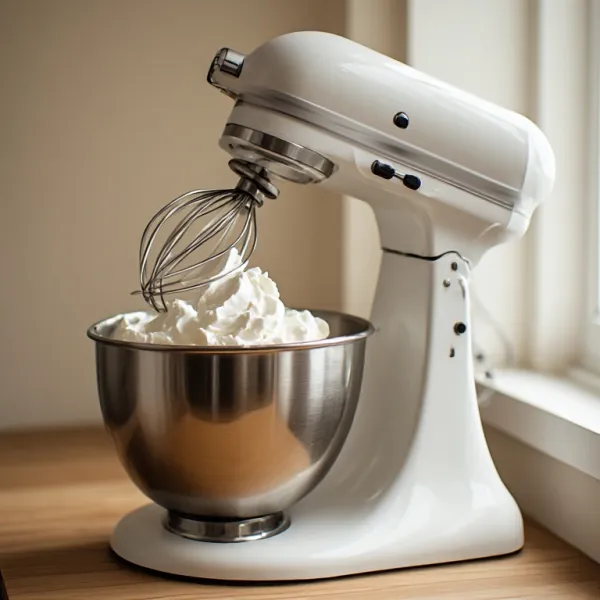
- Whip heavy cream separately with the electric mixer → stiff peaks
- Fold whipped cream into mascarpone in three additions → airy, pale green cream
Dipping Ladyfingers: Same 1-Second Rule as Classic Tiramisu
Savoiardi ladyfingers are engineered for rapid liquid absorption — that’s their function in tiramisu. The timing that works is 1 second per side, 2 seconds total. At this point the ladyfinger has absorbed a visible espresso color through its surface but retains enough structure to transfer without bending.
| Dip Duration | Result After Overnight Chilling |
|---|---|
| Under 1 sec per side | Dry core — slightly firmer, more distinct from cream |
| 1 sec per side (target) | Tender, cake-like layer — fully integrated with cream |
| 3+ sec per side | Mush — falls apart during transfer, produces a wet, indistinct base |
The espresso must be fully cooled before you start. Hot espresso doubles or triples the absorption rate — a 1-second dip in hot espresso saturates the ladyfinger as thoroughly as 3 seconds in cold, giving you no margin to recover. Cool fully (or chill in an ice bath for 5 minutes) before you begin.
Pistachio Cream vs. Pistachio Paste — The Most Misunderstood Ingredient
Walk into any kitchen supply store or specialty food shop and you’ll find both products, often labeled similarly. They are not interchangeable in this recipe.
| Pistachio Cream | Pistachio Paste | |
|---|---|---|
| What’s in it | Pistachios, sugar, vegetable oil, sometimes milk solids | Ground pistachios only (or with minimal sugar) |
| Texture | Soft, spreadable — like a thick Nutella | Denser, stiff — like thick almond butter |
| Flavor | Sweet, lightly roasted, creamy | Intensely nutty, savory, roasted |
| Color | Pale green-beige to vivid green (by brand) | Deeper green, sometimes olive |
| What happens in this recipe | Blends smoothly with mascarpone; provides sweetness and pistachio flavor | Makes the cream dense and savory; requires significant sugar adjustment |
If you can only find pistachio paste: use ½ cup, increase powdered sugar to ⅓ cup, and add 2 tablespoons sweetened condensed milk for smoothness. Taste before assembly.
The brands worth knowing: Trader Joe’s pistachio cream ($5–6, widely available) is the reliable mainstream option. Bronte PDO Sicilian pistachio cream imports (found at Italian grocery stores and online) have the most intense color and flavor. Aldi pistachio cream (seasonal, ~$4–5) is an excellent budget option. Fiasconaro and Babbi are Italian imports commonly available on Amazon and at specialty retailers.
Why the Color May Disappoint You (and Whether That Matters)
The pistachio tiramisu on TikTok frequently shows a vivid green cream. In a home kitchen, the reality depends heavily on which brand of pistachio cream you use.
Sicilian-origin pistachio cream, especially from Bronte (where the pistachios carry a protected designation of origin for their deep green pigment), produces a cream with a noticeable sage-green color when folded into mascarpone. Domestic or lower-quality pistachio creams — where the pistachio content is 30–40% and the rest is palm oil and sugar — often look pale beige-green or nearly off-white in mascarpone.
The flavor difference between a vividly green and a pale-beige cream is real: the greener the pistachio cream, the higher the pistachio content, and the more intense the flavor. The pale version still tastes like pistachio — but more faintly.
If you want the visual: seek the most pistachio-dense cream you can find (50%+ pistachio content on the label), or add a very small pinch of matcha (1/8 teaspoon) to boost the green without affecting flavor.
The Swirl on Top
The pistachio cream drizzle on the surface is not just decoration — it adds a layer of undiluted, concentrated pistachio flavor that hits before the first bite. Warm the reserved 3 tablespoons of pistachio cream just until pourable (10–15 seconds in the microwave), then either:
Simple drizzle: Use a spoon to drizzle in a zigzag pattern across the top surface.
Marbled swirl: Pour the warm cream in a loose figure-8 or swirl pattern, then drag a toothpick or skewer through it in perpendicular strokes — across, then up-and-down — to create a marbled surface.
Either works. The marbled version photographs better; the drizzle takes 10 seconds. Let it set in the refrigerator — the warm pistachio cream will firm slightly as it chills, holding its pattern.
The Dubai Chocolate Variation
To lean directly into the Dubai chocolate bar parallel:
Add a layer of roughly chopped pistachio-filled chocolate (or dark chocolate) between each ladyfinger layer and the cream. The structure becomes: dipped ladyfingers → thin chocolate scatter → pistachio cream layer → repeat. You lose a little of the clean layered slice, but the combination of espresso, dark chocolate, and pistachio cream in a single bite is exactly why Dubai chocolate went viral — and this version has it in a form that serves 8 from a single dish.
Alternatively: drizzle melted dark chocolate over the top alongside the pistachio cream swirl. The dark chocolate–pistachio contrast is visually striking and the flavor is unmistakably Dubai.
Why This Is Better the Next Day
| Time After Assembly | Texture and Flavor State |
|---|---|
| 0 hours | Set, but ladyfinger layers are still distinct; flavors are separate |
| 4–5 hours | Ladyfingers softened; cream is firm; pistachio flavor starting to deepen |
| 12–24 hours | Ladyfinger-cream boundary has dissolved; layers fully integrated; pistachio has bloomed through the whole cream; best texture and flavor |
| 48–72 hours | Still excellent; cream begins to soften slightly at edges |
Make it the evening before and serve the next day — this is the version that earns the recipe request.
How This Compares to Classic Tiramisu
| Pistachio Tiramisu | Classic Tiramisu | |
|---|---|---|
| Eggs | None | Raw egg yolks + sometimes whites |
| Flavoring | Pistachio cream | Espresso (in cream) |
| Topping | Pistachio cream swirl + chopped pistachios | Cocoa powder |
| Calories per serving | ~545 | ~420–500 |
| Complexity | Low | Moderate (zabaglione requires heat) |
| Make-ahead window | 3 days | 2 days |
| Raw egg risk | None | Present (use pasteurized to avoid) |
Cost
| Ingredient | Amount | Approximate Cost |
|---|---|---|
| Mascarpone (16 oz) | 1 container | ~$6.00 |
| Heavy cream (1 cup) | Small carton | ~$2.00 |
| Pistachio cream (jar) | ~1 cup used | ~$5.00–7.00 |
| Savoiardi ladyfingers | 1 package (7 oz) | ~$4.00 |
| Espresso | 1 cup | ~$0.30 |
| Pistachios (¼ cup chopped) | Small amount | ~$1.50 |
| Sugar, vanilla, salt | Pantry amounts | ~$0.25 |
| Coffee liqueur, optional | 2 tablespoons | ~$0.75 |
| Total for 8 servings | ~$19–22 | |
| Per serving | ~$2.50–2.75 |
A single restaurant tiramisu runs $10–16; a pistachio-focused dessert at a nice restaurant will cost more. The home version lands under $3 per serving.
For more no-bake desserts in this flavor family, the Dubai Pistachio Cream Spread is the 5-ingredient pistachio knafeh spread that started the craze and takes 15 minutes flat. The Pumpkin Tiramisu swaps in pumpkin-spice mascarpone cream for the fall seasonal version. The Biscoff Yogurt Tiramisu uses strained Greek yogurt instead of mascarpone for roughly half the calories and 15g protein per serving. And the Strawberry Tiramisu is the no-coffee fruit version built on the same room-temperature-mascarpone technique.