

Dubai Knafeh Toast — The Most Opulent Breakfast TikTok Could Imagine
The Dubai chocolate bar trend of 2024 introduced millions of people to a flavor combination they hadn’t encountered before: toasted kataifi pastry and pistachio cream inside a chocolate shell. The texture — shatteringly crispy strands against a dense, nutty cream — was unlike anything in mainstream Western confectionery, and the videos of people breaking through the chocolate shell to reveal the filling became inescapable.
The inevitable next step was taking those flavors and applying them to breakfast.
From Chocolate Bar to Toast
Fix Dessert Chocolatier’s “Can’t Get Knafeh of It” bar sparked a wave of knockoffs and riffs that spread far beyond chocolate. Food creators started asking: what other formats could hold toasted kataifi and pistachio cream? The answer, apparently, is almost any format you can imagine — but toast became the dominant breakfast adaptation for obvious reasons. Toast is fast, accessible, and provides a neutral base that lets the more exotic components shine.
The “Dubai knafeh toast” format emerged on TikTok in late 2024 and built momentum through 2025 as Middle Eastern grocery stores started stocking kataifi more widely due to demand from the chocolate bar trend. Creators who had ordered kataifi online for chocolate bar knockoffs had leftover pastry in their freezers and started experimenting.
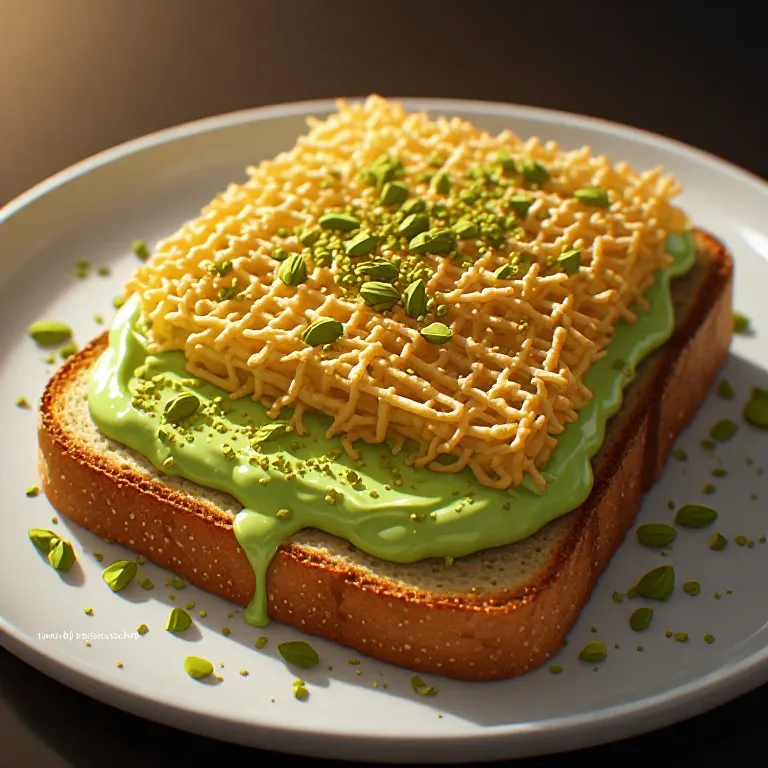
The result is one of the most luxurious breakfast items you can make at home without professional equipment — something that looks and tastes like it belongs in a high-end hotel brunch.
Understanding Kataifi
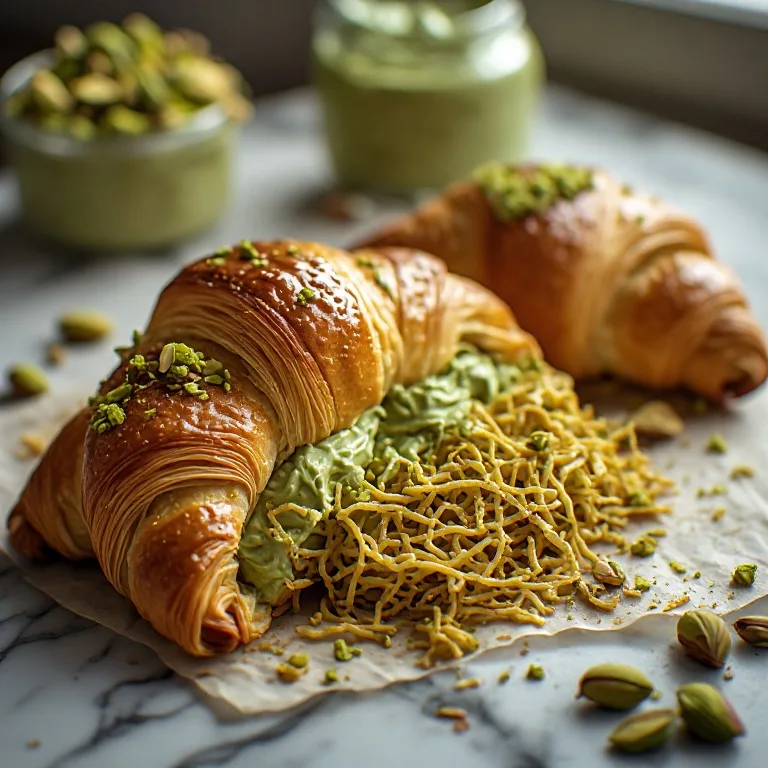
Kataifi is one of the foundational ingredients of Middle Eastern and Eastern Mediterranean pastry-making. It’s essentially phyllo dough extruded through very fine holes to create thread-like strands — similar in structure to angel hair pasta but made from wheat flour and water without egg. When cooked in butter, the strands crisp and brown rapidly, creating a texture that is simultaneously delicate and dramatically crunchy.
The strands have enormous surface area relative to their volume, which means they absorb butter quickly and toast fast. This is an advantage for flavor — every strand gets coated — and a liability if you look away from the pan. On medium heat, kataifi goes from white to golden in about 3 minutes, and from golden to burned in about 30 seconds after that. Keep the heat moderate and keep stirring.
The Pistachio-Tahini Cream
Traditional knafeh uses pistachio paste alone or with a small amount of sweet cheese. This recipe adds tahini to the pistachio cream for two reasons: it makes the cream more spreadable and it adds a subtle sesame note that grounds the sweetness and complements the cardamom.
If you can find commercial pistachio paste (imported from Italy or the Middle East, usually labeled “pistachio cream” or “pasta di pistacchio”), use it — the flavor is rounder and more intensely pistachio than anything you can grind at home. Ground pistachios work and have a slightly more rustic texture.
Cardamom is essential. It’s the spice note that signals “Middle Eastern pastry” to the palate and frames the sweetness of the honey and pistachio correctly. Don’t skip it or substitute cinnamon — they’re not interchangeable here.
The Cheese Layer
This is the element that surprises most people. Melted cheese in a sweet breakfast context seems incongruous until you remember that knafeh — the original dish this toast derives from — is fundamentally a sweet cheese dessert. Warm, melted akawi or mozzarella between layers of sweet, crispy pastry is the traditional form.
On toast, the cheese goes on top of the kataifi under the broiler. It melts into and around the kataifi strands, binding them slightly to the toast while adding a mild, creamy dairy note that rounds out the pistachio and honey. The cheese stretches when you pick up the toast, which is a feature, not a complication.
Serving
This toast is for weekends. It takes 25 minutes from start to finish — not long, but long enough that you’re not reaching for it on a Tuesday morning. Its proper context is a slow brunch with good coffee, a table worth sitting at, and someone to admire how it looks before you eat it.
The edible rose petals are optional but strongly recommended for the visual. They don’t contribute much flavor but they make the plate look like it was assembled by a pastry chef.
Variations
Dark chocolate drizzle: After broiling, drizzle melted dark chocolate (70% or higher) in thin lines over the toast. This brings it closest to the original Dubai bar flavor profile.
Honey-walnut instead of pistachio: Swap pistachio paste for a thick walnut butter and use extra honey. Different nut flavor, similar textural profile, and walnuts are more widely available than pistachio paste in most markets.
Savory version: Skip the honey entirely, add a pinch of sumac to the tahini cream, and top with akawi cheese, toasted kataifi, and a drizzle of pomegranate molasses. This version could function as a light lunch or starter rather than breakfast — Middle Eastern flavors work equally well in savory contexts.
Dubai knafeh toast is proof that viral food trends, when examined carefully, often contain genuinely interesting flavor combinations worth integrating into everyday cooking. The chocolate bar was the delivery vehicle. The real discovery was what was inside it.