
Pistachio Latte — The Winter Latte Worth Making Year-Round
Starbucks’s Pistachio Latte launched in January 2021 and immediately sold out at locations nationwide. It returned by popular demand the following winter and has been a seasonal staple ever since. The internet has had… opinions about whether the Starbucks version tastes like real pistachios (it doesn’t — it tastes like pistachio candy, which many people love for different reasons).
The homemade version is something different: a genuinely nutty, complex latte that tastes like you ground actual pistachios into your coffee. Because you did.
The Difference Between Real and Artificial Pistachio Flavor
Walk into a Middle Eastern bakery and order a pistachio pastry. The flavor is earthy, slightly sweet, faintly grassy, with a richness that comes from the fat content of the nut itself. That’s what real pistachio tastes like.
Artificial pistachio flavor — the kind in Starbucks sauce, many ice creams, and most packaged pistachio snacks — is engineered to taste like a sweet, roasted, almost marzipan-adjacent version of pistachio. It’s more intense and more immediately recognizable as “pistachio” to most people, but it’s quite far from the actual nut.
When you make pistachio syrup from toasted pistachios, you get the real thing: deep, nutty, slightly savory, with a fat richness that makes the espresso taste rounder and softer. It’s quieter than artificial pistachio flavoring, but more satisfying in a coffee context.
Why Toasting Changes Everything
Raw shelled pistachios have most of their flavor locked in the oils inside the nut. When you toast them at 350°F, two things happen: the Maillard reaction develops new flavor compounds on the exterior (that toasty, almost caramel note), and the heat releases the volatile aromatic compounds trapped in the oils.
Seven minutes in the oven transforms mild, slightly bland raw pistachios into the intensely fragrant nut that gives baklava its depth. That transformation carries directly into the syrup.
Toast until you can smell them from across the room. If you can’t smell them, they need more time.
The Green Color Question
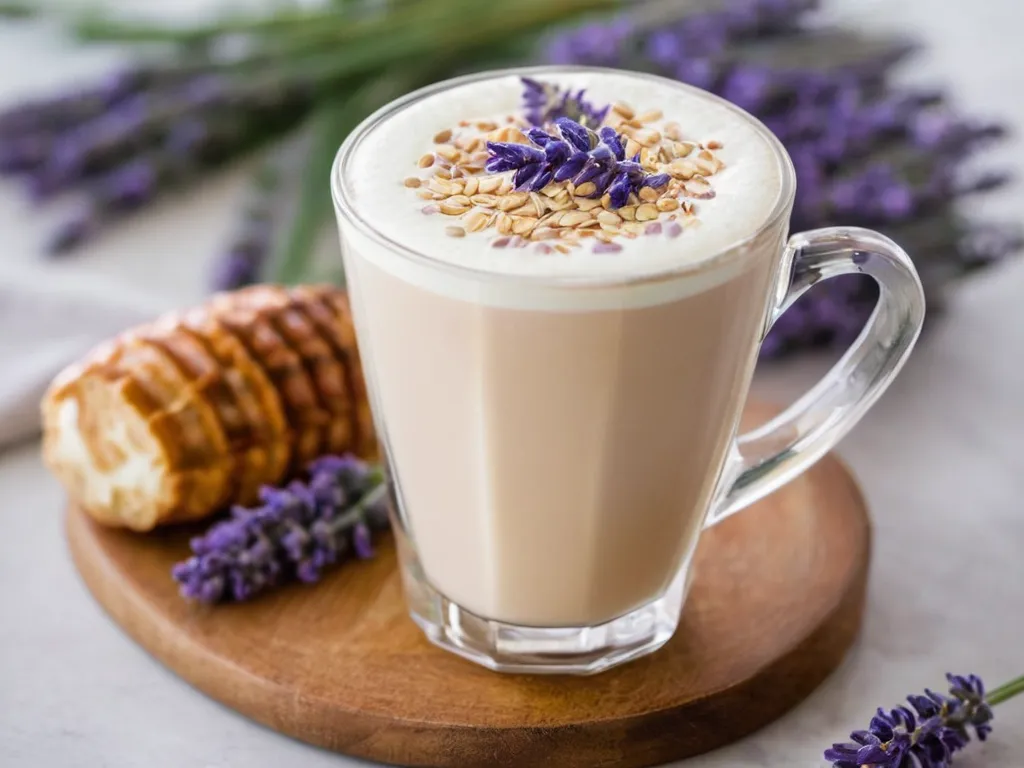
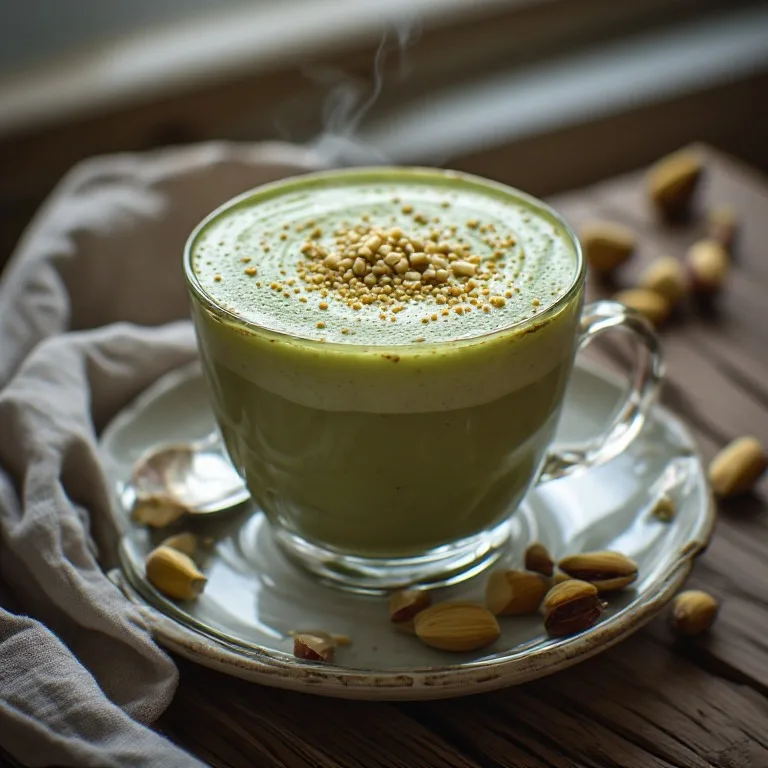
Real pistachio lattes are a muted, natural green — the color of actual pistachios. Artificial pistachio lattes are sometimes a vivid, almost neon green from added food coloring. Your homemade version will be a beautiful natural green from the chlorophyll in the pistachio skins. If you want it more vivid, add 1/4 teaspoon of matcha powder to the syrup while blending — it deepens the color and adds a grassy note that pairs surprisingly well with pistachio.
Three Variations Worth Trying
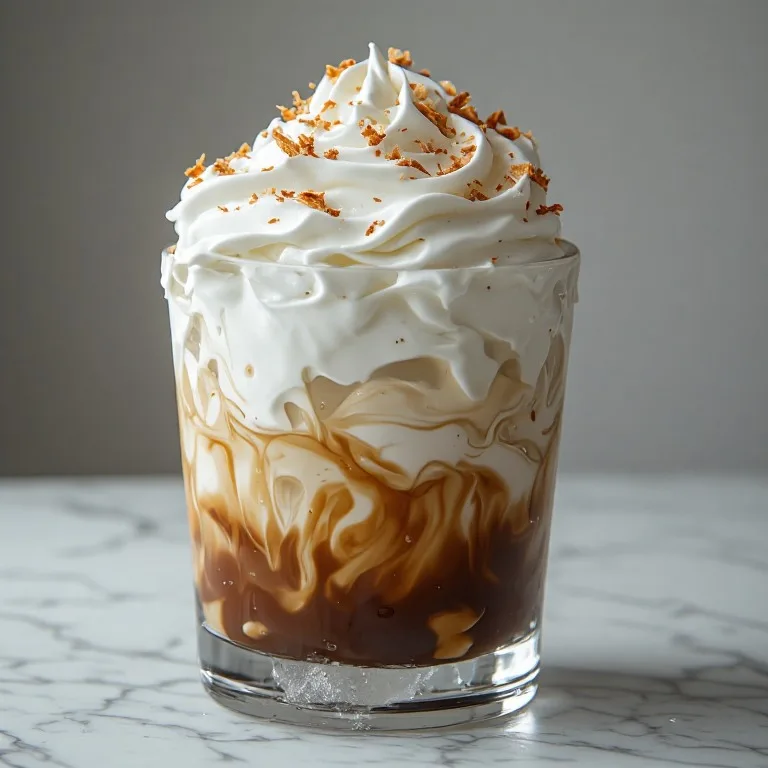
Iced pistachio shaken latte: Pull 3 espresso shots, cool briefly, add 3 tablespoons pistachio syrup, shake vigorously over ice for 15 seconds. Pour into a glass over fresh ice, top with oat milk. The shaking creates a frothy, caramel-colored layer that makes the drink look as good as it tastes.
Pistachio rose latte: Add 1/4 teaspoon food-grade rosewater to the syrup. The pistachio-rose combination is a classic Middle Eastern flavor pairing that makes the latte taste genuinely exotic. Use sparingly — rosewater is potent.
Pistachio matcha latte: Skip the espresso. Whisk 1 teaspoon ceremonial matcha with 2 oz hot water, add 2 tablespoons pistachio syrup, top with steamed oat milk. The earthiness of matcha and the nuttiness of pistachio complement each other in a way that works better than it sounds.