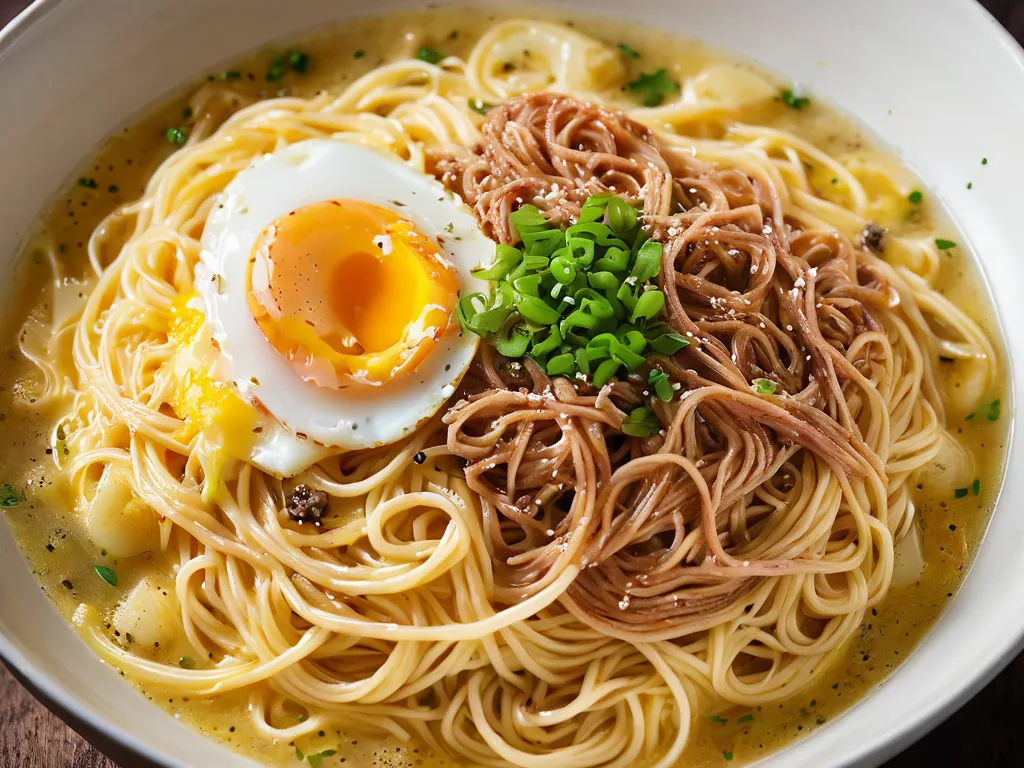
Ramen Carbonara — The $2 Dish That Taught Everyone Italian Cooking
Ramen carbonara is exactly what it sounds like: instant ramen noodles, egg yolks, parmesan, black pepper. The Italian carbonara technique applied to a 50-cent packet of dorm-room noodles.
It went viral for the obvious reason — it works. The wavy, curly ramen noodles grab the creamy egg-parmesan sauce in a way that straight spaghetti doesn’t. The whole dish comes together in 10 minutes. And the transformation is dramatic enough to look like a magic trick even if you’ve never cooked anything more complicated than boiling water.
The trend emerged across TikTok in 2021 without a single dominant creator — dozens of food accounts posted their own versions of the instant-ramen-hack simultaneously, and the #ramencarbonara hashtag accumulated hundreds of millions of views as the format spread. The premise was simple enough that anyone could film a video: buy ramen, ignore the flavor packet, use the noodles as pasta, make carbonara sauce.
TL;DR
Ramen noodles work for carbonara because they’re chewier and release more surface starch than dried pasta. The emulsification technique is identical to real carbonara: egg yolks + starchy cooking water + cheese, off heat, toss until creamy. The single skill worth learning is temperature control — add the egg off the heat, not on it. The whole dish costs under $2.
Why Ramen Noodles Actually Work Better Than Spaghetti Here
This is the counterintuitive part: the “downgrade” of swapping Italian pasta for instant ramen turns out to be a structural upgrade for this particular dish.
The alkaline chemistry. Ramen noodles are made with kansui, an alkaline solution (usually potassium carbonate or sodium carbonate) that manufacturers add during mixing. The alkaline environment alters the flour proteins, giving ramen noodles their characteristic chewiness, springiness, and slightly yellow color. In a carbonara application, that extra chew means the noodles push back against the thick sauce — they don’t go soft or absorb the egg coating the way a more porous dried pasta might.
The flash-fry coating. Most instant ramen noodles are fried in oil during manufacturing (which is why they cook in 3 minutes — they’re already partially cooked). This flash-frying leaves a light coating of oil on every strand that does two things in this recipe: it helps the sauce cling better initially, and it releases into the pan when you toss the noodles in butter and bacon fat, contributing to the overall emulsified texture.
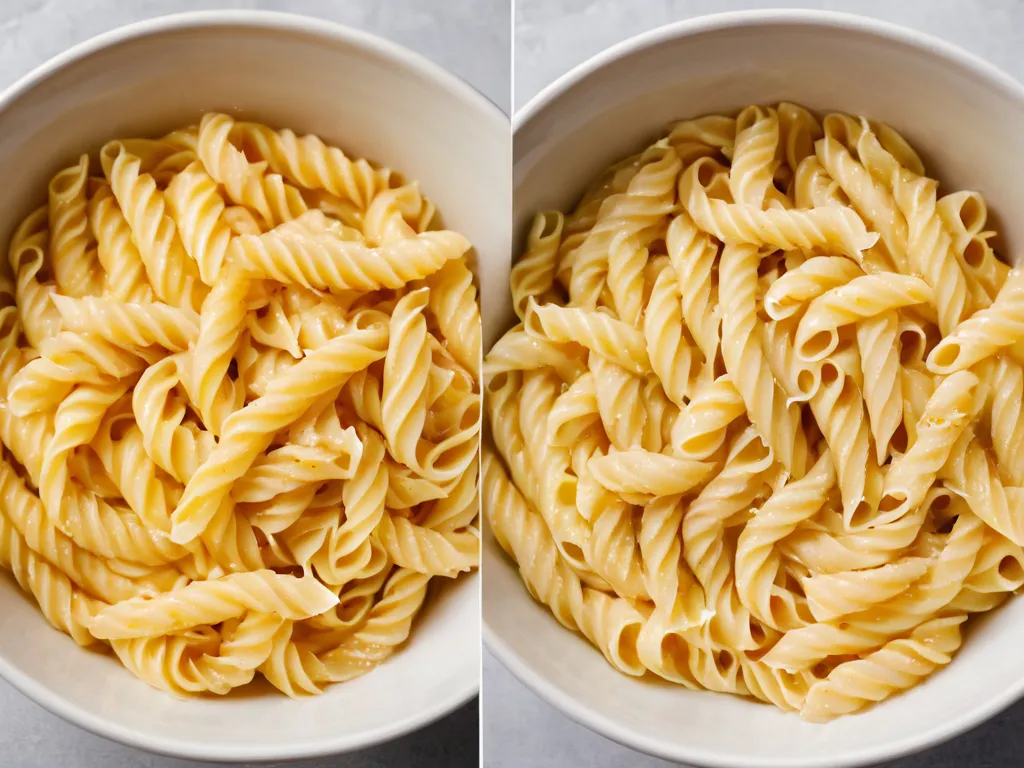
The wave shape. Ramen noodles come out of the package in tight, wavy, curled shapes. That curl means more surface area per inch than straight spaghetti. More surface area means more sauce per bite — the carbonara coating is more pronounced in every forkful.
The starchy water. Instant ramen noodles release a significant amount of starch into the cooking water. That starch is what makes the reserved cooking water look cloudy and milky rather than clear. It’s also exactly what you need for the carbonara emulsion — the starch acts as a bridge between the egg yolk’s fat and the water, holding the sauce together. Ramen cooking water is often starchier than pasta water from the same amount of water, which gives you more insurance against a broken sauce.
The One Skill: Temperature Control
Carbonara has exactly one failure mode: scrambled eggs.
Egg yolk proteins begin to cook — meaning they coagulate and firm up permanently — above roughly 145–150°F (63–66°C). A skillet fresh off medium heat is well above that. If you pour the egg-parmesan mixture directly onto hot noodles sitting in a hot pan, you’ll get egg chunks instead of a sauce.
The solution is not complicated, but it requires actually doing it:
Remove the pan from the heat source entirely. Not “turn it to low.” Not “take it off the flame but keep it on the warm burner.” Move the pan off the stove and onto a cool trivet or cutting board. Wait 15 seconds. Then pour the egg mixture over the noodles and toss.
The residual warmth of the pan and the noodles is exactly enough to cook the egg yolk proteins into a creamy, sauce-like consistency. It’s not hot enough to scramble them. The difference between creamy carbonara and scrambled eggs is measured in seconds and a few degrees of temperature — which is why the “off heat completely” rule matters.
The starchy cooking water is your safety valve. If the sauce looks too thick, add a tablespoon of water and toss again. If the mixture seems to be threatening to scramble (you’ll see small solid pieces forming), get it off the heat immediately and add more cold water.
The Egg Yolk and Why It Works
Egg yolks are rich in lecithin, a phospholipid that acts as a natural emulsifier. Lecithin molecules have one end that’s attracted to water and one end that’s attracted to fat — they sit at the water-fat interface and hold the two together in a stable suspension. This is why egg yolk is the emulsifying agent in aioli, hollandaise, and traditional carbonara: it binds the water-based cooking liquid and the fat-based cheese and bacon drippings into a single, unified sauce.
The technical term for what you’re making is an oil-in-water emulsion — the fat droplets from the parmesan and bacon are suspended within the water-based egg mixture. As long as the temperature stays low enough that the lecithin isn’t destroyed (which would break the emulsion and cause the sauce to separate into greasy liquid), you have carbonara.
Using two egg yolks per serving (rather than a whole egg) gives you more lecithin, more fat, and more emulsifying power — which is why most serious carbonara recipes specify yolks only, not whole eggs.
The Seasoning Packet Question
This comes up in every ramen carbonara conversation: do you use it or throw it away?
Throw it away. Or save it for fried rice.
The seasoning packet in standard instant ramen (Maruchan, Nissin, Ramen Noodle Soup) contains roughly 1,280–1,500mg of sodium plus MSG, hydrolyzed soy protein, and artificial flavors calibrated for a clear, broth-based soup. Those flavors actively clash with carbonara’s clean egg-and-cheese profile. Adding the packet would produce something confusing — vaguely Asian-flavored with a cheesy aftertaste — rather than a coherent dish.
The parmesan and bacon already provide significant salt. Freshly grated parmesan has about 180–200mg sodium per ounce; two slices of bacon add another 180–200mg. Without the packet, this dish is perfectly seasoned. With it, it becomes aggressively salty and muddled.
The one exception: Samyang Buldak Carbonara (the pink bag) includes its own carbonara-style sauce packet, which is calibrated for this application. See the variation section below.
The Buldak Carbonara Upgrade
Samyang Buldak Carbonara — the pink bag in the Korean instant noodle section — is a commercial ramen that already comes with a carbonara-style sauce. It’s spicier and creamier than standard chicken-flavor ramen, and it has its own TikTok following, particularly in the format where you enhance the included sauce packet with extra egg yolk and mayo.
The technique for the Buldak upgrade is different from this recipe:
- Cook the Buldak noodles per package, drain, reserving 3–4 tablespoons of cooking water.
- Add both sauce packets (the red sauce + the milk powder/flakes packet) to the drained noodles.
- Add one egg yolk and 1 tablespoon of Kewpie (Japanese) mayo.
- Toss off heat until the sauce coats everything glossy and creamy.
The Kewpie mayo works here because Japanese mayo has a higher egg-yolk concentration and is made with rice wine vinegar, which makes it tangier and glossier than American mayo. It amplifies the carbonara-style packet sauce into something noticeably richer without changing the product’s spicy flavor profile.
This is a valid, genuinely delicious result — but it’s a different dish from the parmesan-based version in this guide. Don’t confuse the two.
Common Mistakes
Using pre-grated parmesan. The green shaker can of shelf-stable parmesan has anti-caking agents (cellulose, potassium sorbate) that prevent it from melting cleanly. Instead of dissolving into the egg, it clumps into a gritty, uneven coating. Buy a wedge of Parmigiano-Reggiano and grate it yourself.
Adding the egg on the heat. The most common failure. The pan feels “low” but is still hot enough to scramble. The fix is not adjusting the heat — it’s removing the pan entirely.
Using too little starchy water. Two tablespoons is a minimum. If the sauce tightens up and starts to look dry or pasty before it’s fully coated the noodles, add another tablespoon. Don’t be stingy with it.
Skimping on the black pepper. The name carbonara is often linked to carbone (charcoal) — one popular story is that the coarse black pepper is meant to look like scattered coal dust. Whatever the true origin, the traditional Roman recipe calls for a truly aggressive amount of freshly cracked pepper, not a polite pinch. It’s not decoration; it’s flavor. Use at least half a teaspoon per serving, cracked fresh rather than pre-ground.
Cooking the noodles too long. Ramen noodles go soft fast. Pull them 30–45 seconds before the package says. They’ll finish cooking from the residual heat in the pan and the sauce.
Trying to reheat leftovers. Don’t. Carbonara is a dish you make and eat. The emulsion breaks completely as it cools, and the noodles absorb whatever liquid is left overnight. Make one serving at a time.
Variations
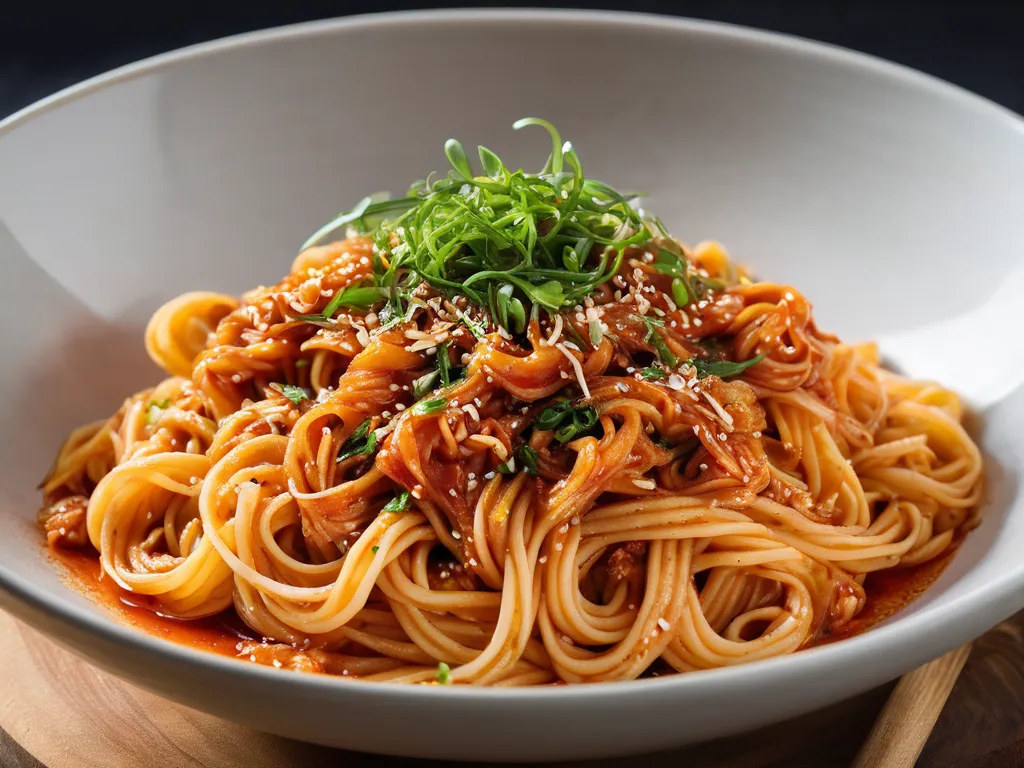
Gochujang ramen carbonara. Add 1 teaspoon of gochujang paste to the egg-parmesan mixture before tossing. It doesn’t overwhelm the sauce — it adds a background heat and a subtle fermented depth. Top with sliced scallions and sesame seeds. This is probably the best variation: Korean and Italian flavors align well in a way that’s hard to predict until you try it.
Mushroom carbonara. Cook 4–5 sliced cremini or shiitake mushrooms in butter with the garlic before adding the noodles (skip the bacon, use vegetable oil). The mushrooms provide savory depth and absorb the bacon fat’s role as the fat component in the sauce. Add a few drops of soy sauce to the egg-parmesan mixture for extra umami.
Truffle ramen carbonara. Finish with a thin drizzle of truffle oil (real white or black truffle oil, not synthetic “truffle flavor” oil) after tossing. The truffle aroma pairs unexpectedly well with the egg and parmesan. This version costs more but feels genuinely indulgent for a noodle dish.
Spicy chicken carbonara. Keep half the ramen seasoning packet (not the full packet) and reduce the parmesan to 1/4 cup. Add a pinch of red pepper flakes to the garlic step. This is the version for people who miss the ramen flavor but want the carbonara creaminess — the half packet gives you flavor without overwhelming the dish.
Cost and Nutrition
A packet of instant ramen: $0.25–0.50. Two egg yolks: $0.30–0.40. One ounce of parmesan: $0.60–0.80. Two strips of bacon: $0.40–0.60. Total: roughly $1.75–2.30 for a filling meal.
Without the seasoning packet, the sodium drops to approximately 900–950mg per serving — still notable, but well below the ~1,700–2,000mg you’d get eating the ramen as intended (noodle block plus the full seasoning packet).
| Per serving | With bacon | Without bacon |
|---|---|---|
| Calories | ~580 | ~490 |
| Protein | ~22g | ~16g |
| Carbs | ~50g | ~50g |
| Fat | ~32g | ~25g |
| Sodium | ~920mg | ~750mg |
More Viral Ramen and Pasta Recipes
- Viral TikTok Birria Ramen — birria beef broth as the ramen base; one of the most dramatic ramen upgrades.
- Viral TikTok Instant Ramen Upgrade — the basics: how to make any instant ramen taste like a restaurant bowl.
- Viral TikTok Crunchy Ramen Salad — raw ramen noodles toasted in butter as the crunch element in an Asian-style slaw.
- Viral TikTok Butter Pasta — the other Italian “simple-technique” pasta that TikTok made viral; pasta al burro with the same “starchy water + fat” emulsification logic.
- Viral TikTok Gochujang Pasta — the Korean-Italian fusion that preceded ramen carbonara as the dominant pasta-hack trend.