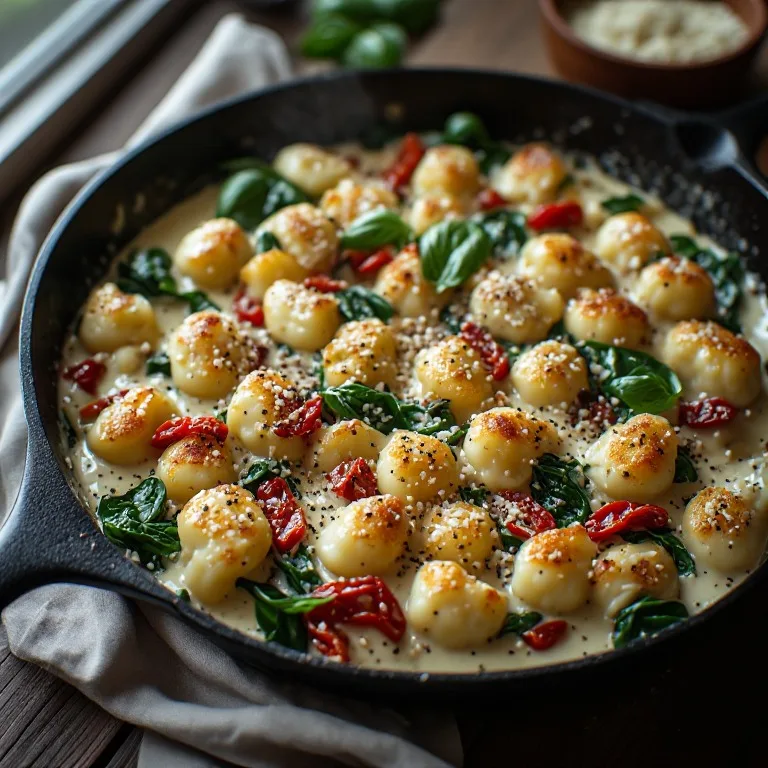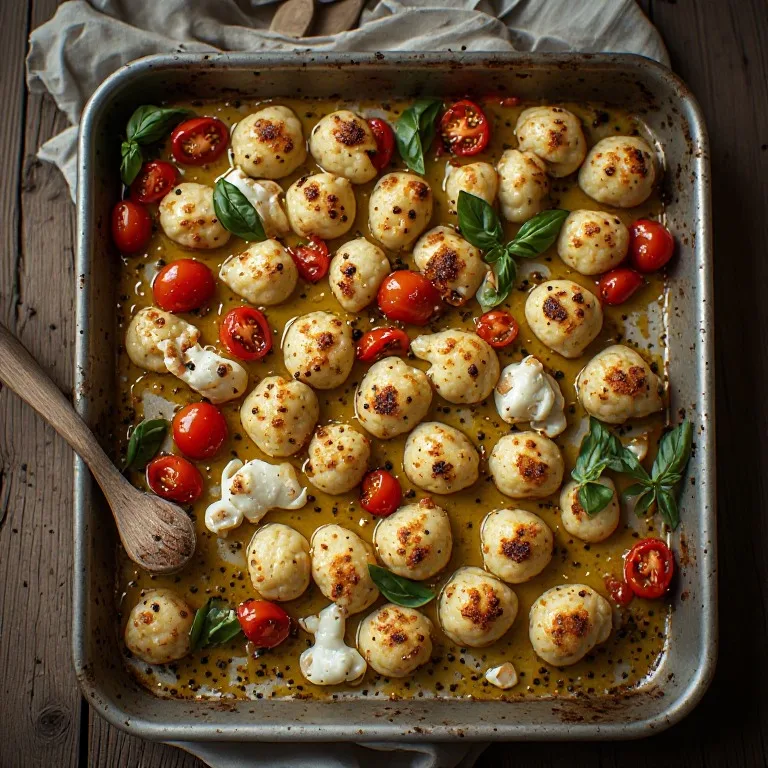


Crispy on the outside, pillowy inside, zero boiling — this is what happens when you stop treating gnocchi like pasta that needs to be boiled and start treating it like something that deserves the oven.
What Makes Sheet Pan Gnocchi Different
Every other gnocchi recipe starts with a pot of salted boiling water. This one starts with a cold bag and a hot oven, and it produces a different dish entirely.
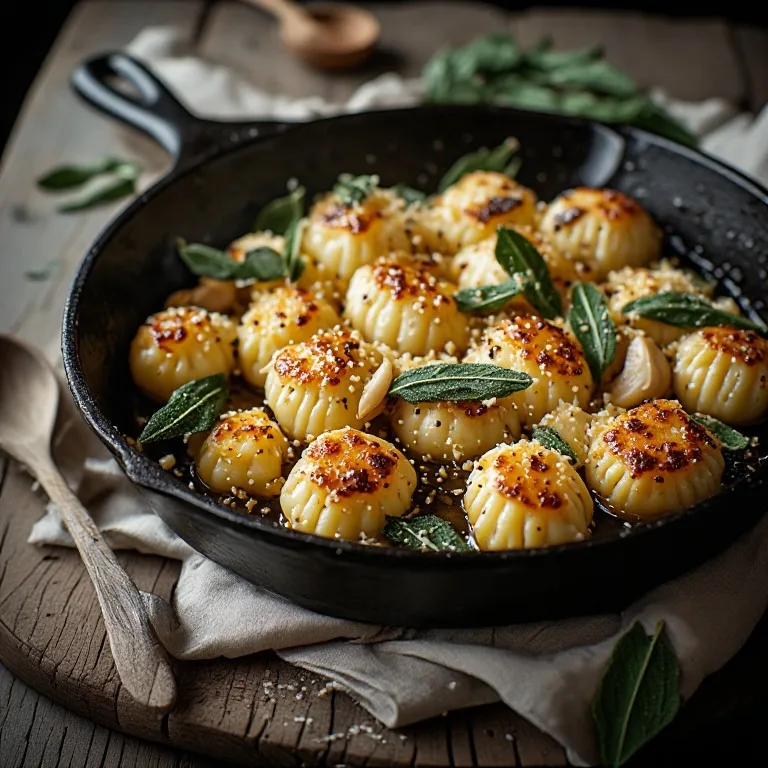
Boiled gnocchi is pillowy and soft throughout. Sheet pan gnocchi has a thin crispy skin — dry oven heat gelatinizes and dehydrates the starchy exterior before the interior softens, creating a lightly golden crust that doesn’t exist in the boiled version. The stovetop pan-fry method produces a similar crust, but requires working in batches and active attention for 8–10 minutes. The oven does it hands-off, to every single piece simultaneously.
The viral TikTok version by Sarah Baus (@sarahebaus) distilled this down to three ingredients: shelf-stable gnocchi, cherry tomatoes, and a jar of marinated mozzarella (the hack being: use the oil from the jar as your sauce base). That oil — already infused with garlic, basil, and oregano — coats the gnocchi with built-in flavor, and the mozzarella balls added in the final five minutes melt into the burst tomatoes to create a light, almost creamy sauce from the pan drippings.
The One Rule That Makes or Breaks It
Single layer. Not almost a single layer. Not a loose pile. One flat layer where nothing touches.
When gnocchi overlap — even slightly — they trap steam between pieces. That steam keeps the surface wet, which means the Maillard reaction (browning) can’t happen until the moisture evaporates. At 450°F, a 15-minute roast doesn’t have enough time to evaporate that moisture AND brown the exterior. You end up with soft, pale gnocchi instead of crispy ones.
If your baking sheet won’t fit everything flat, use two pans. The difference between sheet pans is not worth arguing about; the difference between single-layer and crowded is everything.
The Marinated Mozzarella Trick
If you can find a 7–8 oz jar of marinated mozzarella balls (ciliegine or bocconcini packed in herb oil — they’re in the cheese section next to fresh mozzarella), buy it. The oil in the jar does double duty: it seasons and coats the gnocchi with herb flavor during roasting, and the mozzarella itself goes on top in the last five minutes to melt into a creamy, pulling finish.
If the jar isn’t available, use plain extra-virgin olive oil (3 tablespoons) plus a pinch of dried Italian seasoning, and buy fresh mozzarella separately. Same result, just an extra step.
Variations
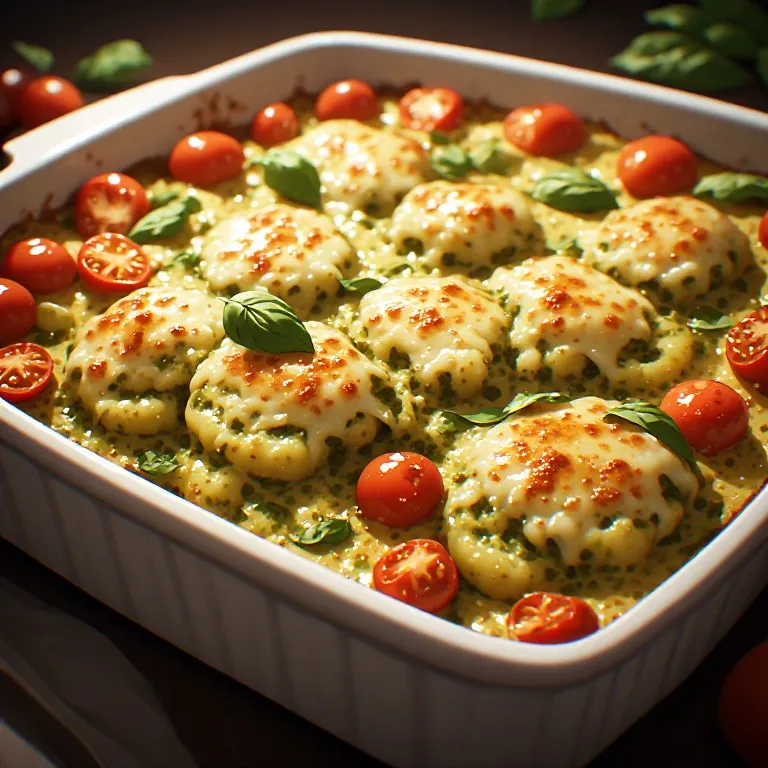
Pesto sheet pan gnocchi: Omit the garlic and replace the olive oil with 3 tablespoons jarred basil pesto. Add zucchini cut into half-moons alongside the tomatoes. Skip the mozzarella or use burrata instead, torn over the top after it comes out of the oven. The pesto blooms and intensifies in the dry oven heat in a way it doesn’t on the stovetop.
Sausage and pepper sheet pan gnocchi: Add 8 oz Italian sausage (casings removed, pinched into marble-sized pieces) and 1 sliced bell pepper to the pan alongside the gnocchi and tomatoes. The sausage renders and browns in the same 15 minutes. Mozzarella optional but excellent.
Broccoli and garlic sheet pan gnocchi: Replace the cherry tomatoes with 2 cups broccolini or broccoli florets and increase the garlic to 6 cloves. The broccoli caramelizes at the edges and softens to tender-crisp in the same 450°F window. Skip the mozzarella and finish with Parmesan and lemon zest.
Fall harvest version: Add 1 cup butternut squash cut into ½-inch cubes to the pan 10 minutes before adding the gnocchi and tomatoes — the squash needs a head start. Then add everything else, toss together, and roast 18–22 minutes more. Finish with fresh sage, brown butter drizzled on top, and Parmesan.