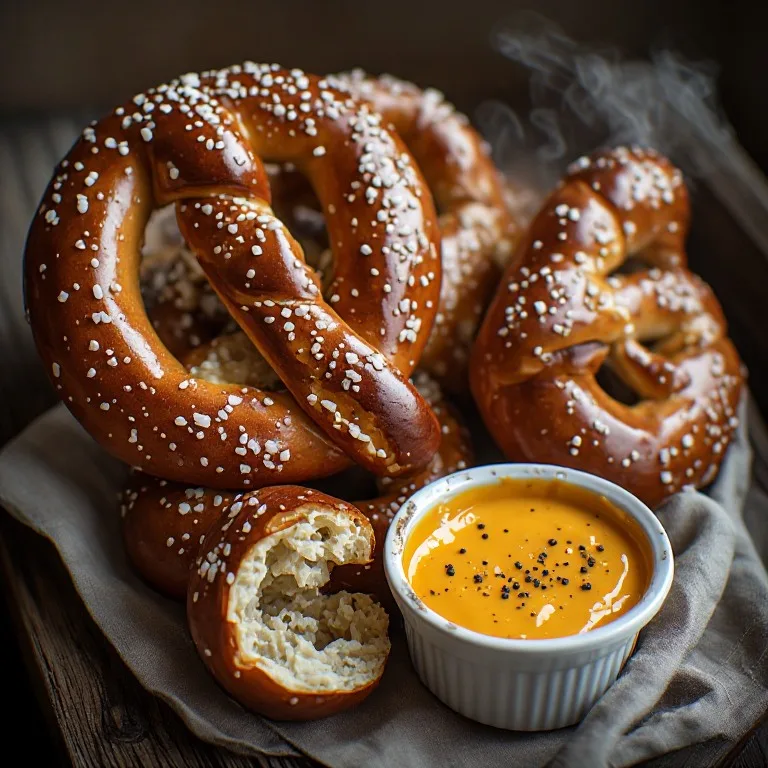

Auntie Anne’s opened its first location at a farmers market in Downingtown, Pennsylvania in 1988. Anne Beiler was not a trained baker — she was running a stall to raise money for a free family counseling center, and after months of recipe testing she landed on a soft pretzel formula that sold out every day. A mall location followed in 1989, then airports, then shopping centers across the country. The chain now operates more than 1,200 stores. The smell of a pretzel baking in a mall — yeast, butter, the faint caramel note from brown sugar — is one of the most widely recognized food scents in America.
The copycat recipe is not a mystery: Auntie Anne’s has sold home baking kits for years, and the formula that food bloggers have converged on matches them closely. Brown sugar instead of white. A quick dip in baking soda solution rather than a rolling boil. Very hot oven. Enough butter to coat every inch of the crust the moment it comes out.
What a mall pretzel actually costs you: $6 to $8 per pretzel at current mall prices, or about $5 for a cup of pretzel bites. A batch of eight at home runs under $3 in ingredients.
The One Ingredient Most Recipes Get Wrong
Standard soft pretzel recipes use white granulated sugar or no sugar at all. Auntie Anne’s dough uses brown sugar. The molasses in brown sugar does two things: it gives the inside of the pretzel a subtle caramel sweetness that is the distinguishing flavor note, and it adds a small amount of moisture that keeps the crumb slightly tender even as the outside crisps. This is the detail that most generic soft pretzel recipes miss — and it is why a good homemade pretzel made with white sugar still tastes slightly different from Auntie Anne’s even when everything else is identical.
Why the Baking Soda Bath Works
The baking soda bath raises the pH on the surface of the dough. High-pH surfaces brown faster in the oven through the Maillard reaction — the same chemistry that gives steak its crust and coffee its roast. Without the bath, a pretzel baked at 450°F comes out pale tan. With it, the same dough bakes to deep mahogany in 12 to 14 minutes.
Traditional German pretzels use lye (sodium hydroxide) rather than baking soda — lye is more strongly alkaline, produces a thicker crust and shinier finish, and is what gives a true Bavarian pretzel its distinctive snap. Lye is safe at food-grade concentrations but requires gloves and careful handling. Baking soda achieves about 90% of the same result without the chemistry precautions.
Auntie Anne’s uses a dip rather than a boil. A full boil (the New York pretzel and bagel method) changes the internal texture of the dough, creating a denser, chewier interior. A 30-second dip coats the surface without penetrating; the inside bakes up soft and pillowy. This is the structural decision that makes Auntie Anne’s feel distinctly different from a street pretzel.
The Butter Finish is Not Optional
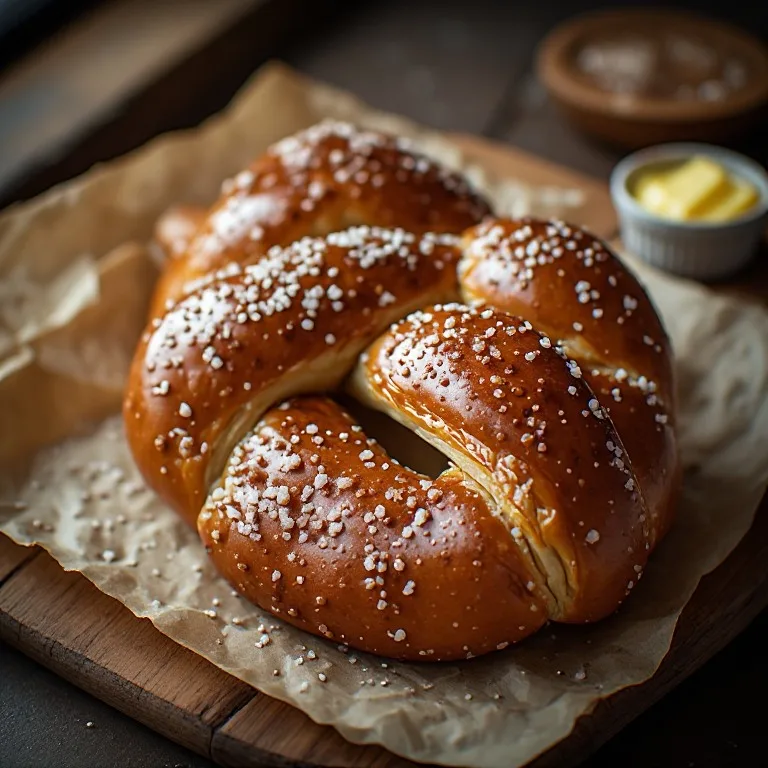
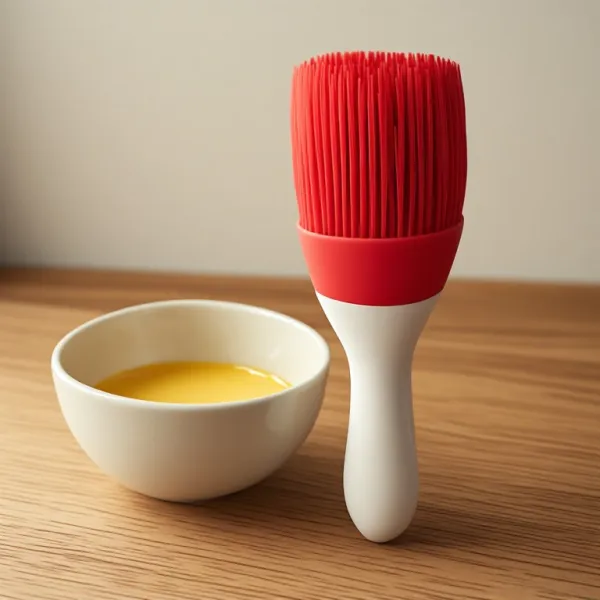
The last step — brushing each pretzel with about 1 to 1½ tablespoons of melted butter immediately out of the oven — is the thing most home versions undershoot. The butter absorbs into the still-open, still-hot crust and produces the gloss, the aroma, and the softness that cools into the characteristic Auntie Anne’s texture. Doing it at room temperature or with too little butter produces a dull, slightly stiff pretzel. Do it hot, do it generously.
The Cinnamon Sugar Variation
The cinnamon sugar pretzel is, by customer count, Auntie Anne’s most popular flavor. The technique: skip the pretzel salt before baking (pretzel salt + cinnamon sugar = very strange). Bake as usual. Brush immediately with butter. While the butter is still wet, lay the hot pretzel in the cinnamon sugar bowl and press gently, then flip and coat the back. The butter acts as the adhesive; if it is cool enough to not be immediately absorbed, the sugar falls off. The ratio Auntie Anne’s uses is sweeter than most home versions — ⅓ cup sugar to 1 teaspoon cinnamon, not the 2:1 ratio some recipes suggest.