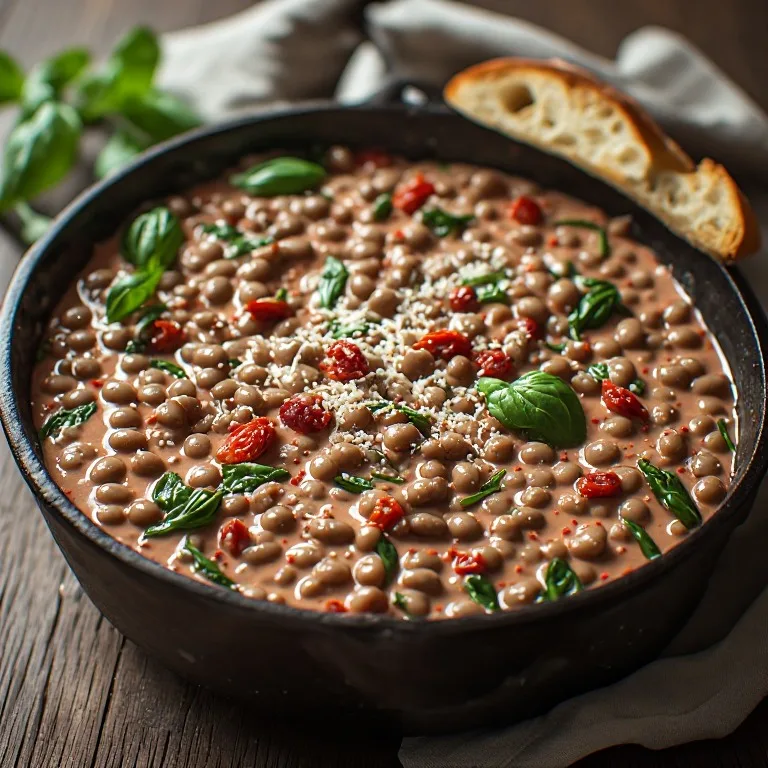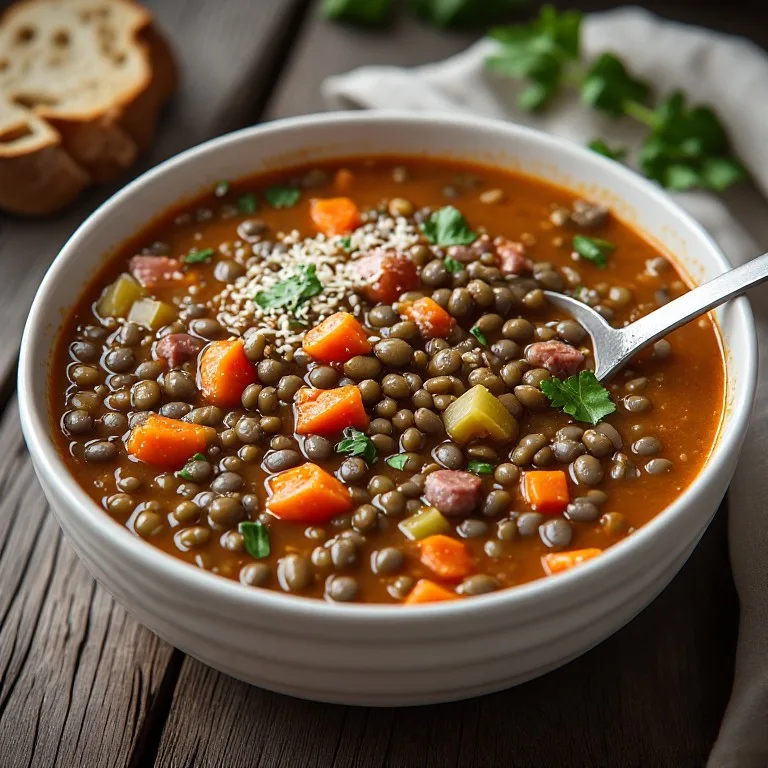



Carrabba’s Sausage and Lentil Soup is one of those dishes that regulars ask for by name and that the restaurant can never quietly remove. It’s been on the Carrabba’s menu since the early years — a hearty Italian-American soup built on browned sausage, mirepoix, San Marzano tomatoes, and lentils, simmered long enough to fuse everything into a deeply savory broth.
The dish costs about $7–8 as a starter at the restaurant. This recipe makes eight servings for under $16 total — under $2 per bowl.
The One Thing Most Copycat Recipes Get Wrong
The failure point in every disappointing copycat is the lentil. Most recipes reach for whatever brown lentils are in the pantry. Brown lentils have a thin outer skin that breaks down during 45 minutes of simmering, producing a thick, grayish soup where the lentils have essentially dissolved into the broth. The texture is completely wrong.
The fix is firm-cooking lentils — French green lentils (du Puy) or black beluga lentils — that hold their shape and keep a slight bite even after a long simmer. The difference is visible: individual, intact lentils in the bowl rather than a pea-soup texture, matching the restaurant bowl exactly. If you make one upgrade over every other copycat recipe you find, make this one.
French green lentils have a mildly peppery, almost mineral flavor and a dark green-brown color. Black beluga lentils are smaller, slightly earthier, and nearly black — beautiful against the orange-red of the tomato broth. Both are widely available at most grocery stores, often in the bulk bins. Neither requires soaking.
Why the Sausage Technique Matters
The second place most home versions fall short is the sausage browning step. Many recipes just cook sausage until gray and move on. Browning until genuinely caramelized — with dark spots, not just cooked-through gray — is where a third of the soup’s flavor comes from. The Maillard reaction on the surface of the pork creates compounds that season the entire batch of broth. Leave the sausage undisturbed for two minutes before breaking it up; that contact with the hot pan builds the crust.
Breaking the sausage into very small, pea-sized pieces matters for the final texture too. A few large chunks per bowl make each spoonful uneven — some bites all sausage, others all broth. Fine, even crumble distributes flavor uniformly.
After browning, the sausage comes out and the aromatics go into the rendered fat. The fat carries the same flavors the sausage deposited into the pan; you want all of that going into the vegetables, not down the drain.
The Cucina Povera Tradition
This soup belongs to southern Italy’s cucina povera — literally “poor kitchen,” the cooking tradition that builds deeply satisfying meals from cheap, shelf-stable pantry staples. Dried lentils, sausage, canned tomatoes, a few root vegetables: these were winter survival ingredients for Sicilian and southern Italian peasant families, and the dishes built from them are still the most comforting things you can make in a single pot.
Carrabba’s founders, the Carrabba and Mandola families, brought these cooking instincts from their Sicilian immigrant background. The soup tastes like something that has been cooked and refined over generations — because in a real sense, it has been.
What to Serve Alongside
Crusty Italian bread is mandatory for this soup. The broth is specifically worth soaking up. A simple green salad with red wine vinaigrette works as a side; for a full family dinner, add a second Carrabba’s dish — the Chicken Bryan is the restaurant’s most popular main and doesn’t require much active time while the soup simmers.
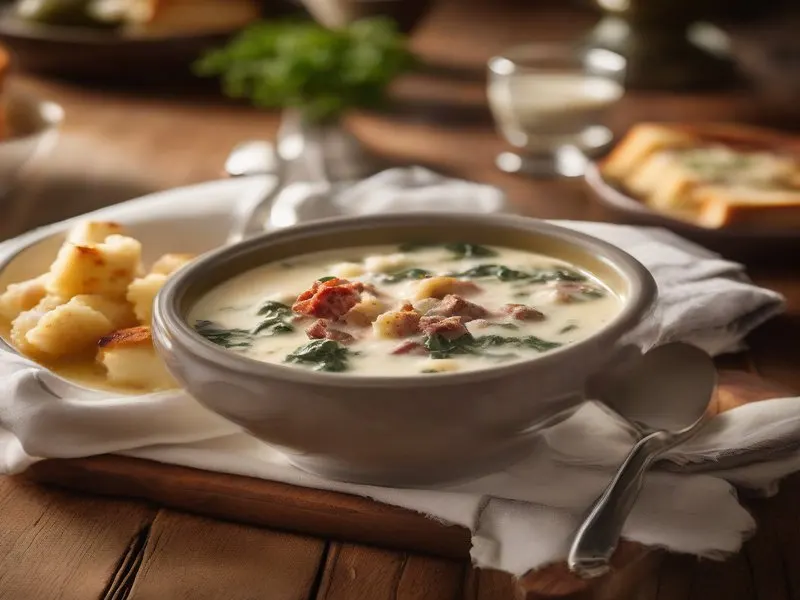
For more Italian-American soup options in the same tradition, the Olive Garden Zuppa Toscana uses the same sausage base with a cream and potato broth, and the Pasta e Fagioli adds beans and pasta to a similar tomato broth.