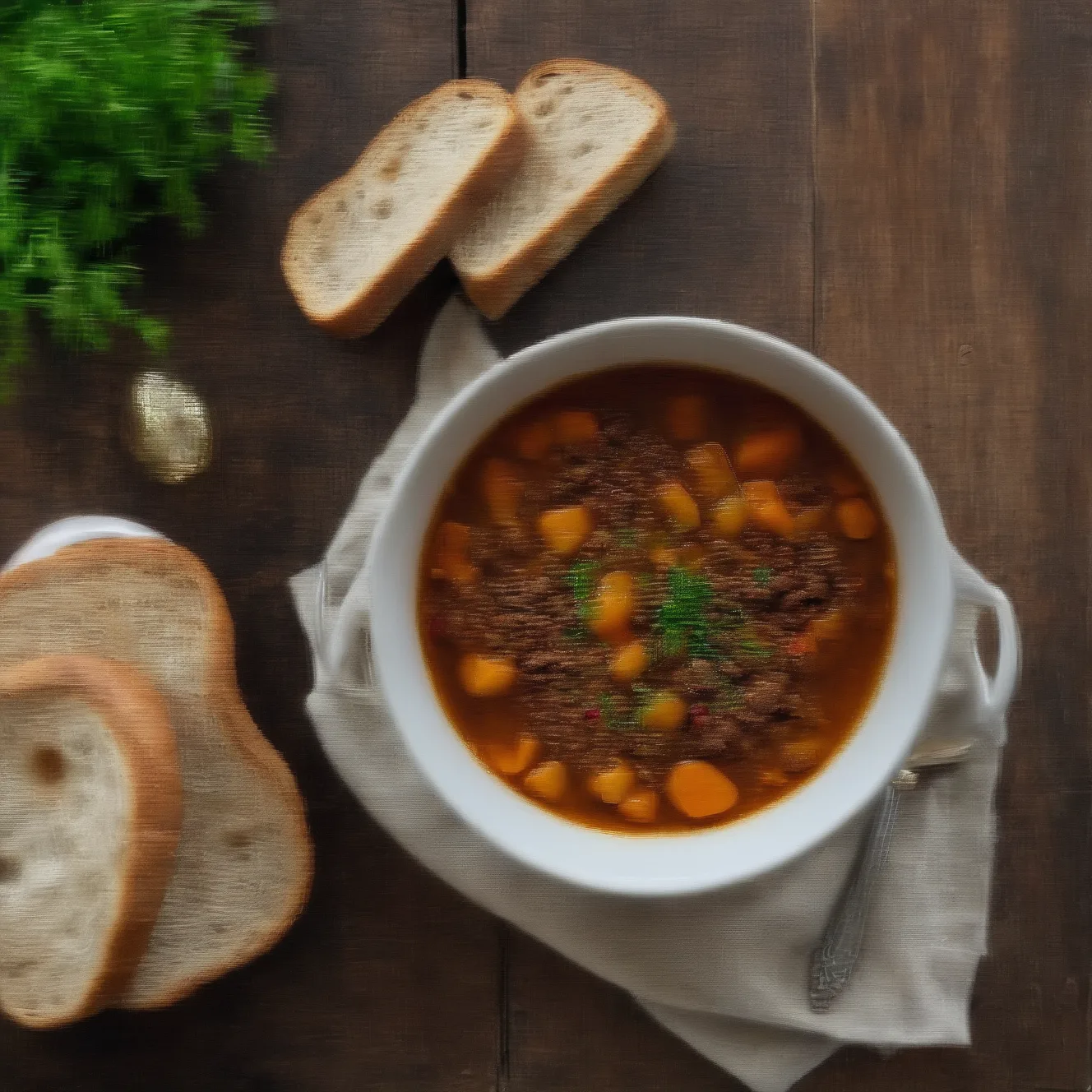
Copycat Olive Garden Pasta e Fagioli
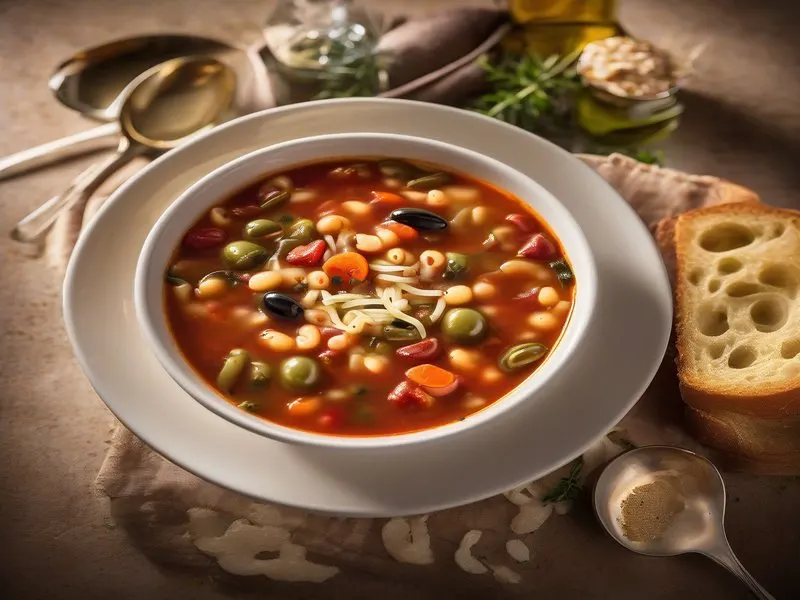
Pasta e Fagioli is the Italian phrase for “pasta and beans,” and Olive Garden’s version earns its spot as one of the most-requested soups on their menu. It is thick, hearty, and genuinely filling — closer to a meat-and-bean chili in consistency than a light broth soup — with a savory tomato base, two kinds of beans, small ditalini pasta, and ground beef in every spoonful.
The at-home version takes about 45 minutes and costs about $12–14 to make a full 8-serving pot.
TL;DR
Brown ground beef. Soften the mirepoix (carrot, celery, onion) and garlic. Add diced tomatoes, marinara, beef broth, beans, and seasonings. Simmer 15 minutes. Cook ditalini pasta separately and stir it in per bowl. Total: about 45 minutes. One cup is approximately 150 calories, 8g protein, 710mg sodium.
What Makes Olive Garden’s Version Different From Regular Pasta e Fagioli
Traditional Italian pasta e fagioli is usually vegetarian, lighter in texture, and often uses pork fat (pancetta or lardo) for flavor. Olive Garden’s version is an Americanized adaptation with three key differences:
Ground beef. The restaurant adds lean ground beef, making it substantially more protein-dense and hearty than the Italian original. This is the biggest departure and the reason it eats like a meal rather than a starter.
Marinara as the tomato base. Rather than just diced tomatoes or tomato paste, Olive Garden’s version uses a combination of diced tomatoes and marinara sauce. The marinara brings pre-seasoned tomato flavor — Italian herbs, a touch of sweetness — that thickens the broth and gives the soup its characteristic deep red color.
Two beans. Red kidney beans and white kidney beans (cannellini) in equal amounts. The red beans hold their shape and contribute a slightly earthy, robust flavor; the white beans are softer and release more starch into the broth, helping thicken it naturally as the soup simmers.
Pasta e Fagioli vs. OG’s Other Rotation Soups
Olive Garden rotates four soups on its menu year-round. Here is how Pasta e Fagioli stacks up — calorie and sodium figures verified against OG’s official nutrition data.
| Soup | Broth | Protein | Starch | Calories | Sodium | Best For |
|---|---|---|---|---|---|---|
| Pasta e Fagioli | Tomato-beef | Ground beef | Ditalini + beans | 150 | 710mg | Heartiest bowl; best protein-to-calorie ratio |
| Zuppa Toscana | Creamy | Spicy Italian sausage | Russet potato | 220 | 790mg | Spicy-rich; more distinct flavor than Chicken Gnocchi |
| Chicken Gnocchi | Cream-based | Chicken | Gnocchi | 230 | 1,290mg | Most comforting; richest and highest sodium |
| Minestrone | Vegetable | None | Pasta + mixed veg | 110 | 810mg | Lightest; the only vegetarian option |
The key standouts: Pasta e Fagioli has the lowest sodium of the four and is the only beef soup. Minestrone has the fewest calories and is vegetarian. Chicken Gnocchi is the richest — 230 calories and 1,290mg sodium, nearly twice the sodium of Pasta e Fagioli. If you are counting sodium or just want a filling bowl without cream, Pasta e Fagioli is the correct pick.
See the full four-soup breakdown in the Olive Garden Chicken Gnocchi Soup and Olive Garden Zuppa Toscana guides.
The Pasta Problem: Why You Must Cook It Separately
This is the single most important technique in this recipe, and most copycat guides skip it.
Ditalini — like all small pasta shapes — absorbs broth at a remarkable rate once submerged in hot liquid. If you add dry pasta to the soup pot and let it cook directly in the broth, here is what happens: after 10 minutes of cooking time and 20 minutes of sitting, the pasta has roughly tripled in volume, absorbed most of the available liquid, and turned from firm al dente to a soft, bloated mass. The soup becomes a thick pasta paste instead of a brothy stew.
The fix: cook the pasta in a separate pot of salted water until 1 minute shy of al dente. Drain it, toss it with a small drizzle of olive oil to prevent sticking, and refrigerate it separately. When serving, add 2–3 tablespoons of cooked pasta to each bowl, then ladle the hot soup over it. The pasta warms through in seconds and the broth stays the right consistency — for the meal and for every leftover serving.
The Beans: Starch Release and Texture
Using one can each of red kidney and white kidney beans is not arbitrary. Each does a different job:
Red kidney beans are dense and hold their shape well through a 15-minute simmer. They add visible texture and a slightly more assertive, earthy bean flavor. They contribute less starch to the broth.
White kidney beans (cannellini) are softer and release starch into the surrounding liquid as they cook. This starch thickens the broth naturally — no roux, no cornstarch needed. By the end of the simmer, the broth will have gone from thin to glossy and lightly thickened on its own. If you use two cans of one type, you lose either texture (all cannellini, too soft) or self-thickening (all kidney, thinner broth).
Drain and rinse both cans before adding. The liquid in canned beans is high in sodium; rinsing removes most of it without changing the bean flavor.
Getting the Broth Right
Beef broth over chicken broth. Olive Garden’s Pasta e Fagioli is a beef-forward soup. Using chicken broth gives you a lighter base that works but doesn’t match the restaurant’s deeper, savory flavor profile. Use low-sodium beef broth so you control the salt level.
Undrained diced tomatoes. Add the tomatoes with their liquid. That liquid is seasoned tomato water; discarding it throws away flavor. The tomatoes will break down slightly during the simmer and become part of the broth.
1 cup of marinara, not more. Marinara brings body and pre-built flavor, but too much makes the soup taste like tomato sauce with beans. One cup is the right ratio for this 8-serving batch — it colors and flavors the broth without overwhelming the other components.
Cost Comparison
| Olive Garden | Homemade | |
|---|---|---|
| Soup, Salad & Breadsticks (dine-in, all day) | ~$12.99 / person | — |
| Weekday lunch special (Mon–Fri, 11am–2:30pm) | ~$9.49 / person | — |
| Full 8-serving pot | — | ~$12–14 |
| Cost per 1-cup serving | — | ~$1.50–1.75 |
The restaurant’s Soup, Salad & Breadsticks combo runs around $12.99 all day (price varies by location). A full pot of this recipe — ground beef, two cans of beans, canned tomatoes, marinara, pasta, and vegetables — comes in around $12–14 total, or about $1.75 per generous serving. Add Olive Garden Breadsticks on the side and the full spread costs under $20 for 6–8 people.
Variations
Slow cooker. Brown the beef and soften the vegetables in a skillet (10 minutes), then add everything except the pasta to a 6-quart slow cooker. Cook on low 6–8 hours or high 3–4 hours. Cook the pasta separately and add per bowl at serving. The beans release more starch in a slow cooker; the soup will be slightly thicker — add a splash of broth to loosen if needed.
Spicy version. Double the red pepper flakes (to 1/2 teaspoon) and use hot Italian sausage in place of half the ground beef. The sausage fat flavors the broth differently — slightly fennel-forward — and increases the heat.
Vegetarian. Skip the beef and use vegetable broth in place of beef broth. Add a parmesan rind to the pot during the simmer (or a teaspoon of soy sauce) to replace the savory depth the meat would have added. Remove the rind before serving.
Extra-thick version. At the end of the simmer, scoop out 1 cup of beans and mash them roughly with a fork, then stir the mash back into the pot. This tricks the broth into thickening further without any thickening agent. The texture moves toward chili territory.
Storage and Reheating
Fridge: Soup (without pasta) keeps 4–5 days in an airtight container. The pasta keeps separately 3–4 days.
Reheat: Stovetop over medium heat, stirring occasionally, until hot through — about 5–7 minutes from cold. Add a splash of broth or water if the soup has thickened in the fridge (the beans continue to release starch as it sits).
Freeze: Freeze the soup base (no pasta) in quart containers for up to 3 months. Cooked pasta does not freeze well — cook fresh pasta when reheating from frozen. Thaw overnight in the fridge and reheat on the stovetop.
More Olive Garden Copycat Recipes
These round out an Olive Garden night at home:
- Copycat Olive Garden Breadsticks — the butter-brushed, garlic-salted breadsticks. A full batch costs about $2.
- Copycat Olive Garden Zuppa Toscana — the spicy sausage and kale soup. Compare the two and pick your favorite.
- Copycat Olive Garden Minestrone — the vegetarian alternative from the same soup rotation. Lighter broth, more vegetables.
- Olive Garden Chicken Gnocchi Soup — the cream-based option. Different direction entirely: creamy vs. tomato-red.
- Olive Garden Salad Dressing — make the house salad at home to go alongside the soup.
See all Olive Garden copycat recipes →