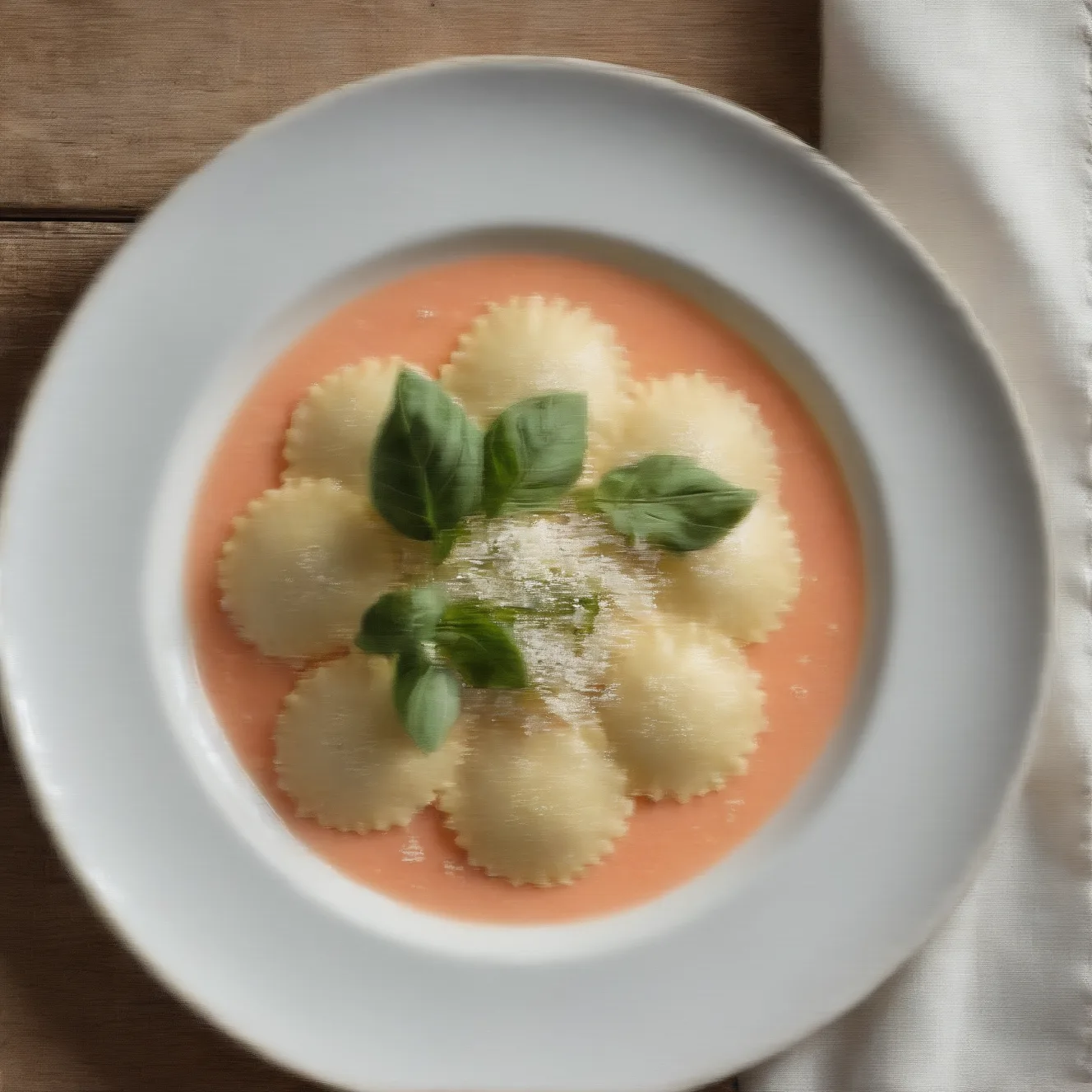
Carrabba’s Mezzaluna is one of those dishes that sounds more ambitious than it is. Half-moon shaped ravioli stuffed with chicken, ricotta, romano, and spinach, then served in a pink tomato cream sauce. It’s on the menu for around $21, which is fair for the labor — but at home, the technique is more manageable than the word “handmade pasta” implies, especially if you use a pasta machine and rotisserie chicken for the filling.
The dish’s full name, Mezzaluna, comes from the Italian for “half moon” — the shape each piece makes when a round of pasta dough is filled and folded over. It’s the same crescent shape you’ll see in half-moon cookies, half-moon dumplings, and the curved kitchen knife of the same name.
What’s Actually in Carrabba’s Mezzaluna
The official Carrabba’s menu lists four components in the filling: chicken, ricotta, romano, and spinach. The sauce is a tomato cream — not marinara, not Alfredo, but a blush or rosa-style that’s roughly equal parts tomato and cream, giving it a salmon-pink color and a balanced flavor that is neither purely bright and acidic nor heavy and dairy-rich.
The restaurant price is $21.29 to $21.99 depending on location. Calories come in at 700 per serving — the restaurant’s portion is generous with sauce. Homemade costs about $5.50–6.50 per serving.
What Most Copycat Recipes Get Wrong
Two problems show up in most Mezzaluna copycat recipes.
Wet filling. Fresh spinach looks dry after wilting, but it holds a remarkable amount of water. If you fold wilted spinach directly into the ricotta, that moisture migrates into the filling as it sits, turning it slack and loose. Wet filling does two things wrong: it prevents a clean seal (so pieces open in the water) and it dilutes the flavor of the cheese and chicken. The fix is to wring the wilted spinach in a kitchen towel with real force — grip the ends, twist hard — until you can squeeze out nothing more. You should lose at least a tablespoon of liquid per cup of spinach. After this step, the spinach is nearly fibrous in texture, which is correct.
Sauce added too early. Tomato cream sauce breaks when the cream meets thin, watery crushed tomatoes. The tomato base needs to cook down to a thick, jam-like consistency before any cream is added. At that point, the cream incorporates into a dense, cooked base rather than simply pooling in a watery tomato soup. Ten to twelve minutes of simmering uncovered gets you there — the sauce should coat a spoon and pull away from the pan edge as it moves.
The Pasta Dough
Carrabba’s uses a fresh egg pasta dough, which is standard for stuffed Italian pasta. The formula here is two whole eggs plus an extra yolk — the extra yolk adds richness and a slightly golden color while keeping the dough pliable. All-purpose flour works fine; 00 (doppio zero) flour is finely ground and produces a silkier texture if you have it.
The resting step matters: 30 minutes wrapped in plastic, at room temperature. Freshly made pasta dough is tight and elastic because of gluten development during kneading. After the rest, the gluten relaxes and the dough rolls thin without springing back — you can reach the 5 or 6 setting on a pasta machine rather than having the sheet contract back to half its rolled length.
Roll each sheet thin enough that you can hold it up and see light through it without seeing your fingers clearly. If it’s opaque, roll thinner.
Filling and Assembly
The filling-to-pasta ratio matters more than most recipes acknowledge. One scant teaspoon per mezzaluna is the maximum for a 3-inch round — you need at least 1/4 inch of clear edge all the way around to form a seal. The egg wash goes on the half of the round that folds over, not on the filled half. Press the edges together firmly before crimping with a fork; the fork marks are decorative but also mechanical — they increase the contact area of the seal.
Work in batches and keep covered pieces under a damp towel. Exposed pasta dries out fast and develops cracks where the seal should be.
The Sauce
Carrabba’s describes the sauce as tomato cream — internally, the dish’s flavor profile tracks as half-and-half tomato and cream, which places it squarely in the blush/rosa family. The white wine goes in before the tomatoes, which gives the garlic-shallot base a clean acidic backbone before the tomato’s sweetness arrives. The Parmesan goes in at the very end, off or on low heat, to prevent it from seizing into clumps.
Cost Comparison
| Carrabba’s | Homemade | |
|---|---|---|
| Mezzaluna (per plate) | $21.29–$21.99 | $5.50–$6.50 |
| 4 servings | $85–$88 | $22–$26 |
| Savings | ~$60–$65 |
Homemade cost breakdown (4 servings): flour and eggs ($1.50), rotisserie chicken ($4 for a quarter-bird), whole-milk ricotta ($3), Pecorino Romano and Parmesan ($2.50), can of crushed tomatoes ($2), heavy cream ($2.50), white wine for cooking ($1.50), shallot, garlic, fresh basil, butter ($1.50).
Variations
Spinach-and-cheese only (meatless): Omit the chicken and add an extra 1/2 cup of drained ricotta plus 2 tablespoons more of Romano. This version is lighter and quicker since you skip mincing the chicken. The filling still holds well if the spinach is properly squeezed.
Add shrimp to the sauce: Sauté 12–16 medium shrimp (peeled, deveined) in butter and garlic until just pink, about 2 minutes per side. Add them to the finished sauce before tossing with the mezzaluna. The slight sweetness of shrimp against the tomato cream is a natural complement.
Butternut squash version (fall variation): Replace the chicken and spinach with 3/4 cup roasted butternut squash, mashed with a pinch of nutmeg and sage. Use sage browned butter in place of tomato cream sauce — the squash sweetness needs fat and herb, not tomato acid.
What to Serve With It
Mezzaluna is rich, so the plate wants contrast, not more starch. A simple arugula salad with lemon, olive oil, and shaved Parmesan cuts the cream. Garlic bread or a warm ciabatta is the Carrabba’s-style move for mopping the sauce. For a vegetable, roasted asparagus or broccolini holds up to the tomato cream. Keep the portion honest: six to eight mezzaluna per person is a main course, and this recipe yields roughly 28–32 pieces, enough for four.
For wine, a dry Italian white like Pinot Grigio or Vermentino echoes the wine already in the sauce; if you prefer red, a light Chianti or Barbera works without overpowering the chicken filling.
Storage and Reheating
Uncooked mezzaluna: Freeze on a semolina-dusted sheet pan until solid, then transfer to a bag. Cook directly from frozen in boiling salted water for 5–6 minutes. Do not refrigerate uncooked mezzaluna for more than 24 hours — the moisture in the filling migrates and softens the dough.
Cooked leftovers: Store sauced mezzaluna in an airtight container for up to 2 days. The pasta softens significantly overnight. Reheat in a skillet over low heat with a splash of water or cream, covered, for 3–4 minutes — do not microwave or the pasta toughens and the sauce separates.
For more from Carrabba’s Italian Grill, see Copycat Carrabba’s Chicken Bryan — the lemon butter sauce technique applies directly to pan sauces for pasta as well. For other Italian-American pasta dishes, see Copycat Olive Garden Chicken Alfredo, Copycat Olive Garden Chicken Marsala, and Cheesecake Factory Four Cheese Pasta.