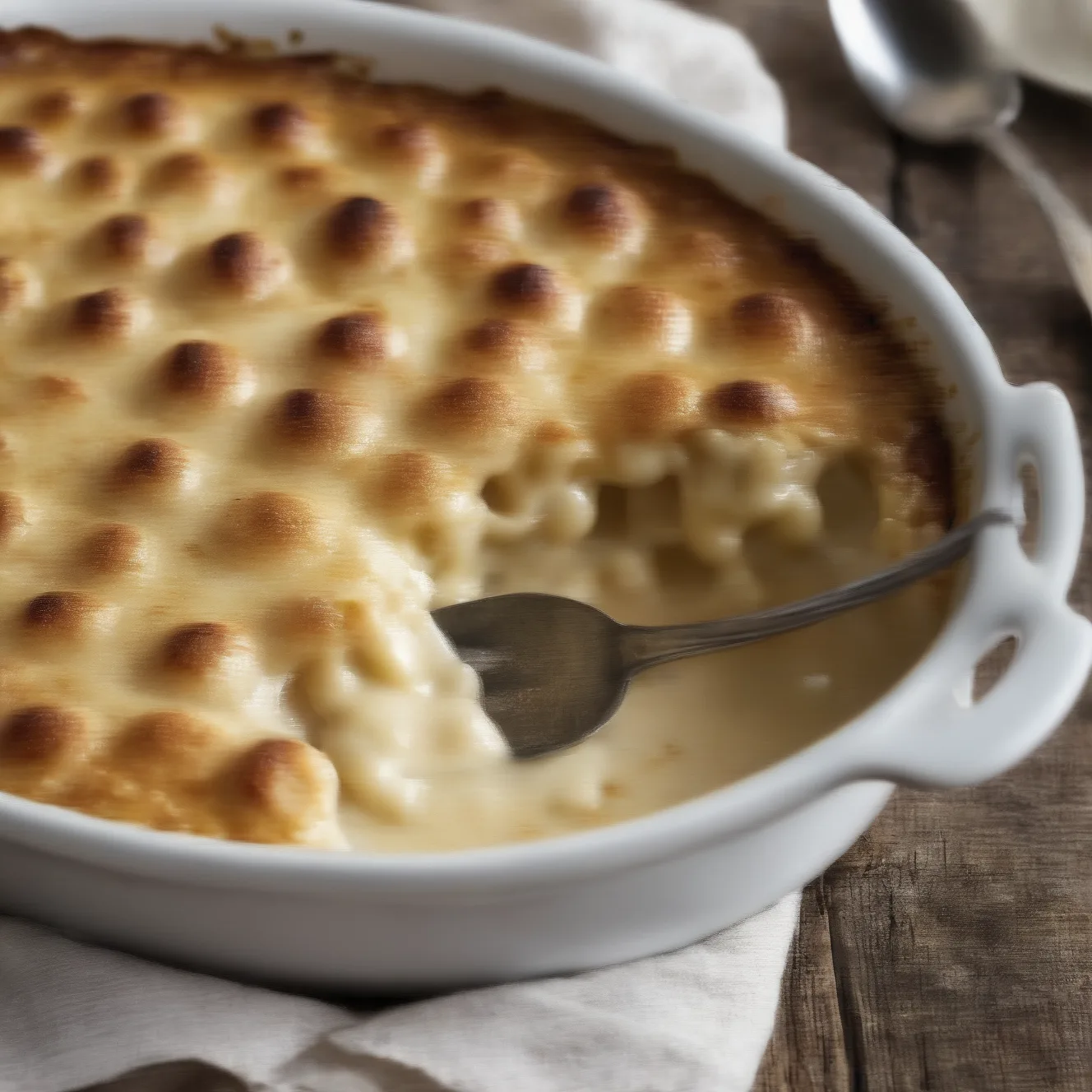
TL;DR: Colby cheese (not cheddar) shredded fresh from a block, half chicken broth and half whole milk in the roux sauce, 10-minute oven finish at 350°F for browned edges. That’s what makes CB’s mac and cheese taste different from every generic version.
Cracker Barrel’s mac and cheese shows up as a “country side” — a small bowl that arrives alongside meatloaf or chicken fried steak and quietly outperforms expectations. It’s mild, creamy, and savory in a way that reads as comfort food first and cheese dish second. People notice it specifically. They come home and try to make it, and the versions that miss do so in predictable ways: the wrong cheese, the wrong liquid, and no oven finish.
The right cheese is Colby. The right liquid is chicken broth plus whole milk. And the oven finish matters.
Why Colby, Not Cheddar
Most copycat mac and cheese recipes call for sharp cheddar or a cheddar blend because that’s what’s in the refrigerator. CB uses Colby, and the difference is not subtle.
Colby was invented in Colby, Wisconsin in 1885 by cheesemaker Joseph Steinwand. The distinction from cheddar is in how it’s made: cheddar undergoes “cheddaring,” where the cut curds are stacked and turned repeatedly to expel whey and develop lactic acid — that’s what gives sharp cheddar its bite and its relatively firm body. Colby’s curds are washed with water after cutting, removing lactose before pressing. This keeps the cheese softer and higher-moisture, with a milder, slightly sweet flavor and a lower melting point.
| Sharp Cheddar | Colby | |
|---|---|---|
| Flavor | Sharp, tangy, assertive | Mild, slightly sweet, creamy |
| Moisture content | Lower (firm, crumbly) | Higher (soft, yielding) |
| Melting behavior | Slower, can break or go grainy | Fast, smooth and cohesive |
| In a sauce | Sauce tastes cheesy-forward | Sauce tastes balanced and creamy |
Sharp cheddar in a mac and cheese sauce produces a sauce where you primarily taste cheese. Colby produces a sauce where everything tastes rounded — pasta, butter, broth, and cream all come through because the cheese isn’t overwhelming them.
This is by design. Mac and cheese as a side dish should complement the entrée, not compete with it. A plate of Cracker Barrel meatloaf with sharp-cheddar mac creates two assertive flavors fighting for attention. Colby mac sits alongside and makes both things better.
Buy the block, not the bag. Pre-shredded Colby is coated with cellulose powder or potato starch to prevent clumping. That coating prevents clean emulsification — instead of a smooth sauce, you get a grainy or stringy result. Buy an 8-ounce block and shred it yourself on the large holes of a box grater immediately before use.
The Chicken Broth Secret
Standard mac and cheese sauces use all milk or all cream. Cracker Barrel uses chicken broth for roughly half the liquid, and it makes a real difference.
Broth adds umami — a savory depth that comes from glutamates. You don’t taste “chicken” in the finished dish. The broth dissolves into the sauce and becomes part of the background, but that background is richer and more savory than a plain milk sauce. An all-milk mac and cheese tastes flat by comparison once you’ve tried the broth version.
Low-sodium broth is the right call: the Colby already contributes salt, and you want control over the final seasoning. If you use standard broth, taste before adding any additional salt at the end.
Adding the broth before the milk is the right sequence too. The roux seizes dramatically when liquid hits it — that’s normal. Adding the broth first to loosen the roux (while whisking hard), then the milk to thin the sauce, is more controlled than pouring both in at once and trying to whisk out lumps from a much-larger volume.
The Stovetop-to-Oven Method
CB’s mac and cheese is not baked mac and cheese. It’s not stovetop mac and cheese either. It’s a short sequence of both.
The stovetop phase builds the sauce correctly: roux → broth and milk → cheese → pasta. This order ensures the sauce is smooth before the pasta goes in. If you add pasta to a broken or lumpy sauce, there’s no recovering it.
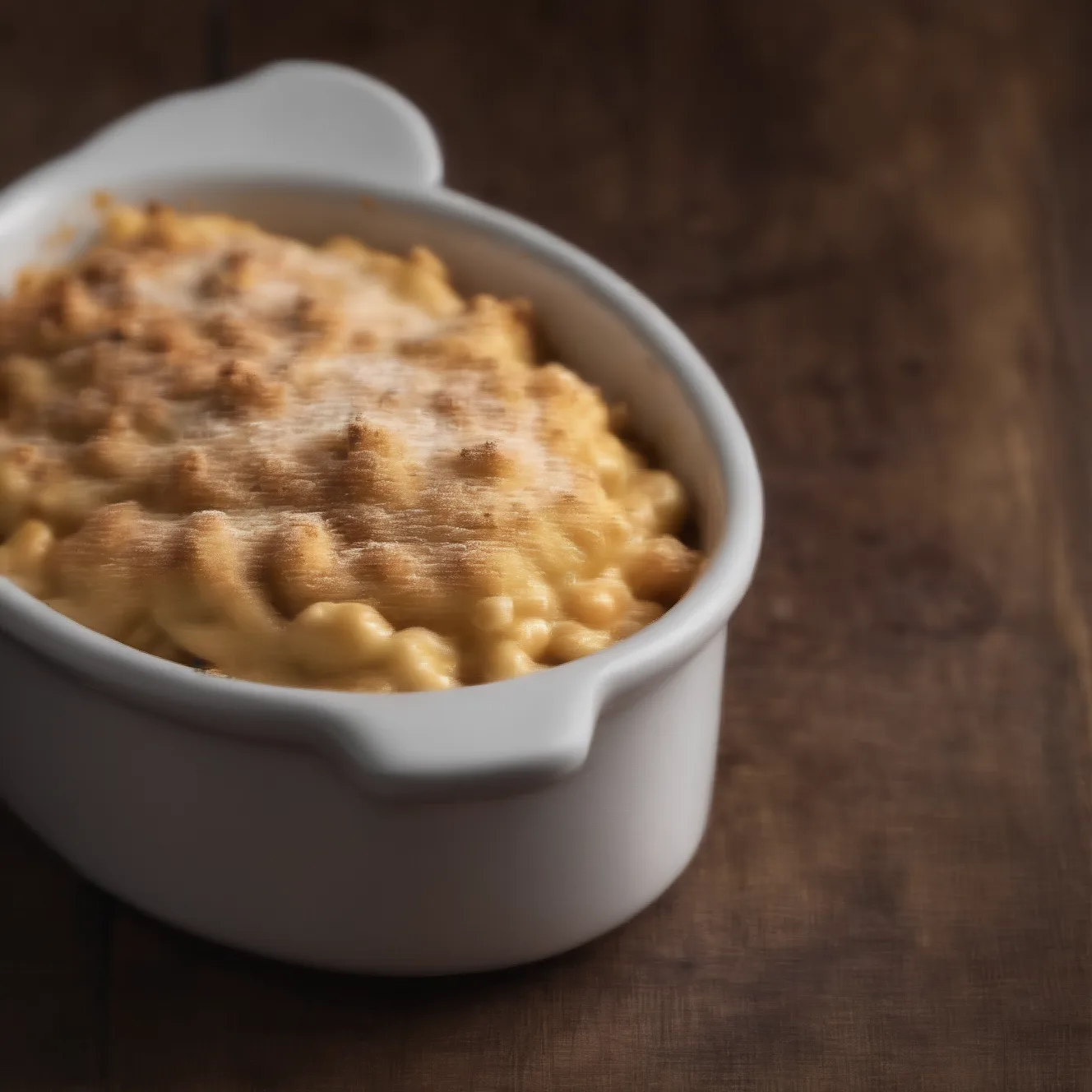
The oven phase (10 minutes at 350°F) does something the stovetop can’t: it creates browned edges. The perimeter of the baking dish reaches a higher temperature than the center, and the cheese and starch there brown slightly — developing a richer, nuttier flavor than the creamy interior. If you’ve had CB’s mac and noticed the edges tasted slightly different (more savory, faintly caramelized) than the center, that’s the 10-minute oven pass doing that.
A shallow baking dish is specifically the right vessel because it maximizes the edge-to-center ratio. A deep casserole dish produces less browned perimeter relative to the total volume.
Getting the Roux Right
The roux thickens the sauce and gives it body. Two minutes of cooking at medium heat accomplishes two things: the flour’s starch granules begin to absorb the butter (priming them to absorb and thicken liquid), and the raw flour taste cooks off. Under-cooked roux produces a sauce that tastes starchy and slightly chalky — that faint paste note in mediocre mac and cheese is usually a roux that wasn’t cooked long enough.
When the roux is properly cooked, it will be smooth, pale golden, and smell faintly nutty — like buttered toast just before it browns. That’s the right moment to add the broth.
Variations
Four-cheese upgrade: Replace 1 cup of Colby with a mix of ½ cup Gruyère and ½ cup Fontina. Both melt smoothly and add complexity — Gruyère adds nuttiness, Fontina adds a mild buttery richness. Keep 1 cup of Colby as the base to maintain the mild, balanced character.
Jalapeño bacon version: Render 4 strips of bacon until crispy. Crumble and set aside. Sauté 1 finely diced jalapeño (seeds removed for mild, seeds in for hot) in the rendered fat until soft, then build the roux in the same pan with the fat. Fold the bacon crumbles in with the pasta before baking. Not authentically CB but built on the same technique.
Breadcrumb crust: Toss ½ cup panko with 1 tablespoon melted butter and a pinch of salt. Scatter over the top before baking. Increase oven temperature to 375°F and bake 12–15 minutes until the breadcrumbs are golden. This moves the dish from CB-style into traditional baked mac territory — different, but better for reheating because the crust stays textured.
Leftovers: Add a splash of milk and stir before reheating over low heat or in the microwave at 50% power in 30-second intervals (stir between each). The sauce that looks seized at refrigerator temperature loosens up with heat and the added milk. Full microwave power will make the cheese rubbery.
Pairings
At Cracker Barrel, mac and cheese arrives in a small round crock with browned edges visible at the top. For a full CB-style spread at home:
- Cracker Barrel chicken fried steak — mac and cheese in place of or alongside the white gravy
- Cracker Barrel meatloaf — the creaminess cuts through the meatloaf’s dense, savory weight
- Cracker Barrel chicken and dumplings — a full Southern spread where the mac rounds out the broth-based entrée
- Cracker Barrel hashbrown casserole — for a breakfast or brunch table; two golden-edged casseroles, both better than anything you’d heat from a box
Cost
A single Cracker Barrel side order of mac and cheese runs around $4–5. Made at home, this 8-serving batch costs roughly $6–8 in ingredients (an 8-oz Colby block, a box of elbow macaroni, broth, milk, and pantry staples) — under $1 per serving. The main variable is the Colby block; it’s stocked in most grocery stores near the standard cheddar blocks.