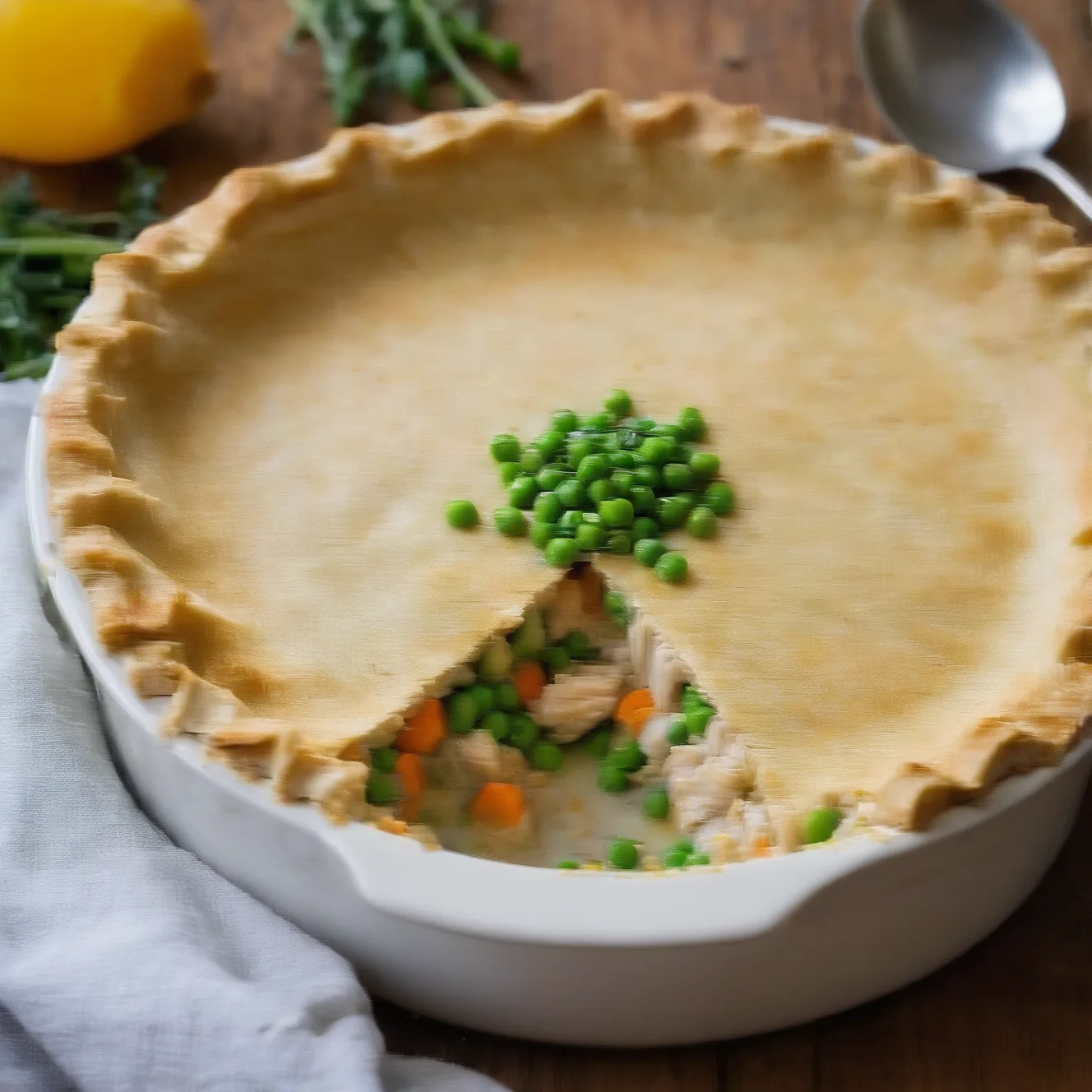
Cracker Barrel’s chicken pot pie has been on the menu for decades, and it holds up for a specific reason: the filling doesn’t taste like soup under a crust. It’s a thick, substantial cream sauce with real depth — the kind of filling that holds its shape when you cut into it and doesn’t collapse into a puddle on the plate.
The two details that most home versions miss are on the spice shelf. Herbes de Provence — not just thyme and sage — gives the filling a warmth that’s recognizably different from any other pot pie you’ve had. Better Than Bouillon Roasted Chicken Base gives the sauce the concentrated, slightly sweet chicken depth you’d otherwise only get from a long stock reduction. Both are easy to find and cheap; neither is exotic. They’re just not in most recipe databases because most databases weren’t reverse-engineering this dish specifically.
The format matters too. This is a double-crust pastry pie — bottom crust and top crust, sealed, vented, egg-washed. Not biscuit-topped, not cracker-topped, not single-crust. The biscuits Cracker Barrel is famous for come on the side. The pie itself is old-fashioned deep-dish, which means a few technique rules apply that a single-crust or biscuit-top version doesn’t need.
The Double Crust: What Goes Wrong and Why
Soggy bottom: The enemy. Two defenses: (1) let the filling cool 10 minutes before spooning it into the raw crust — hot filling melts the butter in the pastry before the oven can set it; (2) brush the raw bottom crust with egg white before filling. The egg white cooks in the oven’s initial heat and forms a protein barrier that resists moisture. Skip either step and the bottom crust will be dense and wet.
Gummy top: Happens when the crust isn’t vented. The filling produces substantial steam at 450°F. Without cuts in the top crust, steam has nowhere to go and the pastry softens from the inside. Cut 5–6 slits with confidence — bigger is better for venting.
Shrinking edges: Caused by stretching the dough when fitting it to the dish. Press gently and let the dough relax into the dish instead of pulling it. If it tears, pinch it back together — it’s forgiving. Stretching means it contracts in the oven and the seal opens.
The Filling Formula
The filling is a milk-and-roux cream sauce, not a broth-based sauce and not heavy cream. The ratio is 2 cups whole milk to ¾ cup chicken broth, thickened with a ¼ cup butter + ⅓ cup flour roux. This gives you a filling that’s rich enough to coat the chicken but not so heavy it overwhelms the vegetables or the pastry. Heavy cream versions taste good but overpower the Herbes de Provence; straight broth versions are too thin and often separate in the oven.
The vegetables need to be sautéed first. Raw onion, celery, and carrot release water when they hit the oven’s heat, diluting the sauce and making the bottom crust wet. Five minutes in butter before the roux goes in is enough to draw out most of that excess moisture.
The potatoes need a brief parboil — 8 to 10 minutes until just fork-tender — before going into the filling. They finish cooking in the oven, but if they go in raw they won’t fully cook through in 30 minutes at 450°F and you’ll have crunchy chunks in an otherwise tender filling.
High Heat Is Correct
Most home baking recipes suggest 375°F for pies. Cracker Barrel’s double-crust pot pie bakes at 450°F, and that’s right. The high initial heat sets the bottom crust quickly (combined with the egg-white barrier, this is what prevents sogginess), drives steam through the vents efficiently, and produces the deep golden-brown top crust color in 25–30 minutes rather than 45–50. At lower temperatures, the crust gets pale and the filling is more likely to separate.
Watch the crust edges — they brown faster than the center. Tent them with strips of foil after 15 minutes if they’re getting too dark while the center is still pale.
Serving and the Rest Period
Ten minutes of rest is not optional. The filling at 450°F is essentially boiling when it comes out of the oven. If you cut it immediately, the liquid filling floods the plate before it has time to tighten up. At 10 minutes it’s still piping hot but holds its shape through a clean cut.
At the restaurant, a pot pie serves one as the full entree with a side biscuit. At home, this recipe serves six — and the copycat Cracker Barrel Biscuits or Corn Muffins are the right side. If you want a full Cracker Barrel spread, the Hashbrown Casserole is the other classic — though the pot pie is a standalone meal. See the full collection at the Cracker Barrel copycat recipes hub.
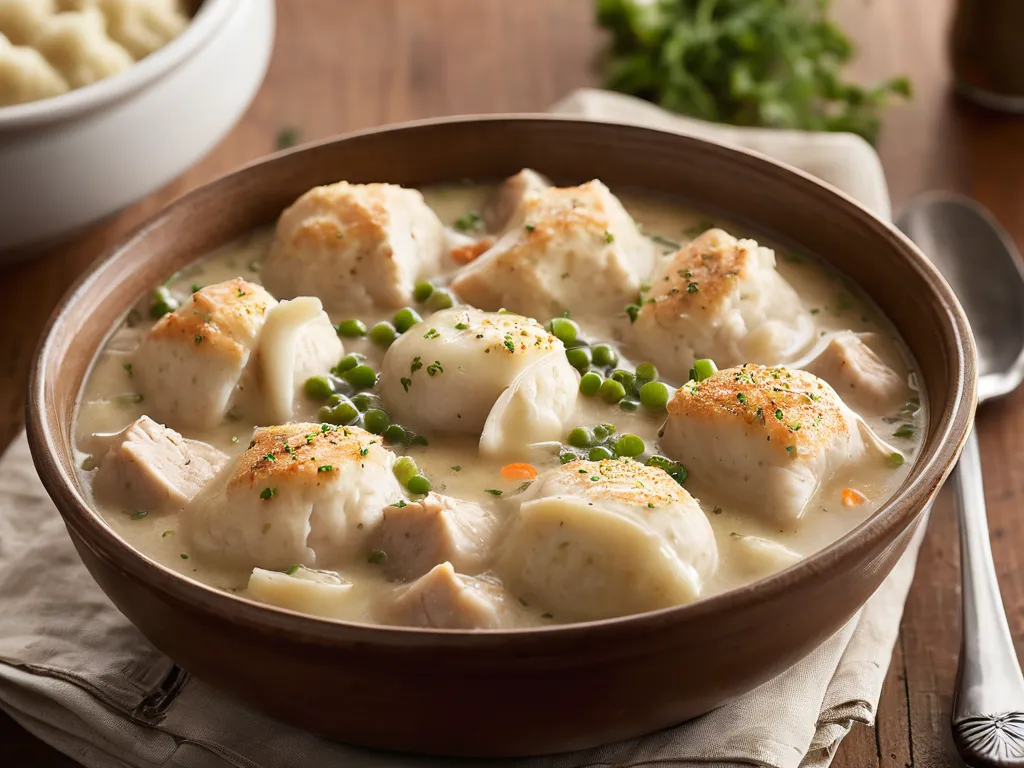
The pot pie is a very different dish from the Chicken and Dumplings — same restaurant, same chicken, opposite direction. The dumplings are all broth, no cream, with flat pasta-like dough cooked directly in the stock. The pot pie is all cream sauce and pastry crust, no broth. Both are worth having in rotation; they don’t compete. If you want a comparison from outside the Cracker Barrel family, the KFC Chicken Pot Pie is lighter and individual-serving format — good for a weeknight, but not what you reach for when you want the full deep-dish experience.