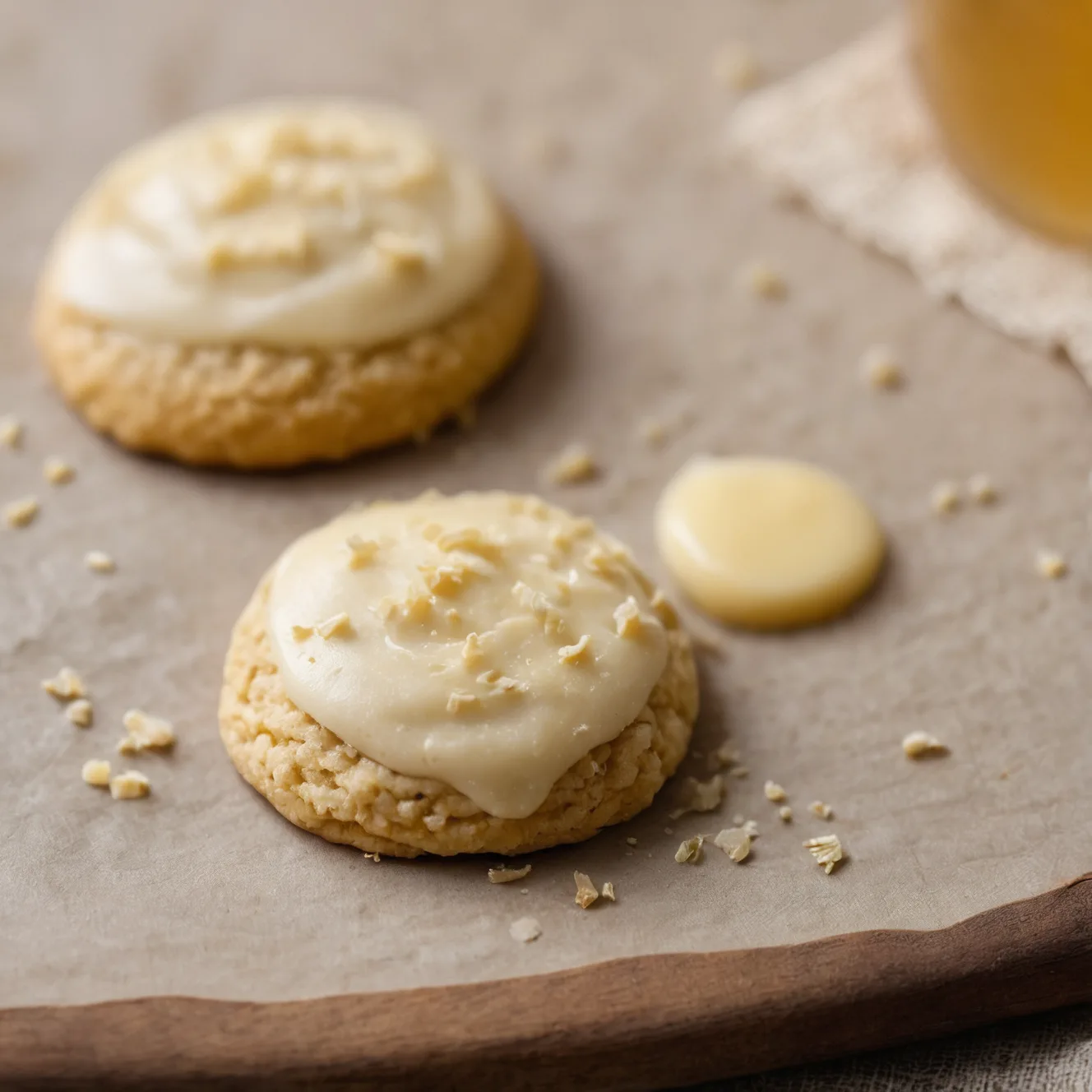
Crumbl Cornbread Cookie
TL;DR: Crumbl’s cornbread cookie is a thick oversized cookie with fine yellow cornmeal in the dough and honey in both the dough and frosting — the result tastes like a cornbread-honey butter mashup in cookie form. Cream the butter and sugars for a full 4 minutes (this is the step most recipes rush and why most home versions come out dense). Top generously with honey buttercream piped into a tall swirl, then drizzle with honey. Serve at room temperature.
Crumbl launched the cornbread cookie as a rotating specialty and it became one of those flavors people actively track the weekly menu waiting for it to come back. The concept is simple — take everything that makes cornbread appealing (the warmth of yellow cornmeal, the honey glaze, the buttery richness) and move it into a cookie — but executing it at home requires paying attention to a few details the recipe roundups usually skip.
The Cornmeal Question
The single most important ingredient decision in this recipe is which cornmeal to use — and most copycat recipes don’t explain why it matters.
Fine-grind yellow cornmeal is what you want. This is the standard grocery-store cornmeal in the blue-and-yellow Quaker box, Bob’s Red Mill Fine Ground Cornmeal, or any bag labeled “fine.” It has a texture between flour and coarse sand — you can feel the grittiness between your fingers but it dissolves into a batter.
Medium-grind cornmeal produces a noticeably grittier cookie — not unpleasant if you like texture, but not the smooth-with-a-hint-of-grain feel that Crumbl achieves.
Coarse-grind (polenta-style) doesn’t fully absorb the butter and moisture in the dough and leaves visible granules that feel gritty in an unpleasant way. Skip it.
White cornmeal is a swap, but yellow cornmeal’s slightly stronger flavor and golden color are more authentic here. The warm yellow hue also looks more like cornbread.
Why the Creaming Step Matters More Here
Most sugar cookie recipes say “cream butter and sugar until light and fluffy” without explaining what that actually means or why it matters. For a cookie that includes cornmeal — which doesn’t contribute gluten structure the way flour does — the creaming step is the only way you build the scaffolding that keeps the cookies from coming out dense.
Four minutes on medium-high speed. Use a timer. By the end, the mixture should be nearly white, almost doubled in volume, and light enough that it looks almost like whipped cream before it’s fully set. That trapped air creates micro-pockets throughout the dough that expand in the oven, giving the cornmeal cookie lift and an open crumb instead of a brick.
Skip this step or rush it, and the cookies will be edible but noticeably denser — more like a thick cornmeal bar than a light, soft cookie.
Honey in Two Places
Honey goes into both the cookie dough and the frosting, and it serves different purposes in each.
In the dough, honey adds a faint floral warmth and slightly extends shelf life — honey is hygroscopic (it pulls moisture from the air), which keeps the cookie soft for an extra day or two compared to an all-sugar version. The flavor contribution is subtle in the baked cookie; you’re not biting into a honey bomb.
In the frosting, honey is the dominant flavor you taste first. The ratio matters: too little and it’s just a sweet buttercream; too much and it becomes cloying and sticky. Three tablespoons in a full batch (about 1 teaspoon per cookie’s worth of frosting) is the sweet spot — you taste it clearly without it overwhelming the butter and vanilla.
Use a mild honey: clover, wildflower, or any generic store-brand. Buckwheat, manuka, or strongly flavored raw honeys compete with the cornmeal instead of complementing it.
The Drizzle
Crumbl finishes the cornbread cookie with a light honey drizzle over the frosting — about 1/2 teaspoon per cookie, enough to glisten but not pool. This is mostly visual (the honey flavor is already in the frosting) but it signals to anyone eating the cookie what the flavor is before they take a bite. Don’t skip it if you’re making these for guests.
Cost Comparison
| Crumbl | Homemade | |
|---|---|---|
| Per cookie | ~$4.75 | ~$0.90 |
| 4-cookie box | ~$15 | ~$3.60 |
| 8 cookies | not sold as one box | ~$7.20 |
The main ingredient costs: butter for the cookie and frosting ($3–4 for 2 sticks each), honey ($1.50 for a small bottle that covers both the dough and frosting with some left over), and fine cornmeal ($1.50–2 for a bag that makes several batches). Everything else is standard pantry.
Storage
Frosted cookies keep well at room temperature for up to 3 days, covered loosely with plastic wrap or in a single layer in an airtight container. Unlike the Crumbl Pink Sugar Cookie, the cornbread cookie does not benefit from refrigeration — the cold stiffens the honey buttercream and firms the cookie base in a way that makes both less pleasant. If your kitchen is hot (above 80°F), a brief 15-minute refrigerator chill before serving is fine, but bring them to room temperature before eating.
Unfrosted baked cookies keep at room temperature for 4–5 days. Freeze unfrosted for up to 3 months; thaw at room temperature for 1 hour and frost before serving.