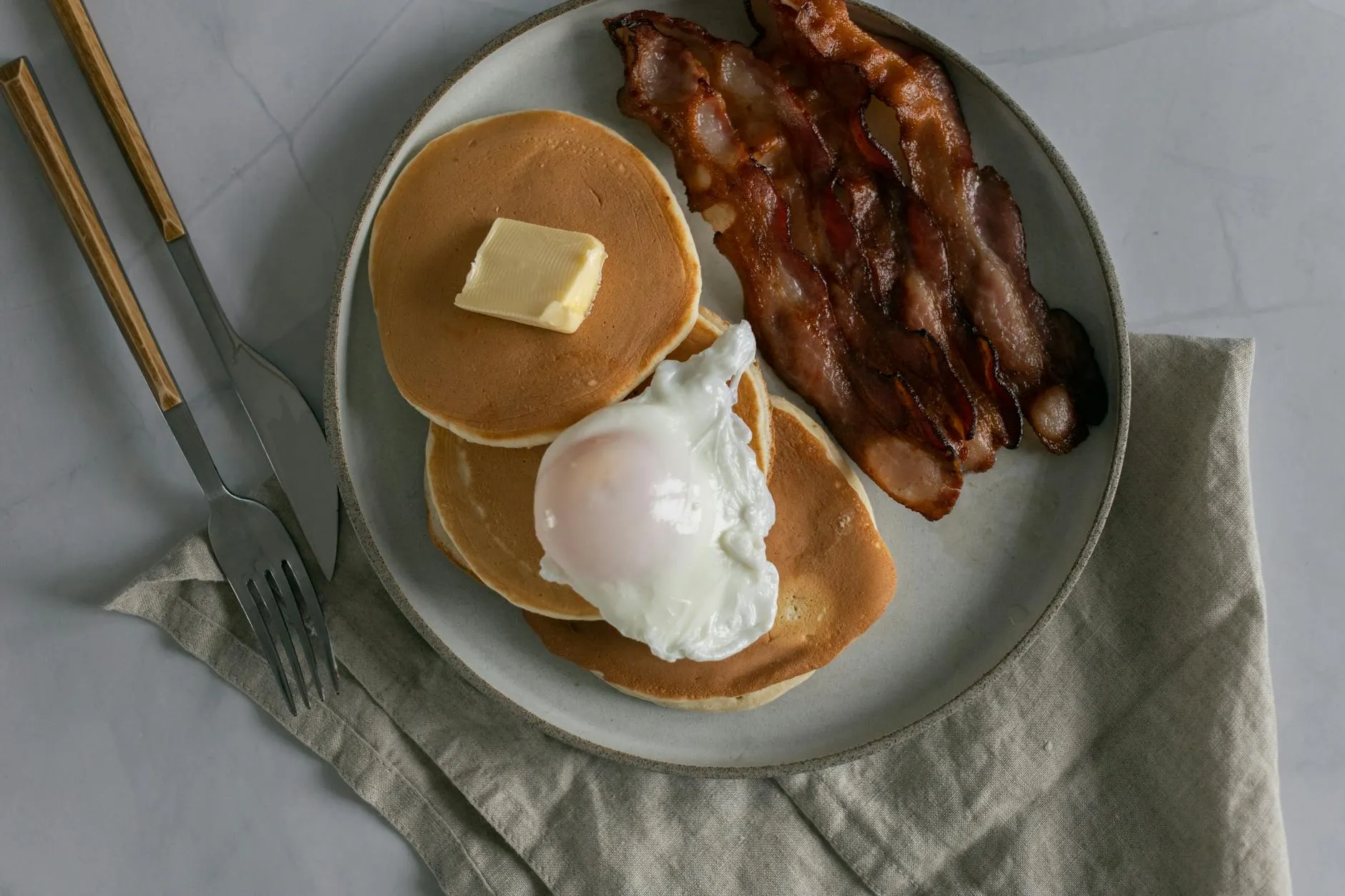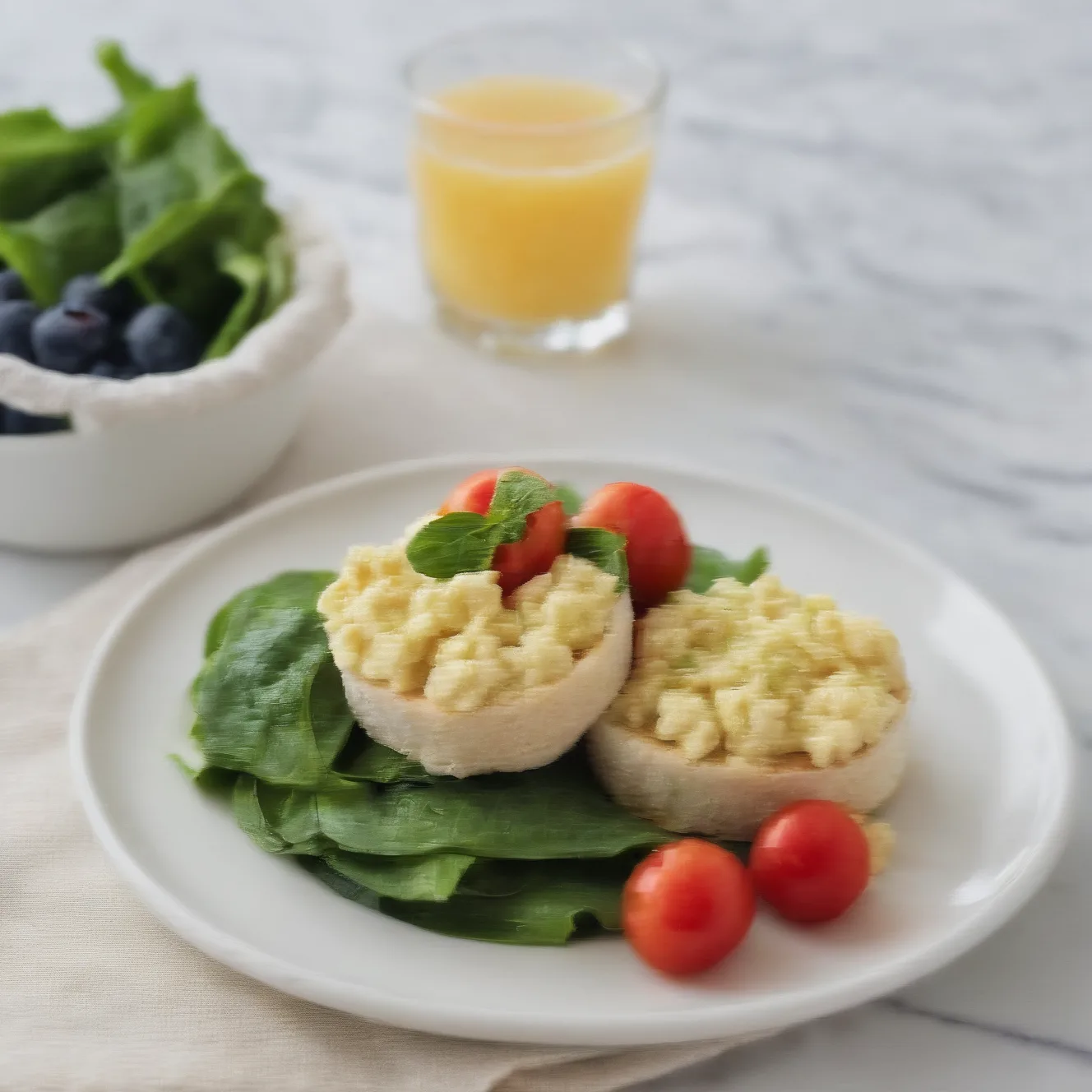
Denny’s Fit Slam was built around one idea: keep the structure of a classic American diner breakfast — eggs, a protein strip, toast, and fruit — while replacing the four highest-calorie components with leaner ones. Whole eggs become egg whites. Pork bacon becomes turkey bacon. Pancakes become an English muffin. Hash browns become fresh fruit. The result cuts roughly 550 calories from the Grand Slam without changing what the breakfast fundamentally is.
At home, the recipe is faster and better than the restaurant version in two ways. First, you control the turkey bacon quality — most diners use generic brands that steam instead of crisping; a decent brand like Applegate makes the difference between rubbery strips and something that actually tastes like breakfast. Second, you can cut nearly 250mg of sodium without sacrificing anything.
TL;DR
Four swaps, one plating: egg whites with wilted spinach and tomatoes, crisp turkey bacon, a toasted English muffin, fresh fruit on the side. Takes 20 minutes start to finish and costs under $3.
The Four Swaps That Make It “Fit”
The Fit Slam doesn’t reinvent breakfast — it precisely substitutes each component of the Grand Slam with a lower-calorie version:
Whole eggs → Egg whites. Two whole eggs bring about 140 calories, 10g fat, and 374mg cholesterol. Two egg whites bring 34 calories, 0g fat, and 0mg cholesterol. The whites also contribute 7g of pure protein. The trade-off is texture and flavor: yolks are creamy and rich; whites are bland and rubbery if cooked wrong. The fix is technique, not ingredients — season aggressively, cook low and slow, and pull early.
Pork bacon → Turkey bacon. Two Applewood-smoked pork bacon strips run about 80 calories and 6g fat. Turkey bacon is 50–60 calories and 2–3g fat. The sodium difference at home depends heavily on brand — generic turkey bacon can actually be higher in sodium than pork bacon, which is why brand choice matters.
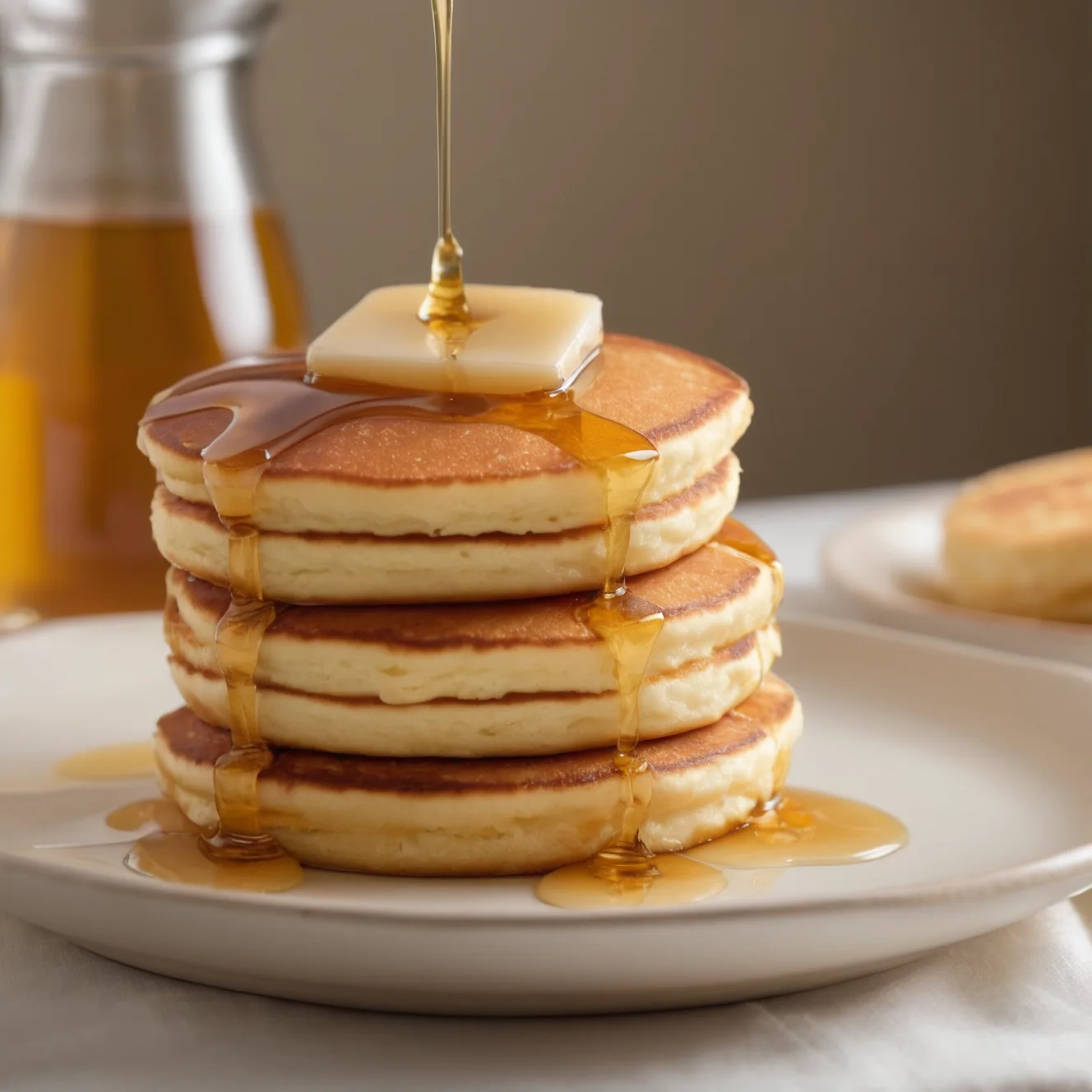
Buttermilk pancakes → English muffin. Two Denny’s-style buttermilk pancakes add roughly 300 calories before butter and syrup. One English muffin is 120–140 calories. The muffin is also denser and more filling per calorie because it doesn’t absorb syrup and stay fluffy — it’s bread, and bread sits heavier.
Hash browns → Fresh fruit. A side of hash browns at a diner runs 140–180 calories and contributes almost nothing nutritionally. A half-cup of mixed fruit is 40–50 calories with 2–4g fiber and actual vitamins.
How to Cook Egg Whites That Aren’t Rubbery
Egg whites go rubbery for two reasons: high heat and nothing to slow the protein coagulation. Here’s how to avoid both:
Season before cooking. Plain egg whites taste like nothing — sometimes like slightly sulfurous nothing. Salt, pepper, and a pinch of garlic powder are the minimum. Add them to the raw whites and whisk before cooking. Seasoning after the fact doesn’t penetrate.
Add water, not milk. One teaspoon of water per 2 egg whites creates steam pockets during cooking, which keeps the texture soft and slightly pillowy. Milk adds fat and proteins that belong in a whole-egg scramble; they don’t help egg whites and can actually make them tougher.
Cook the vegetables first. Spinach releases water. If you add it directly to the egg whites, it makes them wet and steamed rather than scrambled. Wilt the spinach and halved tomatoes in the pan for 30 seconds before the whites go in — they release their liquid into the pan and slightly dry out, then the egg whites go on top of textured vegetables rather than a puddle.
Low heat, gentle stirring. Medium-low heat, a silicone spatula, and patience. The whites take about 2 minutes from liquid to set. Stir them slowly, folding from edges to center. Pull the pan off the heat when they still look 10% underdone — the residual heat in the pan finishes them.
Turkey Bacon: The Technique Most People Get Wrong
Turkey bacon has a much lower fat content than pork bacon, which means it behaves differently in the pan. Pork bacon renders its own fat and essentially fries in that fat. Turkey bacon has no fat to render — it must be cooked through direct pan contact alone.
The mistake most home cooks make is starting with a hot pan and cooking on high. The outside chars before the inside cooks, and you end up with dark, chewy strips.
The correct method: cold pan, medium heat, no oil. Place the strips in a cold non-stick skillet, set the burner to medium, and let them cook as the pan comes to temperature. 3–4 minutes per side. The strips will start to brown and the edges will crisp. When they’re done, they should be firm when pressed — not bouncy and pliable.
Brand matters more than any technique. Applegate Naturals Turkey Bacon has a clean ingredient list (turkey, water, salt, celery powder) and crisps properly. Most store-brand turkey bacon has sodium phosphate, sugar, and artificial smoke flavor added — the sugar burns before the bacon crisps.
English Muffin: The Fork-Split Method
A knife gives you a clean cut but destroys the interior texture — those nooks and crannies that Thomas’ always advertises are the point. They trap butter, hold the egg whites, and give the muffin a toasted-interior crunch instead of soft bread.
Fork-split: insert a fork into the side of the muffin and work it all the way around the perimeter, then pull the two halves apart. You get a rough, irregular interior with maximum surface area. Toast that interior face-down in the toaster slot (or face-up under a broiler) until golden.
What Fruit to Pack
Denny’s uses whatever seasonal mix is cheapest. At home, the actual seasonal pick makes a real difference.
Summer (now): Sliced strawberries, blueberries, and pineapple chunks. Blueberries add 3g fiber per ½ cup. Don’t add banana to a plate you’re serving — it oxidizes fast.
Fall: Apple slices (Honeycrisp or Fuji, tossed in a little lemon juice), red grapes, a few blackberries.
Winter: Mandarin segments, kiwi slices, pomegranate arils. Citrus holds color and texture better than soft fruit in colder months.
Year-round backup: A good mixed fruit cup from the produce section (Dole or store brand) works when you don’t have fresh. Drain the liquid before plating or it bleeds onto the rest of the dish.
Nutrition: Restaurant vs. Home
| Denny’s Fit Slam | Home Version | |
|---|---|---|
| Calories | ~450 | ~300 |
| Protein | 27g | 27g |
| Fat | 12g | 9g |
| Sodium | 860mg | ~620mg |
| Carbs | 59g | 28g |
The carb difference is almost entirely the fruit portion size — Denny’s serves a generous fruit cup; this recipe uses ½ cup. The protein is identical because the egg whites and turkey bacon don’t change.
The home version’s lower sodium comes from two places: lower-sodium turkey bacon (Applegate: 230mg vs. generic: 400mg+) and skipping any added salt to the English muffin.
Cost Comparison
| Item | Cost |
|---|---|
| 4 egg whites (from 4 eggs or carton) | $0.60 |
| 2 turkey bacon strips | $0.80 |
| 1 English muffin | $0.35 |
| ½ cup fresh mixed fruit | $0.80 |
| Olive oil, salt, seasoning | $0.15 |
| Total | ~$2.70 |
Denny’s Fit Slam runs $7.99–$10.99 depending on location and region. The home version is about $2.70 and takes 20 minutes.
Related Denny’s Copycat Recipes
If you’re working through Denny’s full breakfast menu at home, the Grand Slam is the place to start — it explains the full component breakdown and why Denny’s improved their pancakes in 2016.
- Denny’s Grand Slam — the original 4-component breakfast, with the buttermilk pancake upgrade story
- Denny’s Fabulous French Toast — thick Texas toast dipped in a batter with flour (the single technique that prevents sogginess)
- Denny’s Moons Over My Hammy — the scrambled-egg-and-ham sandwich on sourdough, with Swiss
- Denny’s Country Fried Steak — cube steak, white pepper gravy, the full diner-style technique