Pin It

Copycat Denny's Slamburger (Hash Browns Inside Is the Whole Point)

Copycat Denny's Slamburger (Hash Browns Inside Is the Whole Point)
Jump to Recipe
Prep 15 min Cook 25 min Serves 2
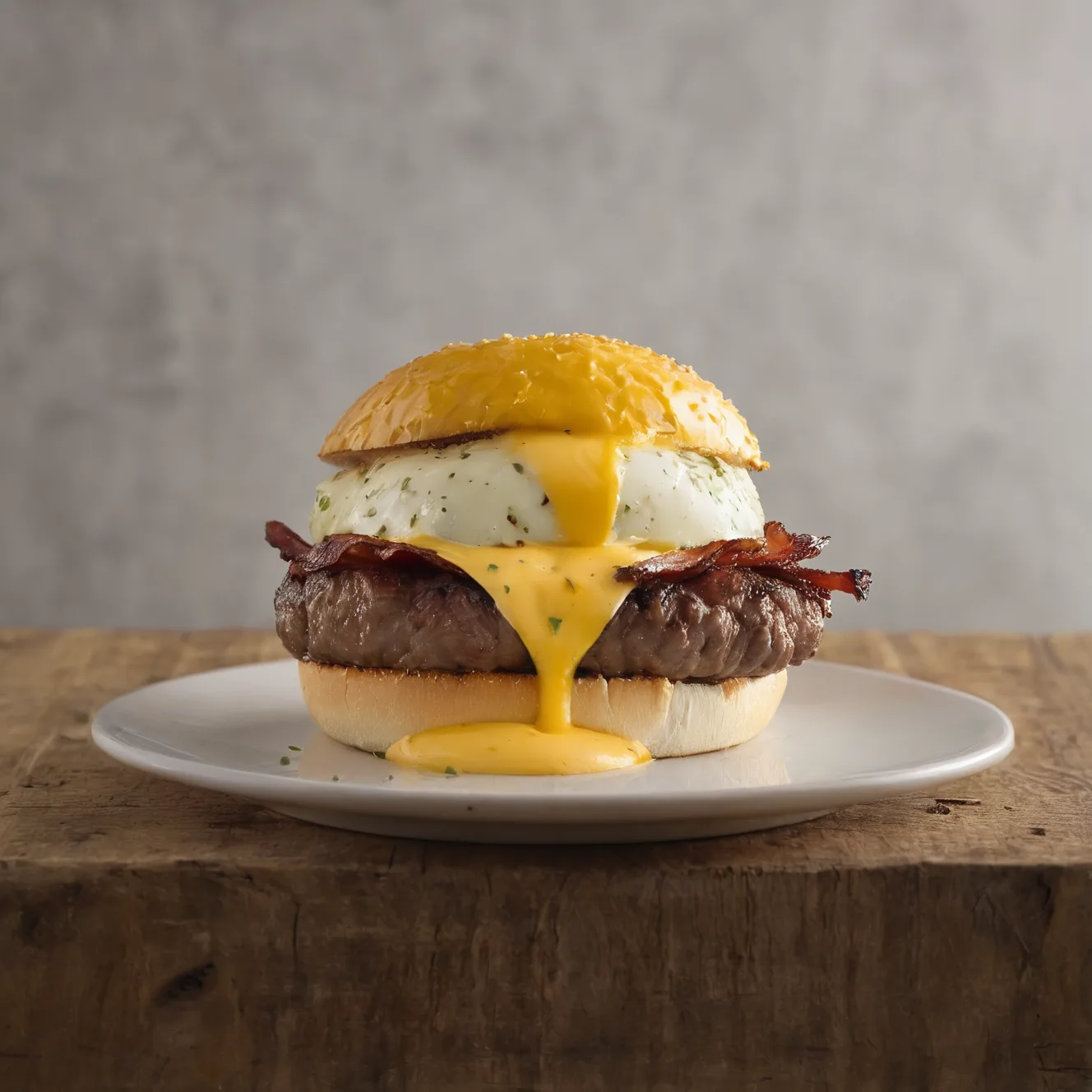
Quick answer: Denny's Slamburger is a griddled beef burger — a seasoned quarter-pound patty — stacked with crispy hash browns, two strips of Applewood-smoked bacon, an over-easy egg with a runny yolk (it acts as extra sauce), and a Pepper Jack queso drizzle on a toasted brioche bun. Restaurant price: approximately $11–14 (varies by market and franchise). Calories: approximately 850 for the sandwich (a roughly 12-ounce burger). The ingredient most home cooks get wrong: the hash browns inside the burger have to be fully crispy — a deep-golden disc that holds its shape — before assembly. Undercooked hash browns turn into wet potato mush under the egg. Two Slamburgers at home cost about $14.

Copycat Denny's Slamburger (Hash Browns Inside Is the Whole Point)

Denny's Slamburger puts crispy hash browns and an over-easy egg on a griddled beef burger topped with Applewood-smoked bacon and Pepper Jack queso. Here's how to keep the hash browns from going soggy — the mistake most copycats make. About 850 calories, ~$11–14 at the restaurant.

Medium Prep: 15 min Cook: 25 min Total: 40 min2 servings ~$4.50/serving
Prep15 min
Cook25 min
Total40 min
Servings
2
At home~$4.50/serving
vs
Restaurant~$20.25/serving
You save ~78%

Ingredients

Instructions

💡
Pro tip: This recipe tastes even better the next day. The flavors need time to meld together in the fridge.
❄️
Storage: Keeps in an airtight container in the fridge for up to 2 weeks. Freezer-friendly for up to 3 months.
~350-550 cal/serving · Rich & Indulgent🔥

The Story Behind the Recipe

Copycat Denny’s Slamburger (Hash Browns Inside Is the Whole Point)

Prep time: 15 min
Cook time: 25 min
Servings: 2

The Denny’s Slamburger is a griddled beef burger — a seasoned quarter-pound patty — stacked with crispy hash browns, two strips of Applewood-smoked bacon, an over-easy fried egg, and a Pepper Jack queso drizzle on a toasted brioche bun. Restaurant price: approximately $11–14 depending on market. The whole sandwich runs about 850 calories. Two at home cost about $14.

It is the kind of 24-hour diner burger that should not work on paper — a full breakfast component (hash browns), another full breakfast component (egg), bacon, a cheese sauce, plus a beef patty, all compressed between a bun. Denny’s has been serving it because the combination does work: the crispy potato absorbs the rendered beef fat and runny egg yolk; the Pepper Jack queso ties the whole stack together with a low-heat warmth.

The One Thing Most Copycats Get Wrong

The hash browns. Every copycat recipe acknowledges them as a topping, but most treat them like an afterthought — loose shreds dropped on from a bag or a frozen patty that gets barely heated through. The result is wet, soft potato mush inside the burger rather than a distinct crispy disc.

The standard has to be higher: a hash brown that holds its shape when you pick it up, has a deep golden crust on both sides, and won’t collapse under the egg. The technique is simple but requires discipline — squeeze every drop of moisture from the shredded potato before it touches the pan, press the shreds firmly into a disc shape, and don’t move them for a full 4–5 minutes per side. Any motion prevents the crust from forming. Slightly overdone on the outside is intentional here; the egg yolk and patty juices will soften the hash brown further after assembly, and you need to start from a point of maximum crispiness.

Why the Egg Yolk Is a Sauce

The Slamburger is designed to be eaten with a runny yolk. The over-easy egg functions as a third sauce alongside the Pepper Jack queso — when the yolk breaks as you eat, it drips down through the hash browns and bacon and combines with the queso into something richer than either element alone. Cook the egg over-hard and you lose that entirely; the burger becomes noticeably drier and the Pepper Jack queso has to do all the work.

If a fully runny yolk feels like too much, over-medium is a reasonable middle ground — the yolk is thick, barely moves, but still has some give and contributes some richness. But the design of the burger was built around the liquid yolk.

Pepper Jack Queso vs. a Cheese Slice

Standard diner burgers get a slice of American melted over the patty. The Slamburger uses a poured queso instead, which changes the eating experience: the sauce flows into and around the other components rather than staying fixed in one layer.

Pepper Jack cheese alone melts poorly — it tends to break into greasy, grainy shreds rather than a smooth sauce. One slice of American cheese added to the melting process acts as an emulsifier. A small amount of processed cheese stabilizes the melt and gives you a pourable consistency without making the sauce taste like processed cheese. The Pepper Jack heat level is mild (400–700 Scoville from the diced pepper inclusions) — enough to register as warmth, not spice.

Diner Timing: Everything Hot at Once

The Slamburger has more components than a standard burger, so timing them to arrive hot simultaneously is the actual challenge. The correct sequence:

  1. Queso first — it holds on the lowest burner setting while everything else cooks
  2. Hash browns second — can be kept warm covered with foil on a plate
  3. Bacon — in the same pan; renders fat that flavors the patties
  4. Patties — press-sear in the bacon fat
  5. Eggs last — 2½ minutes; go straight into the assembled burger

Toast the buns while the patties cook. Build the burger the moment the eggs finish. The Slamburger does not hold — the queso sets, the yolk congeals, and the hash browns continue to soften from the moment the burger is assembled.

Denny’s Burger Lineup at a Glance
BurgerWhat Sets It ApartApprox. Cals
SlamburgerCrispy hash browns + over-easy egg + queso inside~850
Double SlamburgerTwo patties, same stack~1,200
Bacon Avocado CheeseburgerAvocado, Swiss, bacon — no egg or hash browns~900
Bourbon Bacon BurgerBourbon-glazed bacon, BBQ sauce~850
Tips
  • Squeeze the potato hard. This is the single most important step in the entire recipe. Even frozen hash browns carry residual moisture that prevents crisping. A kitchen towel wrung tight removes enough water in 30 seconds to make the difference between a crispy disc and a steaming potato mat.

  • Make the hash brown disc slightly larger than the bun. The disc shrinks 15–20% as it cooks. Start with a disc about an inch wider than the bun diameter; it will finish close to the right size. A too-small hash brown disappears inside the burger and loses its structural role in the stack.

  • Cook the patty in the bacon fat. Leave 1 tablespoon of rendered bacon fat in the pan and cook the patty directly in it. The fat adds smokiness and flavor with no extra work. This is standard diner technique and the reason a diner-style burger at home tastes different from a backyard-grill version.

  • Only press the patty at the beginning. Press the ball flat immediately when it hits the pan — the goal is maximum crust surface area. After the flip, leave it alone. Pressing after the flip forces the juices out and produces a drier, tougher patty.

  • Build and eat. The Slamburger is not a burger that improves with 5 minutes of rest. Build when every component is hot and eat immediately.

Storage

The components keep separately in the refrigerator: cooked patties wrapped in foil up to 3 days, cooked bacon up to 3 days. Hash browns are best made fresh each time — reheating cooked hash browns in an oven softens them further and they never fully recover their crust. The queso reheats well over low heat with a splash of milk to loosen it.

For a next-day version, reheat the patty and bacon in a skillet, make a fresh hash brown (the actual work is about 10 minutes once you know the technique), fry a fresh egg, and warm the queso.

More Denny’s copycat recipes: Grand Slam Breakfast · Country Fried Steak · Lumberjack Slam · Moons Over My Hammy

See all Denny’s copycat recipes →
Nutrition Facts

Per serving (2 servings)
Calories850
Total Fat49g
Total Carbs55g
Protein47g
Sodium1680mg

* Estimated values based on standard recipe preparation. Actual values may vary.

🥗

Make It Healthier

Love Denny's Slamburger (Hash Browns Inside Is the Whole Point) but want a lighter version? Try these simple swaps:

  • Use 90/10 or 93/7 lean ground beef — drops the patty fat significantly without major flavor sacrifice on a well-seasoned diner burger; the queso and egg yolk provide enough richness
  • Cook the egg over-medium instead of over-easy to control the yolk drip, and use a smaller drizzle of queso — slightly lighter without losing the core flavor
  • Use one strip of bacon instead of two — saves about 50 calories and 4g of fat per burger with almost no perceptible difference in the stack

Equipment You'll Need

10-inch skillet

For the hash browns, bacon, and eggs — in sequence; the residual fat from each carries flavor to the next

Heavy skillet or cast iron pan

For the burger patties — needs to hold enough heat for a proper sear after smashing

Small saucepan

For the Pepper Jack queso — the smallest size you have helps control the gentle, low heat

Clean kitchen towel

For wringing all moisture from the shredded potato — essential for crispy hash browns

Wide sturdy spatula

For pressing the patties flat initially and for flipping the hash brown discs cleanly

Frequently Asked Questions

Why does Denny's put hash browns inside the burger?

The Slamburger is a 'whole Slam plate between a bun' concept. Denny's Grand Slam breakfast — introduced in 1977 — built its identity on combining multiple components into one plate: eggs, pancakes, bacon, and hash browns. The Slamburger applies the same logic to the burger category by incorporating the classic Slam breakfast elements (egg, hash browns, bacon) into a burger stack. Inside the burger, the crispy potato disc absorbs rendered beef fat and runny egg yolk, turning hash browns from a neutral side into a flavor-integrated layer. The name is a direct reference to the Slam breakfast lineage.

How do I keep the hash browns from getting soggy inside the burger?

Three rules: (1) Squeeze out all moisture before cooking. Whether you shred fresh russet potato or thaw frozen shredded hash browns, wring them in a clean kitchen towel until you can't get more liquid out. Water trapped in the shreds steams from the inside and prevents a crust from forming. (2) Press the shreds into a disc shape in the pan and do not touch them for 4–5 minutes per side. Constant stirring breaks up the crust as it forms. A disc that holds its shape when lifted with a spatula is the target. (3) Cook them past golden to deep golden-brown. The egg yolk and patty juices will soften the hash brown further after assembly — start from a point of maximum crispiness so they retain some texture in the finished burger.

Does the egg have to be over-easy?

Denny's cooks it 'your way,' so technically any egg style is fine. But the Slamburger's design relies on the runny yolk — it drips down through the hash browns and bacon and combines with the Pepper Jack queso into a richer sauce than either component alone. Cooking the egg over-hard eliminates that element and leaves the burger noticeably drier. If you want more control than a fully runny yolk, over-medium (yolk thick, barely moves) is a reasonable middle ground. Over-hard is valid, just a different experience.

What is the Pepper Jack queso and what can I substitute?

Pepper Jack queso is a pourable cheese sauce — not a cheese slice — made by melting Pepper Jack with a small amount of liquid and an emulsifier. Shredded Pepper Jack alone tends to break into greasy, grainy shreds instead of melting smoothly; adding a small amount of American cheese (one slice) or cream cheese stabilizes the emulsion and gives you a smooth, pourable consistency. The heat level from Pepper Jack is mild — 400–700 Scoville — adding warmth, not spice. If Pepper Jack isn't available, Monterey Jack with a pinch of cayenne and a tablespoon of diced pickled jalapeño is a close substitute. Do not use jarred nacho cheese sauce; it is much saltier and has a different flavor entirely.

Is it called the Bacon Slamburger or just the Slamburger?

Denny's menu lists it as the Slamburger — the 'Bacon' in the name refers to one of the standard toppings (Applewood-smoked bacon), not a variant. Some copycat sources call it the 'Bacon Slamburger' to signal that the burger includes bacon in the topping stack, since the word 'Slam' alone doesn't indicate bacon to most readers. But Denny's itself just calls it the Slamburger.

Can I use frozen hash browns?

Yes, and frozen shredded hash browns are often easier to work with than fresh because they carry less moisture. Thaw them first, then squeeze out any liquid in a kitchen towel — even thawed frozen hash browns contain moisture that must come out before they'll crisp. The cooking technique is the same: press into a disc, cook undisturbed 4–5 minutes per side until deep golden brown. Preformed frozen hash brown patties (the round ones) also work — just cook until fully golden, not merely heated through.

What is the Double Slamburger?

The Double Slamburger uses two beef patties instead of one, with the same stack of hash browns, egg, bacon, and Pepper Jack queso. It's approximately 1,200 calories. The assembly is the same — both patties go on the bottom of the stack, with hash browns, bacon, and egg on top. Building the double version requires a slightly thinner press on each patty (to keep the finished height manageable) and a taller bun, or cutting the finished burger in half to eat. Everything else in the technique is identical.

Love this recipe? Share it!

Shop the tools

Gear matched to this recipe's equipment list. We may earn a small commission if you buy through these links — at no extra cost to you.

As an Amazon Associate, Copycat Spices earns from qualifying purchases.

Free PDF: our 12 most-wanted copycat recipes — instant download.

Ratings & Reviews

No ratings yet

Rate this recipe

Click a star to rate

Leave a Review

0/500

CS

Copycat Spices Test Kitchen

Every recipe on Copycat Spices is developed and tested in our home test kitchen. We reverse-engineer beloved restaurant dishes and refine each one until the flavors and the instructions work reliably for home cooks of all skill levels.

Learn more about our mission →