Pin It

Copycat Denny's Fabulous French Toast

Copycat Denny's Fabulous French Toast
Jump to Recipe
Prep 10 min Cook 15 min Serves 2
Quick answer: Denny's 'Fabulous French Toast' is three thick slices of bread dipped in an egg-milk-flour custard, griddled at medium heat until golden on both sides, and finished with powdered sugar (syrup served on the side). The flour — 1/3 cup per batch — is the ingredient most home recipes leave out; it gives the coating structure so it crisps instead of soaking into the bread. Bread thickness matters: the standard is 3/4-inch thick, which is about double the thickness of regular sandwich bread — Texas toast is the right off-the-shelf approximation. Soak time is 5–10 seconds per side, not a long egg-bath; longer soaking makes the bread fall apart. At the restaurant, three slices run about $9–10 (2026 pricing) plus $3–4 more for the French Toast Slam upgrade with eggs and meat.

Copycat Denny's Fabulous French Toast

Denny's French Toast has flour in the egg custard — not a dusting, but 1/3 cup blended in. That's the single step that makes the coating crisp up on the griddle instead of turning soggy. Thick bread, short soak, low-medium griddle heat.

Easy Prep: 10 min Cook: 15 min Total: 25 min2 servings ~$4.50/serving
Prep10 min
Cook15 min
Total25 min
Servings
2
At home~$4.50/serving
vs
Restaurant~$20.25/serving
You save ~78%

Ingredients

Instructions

💡
Pro tip: This recipe tastes even better the next day. The flavors need time to meld together in the fridge.
❄️
Storage: Keeps in an airtight container in the fridge for up to 2 weeks. Freezer-friendly for up to 3 months.
~350-550 cal/serving · Rich & Indulgent🔥

The Story Behind the Recipe

Copycat Denny’s Fabulous French Toast

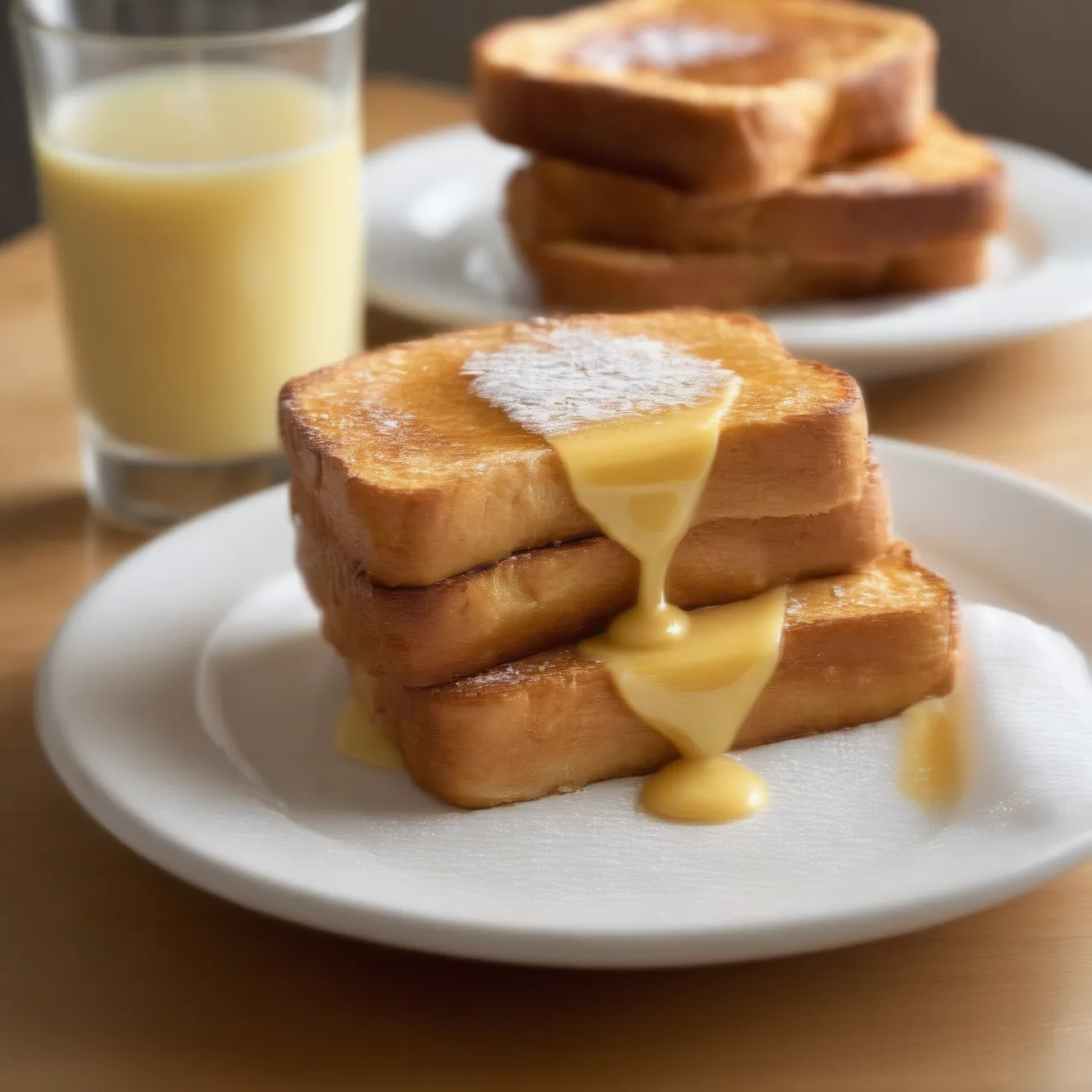
The menu calls it “Fabulous French Toast” and the description is exactly what you get: three thick slices of bread griddled to a deep golden color, sprinkled with powdered sugar, syrup on the side. It’s been a core Denny’s breakfast item for decades because it’s genuinely good — soft and eggy inside, with a slightly crisp, structured exterior that holds up on the plate.

Most home copycat attempts produce something closer to French toast pudding — soggy in the middle, soft on the outside. The gap comes down to one ingredient and one technique.

The Flour (and Why It Matters)

Denny’s custard is not a simple egg-and-milk dip. It has flour — 1/3 cup per batch, whisked in until smooth. This is the difference between diner French toast and home French toast.

When the flour-reinforced custard hits the hot griddle, the starch and protein in the flour gelatinize and set almost immediately on contact, forming a thin, structured coating around the bread. A plain egg wash doesn’t do this — it stays liquid and soaks into the bread as it cooks, creating a soft, eggy texture all the way through with no exterior crispness.

The flour batter produces:

  • A distinct outer coating (slightly matte when done, not shiny)
  • A custardy interior that stays soft without being wet
  • Slices that hold their structure for several minutes on the plate

This is the same principle behind French crepes and some breaded coatings — flour creates structure; eggs provide richness; the combination firms up on heat.

The Bread

Standard sandwich bread is too thin. At 3/8 to 1/2 inch, it can’t support the flour batter without becoming fragile, especially with even a 5-second dip. Denny’s uses thick-cut white bread at 3/4 to 1 inch — roughly twice the thickness.

Texas toast is the right off-the-shelf approximation. Available in the bread aisle of most grocery stores, it’s typically 1 inch thick and made from a soft, enriched white loaf that holds up to dipping without tearing. The thickness gives you the interior custard depth that makes the dish satisfying, not just breakfast bread with eggs on it.

The Griddle and the Temperature

A flat griddle at medium-low heat (around 325°F) is the right setup — not a screaming-hot skillet. The flour in the batter means the coating sets quickly; too much heat browns the outside before the interior custard has time to cook through, leaving a raw, doughy center.

Two minutes of browning per side, untouched, is the standard. Press nothing. Flip once.

What to Add for the French Toast Slam

The French Toast Slam at Denny’s adds two eggs (cooked your preferred way) and two strips of bacon or two sausage links. The toast itself is identical. After the last toast batch comes off the griddle, cook your eggs in the remaining butter in the pan — the faint cinnamon-vanilla from the custard residue carries into the eggs, which is a genuine improvement over eggs cooked in plain butter. For other Denny’s items to round out the plate, see the Denny’s Grand Slam, which covers the full breakfast combination in detail, and Denny’s Pancake Puppies for a sweet side. For the full Denny’s copycat collection, the Moons Over My Hammy and Country Fried Steak round out the lunch/dinner side.

Cost and Portion Notes

At the restaurant, the Fabulous French Toast (3 slices) runs approximately $9–10 depending on location in 2026. This recipe makes 6 slices — two full restaurant servings — for about $3–4 in groceries, mostly from the eggs and butter. Texas toast is sold in 16-slice loaves, so one loaf makes about five batches. The custard uses 4 eggs per 6-slice batch; the main variable in cost is whether you use whole milk (cheapest) or half-and-half (slightly richer).
Nutrition Facts

Per serving (2 servings)
Calories310
Total Fat10g
Total Carbs43g
Dietary Fiber1g
Sugars15g
Protein11g
Sodium390mg

* Estimated values based on standard recipe preparation. Actual values may vary.

🥗

Make It Healthier

Love Denny's Fabulous French Toast but want a lighter version? Try these simple swaps:

  • Substitute 2% milk for whole milk; the difference in texture is minimal with the flour providing structure.
  • Reduce the powdered sugar in the batter to 2 tablespoons — it primarily sweetens the coating, and the serving sugar covers the presentation.
  • Use whole-grain thick-cut bread instead of white Texas toast for added fiber; the recipe works the same way.
  • Skip the powdered-sugar dusting and cut the syrup — plain, the toast is naturally sweet from the vanilla and cinnamon in the batter, and the finishing sugar plus syrup is where most of the added sugar comes from.

Equipment You'll Need

Wide, flat griddle or large non-stick skillet

A flat surface browns all of the bread evenly; a curved pan creates hot spots and uneven edges

Wide shallow bowl

Large enough to lay a full slice of Texas toast flat — a dinner plate works if you don't have a wide bowl

Wire rack + sheet pan

For holding finished slices in the oven; keeps the underside from steaming

Fine-mesh strainer (optional)

For a perfectly smooth custard — sift the powdered sugar and flour together before adding to eggs to avoid lumps

Frequently Asked Questions

Why does Denny's put flour in the French toast batter?

Flour is the single ingredient that separates diner French toast from home French toast. When flour hits a hot griddle in the presence of egg and heat, the proteins and starches set quickly — creating a crisp, slightly structured coating on the outside of each slice. A plain egg-and-milk custard doesn't have this; it soaks into the bread and steams from the inside, producing a soft but often soggy result. The flour batter is why Denny's French Toast has a crisp exterior and a custardy interior at the same time. Multiple copycat research trails — Todd Wilbur's reverse-engineered recipe included — identify flour as the key departure from a standard egg wash.

What kind of bread does Denny's use for French Toast?

Thick-sliced white bread, approximately 3/4 to 1 inch thick. This is about double the thickness of standard sandwich bread (typically 3/8 to 1/2 inch). At the restaurant, the bread is cut in-house or received pre-sliced at this thickness. At home, the best readily available substitute is Texas Toast, sold in the bread aisle at most grocery stores — it's typically 1 inch thick and made from a soft white bread that holds up well to the custard dip without falling apart. Regular sandwich bread is too thin and will become fragile after dipping.

How long should I soak the bread in the egg mixture?

Five to ten seconds per side — that's it. This is one of the most counterintuitive parts of the recipe. Most home French toast recipes call for 20–30 seconds of soaking, sometimes even a full minute. Denny's style uses a very short dip because the flour in the batter coats the outside quickly and efficiently. A long soak breaks down the bread's structure, especially with the thicker bread required for this recipe, and the flour-reinforced custard turns soggy rather than crispy. Dip, count to five, flip, count to five, drain for two seconds, and onto the griddle.

What's the difference between the French Toast and the French Toast Slam?

The Fabulous French Toast is three slices of the glazed, powdered-sugar-dusted bread on its own — about $9–10 (2026 pricing). The French Toast Slam adds two eggs cooked any style, two bacon strips (or sausage links), and is served as a full breakfast plate for about $13–15. The French toast itself is identical in both versions; you're paying for the protein additions. If you want to replicate the full Slam at home, this recipe handles the toast component — cook your eggs alongside in the same butter remaining in the pan after the last toast batch.

Can I make this ahead and reheat it?

Yes, but with a specific technique. French toast reheats best in a 375°F oven directly on a wire rack for 5–7 minutes — not in a microwave (turns rubbery) and not in a covered container (steams and softens the crust). You can also reheat in a dry skillet over medium heat for 2 minutes per side. The flour structure in the batter actually helps the reheated version hold up better than plain egg-based French toast. For make-ahead batches, slightly undercook the bread on the first pass (pull at light golden, not deep golden) so the reheating step finishes it properly.

Why powdered sugar instead of syrup?

At Denny's, the French toast is plated with a dusting of powdered sugar across the top and syrup served in a small pitcher on the side. This is a deliberate presentation choice — the powdered sugar provides sweetness and visual contrast immediately, while letting diners control how much syrup they add. The powdered sugar also slightly tightens the surface crust (the fine sugar crystals absorb any remaining moisture from the coating), keeping the toast crisp longer on the plate. Applying syrup directly in the kitchen defeats this and turns the crust soft within about 30 seconds.

Love this recipe? Share it!

Free PDF: our 12 most-wanted copycat recipes — instant download.

Ratings & Reviews

No ratings yet

Rate this recipe

Click a star to rate

Leave a Review

0/500

CS

Copycat Spices Test Kitchen

Every recipe on Copycat Spices is developed and tested in our home test kitchen. We reverse-engineer beloved restaurant dishes and refine each one until the flavors and the instructions work reliably for home cooks of all skill levels.

Learn more about our mission →