


Pin It

Eggslut's 'The Slut' (Coddled Egg Over Potato Purée in a Mason Jar)

Eggslut's 'The Slut' (Coddled Egg Over Potato Purée in a Mason Jar)
Jump to Recipe
Prep 20 min Cook 40 min Serves 4
Quick answer: Make a smooth potato purée: boil 1 lb Yukon Gold potatoes until very tender (about 15 min), pass through a ricer or fine sieve into a bowl, beat in 4 tablespoons of unsalted butter and 3 tablespoons of warm heavy cream, season with salt. Fill four 8-oz narrow-mouth mason jars about ¾ full with the warm purée (3–4 oz per jar). Crack one large egg directly onto the purée in each jar, being careful not to break the yolk. Place the lids on very loosely, or cover tightly with plastic wrap secured with a rubber band — the goal is to keep water out, not to seal steam in. Set a large pot of water on the stove and heat to exactly 165°F using an instant-read thermometer; maintain that temperature throughout coddling. Lower the jars gently into the water bath, making sure the water level reaches at least the shoulder of the jar but not the lid. Coddle for 13–16 minutes. At 13 minutes, gently tilt one jar — if the egg white has gone fully opaque (no translucent patches) but the jar still sloshes slightly, it's ready. If the white is still clear in spots, give it 2 more minutes. Remove the jars carefully with tongs or a jar lifter, uncover, and finish with a pinch of flaky gray salt and minced fresh chives. Serve immediately with 2–3 slices of baguette, toasted in butter in a dry skillet until golden on both cut faces.

Shop the tools

Gear matched to this recipe. These are Amazon affiliate links — we may earn a small commission if you buy, at no extra cost to you.

As an Amazon Associate, Copycat Spices earns from qualifying purchases. Product images are generic illustrations, not the exact item listed.

Eggslut's 'The Slut' (Coddled Egg Over Potato Purée in a Mason Jar)

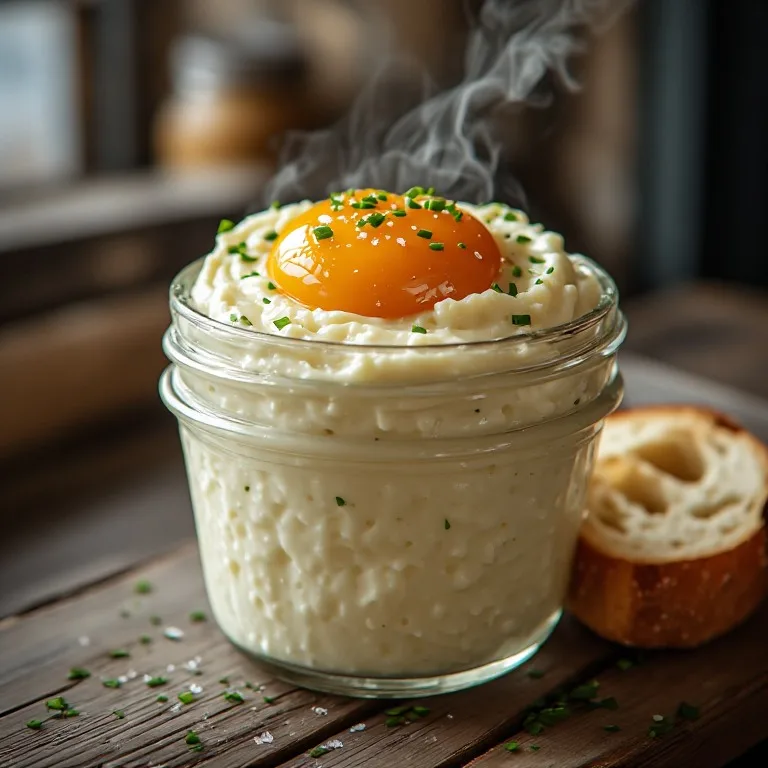
Eggslut's most iconic dish: silky potato purée in an 8-oz mason jar with a raw egg coddled on top in a 165°F water bath until the white barely sets and the yolk runs free. The LA dish that made coddled eggs famous again — at home for about $4 per jar.

Intermediate Prep: 20 min Cook: 40 min Total: 1h 0m4 servings ~$4.50/serving
Prep20 min
Cook40 min
Total1h 0m
Servings
4
At home~$4.50/serving
vs
Restaurant~$20.25/serving
You save ~78%

The Story Behind the Recipe

Alvin Cailan launched Eggslut as a food truck in 2011, then opened the brick-and-mortar counter at Grand Central Market in downtown Los Angeles in November 2013. The name came from Cailan calling himself an "egg slut" — someone so obsessed with eggs he'd build an entire restaurant concept around them. Bon Appétit listed Eggslut among the best new restaurants in the country shortly after it opened, and The Slut ($12–14 at the restaurant) became the dish most associated with the brand. Eggslut later expanded to Las Vegas (at the Cosmopolitan) and opened an international outpost in London, but the original Grand Central Market counter — tucked inside a historic 1917 building surrounded by produce stalls and butchers — is still the one people fly to LA to eat at.

What makes The Slut remarkable is that it is genuinely hard to do at a restaurant: a raw egg over potato purée in a glass jar, coddled in a water bath to order until the white barely sets and the yolk stays completely liquid. The technique is inherently slow (13–16 minutes per order) and requires precise temperature control that most restaurant kitchens avoid. At home, that's your advantage — you can nail the water bath at exactly 165°F, watch the white go opaque through the glass, and pull the jar at exactly the right moment. The restaurant charges $12–14 per jar; at home it costs about $4, and the quality gap favors home if you use fresh eggs and real butter.

Nutrition Facts

Per serving (4 servings)
Calories530
Total Fat32g
Total Carbs42g
Dietary Fiber2g
Sugars1g
Protein13g
Sodium580mg

* Estimated values based on standard recipe preparation. Actual values may vary.

Ingredients

  • For the potato purée
  • For the coddled egg
  • For serving

Instructions

💡
Pro tip: This recipe tastes even better the next day. The flavors need time to meld together in the fridge.
❄️
Storage: Keeps in an airtight container in the fridge for up to 2 weeks. Freezer-friendly for up to 3 months.
🎃 Free Halloween cookbook — download now The Copycat Halloween Cookbook A ready-made, photo-illustrated PDF of our best halloween copycat recipes — free to download, no building required. Pay what you want to support if you love it.

Free PDF — instant download. We'll also send new seasonal copycat recipes now and then; unsubscribe anytime. Or just download it →

Why a Mason Jar?

The jar is not aesthetic; it’s structural. Coddled eggs exist in a precise temperature window where the white sets and the yolk doesn’t, and managing that window requires even, all-around heat that a flat skillet doesn’t provide. A glass jar in a water bath distributes 165°F heat evenly from every side simultaneously — the glass conducts heat uniformly, the water provides a constant temperature medium, and the potato purée below the egg acts as a heat buffer that slows the rate at which the yolk warms up from the bottom. That buffer is why you can coddle for 13–16 minutes without overcooking the yolk: the purée insulates it from the hottest heat source (the water against the jar base) while the white sets from all sides.

The jar also serves the dish: you eat directly from it, which means the last bite of baguette drags through the still-warm residue of yolk and potato at the jar’s bottom. Nothing is lost to the plate.

The Potato Purée: Ricer or Sieve, Never a Processor

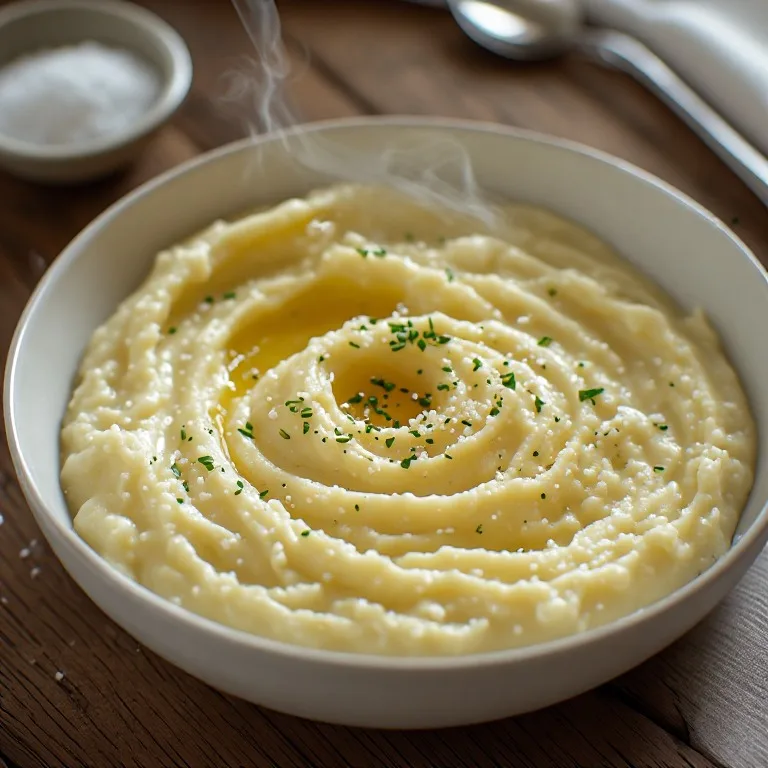
The smoothness of Eggslut’s potato purée is a product of the ricing step. A ricer (or fine-mesh drum sieve) pushes cooked potato through uniform small holes, breaking it into fine, separate grains that absorb butter and cream without developing the glutinous texture that mashing or processing creates. When you mash potatoes, you stretch the cell walls and rupture more starch granules; when you blend in a food processor, you shear the potato starch into a paste that becomes gluey as it cools. The ricer avoids both by pressing, not pulling.

Do this while the potatoes are extremely hot — steaming off the stove. Starch gelatinizes when hot and is much easier to force through the ricer. As it cools, it firms and you’ll need more pressure, which stresses the starch and produces a less smooth result. Once through the ricer, add cold butter cubes (the temperature contrast helps emulsify the butter into the potato) and beat vigorously: you’re building an emulsion, not just folding in fat. The purée is done when it’s glossy, pulls away from the bowl sides cleanly, and holds a soft shape.

Water Bath Temperature: The Single Most Important Variable

The egg’s behavior in a water bath is almost entirely determined by temperature, not time. The approximate ranges:

  • Below 140°F: The white remains essentially liquid — you won’t get The Slut, you’ll get warm egg soup.
  • 145–150°F (63–66°C): The white sets slowly — about 30 minutes — but the result is excellent and the yolk stays fully liquid. This is the precise sous-vide range many cooks use (Anova publishes a 149°F / 30-minute egg), and it’s the most foolproof option if you own an immersion circulator.
  • 160–168°F: The white sets evenly in 13–16 minutes while the yolk stays liquid. This is the home target range for the stovetop water-bath method in this recipe — faster than a true sous vide and easy to hold with a thermometer.
  • 170–180°F: The white sets faster but the yolk begins to film over and firm; you risk a chalky center at the 15-minute mark.
  • Above 185°F: The white sets quickly but the yolk goes rubbery. You’ve made a hard-boiled egg in a jar.

Eggslut’s own published method is blunter than any of this — jars dropped into water returned to a simmer for about 15 minutes, until the whites just set — but a held 160–168°F bath gives you far more control over the yolk at home, which is the whole reason this dish is easier to nail in your kitchen than in a busy restaurant. Use an instant-read or clip-on probe thermometer throughout. The water bath loses temperature when you lower the cold jars in — have it at 168°F before adding the jars, and expect it to settle around 163–165°F once the glass cools it slightly. Maintain from there.

Why “The Slut” — and Why That Name Stuck

Alvin Cailan started Eggslut in 2011 with the premise that eggs deserved the same reverence as any other fine-dining ingredient. The name was a provocation: “egg slut” was slang in the professional kitchen world for someone obsessed with eggs to an embarrassing degree. Cailan turned that into a brand. The dish called “The Slut” was the most direct expression of the concept — nothing but egg and potato, no proteins, no distractions, two ingredients taken to their technical limit.

The name generated controversy in 2015 when some customers and critics found it off-putting, and Cailan responded that the intent was always about food obsession, not gendered language. The dish itself has outlasted the debate: it is still The Slut on the menu at every Eggslut location, and it is still the dish people order on their first visit and the one they describe when they tell someone what Eggslut is.
🥗

Make It Healthier

Love Eggslut's 'The Slut' (Coddled Egg Over Potato Purée in a Mason Jar) but want a lighter version? Try these simple swaps:

  • ✓Use 2 tablespoons of butter instead of 4 for the potato purée — pass the potatoes through a ricer first so the smaller amount of butter still coats every granule. You lose some richness but the potato flavor comes through more clearly. Saves roughly 100 calories per serving.
  • ✓Serve with toasted country-style bread instead of buttered baguette — you get the same vehicle for the egg and purée with about 40% less fat from skipping the butter on the bread.
  • ✓Use one egg per jar but cut the potato purée portion to 3 oz (from 4 oz) — the egg-to-purée ratio shifts toward the egg, which is the more nutrient-dense component, and the dish still reads as 'a full jar' because the egg sits on top and fills the view.
  • ✓Add roasted garlic (one clove, confit in the butter while the potatoes cook) to the purée — it contributes flavor complexity that makes a lighter hand with the butter taste intentional rather than reduced.

Frequently Asked Questions

What is Eggslut's The Slut?

The Slut is Eggslut's signature dish: silky potato purée (made from Yukon Gold potatoes with a high ratio of butter and cream) in a small glass mason jar, with a raw egg cracked on top, then coddled in a precisely controlled water bath until the egg white just sets and the yolk stays completely liquid. It's served with flaky gray salt, chives, and several slices of toasted baguette. The dish is named after the restaurant's irreverent brand: Alvin Cailan, who opened Eggslut in 2013 at Grand Central Market in LA, called himself an 'egg slut' — someone obsessed with eggs. 'The Slut' (the dish) is the most literal expression of that obsession: the entire plate is two ingredients, egg and potato, with butter binding them.

What temperature water bath does The Slut use — and why does it matter so much?

For the stovetop water-bath method used here, maintain 160–168°F (71–76°C) throughout the coddling. Below about 150°F the white sets very slowly — you'd need a 30-minute hold rather than 13–16 minutes — and above 170°F the yolk starts to firm and you lose the liquid center that makes the dish work. At 165°F the white sets gradually and evenly in 13–16 minutes while the yolk stays completely liquid. If you own an immersion circulator, the most foolproof route to the same result is a true sous-vide bath at 149°F (65°C) for 30 minutes (the setting Anova publishes for this style of egg). Either way, the potato purée below the egg acts as an insulator, slowing heat transfer to the yolk; a jar with a smaller purée portion (3 oz vs 4 oz) will cook faster than one that's more full, so check the fuller jars a minute later than the smaller ones if they're not identical.

Can I use any mason jar, or does the size matter?

Use an 8-oz narrow-mouth mason jar (Ball Regular Mouth is the standard). Narrow mouth keeps the egg contained in the center so the white sets evenly rather than spreading into a thin, uneven layer. Wide-mouth jars are harder to control and the egg tends to spread to a shallow disc that cooks unevenly. The 8-oz size gives you the right ratio of potato to egg — a 4-oz jar doesn't leave enough room for the egg to sit above the purée without touching the lid. Don't use decorative or antique glass; use modern canning jars rated for heat. Warm them before filling — cold glass can crack when you add hot potato purée.

Why is egg freshness important for coddled eggs?

A very fresh egg has tight, compact whites that hold together around the yolk during coddling. An older egg (more than a week or so from the carton date) has thinner, more watery whites that spread flat, take longer to set, and are more likely to leave some sections translucent while the yolk begins to firm. For The Slut specifically, a fresh egg also means the yolk sits higher on the purée (less flattening) and holds a round shape through coddling. If you want to test freshness before cracking into the jar, a fresh egg cracked onto a flat surface will have a compact, domed white; an older one spreads immediately into a wide, flat ring. Use eggs from the refrigerator, not room temperature — cold eggs coddle more predictably.

What do I do if my egg white isn't setting after 16 minutes?

Check your water bath temperature first — if it's dropped below 155°F, the white will take much longer or not set at all. Bring it back up to 165°F and give the jars another 5 minutes. If the temperature was fine but the white is still translucent, the egg may be too old (thin whites) or the jar was too full (the purée insulated the egg too much). You can rescue an under-set white by carefully lifting the lid off the jar and placing the open jar under a broiler for 60–90 seconds — the direct dry heat from above sets the white from the top without affecting the yolk significantly. Watch it closely; at 60 seconds the white usually goes fully opaque. The yolk will start to film over at about 90 seconds under a broiler, so don't go past 2 minutes.

Can I make the potato purée ahead of time?

Yes — the potato purée can be made up to 2 days ahead and stored in the refrigerator. When you're ready to serve, reheat it gently in a small pot over low heat, stirring frequently and adding a tablespoon or two of warm cream to restore the consistency (cold purée thickens significantly in the refrigerator). The purée needs to be warm when it goes into the jar — cold purée extends the coddling time unpredictably and can cause the glass to crack if the water bath is very hot. Fill the jars while the purée is just above serving temperature, then coddle immediately.

What does the Dijon and Sriracha on the side do — are they essential?

They're the two condiments Eggslut keeps on the counter at Grand Central Market for The Slut. Neither is applied to the jar before service; both are there to customize after you open it. The Sriracha is straightforward: a few drops on the broken yolk-purée mixture adds heat and vinegar brightness that cuts the richness of the butter. The Dijon is less obvious but correct: a thin spread of Dijon on the toasted baguette before you drag it through the egg adds mustard's sulfurous sharpness, which contrasts with the egg's fat in the same way it does in a classic beurre blanc sauce. Neither is mandatory — the dish is complete without them — but if you're going for full Eggslut fidelity, both belong on the table.

How do I eat The Slut — is there a right way?

The classic approach: pick up a toasted baguette slice, insert one corner through the egg yolk to break it, then drag it down through the purée to coat the bread with the combined yolk-and-potato mixture. Eat in one or two bites. Repeat with the next slice. Some people prefer to first stir the broken yolk into the purée with the baguette tip, creating a richer, unified mixture throughout the jar before scooping. Either is correct. The one wrong move is letting the yolk fully set before you break it — the dish goes from great to merely fine once the yolk is cooked through, and the window is narrower than you'd expect: the jar retains heat and the yolk continues cooking in the residual warmth for about 3–4 minutes after you remove it from the bath. Eat it before it stops steaming.

Love this recipe? Share it!

Free PDF: our 12 most-wanted copycat recipes — instant download.

Made it? Buy us a coffee

Every recipe here is free, with no paywalls. If this one was a hit at your table, a small tip keeps new copycats coming.

$

Eggslut is a trademark of its owner, used here only to describe the dish this recipe recreates. This is an independent copycat written in our own words — Copycat Spices is not affiliated with, endorsed by or sponsored by Eggslut.

Ratings & Reviews

—
No ratings yet

Rate this recipe

Click a star to rate

Leave a Review

0/500

CS

Copycat Spices Editorial

Researched + fact-checked. Every recipe on Copycat Spices is built from published sources — official ingredient lists, brand-published recipes, interviews and food-science references — and fact-checked before it goes live, then written as clear, step-by-step instructions for home cooks of all skill levels.

Learn more about our mission →