
Copycat Momofuku Soy Sauce Eggs (The Famous Ramen Eggs, Made at Home)
Prep time: 10 min (plus 2–6 hours marination) Cook time: 7 min Servings: 6 eggs
David Chang opened Momofuku Noodle Bar at 163 First Avenue in New York’s East Village in August 2004. He was in his mid-twenties, had spent time working in kitchens in Japan, had trained at the French Culinary Institute, and had left the conventional restaurant path to open a small noodle bar of his own. He opened Momofuku Noodle Bar with 28 seats and a menu built around Japanese ramen and pork — a combination with no obvious market in American fine dining at the time.
The restaurant was named for Momofuku Ando, the Japanese businessman who invented instant ramen in 1958. Chang’s version was the opposite of instant: 20-hour pork broth, house-made tare, slow-roasted pork belly, and a set of toppings assembled with the precision of a much more expensive kitchen. One of those toppings was the soy sauce egg.
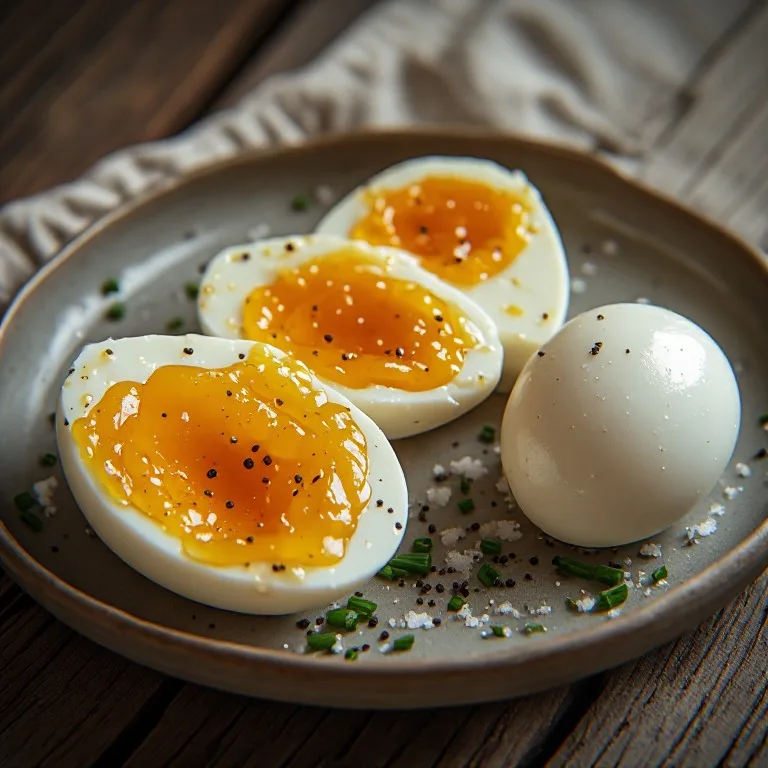
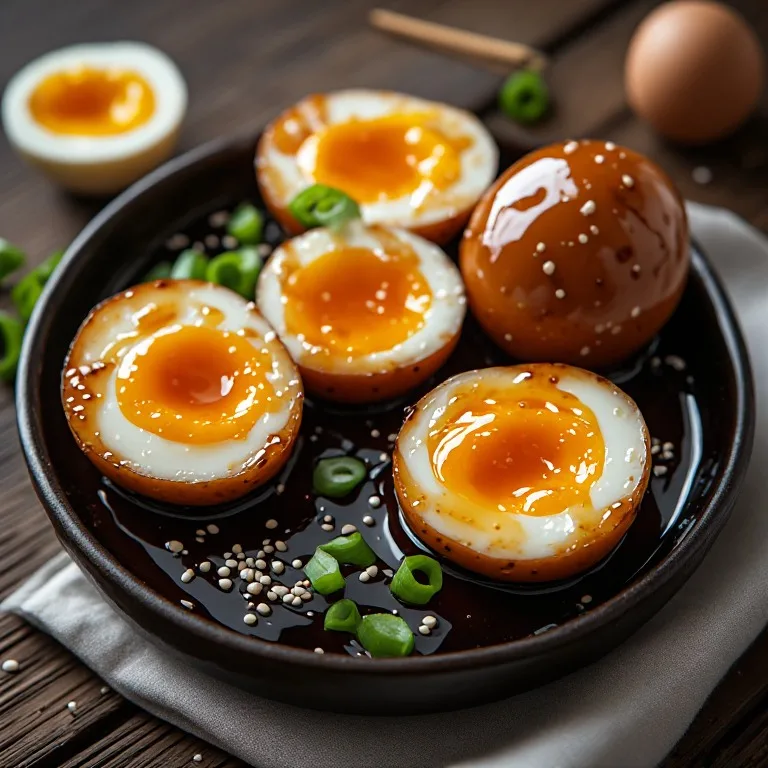
The Momofuku soy sauce egg is a soft-boiled egg marinated in a mixture of soy sauce, water, sugar, and sherry vinegar for 2 to 6 hours. The result is an egg with a caramel-brown outer layer on the white, a jammy golden yolk, and a flavor that is savory, lightly sweet, and acidic enough to register as bright rather than flat. It became one of the most imitated items in American ramen — the benchmark for what a ramen egg is supposed to look and taste like.
Chang published the full recipe in the Momofuku cookbook in 2009, co-written with food writer Peter Meehan. The book won a James Beard Award in 2010 and put the soy sauce egg in home kitchens across the country.
The Two Things That Matter
There are two technical facts that separate a real Momofuku soy sauce egg from the average home version.
The 6-hour hard stop. Soy sauce diffuses into cooked egg white far more aggressively than most marinades penetrate most proteins. Egg white is a dense protein matrix with no fat to slow soy absorption; once you place a peeled egg into the marinade, the sodium and color are moving in immediately. At 2 hours, the outer surface is lightly caramel-colored and lightly seasoned; at 4 to 6 hours, the color is deep and the egg has a proper ramen-bar flavor. After 6 hours, the outer layer turns increasingly dense and the egg becomes unpleasantly salty throughout. After 12 hours overnight, the white is gummy and the flavor is unbalanced. This is the most common failure in home recipes that describe marinating “overnight” or “up to 24 hours.” The 6-hour limit is not a soft preference — it is the point at which the texture and salt level of the egg degrade.
The stirring technique. Egg yolks are denser than egg whites and will settle off-center in a stationary pot before the white firms enough to hold them. Stirring the water in slow circles for the first 90 seconds of cooking keeps the egg rotating, distributing heat evenly and suspending the yolk near the center as both the white and yolk begin to set. The result is a centered yolk when the egg is sliced in half — which is the visual you see in every properly made ramen bowl. This is not decoration. An off-center yolk means uneven marination (more of the white on one side absorbs color; less on the other) and uneven texture (the thin white side sets harder). Stir for 90 seconds, then stop.
Why 6 Minutes 50 Seconds
The target is a white that is fully set — no translucent patches — with a yolk that is firm at the edges and soft and flowing at the center. TikTok’s jammy egg trend popularized 6 minutes 30 seconds, which produces a slightly softer, more runny center. The Momofuku recipe runs 20 seconds longer, producing a slightly firmer set that holds its shape better when marinated and sliced, and that gives the yolk the characteristic fudge-like rather than runny texture of a proper ramen egg.
Both are good eggs. The 20-second difference matters. If you prefer a looser, more flowing center, use 6:30. If you want the firm-but-yielding jammy center of a ramen bar egg, use 6:50.
All timings assume large eggs cold from the refrigerator. Room-temperature eggs will be slightly more cooked at the same timing — move toward 6:15 to 6:30 if your eggs have been sitting out.
The Sherry Vinegar Detail
Most home ramen egg recipes use soy sauce plus mirin or sake — the standard Japanese pantry combination. Chang’s recipe uses sherry vinegar instead. This is worth understanding.
Mirin adds sweetness and a mild sake-adjacent flavor; sake adds the same. Both soften the saltiness of the soy. Sherry vinegar adds brightness through high-pitched acidity without adding sweetness. The result is a marinade that tastes more precisely calibrated — the sugar provides what sweetness the recipe needs, and the vinegar keeps the overall flavor from turning heavy or flat. If all you have is rice wine vinegar, use it at the same quantity (2 tablespoons) and you will get a good egg. The sherry vinegar version is noticeably more balanced.
What Momofuku Noodle Bar Became
Momofuku Noodle Bar drew national attention almost immediately, and the group grew fast. Chang opened Momofuku Ssäm Bar on the same East Village block in 2006, and Momofuku Ko — a small tasting-menu restaurant — in 2008. Ko was awarded two Michelin stars in 2009 and held them until it closed in 2023. Time magazine listed Chang among the 100 Most Influential People in 2010.
The soy sauce egg traveled out of the restaurant in the cookbook and has since appeared on menus from Brooklyn to Los Angeles to Seoul. The version you can make today — in a pint container on your counter, for six eggs, in under 10 minutes of active work — is the same recipe.
Making These Ahead
Marinate for 2 to 6 hours. Remove the eggs from the marinade when your window closes and store them separately in a sealed container in the refrigerator. Kept dry and cold, they hold well for 3 to 4 days — the soy flavor continues to deepen very slightly even out of the liquid, but does not worsen. Do not store the eggs in the marinade beyond the 6-hour mark.
The marinade keeps for 5 days refrigerated and can be used for a second batch with good results. By the third use, the flavor is diluted enough that you should start fresh.
Serving Ideas
In order of how the recipe was intended and how it performs:
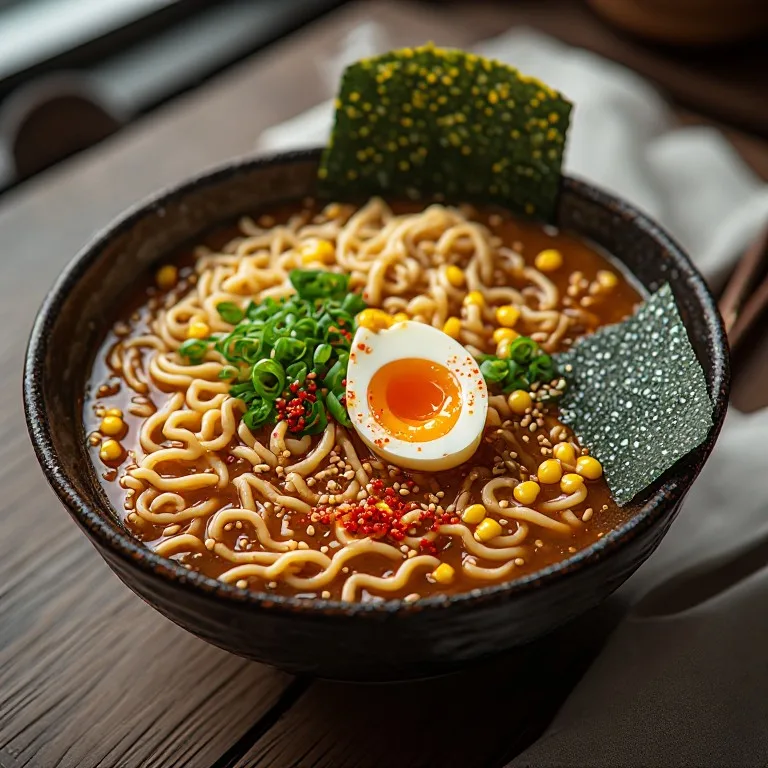
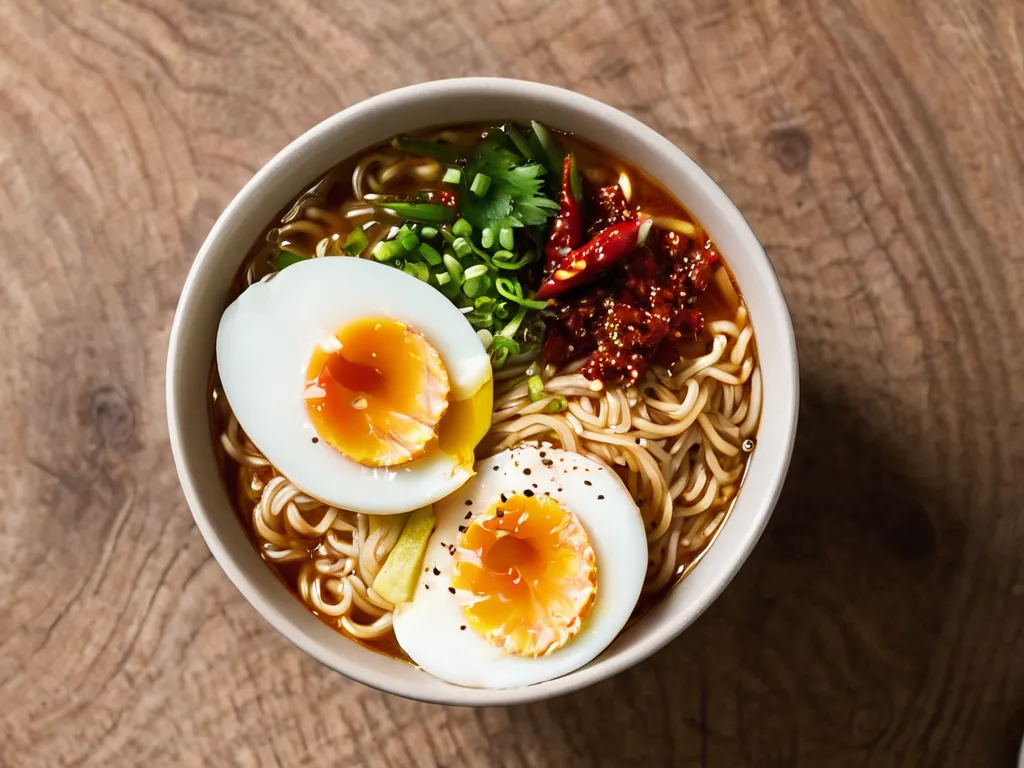
- In ramen. Halved lengthwise, placed yolk-up on top of the broth. The spicy-miso ramen on this site is built for this egg.
- On toast. A halved egg on buttered sourdough with flaky salt and a few drops of toasted sesame oil — three minutes of work, a real meal.
- In grain bowls. The soy-savory flavor works with rice, farro, or soba noodles; the egg brings enough flavor that the bowl needs very little additional seasoning.
- Cold, plain. Eat directly from the refrigerator as a high-protein snack. At approximately 80 calories and 6 grams of protein per egg, they earn their place in the refrigerator.
Cost: Momofuku vs. Home
| Momofuku Noodle Bar | Homemade (6 eggs) | |
|---|---|---|
| Cost | ~$19-22 for a bowl of ramen (egg included) | ~$2.50 for 6 eggs |
| Active time | 0 min (order from menu) | ~10 min + 2-6 hrs passive |
| Eggs per order | 1 (halved) | 6 |
| Timing control | Chef’s | Yours |
The 6 eggs here cost roughly what a single ramen bowl costs at the restaurant, and the recipe scales to a dozen eggs with no additional skill required.